When Holocaust survivor and Los Angeles real estate developer Jona Goldrich wanted to hire security consultants and guards for his vast network of Southern California apartment buildings, he hired Israelis.
"They are much better because of the training, and the problems they’ve got in Israel … they are much more qualified than anybody in Southern California," Goldrich said. "When I came to Los Angeles in 1952, I never locked the door to my apartment, and now my wife won’t walk out of the house without having the alarms on. But the Israelis had that experience from day one."
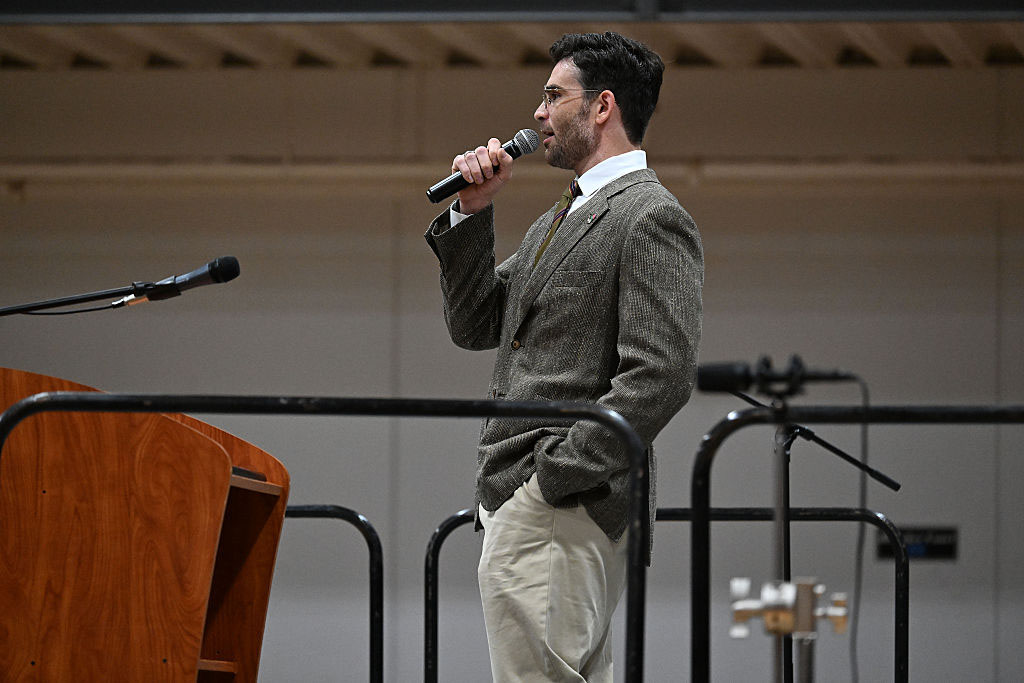
Israelis have made a small niche for themselves in Southern California’s growing security industry, with immigrants running executive protection services for wealthy clients, buildings, estates and special event security for clients like Goldrich, who lined the perimeter of the April 20 Pan-Pacific Park Yom HaShoah Holocaust remembrance event with Israeli security.
"Many years ago we didn’t need any security," he said. "Things have changed in Los Angeles."
A rise in global anti-Semitism and worldwide terrorism against perceived Israel supporters make security issues an ever-present concern in the minds of U.S. Jewish leadership. Earlier this year, the American Jewish Committee, the Conference of Presidents of Major American Jewish Organizations and various Jewish federations launched the Secure Community Alert Network (SCAN) to monitor security threats and send out threat assessments
"After Sept. 11, there was an almost hysterical reaction but I think that the money that was spent on consulting then was bad," said Muky Cohen, president of Chameleon Group, a security consulting firm in Canoga Park. "I think that for the last year, things have been much better."
Though evident at many Jewish institutions, festivals and events, the number of Israeli security consultants is relatively small and distinct from a typical synagogue’s security guard roster made up mostly of African Americans, Latinos and Filipino immigrants.
As for Israeli-run security firms, "I can count them on one hand," said Cohen, who served in Israel’s General Security Services and who, like his fellow security consultants, has an intelligence, military and security background far beyond Israel’s required military service. "I’m in my 50s, I was born with this; I was born with understanding what is a terrorist threat. In America it’s not exactly like that."
"Not everybody who’s Israeli and went through the military, I would say, should be considered an expert in security," said Erez Leshem, 34, a partner in the executive protection firm Greystone Security in Los Angeles. After careers with the Israel Defense Forces, Mossad or Shin Bet, transplanted security consultants like Cohen and Leshem have to adjust to working in the private sector.
"Obviously those of us that came from the background of counterterrorism and intelligence have a very broad, broad spectrum of experience," Leshem said. "Unfortunately, in this day and age it definitely is an advantage. But with that, you still have to understand not everything that we’ve done in Israel we could do here in the civilian world."
And what was once a pre-Sept. 11 mystique about Israelis and security has broadened out to a deeper reality that Israeli immigrants can be very good for some security, but that for a close-contact bodyguard, America’s ex-cops, such as those fielded by companies like The Centurion Group (centuriongroup.com), are preferred. Security guards at Goldrich’s estimated 15,000 apartments and assisted-living units are usually Americans, the real estate developer said.
"I think from a bodyguard standpoint, they’re better than Israelis; ex-U.S. Secret Service," Goldrich said. "I [also] like SWAT teams. I like people from here. They understand the system 10 times better. In the late ’80s, beginning of the 1990s, there was a trend there — Israeli was the way to go."
Interaction with potential clients varies. Cohen’s Chameleon Group has a Web site (www.chameleon1.com), where $40 can get a downloaded "Threat Mitigation Reference Guide," which features Cohen’s "predictive profiling" of potential threats.
Greystone Security’s Leshem prefers word-of-mouth contact with clients willing to spend a lot for elite, round-the-clock executive protection.
"Most of it is by referrals," Leshem said. The [executive protection] industry is very, very narrow; not many people can afford half a million to a million a year in security. I myself don’t work much with the Israeli community. Most of the Israelis here found normal jobs."
But Cohen said Israelis also have a natural feel for executive bodyguard work, protecting wealthy clients and their families. The reason for such family affinity is quite simple: "They’re more Jewish, more involved."
For all their combat experience or intelligence training, Israelis working as executive bodyguards encounter lonely work. For Leshem, traveling with a famous actress to a movie location shoot in Africa or with a Fortune 500 executive to Aspen may sound glamorous, but it usually means long hours of simply standing guard with a gun and an earpiece, far from loved ones.
"You’re living everybody’s life but your own," he said.