In the entire U.S. military there are about 50 Orthodox Jews — and I am one of them. Why am I telling you this?
I was born in Kiev, Ukraine. In 1976, when I was 5, my parents, sister and I immigrated to the United States and settled in Seattle. I grew up mostly nonobservant, but maintained some connection to Judaism during the summers when I would attend a Chabad day camp. My family and I would also go to Seattle’s Chabad House once in a while during the holidays, mostly for the free food and ample vodka.
As a child, I always wanted to serve my country. By nature I was machmir (strict) and never did anything in a half-hearted way, so I decided that I would join the best fighting force in the world, the U.S. Marine Corps.
The typical Jewish reaction was: “What’s a nice Jewish boy doing in the Marines?”
My parents, who escaped the USSR to keep me from having to serve in the Soviet military, thought I was crazy. On Feb. 8, 1989, four days after my 18th birthday, I shipped off to Marine Corps Recruit Depot, San Diego.
On the third day of boot camp, we were sitting in formation when a drill instructor approached the platoon and barked, “All my Jews, stand up.”
I thought to myself, “Here we go, the persecution of the Jews is about to begin.”
Out of 87 recruits, I was the only one to stand up. He ordered me to report to a major standing off in the distance, which I nervously did.
I saluted and said, “Sir, Pvt. Ekshtut reporting as ordered, sir!”
I will never forget the first thing he said to me: “Do you know that you are one-tenth of one percent of all Marines in the Marine Corps?”
He introduced himself as Maj. Goldberg — or some similar Jewish name — and explained that only one in 1,000 Marines is Jewish. He then invited me to attend Friday night services at the nearby Navy chapel. I accepted.
I went on to serve overseas, in exotic locations like Okinawa, Korea, the Philippines and Bangladesh. During the first Gulf War, I was deployed for seven months on a Navy ship in the Middle East. That winter, I lit Chanukah candles in the middle of the Persian Gulf.
After four years of active duty, I continued to serve one weekend a month and two weeks a year in the Marine Reserves. After graduating college as a civil engineer, I spent a few months in Israel where I decided I needed to learn more about what it means to be a Jew.
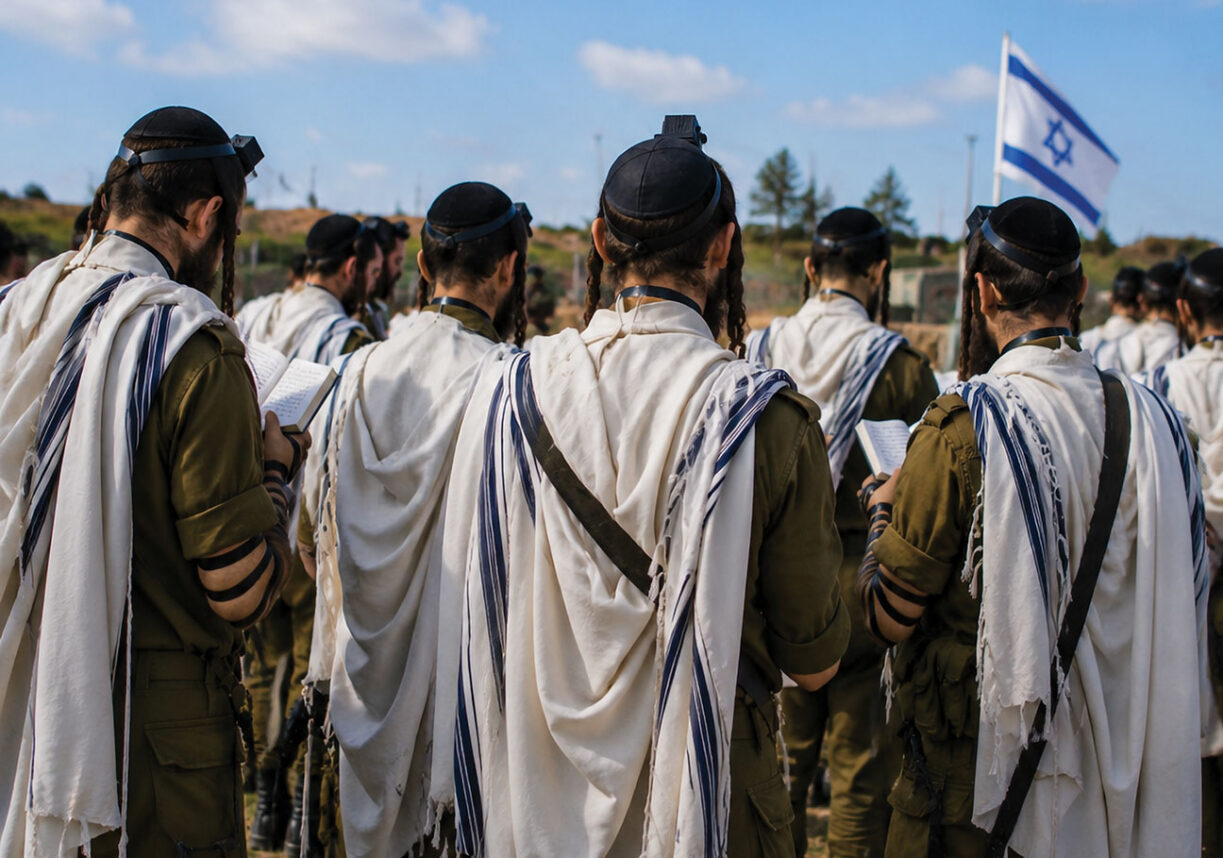
After several years of learning, I was going to synagogue every Shabbat, putting on tefillin every morning and trying to keep kosher. The only time I could not keep the Sabbath was when I was doing my monthly weekend duty in the Reserves. It was not that I wasn’t allowed — on the contrary, the more observant I became, the more supportive everyone was. I lit candles and made “Kiddush” in the barracks on Friday night, and my friends would even do the “labors” that were prohibited for me on the Sabbath. But in the Reserves, Saturday is the main training day.
It was time for me to make a decision: leave my beloved Marine Corps or stay in the Marines and not be so machmir one weekend a month. After nearly 13 years of service, I left the military to keep Shabbat.
However, a lot of what I learned in the Marines made me a better Jew. Jewish observance is similar to military training — except you don’t have to sweat as much or crawl in the mud.
Being a Marine taught me self-discipline and responsibility, how to answer to a “higher authority,” the value of teamwork, family and community, pride and self-esteem. By being charged by the real commander-in-chief, God, to wake up early and go to minyan, put on tefillin, pray three times a day, keep kosher and live in a Jewish community, we acquire some of the same qualities that the military teaches.
So for me, becoming an observant Jew was a straightforward transition. Nothing else would suffice. I continue to learn and grow Jewishly –I’m even on the board of my synagogue now.
I ask myself, would I want my son, when one day God grants me one, to join the military? In both good Jewish and military tradition, I will cross that bridge when I get to it. My more immediate objective is to find my beshert (soulmate). However, I know that if my future son does serve in the military, he’ll be a better man and a better servant of God because of it.
Mikhail Ekshtut, a civil engineer in Seattle and chaplain assistant in the Air Force Reserve, can be reached at
sgteks@tranplaneng.com
.