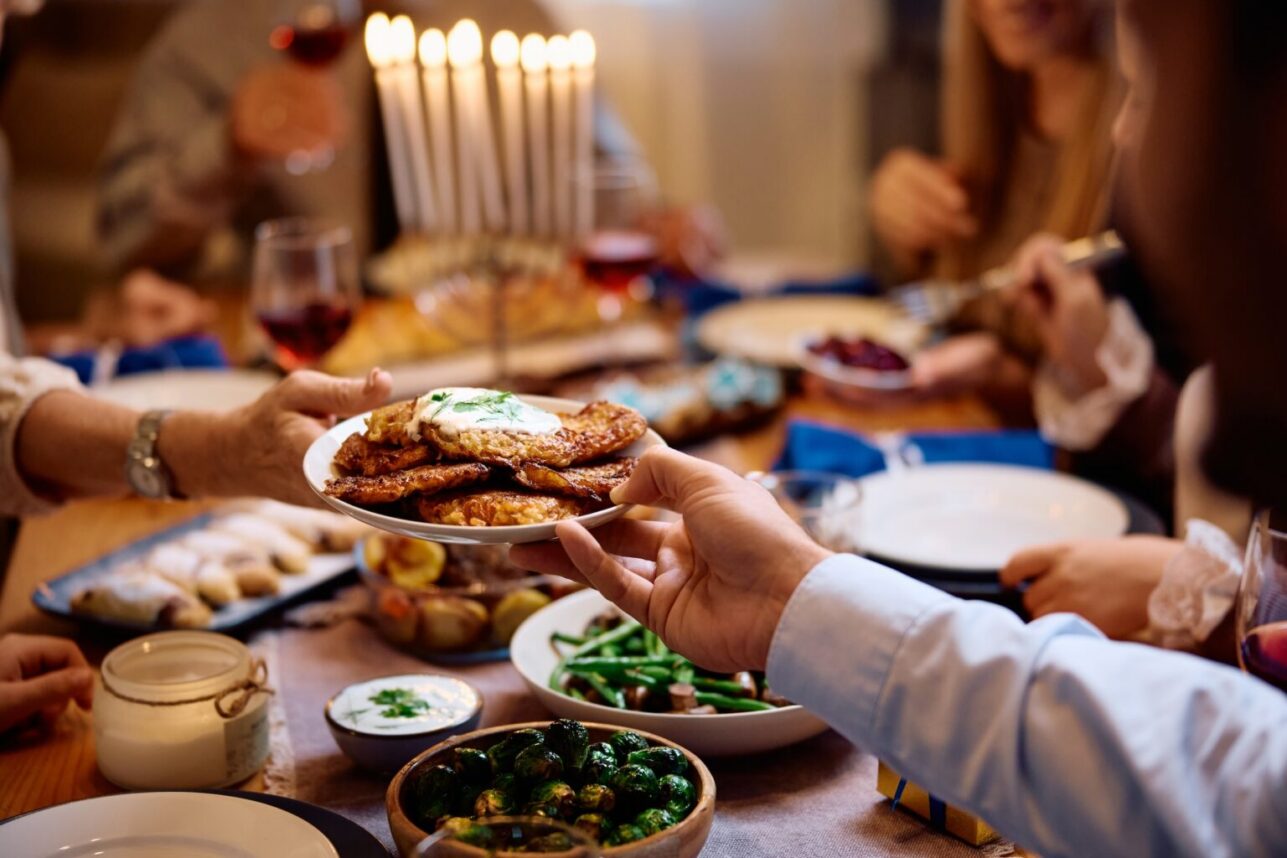
When Jewish and Christian holidays converge — like Passover and Easter or Chanukah and Christmas — Southland communities with large Jewish populations often witness a competition between the celebrations, from public schools to shopping centers.
Many Southern California malls now host public menorah lightings with concerts, a public Jewish response to the longstanding tradition of Christmas trees and photos with Santa. Kosher-for-Passover food, haggadahs and candles compete for shelf space with baskets, egg-decorating kits and chocolate rabbits in local grocery stores.
When it comes to L.A. senior homes, many of which are nonsectarian, lobbies greet visitors with a mix of Jewish and Christian decorations around the holidays. And in facilities with a predominantly — but not exclusively — Jewish population, administrators say there is an openness and willingness among non-Jewish residents to participate in Jewish celebrations, including Shabbat. In turn, they say, Jewish seniors respect and honor the holidays and want to learn from their non-Jewish counterparts.
“There is balance,” said Ahuva Bar Zion, executive director at Agoura Hills Senior Retreat. “We don’t ignore them. I emphasize everything. They need [to be] spiritual in their age.”
At facilities such as Agoura Hills and Aegis Living in Granada Hills, where Jews make up between 60 and 75 percent of the residents, all holidays are observed, with each home adding its own special touches.
Bar Zion tells the story of Ruth for Shavuot, dances with the Torah during Simchat Torah, builds a sukkah during Sukkot and holds a Passover seder a couple of days before the holiday.
As for Agoura Hills’ non-Jewish minority, residents are invited to and occasionally attend Shabbat services. Bar Zion tells the residents they “don’t have to believe but they can understand.”
Agoura Hills currently has a non-Jewish resident from Argentina who attends Shabbat because she enjoys the service and a 103-year-old resident who attends for the challah.
“You have non-Jews going to Shabbat. It’s entertainment for them,” said Joyce Roslin, Agoura Hills’ resident council president. “They get challah. They know the songs.”
One woman who attended Shabbat services, however, initially refused to eat challah because she felt it too closely resembled the Eucharist. But once she understood that challah was simply another way to thank God, she started partaking.
Religious programming for Christian residents includes Catholic masses and Protestant services, rosary meetings and Bible study. The homes also arrange to take parishioners to local churches if requested.
A Christmas tree stands prominently in the main dining rooms during December, and carolers are invited to sing during the run-up to the holiday. Residents are seen with a cross on their foreheads for Ash Wednesday, and Easter brings an egg hunt, ham and mashed potatoes, along with deviled eggs, at Agoura Hills and a brunch at Aegis.
“Everyone is treated fairly,” said Scott Eckstein, executive director at Aegis, which features a Yiddish club and a mezuzah. “If Buddhists were here, I’d [celebrate those holidays]. It’s not in their face. Shabbat services have as much calendar space as Catholic or Protestant services.”
Being in the majority also gives Jews a chance to educate and be educated about other faiths.
One Jewish resident at Aegis said he attends Christian Bible classes because he likes the people, and at Agoura Hills, where Jews recently expressed interested in learning more about Palm Sunday, Mae Eisenberg said she’s popular because she asks numerous questions.
“I want to learn. I’ve been learning the story of my life since the time I was born,” she said. “I’ve wanted to learn all I can.”
Wallace Garwood, also a resident in Agoura Hills, said his years in the Marine Corps taught him to keep an open mind when it comes to study or participating in the traditions of other religions.
“Standing in a church doesn’t make you a Christian any more than standing in a garage makes you a car,” he said.