Potential converts or interested Jews looking for classes to teach them how to be Jewish have an increased menu of options this fall, as a new program gets established and an established program gets a facelift.
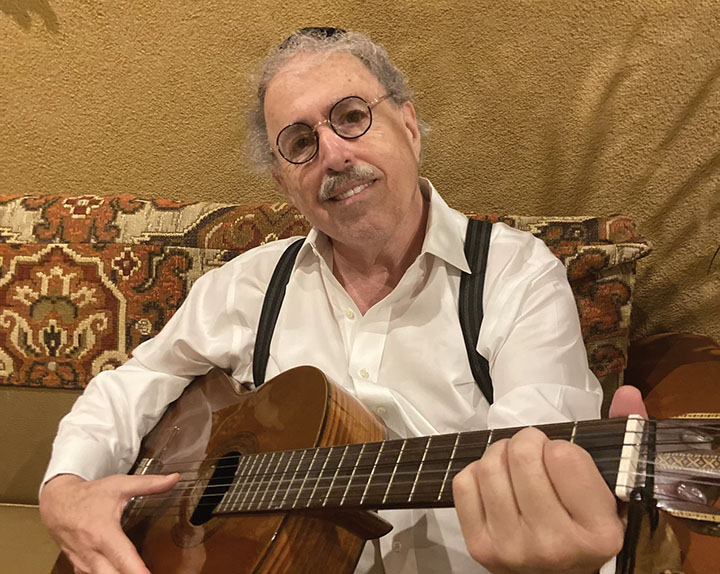
American Jewish University (AJU) is revamping its venerable Miller Introduction to Judaism program, which graduates about 200 students a year, many of whom go on to convert to Judaism. Meanwhile, Miller’s founder and director of 23 years, Rabbi Neal Weinberg, is leaving AJU to start his own program, Judaism by Choice, one of the country’s only independent conversion preparation programs, unattached to any movement.
“American Judaism is turning independent, or transdenominational or postdenominational — taking from the richness of all the movements,” said Weinberg, pointing to the growing number of synagogues and rabbinic programs not attached to the Reconstructionist, Reform, Conservative or Orthodox movement that have long characterized American Jewry.
Students who complete Weinberg’s Judaism By Choice program, which includes classes and attending synagogue and keeping kosher, will be eligible for conversion at batei din, or rabbinical panels, from all the liberal movements, as well as at the Sandra Caplan Community Beit Din, which Weinberg helped found in 2002.
“We’re looking for people who are ready to live a Jewish way of life, but we have respect for the different movements and the different standards, and we want people to find the movement they are most comfortable living in,” Weinberg said.
Over the past two decades, Weinberg has honed his approach to introducing people to Judaism, using humor and interactive learning as he goes through Jewish history, law and practice. He also plans to have discussion sessions for people to explore issues such as integrating into a Jewish family or living peacefully with a non-Jewish family.
The 18 required sessions will be offered at three locations, taught by Weinberg and his colleagues, Rabbi Jason Van Leeuwen of the Conservative Temple Ner Maarav; Rabbi Stephen Robbins, who practices healing in the kabbalistic tradition; and Cantor Eva Robbins, a faculty member at the Academy of Jewish Religion, California. Students can opt for weekly sessions or a twice-a-week fast track.
Weinberg parted ways with AJU as it revamps its program, moving from a lecture format to a more interactive mode of teaching, according to Rabbi Bradley Shavit Artson, dean of the Ziegler School of Rabbinic Studies at AJU, who oversees the program.
Each of the 18 class sessions, taught by a series of staff educators as well as community rabbis, will include studying a Jewish text with a partner and time for informal discussions. The teaching is based in Conservative doctrine, but students may go on to convert through many different denominations. Hebrew mastery will be worked into the classes, and separate electives will be offered to allow people different portals into Judaism. Counseling and a group Shabbat will continue to be part of the program.
“We feel that teaching religion requires an emotional component and a warmth that has to accompany the teaching,” Artson said. “It’s not just about the transmission of information.” Courses are being offered at AJU’s Mulholland campus, as well as in the West Valley, Conejo and Pasadena. An Orange County location is in the works.
For information on Judaism by Choice, visit ” title=”http://wcce.ajula.edu/Content/ContentUnit.asp?CID=505&u=5913&t=0″>http://wcce.ajula.edu/Content/ContentUnit.asp?CID=505&u=5913&t=0 or call 310-440-1273.