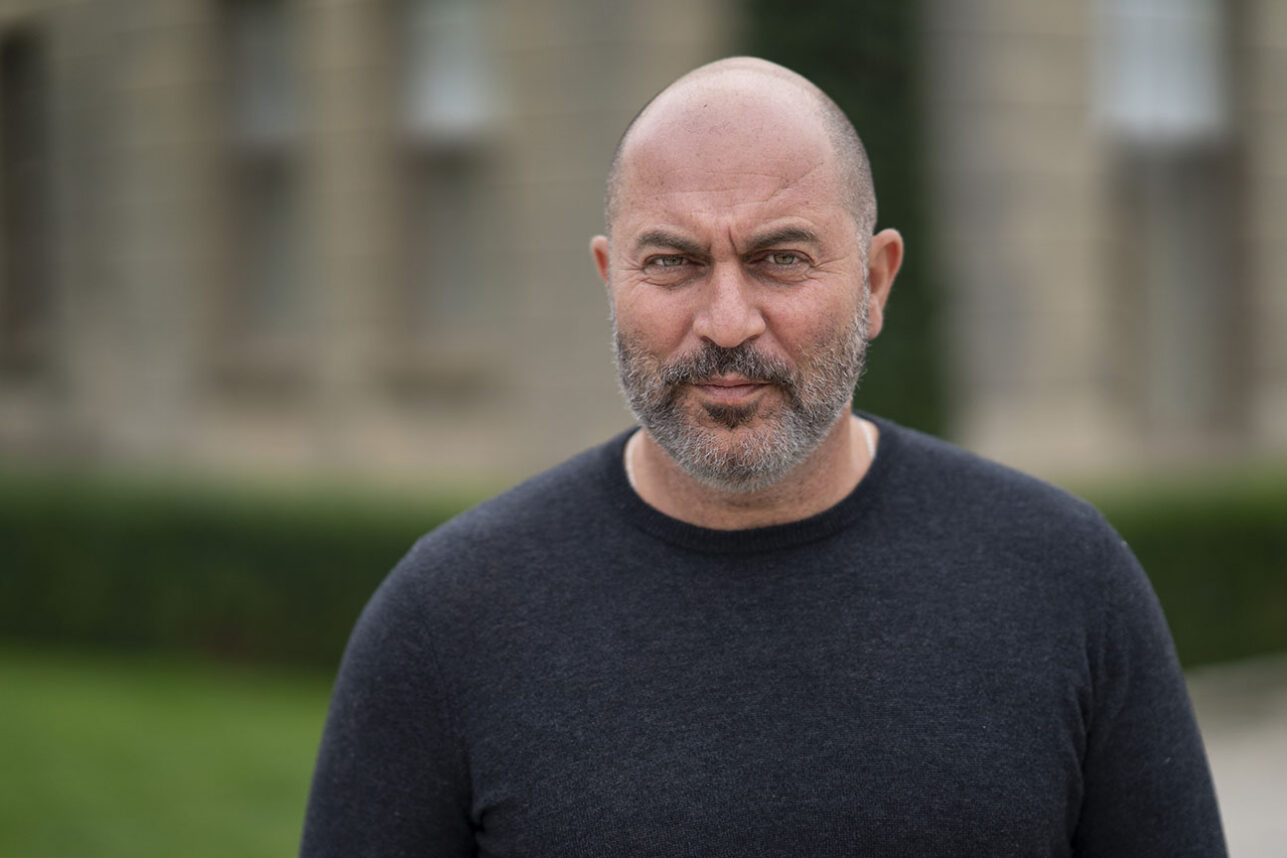
Los Angeles Board of Education member David Tokofsky has always taken pride in being a Jewish representative in an area that was overwhelmingly Latino.
So Tokofsky was shocked when he learned last week that his one-time supporters, former Los Angeles Mayor Richard Riordan and billionaire financier Eli Broad, were trying to run their own candidate against him in the spring election.
Broad reportedly offered $10 million to Occidental College if its president, Theodore R. Mitchell, would agree to run against Tokofsky for the District 5 seat. Mitchell declined to enter the race, and Broad denied linking the donation to backing Mitchell.
The controversy pitted two effective styles of Jewish activism against each other — the grass-roots Tokofsky against the boardroom Broad — and raises the question of whether an elected governing body, such as the Los Angeles Board of Education, can be bought.
“This is not anything new,” said District 6 Representative Julie Korenstein, the longest-serving member on the school board. She said Broad and Riordan “came after her” during her last election, spending “thousands of dollars supporting Tom Riley,” who was defeated.
Korenstein also said Broad and Riordan once targeted former board member Valerie Fields, too. Still, Korenstein said she was “shocked” to hear that Broad and his cohorts were hoping to replace Tokofsky, whom at one time they had supported. “It is disconcerting,” Korenstein said. “It makes it difficult for the grass-roots candidates to run a formidable campaign against this money.”
The alleged backroom offer was most disconcerting, however, to Tokofsky. “I was astonished that somebody thought I had to be removed,” he told The Journal.
Tokofsky, a fluent Spanish-speaker who prides himself on his connection with the community, believes that Mitchell turned down the opportunity when he saw what he was up against. “Some of those trustees [at Occidental College] who know the district and my work thought it was harebrained, especially since there had been a long time of work that I put into being a Jewish representative in an area that is overwhelmingly Latino,” he said.
The filing period for the March 4, 2003 election ended Nov. 9, and Tokofsky is facing three candidates for his seat. The three, all of whom are Latino, are Jose Sigala, aide to Assemblyman Marco Firebaugh (D-Los Angeles); schoolteacher and Democratic activist Nellie Rios-Parra; and Maria Lou Calanche, an educator.
Before all the candidates had filed, Broad said he was unsure of whom he would support. Tokofsky believes Broad will support Rios-Parra.
“Hopefully, Tokofsky said, “this will be one of those campaigns that will be inoculated against the effects of politics and money.”
Tokofsky garnered the support of the primarily Latino community in his East Los Angeles district in 1995.
Broad, the chair of SunAmerica, Inc. said he tapped Mitchell because of his experience in education reform and because he heard that the district’s teachers union was “very unhappy” with Tokofsky. “I am not trying to oust David Tokofsky,” Broad told The Journal. “The fact that we endorsed him in his first race doesn’t mean we’ll support him forever in anything he chooses to do.”
However, some say that this latest turn of events demonstrates that money falls on the side of power. Raphael Sonenschein, a professor in California State University, Fullerton’s political science department and former executive director of the Los Angeles Charter Reform Commission, said that Broad and Riordan once supported Tokofsky because he was formidable at that time.
“He was never a part of their group,” Sonenschein said. “This is a group that Riordan brought on, and Tokofsky has been kind of a maverick.”
Sonenschein was struck by the idea of Broad allegedly using his monetary influence, saying, “I was a little surprised by the idea of someone making an offer to a university to get someone to run for school board. This has always been a little outside boundaries. It seems like not a good way to do business in a public education area.”
While some accuse Broad of wanting to take over the school board, the financier said he is only motivated by his strong feelings about improving the education system. His efforts to bolster education include establishing the nonprofit Broad Foundation in 1999, which seeks to improve public education in the United States. In addition, Broad was the largest contributor to this year’s two school bond issues, Proposition K and Proposition 47.
In response to those who accuse him of using his wealth for power, Broad said, “That’s just silliness. Even if it were true, what’s our motivation? Our only interest is that of citizens. We don’t control the school board or ever intend to control the school board.”