It’s not often that you hear the New Testament being read or Jesus’ suffering being referenced in a synagogue. It is probably less often that you will hear the merits of celibacy being debated in a Jewish studies forum.
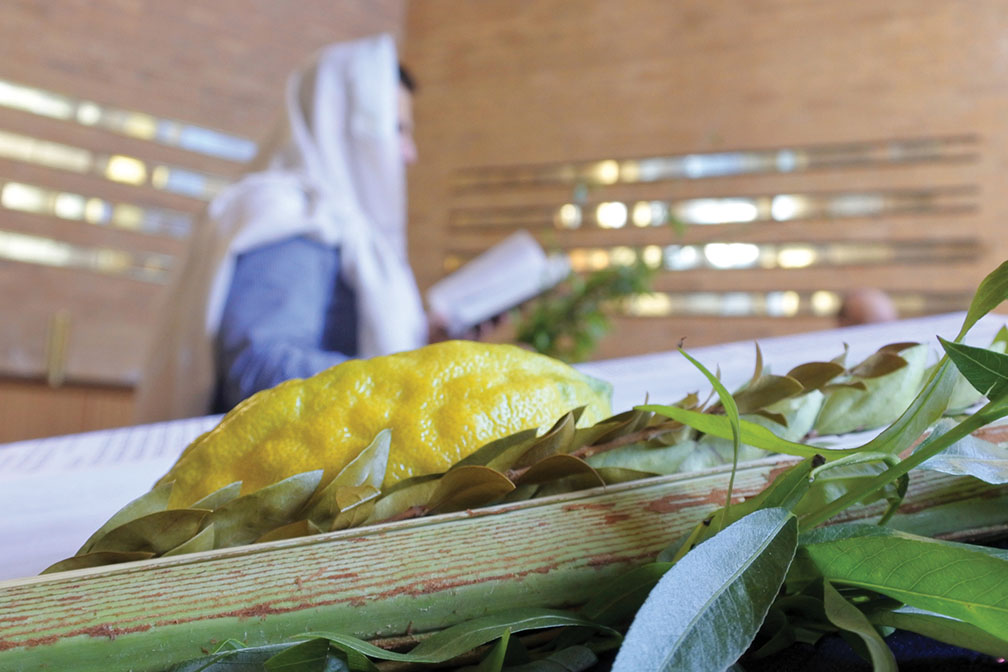
However, both Temple Beth Am and the Jewish Studies Institute of the Simon Wiesenthal Center hosted Jewish and Christian clergymen earlier this month at interfaith forums at which scriptural sparring and cultural clashes made for heated discussions and ultimately ecumenicalism.
At Temple Beth Am, a Conservative temple, the topic was Psalm 22, the chapter in which the writer pleads with God, saying, "My God, my God, why have you forsaken me?" The purpose of the evening was to look at the diverse interpretations the psalm has inspired in different faiths — Jewish, Catholic and Protestant.
Participants in the Beth Am program were the Rev. William Martin, a Protestant minister from the Inner-City Christian Center, Father Bill Wolf of St. Ambrose Catholic Church and Rabbi Joel Rembaum of Temple Beth Am.
For Martin, the psalm was a foreshadowing of Jesus’ suffering on the cross and, perhaps, a subconscious prophecy on the part of King David, who is believed to have written the psalm. Martin noted that according to the New Testament, Jesus spoke the words of the psalm while he was being crucified.
"If we say that this is the psalm of David, which I believe it is," he said, "how is it that this psalm is so accurate in its depiction of some of the things that happened to [Jesus] when he was on the cross? That baffles my mind."
Wolf was less keen to take the account of Jesus’ crucifixion so literally. He explained that there was at least a 30-year gap between Jesus’ death and the writing of the Gospels, in which Jesus’ death was described.
Wolf said that it was possible that the writers of the New Testament, "who were all Jewish and knew their religion," took the psalm and applied it to Jesus after the fact. He traced the usage of Psalm 22 through the New Testament and saw it as divinely inspired and as an expression of a tradition of faith in times of suffering that had been passed down through the ages.
For Rembaum, too, the psalm had a universal message about how faith can be used as a vehicle to overcome suffering. "Is a person of faith entitled to say, ‘God, where are you?’" Rembaum asked. "Isn’t God present in our lives always? But that is exactly the point. A person of faith who exists with a very profound relationship with God can yell at God."
At the Simon Wiesenthal Center the same night, 120 people showed up to hear Rabbi Ari Hier lead a spirited discussion on forgiveness. Participants were Alan Reinach, president of the Seventh-day Adventist Church State Council; Monsignor Padraick Loftus, St. Mel’s Catholic Church; Dr. Ken Durham, of the Protestant Malibu Church of Christ; Rabbi Elazar Muskin, Young Israel of Century City; and attorney Mathew Schwartz.
The panelists debated subjects such as whether celibacy was still viable (the Catholic said yes; the Seventh-day Adventist said no; the rabbi said it had nothing to do with Judaism) and whether people who had committed heinous crimes could be forgiven.
Both of the discussion groups generated enthusiastic audience participation. "What we do is provocative, and in your face," Hier said. "If you take people who represent different things and ask provocative questions, you are bound to get a spirited discussion going."
Rembaum was more philosophical about the impact that such evenings could have. At the Temple Beth Am forum, he led the audience in a recitation of the blessing "Shehecheyanu," which is normally recited to mark the occasion of something new.
"I just want to remind everyone what a miracle is taking place here right now," he said. "I hope that people can see what is taking place in this room tonight and generalize it around the world."