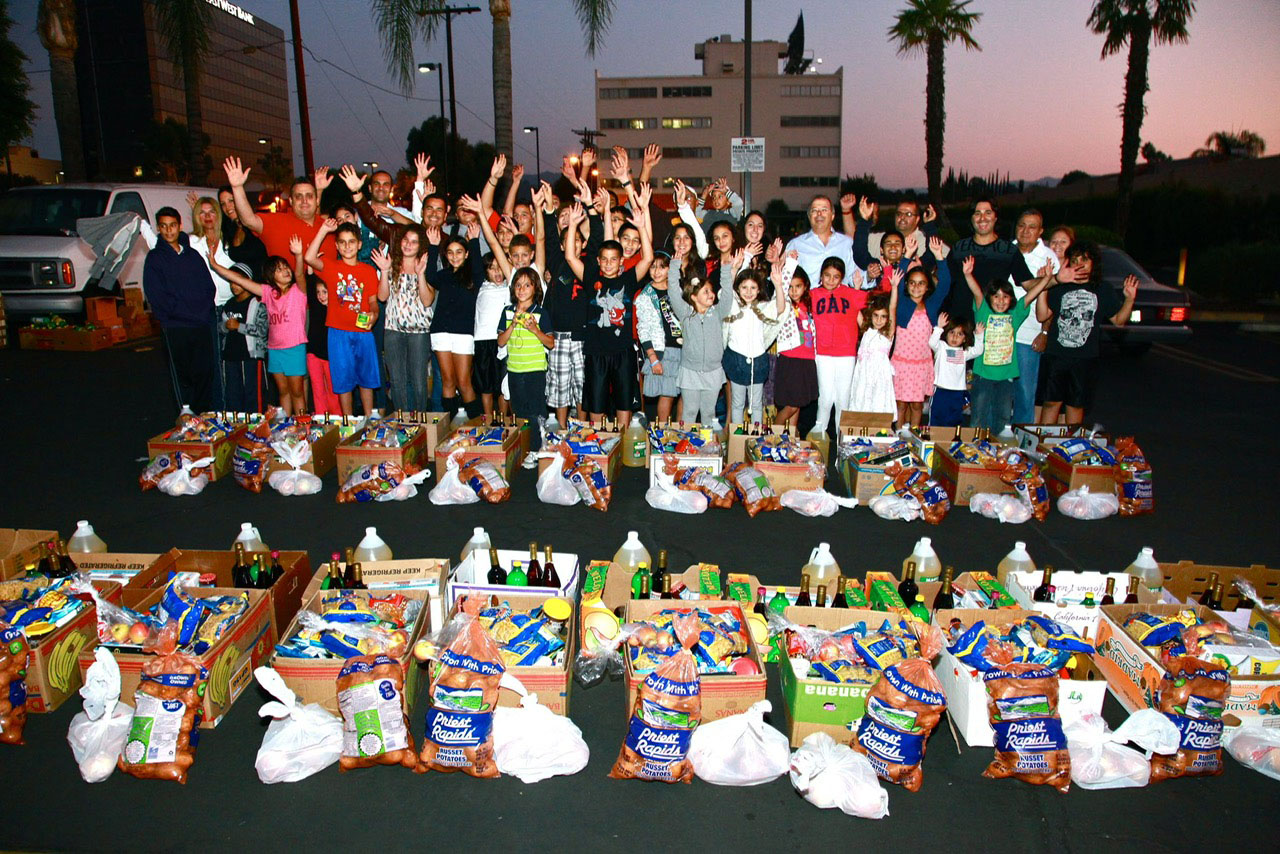
It’s 9 p.m. on a Thursday evening when a line of cars begins forming in the parking lot of Bank of America in Tarzana. Each car takes its turn, stops, and receives a box filled with groceries for Shabbat dinner. This ritual repeats every Thursday night and on every Jewish holiday — a Chesed (from Hebrew: Kindness) project that began over 30 years ago and continues to this day.
Behind it stands Danny, who prefers to remain anonymous, an Israeli man in his 70s. He started this initiative on his own, handing out boxes of provisions to needy families in the Israeli community. At first, he used his own money —at one point even selling his truck to fund the operation — before reaching out to others in the community for support. What began as a small effort has grown into a massive operation, feeding hundreds of families weekly.
This Rosh Hashanah, as they do every year, Danny and his team of volunteers will distribute over 300 boxes containing everything a family needs to celebrate the high holidays: challah, wine, vegetables, sugar, flour, cookies, frozen chickenand gift cards from kosher markets for perishables like milk, meat and fish.
David Vered, one of the project’s biggest donors, recalled how he first heard about the nonprofit organization Shaili(an acronym in Hebrew for “Guardian of Israel for Israelis”) in 2010, through a friend.
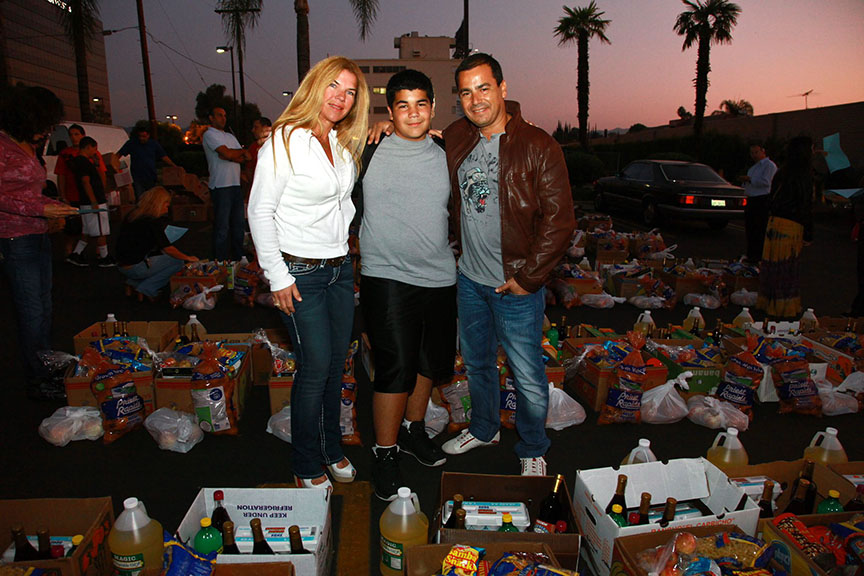
“I was at the synagogue when my friend Shawn Evenhaim told me about Shaili and that he and his kids were going to help package boxes for needy families. I said, ‘I’ll come with you.’”
Vered, owner of the American denim manufacturer YMI Jeans, admitted he was initially surprised to learn that some Israelis here struggle to put food on the table.
“I thought, ‘So what are they doing here? They should return to Israel — there at least they have social services and support,’” Vered said. “But Danny explained that for many of these families, returning isn’t an option. How could they afford a plane ticket, and where would they go? … But who would provide them with housing or a job in Israel? For many, it’s simply not feasible.”
“For many of these families, returning isn’t an option. How could they afford a plane ticket, and where would they go? … But who would provide them with housing or a job in Israel? For many, it’s simply not feasible.”
Among the families who rely on Shaili’s food boxes are those with small children, elderly individuals who no longer work, single mothers and men who lost their jobs due to injury or layoffs and are struggling to find new employment.
“I’ve heard of a mother of four whose husband is in prison. She can’t return to Israel because she visits him regularly. Even if she managed to return, who would provide her with housing?” Vered said. “She doesn’t have family who can help, and that’s the case for many of these people. Some want to return to Israel but simply can’t afford it. Here at least they know how to manage and get some help. There they’ll need to start from scratch.”
Vered started coming to help Danny along with his three children. It was shortly after he had lost his eldest son, 17-year-old Adir, in a car accident in February 2010. The previous year he co-founded Lehosheet Yad, a nonprofit organization that helps Israeli children in Israel who were diagnosed with cancer. Along with his wife and three other couples, he flew kids to Los Angeles for a 10-day dream vacation; something he still does till this day.
“I wanted to teach my children the importance of giving back to the community,” Vered said. “So we started going to help with the packaging and indeed the children were happy to know they are doing a mitzvah.”
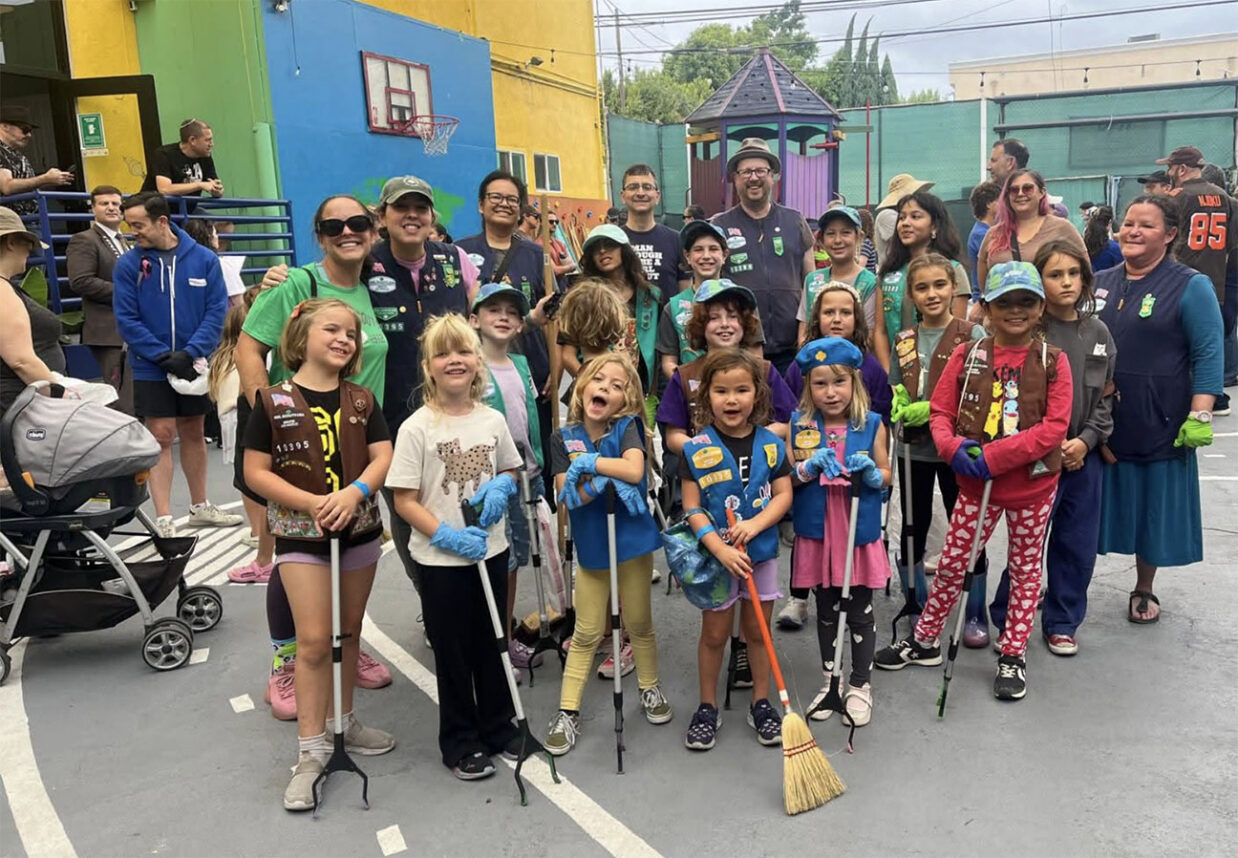
Packaging hundreds of boxes for Rosh Hashanah requires a great deal of work and a dedicated team of volunteers. Sometimes the Israeli scout kids join in, helping to carefully place food items in each box. On top of every package, they include a flyer that reads:
“This distribution is done in collaboration with and with the help of the Vered family, in loving memory of their dear son, Adir Vered.”
A few months after he began supporting Shaili, Vered received a message in his Facebook inbox. It was from a woman who wrote:“I just want to thank you from the bottom of my heart for the box we have just received.”
Another time, he received a phone call from a woman who told him that her family would be able to celebrate Rosh Hashanah thanks to the food boxes. “It moved me so much,” he said. “These people don’t know me. They just saw the flyer with Adir’s name, and still went out of their way to find me and thank me.”
Over the years, families who once relied on Shaili’s food boxes have managed to get back on their feet. Many of them later returned — not as recipients, but as donors or volunteers eager to help with distribution.
“They wanted to give back to the community, just like they once received help,” said Danny. “It makes them feel good —it’s a full circle.”
Being on the receiving end, however, isn’t always easy. For many, there is a sense of shame in needing community support. “No one would choose to receive food if they didn’t really need it,” explained Danny. Sensitive to their situation, he ensures that volunteers complete packaging by 9 p.m., and leave as he waits for families to arrive in the parking lot. For those who don’t have a car or cannot come to collect their boxes, volunteers deliver directly to their doorstep.
The entire process — purchasing groceries from various markets, coordinating packaging and organizing distribution —requires countless hours of work, much of which Danny shoulders himself. Thanks to generous donors he is preparing to provide more than 300 families with three food boxes each this Rosh Hashanah, ensuring they will have everything they need to celebrate the holiday with dignity.

According to Danny, the cost of each holiday food package for a family ranges between $500 and $700. Securing enough donors to cover such a large operation is no simple task. Vered does his best to enlist the help of generous friends, but admits that the tough economy makes fundraising increasingly difficult.
Still, come rain or shine, Danny always finds a way to fill the boxes with food. Each and every week, Shaili provides for 200 families who rely on the organization to put meals on their tables. The monthly cost of this effort is between $7,000 and $8,000.
For Danny, Vered, and the devoted volunteers of Shaili, the mission goes far beyond food — it’s about preserving dignity, strengthening community ties and ensuring that no family is left behind, especially during the holidays. Each box tells a story of kindness and resilience, a reminder that even in challenging times, compassion has the power to nourish both body and soul.
You can Venmo your donation to Shaili@shaili-Organization.