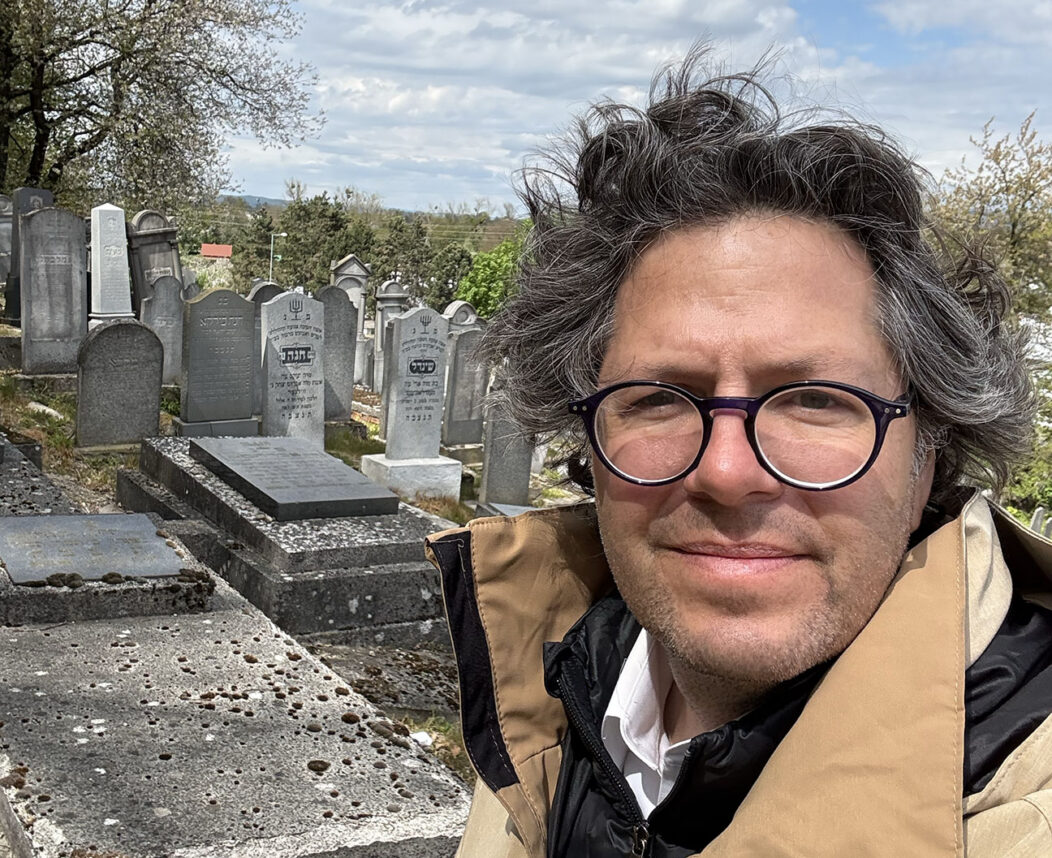

Rabbi David Kasher, associate rabbi at IKAR, is a self-described “Torah nerd.” For five years, he kept up a weekly parsha blog and became totally immersed in Torah commentary. He had books open all over the house and was writing late into the night.
“It was a glorious experience,” Kasher said. “But it was also exhausting.”
During this time, the rabbi started working at IKAR and couldn’t keep up with the same pace of writing. Still, he had an audience, and he wanted to continue to provide them with Torah teachings. He began to wonder if he could turn his project into a book.
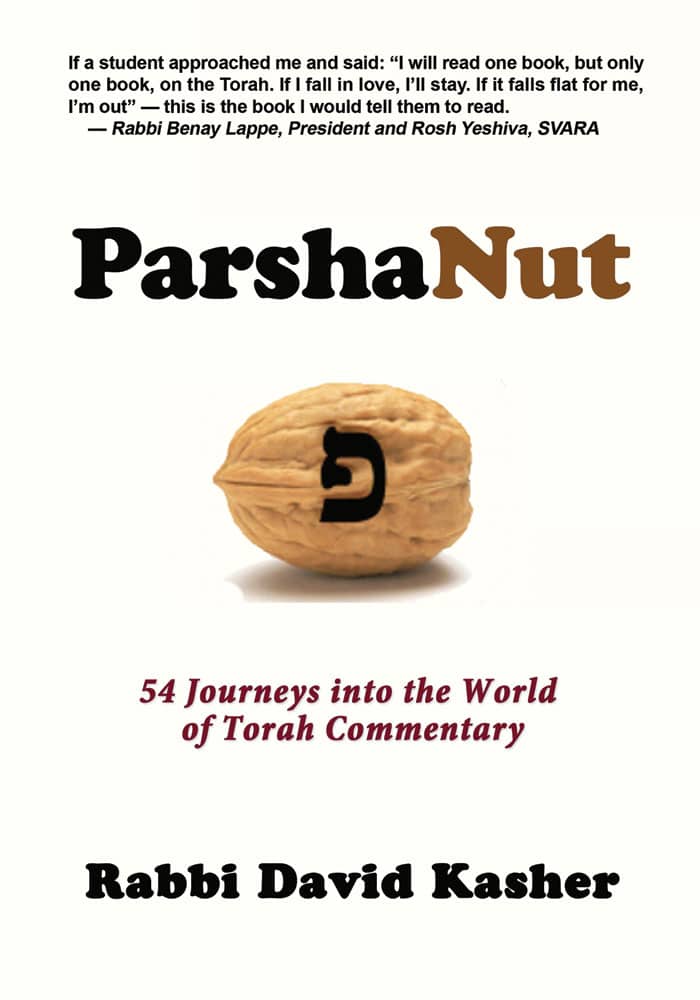
Now, he’s accomplished that dream, and has released his first book, “ParshaNut: 54 Journeys into the World of Torah Commentary.” Based on his blog, the book contains 54 essays exploring the vast genre of Jewish literature called parshanut, or Torah commentary.
Kasher decided to write his book because while many Jews read the parsha every week in synagogue, he believes that fewer people are familiar with the long tradition of writing commentary on the Torah.
 “It’s this tradition that I fell especially in love with during my yeshiva days, and so I wanted to shine a light on it for those who might not have had the opportunity to encounter it before,” he said. “In that sense, I really saw myself as following in the footsteps of Nechama Leibowitz, one of the great Torah teachers of the 20th century, who brought about a revival in the study of parshanut.”
Kasher, who received ordination from Yeshivat Chovevei Torah, grew up with a mother who was secular and a father who was very religious.
“When I was with my father, I saw Judaism in practice around me, but I never really understood where it all came from,” he said. “It wasn’t until my father passed away, in my early twenties, that I decided I had to figure out what exactly Judaism was and what it meant to me.”
The rabbi went to a yeshiva in Israel to seek out answers. The culture of Torah study there was what captured his heart.
“It was learning the commentary of Rashi that first set me on fire for the Torah.”
“It was learning the commentary of Rashi that first set me on fire for the Torah,” he said. “I remember reading an interpretation of his that created a whole new narrative from an extra letter in a word, and thinking, ‘Wait, you can do all this with just one letter?’ It was a lesson I never forgot: that part of the rabbinic project was to find meaning in everything.”
Along with publishing his book, Kasher teaches a weekly Parsha class on Thursdays at noon via Zoom. He studies the Torah with study partners, who tune in.
“Nothing beats studying together in chevruta with others,” he said. “That’s when the material really comes alive.”
Kasher is continuing his parsha class – and a weekly Mishnah class on Mondays – with IKAR, even though he’s resigning from his associate rabbi position in June to work full-time at the Hadar Institute, a Jewish community building and learning organization funded by UJA-Federation.
“I’ve been really privileged to be able to do that at IKAR, a community full of brilliant and passionate learners who are thirsty for Torah,” Kasher said. “I’m especially excited to be based here in Los Angeles, where the Jewish community is already so strong and vibrant in so many ways, and is ripe for more Jewish learning opportunities. My dream is to help make this city one of the great centers of Torah study in the world.”
When people pick up “ParshaNut,” Kasher hopes he can provide them with an opportunity to learn Torah – and inspire them to do it regularly.
“I wanted to showcase the masters of Torah interpretation throughout history, and to show what a magnificent tradition we have inherited,” he said. “Some of the most brilliant minds throughout Jewish history devoted themselves to understanding this beautiful and complicated book, and to be able to witness their dazzling achievements is a thrilling experience — and one that I hope will help people fall in love with Torah study.”