Advances in the medical marijuana industry have captured the world’s imagination and headlines in recent years. So much so that even the Orthodox Union got on board, giving kosher certification to edibles — albeit with the caveat that their use be restricted to medicinal purposes only. Making less headlines, but no less of an impact, however, is marijuana’s more tempered cousin, hemp, which is also derived from the cannabis plant, but has very little of the psychoactive ingredient THC that gives marijuana its high.
In a first, an industrial hemp producer called GenCanna received kosher certification earlier this month for all of its hemp-derived products from Kentucky Kosher International. GenCanna, which produces industrial hemp to form the bulk ingredient in lozenges, cannabidiol powder, tinctures and capsules, is based in Kentucky since the state classifies hemp as an agricultural product.
Brett Goldman, the company’s director of government and industry affairs, explains that, in the United States, there are currently three ways to obtain access to cannabidiol (CBD), cannabis’ active ingredient used to treat anything from anxiety to inflammation to epilepsy. The first is to import it and the second is to obtain it from medical or recreational marijuana, which respectively, either requires a license or is illegal. The third option, deriving CBD from hemp, is the only federally compliant conduit.
“We believe hemp is food and we wanted people who are kosher to have the same access to hemp-derived products just like anyone else,” Goldman told the Jewish Journal.
Newton Cohen, GenCanna’s director of external affairs, said the kosher certification attests the quality of the product for health conscious communities outside of the Jewish world.
“We believe hemp is food and we wanted people who are kosher to have the same access to hemp-derived products just like anyone else.” — Brett Goldman
“It transcends the religious aspects of kashrut and matters to a population outside of the Jewish community,” he said, adding that its kosher certification will yield the way for more communities to develop products and access the hemp-derived CBD market “like never before.”
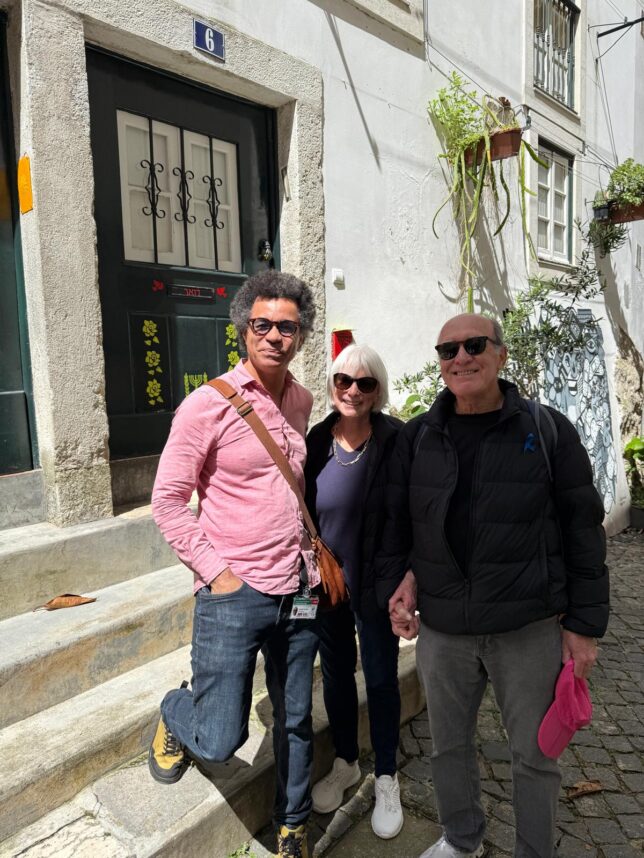
Cohen and Goldman joined GenCanna’s president, Steve Bevan, in Tel Aviv last month for the CannaTech confab.
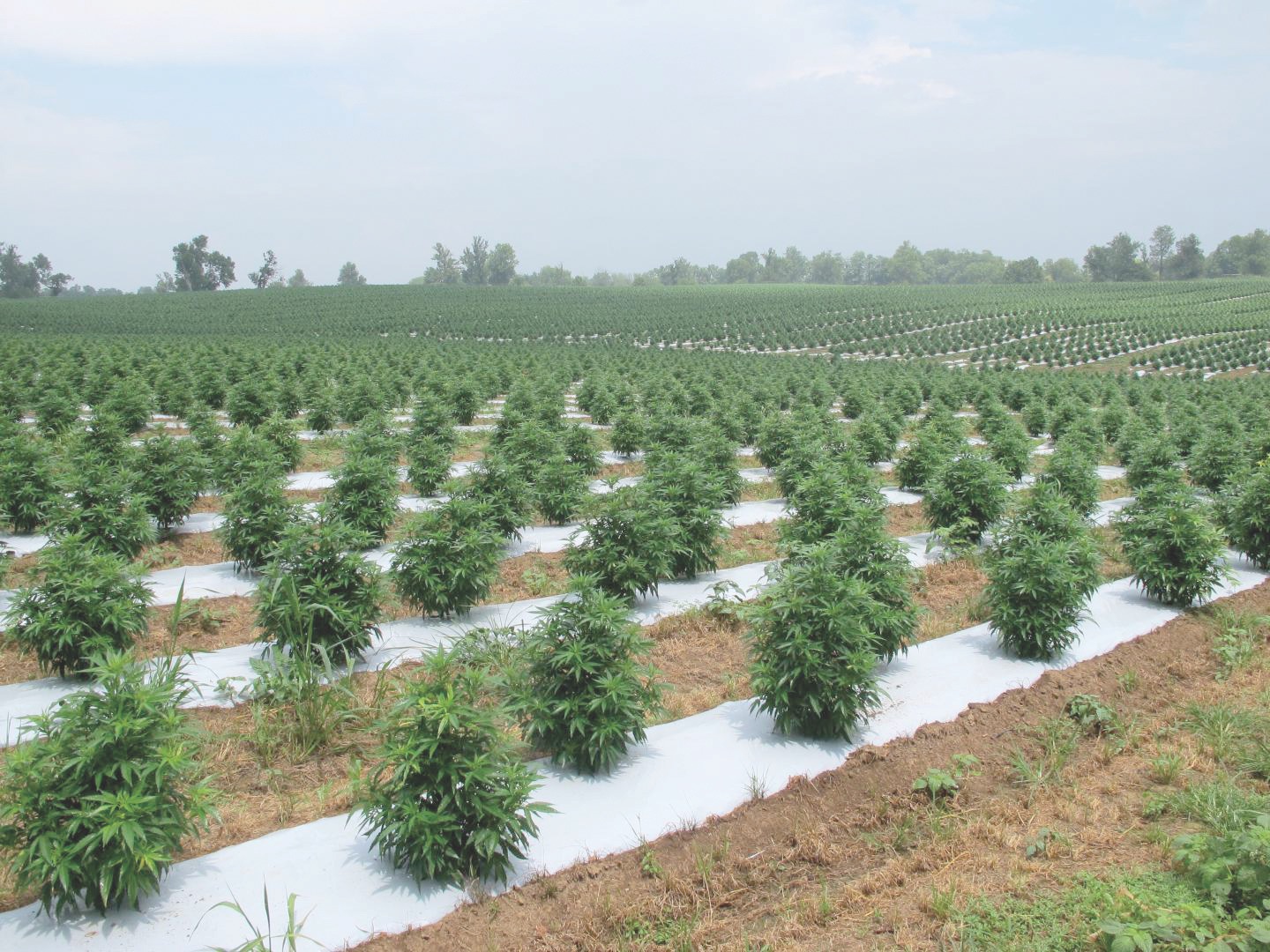
Apart from producing white label CBD products for Gold Bee, the company also has a research facility in Winchester, Ky., alongside hundreds of acres of hemp fields. GenCanna also works remotely, lobbying local governments to change attitudes and regulations toward hemp. In California, for example, GenCanna is working to get a new hemp bill passed.
“Given California’s leadership in the research and legalization of cannabis, California is surprisingly new in the industrial hemp space,” Bevan said.
Industrial hemp research and commercialization, under the 2014 Farm Bill and the Consolidated Appropriations Act of 2017, are permitted as long as the state in question has a program that complies with section 7606 of the bill.
“The California hemp bill is not exactly in line, because it allows for counties and municipalities to ‘opt out’ of Agricultural Department registration, so it’s unclear how the regulators will deal with this,” Bevan explained.
Legislative hurdles notwithstanding, California might have been a natural fit for GenCanna since three of its founders are from there. Still, as Cohen — who currently resides in Los Angeles — points out, Kentucky has a storied history with the crop that dates back to pioneer times.
Hemp is undergoing a “reclamation project” in Kentucky, Cohen said. The state was the largest producer of hemp in the United States in the 19th and 20th centuries until tobacco supplanted it as the state’s cash crop and, eventually, its cultivation was outlawed altogether. In the 1940s, a government film called “Hemp for Victory” encouraged farmers to put all their resources into growing hemp as part of the war effort. The government later denied ever having made the film but in 1989, Jack Herer, the Jewish founding father of hemp advocacy, recovered a VHS copy of it and donated it to the Library of Congress.
“Coal and tobacco are both dying industries,” Cohen said. “Lots of people are clamoring to bring back hemp.”
Two-and-a-half decades later, the 2014 Farm Bill resurrected the industry, which allowed agricultural hemp to be grown under federal law. From just 33 experimental acres that year, industrial hemp will have its biggest year yet in 2018 with more than 12,000 acres earmarked for research purposes.
In his seminal book, “The Emperor Wears No Clothes,” Herer argues that “hemp is, by far, Earth’s premier, renewable natural resource” capable of producing paper, energy, food, textiles and medicine.
These days, hemp is “retrofitting the tobacco industry” in Kentucky, Cohen said, with many farmers trading in the dying crop for hemp’s greener pastures. As tobacco consumption continues its decline, industrial hemp is moving from the fringes of counter culture into the mainstream. It comes as no surprise then, to learn that the building for GenCanna’s hemp research facility once housed a seed-breeding plant belonging to tobacco giant Philip Morris.
Hemp, it seems, is becoming kosher in more ways than one.