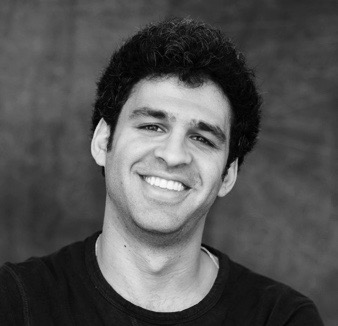
Ethan Youssefzadeh had just run in a track meet held at West Los Angeles College when, while walking to his car, he saw a wallet lying on the grass. The YULA senior picked the wallet up and opened it to look for the name of the rightful owner.
That same early May evening, a man whose son had competed in the same meet on a different team returned to his home in Woodland Hills, only to find his wallet was missing. That man, who asked that his name not be used here, said he believed he would never get back his wallet, particularly as it contained almost $350 in cash, along with his driver’s license, credit cards, some gift cards and more. Given that some 200 students and parents had attended the sporting event, he thought, who would return $350 if they didn’t have to?
That very night, when a knock sounded at his door, the man quickly learned that there are people who would. At the door was Youssefzadeh, whom the man had never met, come to deliver the wallet. Youssefzadeh had driven 45 minutes out of his way, to the address on the driver’s license. The cash, credit cards, gift cards and identification all were still inside the wallet, along with everything else.
For Youssefzadeh, it was a simple matter of following what he’d learned all his life at school. “I’ve been trained to do it,” the 18-year-old said in an interview.
Which is what Youssefzadeh explained to the incredulous man when he made his delivery. After taking his wallet back, the man said in an e-mail that he attempted to give the boy the cash as a reward. When Youssefzadeh refused to take the gift, the man asked what could possibly have motivated the boy.
As a student at the Orthodox YULA who is about to travel to Israel to attend a yeshiva in Jerusalem, Youssefzadeh told the man that he believes the lessons of the Torah required him to return the wallet, and that the Torah is a “guideline for life,” he said. That aside, he added, it is “common sense” to return a lost object when there is evidence of who the owner is.
The wallet’s owner saw Youssefzadeh’s good deed as a rare act of integrity. “The truth is, I am not sure if my children, or even I, would have ever returned something with such great value,” he wrote in an e-mail to YULA’s administration the night he got his wallet back.
He was just as surprised that the boy refused his reward.
Youssefzadeh explained later: “If I accepted the money, I would have felt bad. … I went all the way there to return the wallet, and I knew [it] would have a better meaning if I left” without taking it.
The two talked more. Youssefzadeh revealed that he is the president of his school’s student council, and the man had an epiphany.
“If this is what Jews do, then I want my kids to be like your students,” the man wrote to YULA. And so, on the following Shabbat, for the first time in a “very long time, in honor of Ethan,” the man didn’t go to his work, where he is a real estate agent.
He also wrote in his e-mail to YULA that he planned to donate the $350 from the wallet to the school’s student council fund. The e-mail made YULA head of school Rabbi Heshy Glass reflect on Youssefzadeh, whom he has known for four years. It “made me feel that the lessons which are not necessarily frontal lessons in the classroom got across to him,” Glass said.
“The core values of respecting someone else’s property, caring about someone else’s property, going out of your way to help an individual, doing a mitzvah for the right reason and not for the reward — no one talks about it day to day, but you want it to be the result” of a Jewish education, Glass said.
So, after receiving the e-mail, Glass read it aloud to the school during an assembly. And the story has since gone viral, Glass said. Layla Bayramova, a math teacher at YULA’s girls school, shared the tale with her fiancé’s children, who attend school in Mira Costa, Calif., and they told their friends. One kid, a member of her school’s broadcast journalism program, now wants to interview Youssefzadeh so “she can share this story with her community,” Bayramova said.
On the morning of May 7, before Youssefzadeh went to school, he again met up with the man at a 7-Eleven convenience store on Robertson Boulevard. The man gave Youssefzadeh the money to donate to YULA’s student council.
This time, Youssefzadeh accepted.