“Every Jew, no matter how insignificant, is engaged in some decisive and immediate pursuit of a goal,” the German writer Johann Wolfgang von Goethe wrote nearly 200 years ago.
Throughout history, Jews have numbered disproportionately among Nobel Prize laureates, acclaimed scientists, philosophers, economists and in many other important fields. These achievements are made all the more remarkable considering the persecution endured by the Jewish people during their 2,000 years of exile.
When the State of Israel was proclaimed in 1948, broken souls arrived from the four corners of the world to re-create what was lost and re-established a state that would become a “light unto the nations.” Since the re-establishment and liberation of our nation in its homeland, Israelis have strived to maintain these exceptionally high standards.
Even while our neighbors rejected us, the Jewish people still sought to “repair the world” through tikkun olam.
The early pioneers stretched out their hand to their Arab neighbors, and the first Israeli leaders sought to use their knowledge of draining the swamps and water irrigation for the betterment of the developing world, even while Israel was struggling merely to survive.
Today, Israel stands uniquely placed to act as a bridge between the developed and developing world, a nation at the forefront of the technologies desperately needed to dissipate the growing desertification of our region and beyond. Israelis are at the cutting edge of clean technology, energy efficiency and finding replacements for fossil fuels.
As recently witnessed in Haiti, Israelis are prepared to travel halfway around the world to offer a helping hand to those in distress. We continue to assist the developing world in medicine and public health, education, gender issues and humanitarian aid through Mashav–Israel’s Agency for International Development Cooperation.
In the turbulent Middle East, Israel remains the only full-fledged democracy, the first nation to pass gay-rights legislation and the only nation to have a female leader. A member of Israel’s Arab minority ran for prime minister; Arab Israelis have become ministers, ambassadors and Supreme Court justices.
Much of this is unknown, even to Jewish supporters of Israel in the Diaspora. Unfortunately, many in the Diaspora only relate to Israel through the Internet or their television screens. The Israel they encounter is one of conflict and violence. The framing of Israel solely through the lens of the conflict allows the remarkable Israeli history of feats and achievements against the odds to become distorted.
We need to reverse this trend by allowing Israeli progressive society, innovation and humanitarianism to become the lens by which our brothers and sisters in the Diaspora see Israel and its developments, including the conflict.
The Jerusalem Talmud describes the unity of the Jewish people as a body. The constant delegitimization of Israel at all levels is part of a concerted effort to detach limbs from the body of the Jewish people. Our enemies know well that the Jewish people are most effective when we are united as one, as we were in the fulfillment of our return to Israel and more recently in the battle to free Soviet Jewry.
Those in the Diaspora who are uncomfortable identifying with Israel do so largely because the Israel they assume they know appears to conflict with their other ideologies or sensitivities.
The most worrying trend in the Diaspora is the increasingly partisan nature of support for Israel. It has become almost reflexive to assume that support for Israel is only to be found on one side of the ideological and political spectrum. This creates a great danger and pigeonholes Israel in a certain manner. Israel always was a bipartisan issue that crossed the aisle, and those that seek to claim exclusive support for Israel through their narrative renders Israel a disservice.
While our responsibilities may differ, all Jews have a shared destiny. Our goals are largely the same even if our means widely differ. We need to concentrate on what binds us rather than that which divides us.
In Israel, we welcome and even demand ongoing robust criticism. However, it should remain proportional and not cross the line to delegitimization.
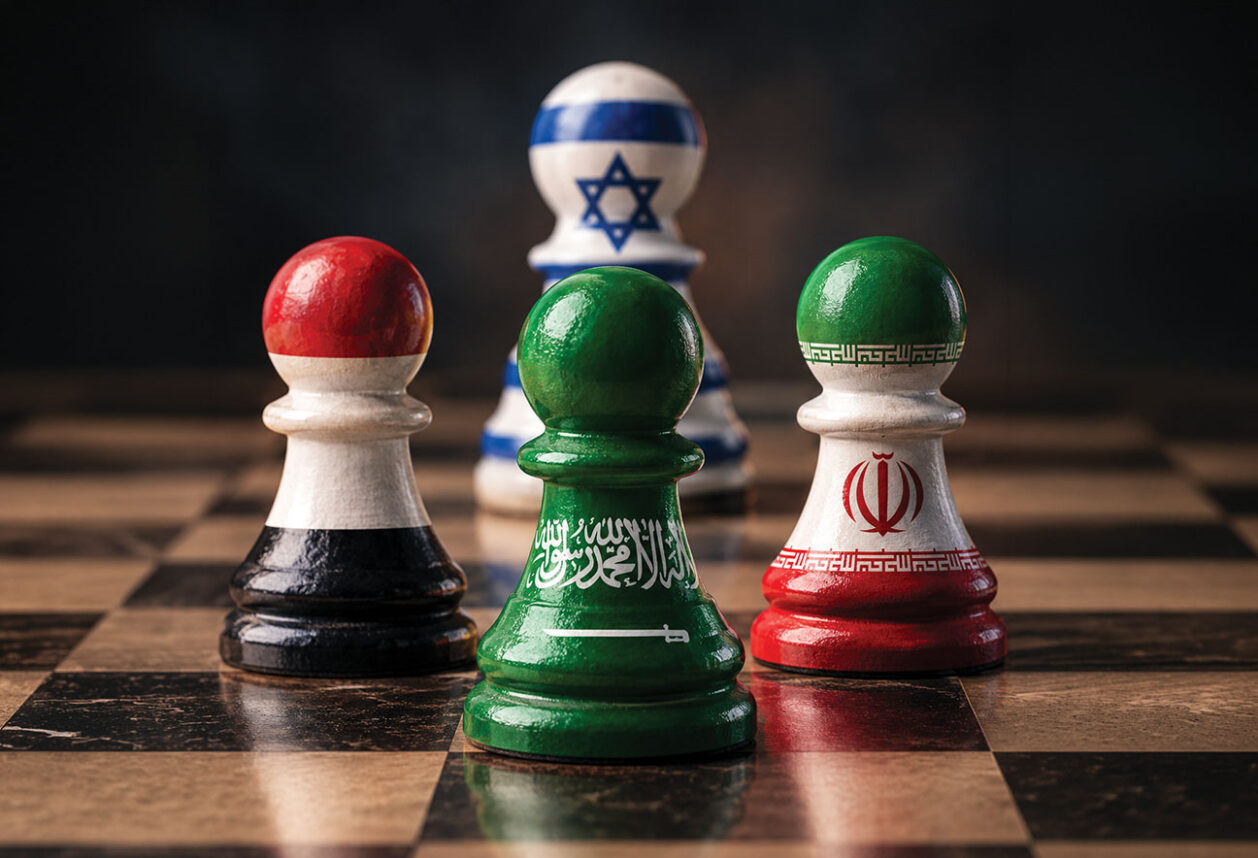
The entire Jewish people have a stake in Israel. While those of us who live in Israel are entrusted with safeguarding its land and people, the Diaspora’s traditional role is to help defend Israel against the intensified battle to delegitimize, demonize and apply double standards to Israel where the front lines are the campuses, unions, courtrooms, the Internet and the streets of capital cities worldwide.
Our shared history teaches us that regardless of background, ideology or the color of our skin, all Jews are responsible for one another. We are facing tremendous challenges as a people; let us begin working as a people for the common goal of sharing the light of Israel to the nations of the world.
(Danny Ayalon is Israel’s deputy minister of foreign affairs.)