In the opening book of his monumental code of Jewish law, Maimonides declared, "We are bidden to walk in the middle paths which are the right and proper ways…." The great medieval sage was articulating the golden mean, the principle that we should avoid extreme behavior, ethical or physical, at all times. The person who succeeds — indeed, who navigates between indulgence and self-denial — is, by Maimonides’ standards, the wise one.
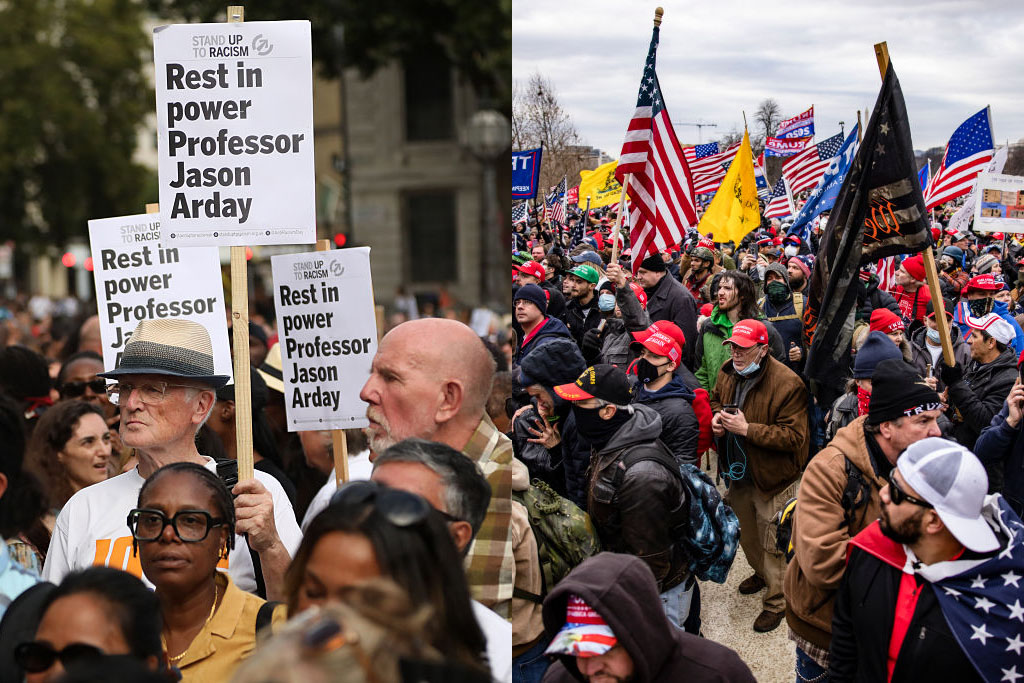
Wisdom, alas, has not always been present in the still-swirling Wolpe affair. At times, the two sides have vied to outdo one other in a cyclical game of delegitimization. Each side would do well to lower the rhetorical volume and adopt the golden mean in its behavior toward the other.
But this does not mean that the competing perspectives on whether the Exodus took place can be reconciled. Rather, it means that we in the Jewish world must tolerate radically divergent ways of understanding the world. The fact is that those who believe in the veracity of the Exodus account exist in a parallel universe to those who question it. The two can acknowledge one another, but they are unlikely ever to reconcile their distinct views.
Many noble and great thinkers have tried their hand at reconciliation. Medieval philosophers labored mightily to achieve a harmonious position between the truths of revelation and reason — before more modern figures like Spinoza overturned the cart. Undaunted, their Modern Orthodox descendants offered up a modified version of this reconciliation, insisting on the compatibility of Torah and science (Torah uMadah).
I am dubious about the prospects for success. The critical historical sensibility that Rabbi Wolpe invoked submits every event, actor or text — without exception–to the scholar’s scalpel. In this approach, evidentiary support and contextual corroboration are the essential tools of the trade. These tools are notoriously, even deliberately, indifferent to claims of sacredness.
And they have been applied to the Exodus story for some time now. It is in this regard that adepts of the modern historical approach found Rabbi Wolpe’s lecture anything but newsworthy. The Jerusalem Report, hardly the first word in archaeological research, devoted its April 8, 1993, cover story to the theme: "Did the Exodus Really Happen?" The author, Felice Maranz, canvassed a large number of historians and archaeologists with an intense interest in the Exodus story. Maranz’s conclusion, which drew upon scholars ranging from Jerusalem’s Benjamin Mazar to Toronto’s Donald Redford, was that "there isn’t a shred of hard evidence … to prove that the Israelites were ever slaves in Egypt or that they ever wandered in the Sinai desert."
But does this necessarily consign Exodus to the resting place of false legends? I believe not. The religious believer understands a sacred event as resistant to historical dissection. Such an event, by definition, assumes mythic proportions. This is not to say that it is false or illusory. On the contrary, myth connotes a truth that transcends a particular historical context. Its function, as Mircea Eliade wrote in "Myth and Reality," is "to reveal the exemplary models for all human rites and all significant human activities." It is precisely in this regard that Exodus has served and continues to serve as a grand myth. It is a sacred narrative of the creation of Jewish peoplehood, as well as an exemplary model for all who are intent on liberation. As such, it is true in ways that can not be disproved by historical analysis — much like Jesus’ divinity or Muhammad’s ascent can not be refuted for most believing Christians or Muslims.
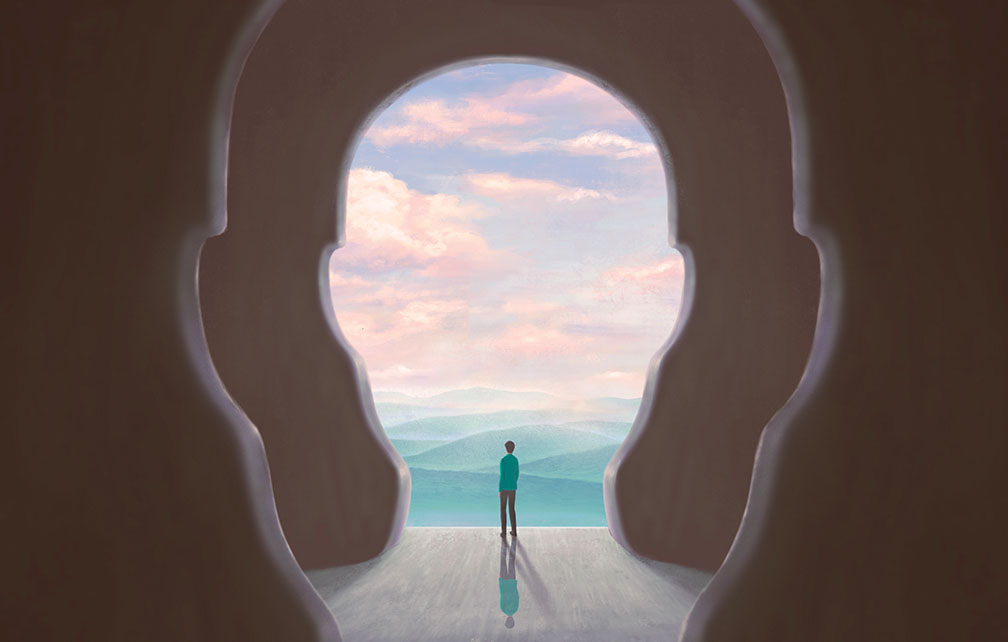
Contrary to the fears — and hopes — of many, the advent of modernity has not put an end to such mythic thinking. Religion lives on — in fact, thrives — in much of the world. At the same time, many have embraced the contextual logic of the critical historical sensibility. Sometimes, those who maintain their faith and embrace history are the same people. I suspect that they maintain equilibrium between the two more by compartmentalizing than by reconciling. For this is the way of the bifurcated modern world that we inhabit. To the extent that most of us contend with competing sensibilities within us, we would do well to respect the divergent views of others — if only as a way of honoring ourselves.