
This year, I was especially looking forward to Yom Kippur. September had been exceptionally busy, and the downtime was a welcome change of pace. Between the fast and the time spent in temple, Yom Kippur worked as intended — I had some rare time for authentic self-reflection.
As the director of a small but dynamic gun violence prevention organization in Washington, D.C., I spend my days developing lifesaving policies and fighting the gun lobby. I am constantly dealing with tragedy and its aftermath — constantly meeting survivors of gun violence, working with those who have been affected, consoling families changed forever. Sometimes, that constant exposure to tragedy makes me create a wall that separates my work from my human emotions.
I don’t intentionally create that wall. The separation happens subtly over time. It enables me to keep working in times of high anxiety, but it also can breed acceptance of the status quo and, even worse, cynicism. Cynicism is the brain telling the heart not to get too hopeful because nothing is going to change. Cynicism can be self-protective, but it thwarts effective advocacy.
This Yom Kippur, I vowed that in the new year I would bring down the wall. I vowed that I would not allow the serious nature of my work to blunt my emotions or muddy my dream: a world free from gun violence. I would not give in to cynicism.
Little did I know that my plans for the new year would be tested immediately.
We awoke the morning of Oct. 2 — shortly after Yom Kippur — to horrific news out of Las Vegas. As the day unfolded and the extent of the carnage became clear, emotions came in waves: grief, anger and, yes, cynicism. How could this happen again and at such a scale? Will we ever learn from our mistakes? Is there really hope for change?
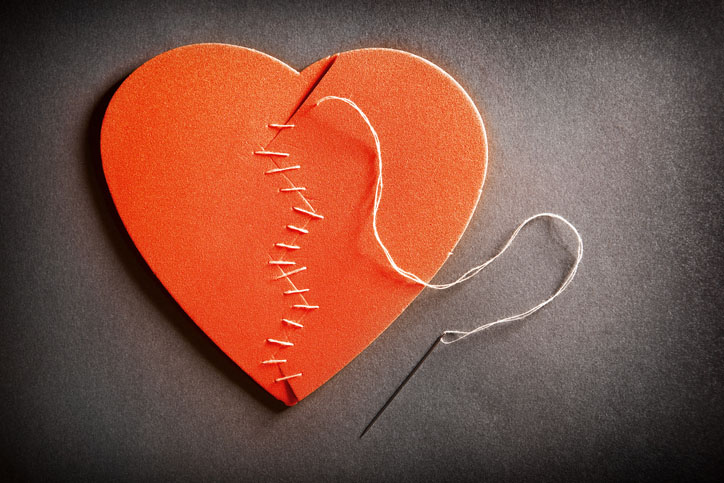
As I felt the wall start to go up, I stumbled across a blog post written a couple of days before Yom Kippur by Rabbi Naomi Levy, the spiritual leader of Nashuva in Los Angeles. She wrote about the inability to connect with her emotions after her father was shot and killed when she was a young girl. She said that the most important theme of Yom Kippur comes down to this line in Ezekiel: “I will remove your heart of stone and I will give you a heart of flesh.”
She goes on to write, “Cutting through the heart of stone and arriving at the heart of flesh isn’t a one-time job. The stone heart isn’t gone forever. At every loss, at every disappointment, at every new challenge, it’s there ready to return, ready to take its familiar place inside you. And it takes so much courage to stay alive and soft and vulnerable.”
As we face the challenges presented by Las Vegas and the terrible toll of gun violence in America, it is imperative that we cut through our hearts of stone and tear down our protective walls. It is imperative that we stay open, vulnerable and confident in our ability to make a difference. We must allow ourselves to feel the urgent pain of gun violence, the human cost, the true toll. And we must use those powerful emotions to summon courage, optimism and commitment.
Here is what gives me optimism in this dark hour:
First, research shows that comprehensive approaches to gun violence prevention work. Permit-to-purchase laws, prohibitions on domestic abusers possessing guns, and policies that remove guns from those in crisis — known as the Extreme Risk Protective Order (ERPO) — among others, have proven effective. We know what to do to save lives.
Second, a majority of Americans support responsible approaches to gun violence prevention. Polls show strong bipartisan support for policies such as universal background checks and ERPO — even among gun owners.
Finally, change already is happening. Individual states are leading the way in enacting innovative and effective gun violence prevention policies. After the terrible tragedy at Sandy Hook Elementary in Connecticut in 2012, some states enacted new universal background-check provisions. Many states have enacted new provisions to further restrict the ability of domestic abusers to acquire guns.
This list does not mean change is easy or inevitable. It means it is possible. And reminding ourselves that change is possible is the wall that can keep cynicism away.
Joshua Horwitz is the executive director of the Coalition to Stop Gun Violence.