Our community conducted its last population study in 1997. We learned a good deal from it about our community, in particular vital information about those in need of community services, many of whom were living at or below the poverty line. The study pointed to the doubling of Los Angeles’ Jewish senior population within a 20-year period. In a city as dynamic and changing as Los Angeles, don’t we need to know more about our community today?
When I speak at synagogues or work with organizations, invariably they ask about data concerning the Jewish community. How can synagogues project growth or the need to refocus their programming? What do we know about the size and composition of our Persian, Russian and Israeli communities? Are millennials leaving L.A., or are we seeing a growth in younger Jewish families and singles opting to come to Southern California? Is it true that Jews are moving back into the city, and where is that growth evident? What types of social, educational and cultural investments must our institutions make in order to serve a changing Jewish community?
More important than the actual numbers, we need to know the demographic character of the Jewish community, i.e. marriage/divorce rates, household composition, patterns of intermarriage, Jews living at or below the poverty line, voting behavior, neighborhood preferences, and patterns of affiliation, etc. These and many other social characteristics that define L.A. Jewry must be a part of this inquiry.
All the other major Jewish communities around the country have conducted such studies. Here is only a partial listing: St. Louis, Miami and Seattle, 2014; Dallas, 2013; New York and Cleveland, 2011; and Baltimore, 2010. The information collected by these communities and 10 in other cities has helped frame critical decisions that federations, agencies, synagogues and organizations must make in determining how to best fulfill their communal mandates. Indeed, to the credit of the San Fernando Valley leadership, it is currently trying to construct a more comprehensive picture of the Valley’s Jewish community, precisely in order to better plan for the years ahead.
In July 2012, the Jewish Journal published a story asking: “Who Knows Who L.A.’s Jews Are?” In that article, Jacob Ukeles, president of Ukeles Associates Inc., the firm responsible for conducting the New York study, noted: “No other large Jewish community has been without a study for such a long period of time.“
Whose responsibility is it to provide this information? Realizing the expense associated with undertaking such a comprehensive study, the burden probably cannot rest with any one institution. However The Jewish Federation of Greater Los Angeles, which historically has made this data available to our community, must be the driving force. Federations in North America were established, in part, to provide planning priorities and to define the core needs of the Jewish community. Indeed, this is a project that demands partners, including our educational institutions, the Jewish Community Foundation, the Jewish Journal, and others. No doubt, there well may be business and consumer groups prepared to invest in such research as the results will be of interest to these constituencies, as well.
The Los Angeles Jewish community is operating today without this vital information. We are one of the few major communities in the Jewish world that does not know the character and content of our population. In the absence of our community’s leadership to put forward such a proposal, there may be other interested parties, such as university think tanks and research centers, that could explore the possibilities of undertaking such a study. However, if we allow outside groups to have control over the construction and distribution of this survey instrument, they would likely use the data to advance their own agendas and specific interests, possibly distorting the integrity and intent of this research.
Our tradition instructs us in the Book of Numbers 1:2 (as well as elsewhere): “Take a census of the whole Israelite community by their clans and families, listing every man by name, one by one.” Indeed, we have a responsibility to help prepare future generations in understanding how one intelligently determines the priorities and needs of the community.
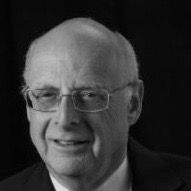
Steven Windmueller is the Rabbi Alfred Gottschalk Emeritus Professor of Jewish Communal Service at the Jack H. Skirball Campus of the Hebrew Union College-Jewish Institute of Religion, Los Angeles. Windmueller’s writings can be found on his website, www.thewindreport.com.














 More news and opinions than at a Shabbat dinner, right in your inbox.