This column would not have been written had its subject not first described himself and his predicament in this week’s New York Times magazine.
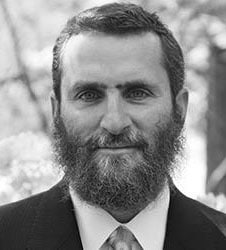
Noah Feldman was a brilliant Orthodox Jewish Rhodes scholar who arrived in Oxford in my fourth year as rabbi there in 1992. We quickly hit it off. For one thing, there was scarcely a subject — Jewish or secular — upon which Noah did not have some profound knowledge. We studied Talmud together several times a week, and I made Noah a kind of secondary rabbi at our L’Chaim Society, such was the range of his Jewish erudition and his phenomenal capacity for teaching.
Noah was one of the most accomplished young students I had ever met. He was valedictorian of Harvard, a Rhodes and Truman scholar, and completed his Oxford doctorate in about 18 months, which may or may not be a university record. It was a source of great pride for me that Noah was observant and wore a kippah. We all marveled every Shabbat at Noah’s incredible ability to read any section of the Torah at our student synagogue.
After graduating from Oxford, Noah went to Yale, where his observance began to wane. I heard from some of his classmates that he was dating a non-Jewish girl. Hearing that he was quite serious about her, when his girlfriend in turn came to Oxford as a Marshall scholar, I made a point of reaching out to her and inviting her to our Shabbat dinner.
My thinking was that Noah was far too precious to me and to the Jewish people to lose. If he was dating a woman whom he wished to marry, then it was our duty to try and expose her to the friendliness of the Jewish community with a view toward her exploring whether a serious commitment to our tradition was something that would suit her.
Sadly, others took a far different view. A mutual friend of ours, who was a rabbi in Noah’s life, essentially told him that if he married outside the faith he would have to sever his relationship with him. Apparently, many of Noah’s Orthodox friends made the same decision. The net result was that one of the brightest young Jews in the entire world was made to feel that the Jewish community was his family only if he made choices with which we agreed.
Of course I had wanted Noah to marry Jewish, and I took pride in the fact that I had helped to sustain his observance during his two years at Oxford. But the choice of whom he would marry was not mine to make. Before his wedding I wrote him a note that said, in essence, that we were friends and my affection for him would never change.
I told him that he was a prince of the Jewish nation, that his obligations to his people were eternal and unchanging, that whether or not his wife, or indeed his children, were Jewish, he would never change his own personal status as a Jew. I added that I knew he would do great things with his life as a scholar of world standing, and that he would always put the needs of the Jewish people first.
We remain good friends today. I admire and respect Noah, and my wish is that perhaps, some day, his brilliant wife might see, of her own volition, the beauties of our tradition and how family life is enhanced by husband and wife being of the same faith and practicing the same religious rituals.
True to my prediction, Noah went on, in his 30s, to become one of the youngest-ever tenured law professors, first at NYU and then at Harvard, and was chosen by the American government to serve as the consultant to the Iraqi provisional government in drawing up their constitution. Today he ranks, arguably, as one of the youngest academic superstars in the United States.
How tragic, therefore, that Noah’s article in The New York Times magazine is a lengthy detailing of the alienation he has experienced from his former Orthodox Jewish day school and friends, who even cut him out of a class reunion photograph in which he participated.
For more than two centuries now, since the Emancipation, Jews have been debating how to deal with those who marry outside the community. The conventional response has been to treat them as traitors to the Jewish cause. We are all familiar with the old practice of sitting shiva for a child who marries out, as if he or she were dead, made famous in “Fiddler on the Roof.”
The extreme practice of ostracization was justified by the belief that only by completely cutting off those who married out would we be making a sufficiently strong statement as to the extent of their betrayal, thereby dissuading those who might follow suit.
There is one problem with this practice. Aside from the ethical and humanitarian considerations, it does not work. We have been practicing this alienation for decades, and yet intermarriage has grown to approximately 50 percent of the Jewish population! Worse, the practice is a lie insofar as it propagates the false notion that our Jewishness is measured only in terms of our being a link in a higher chain of existence, and that our Jewish identities have meaning only through our children. This absurd notion would deny the idea of Jewish individualism and how we are Jews in our own right.
I am well aware of the fact that intermarriage is a direct threat to the very continuity of the Jewish people. But that does not change the fact that those who have chosen to marry out are still Jewish, should still be encouraged to go to synagogue, should still be encouraged to put on tefillin and keep Shabbat, should still have mezuzot on their doors, and should still be encouraged to devote their lives and resources to the welfare of the Jewish people and the security of the State of Israel.
And as far as their non-Jewish spouses are concerned, do we really believe that by showing the most unfriendly behavior we are living up to our biblically mandated role of serving as a light unto the nations? Is there any possibility that a non-Jew married to a Jew will look favorably at the possibility of becoming halachically Jewish if he or she witnesses Orthodox Jews treating their husbands or wives as pariahs?