I would like to offer a view on Jewish neighborhoods that is so contrary to accepted wisdom that I can only ask that people read this column with as open a mind as possible.
On balance, after a lifetime of thought, I don’t think that Jewish neighborhoods are always a good thing for Jews or, for that matter, for our fellow Americans who are not Jewish. In fact, committed Jews living among non-Jews often does more good — for Jews, for Judaism, for Kiddush HaShem and for relations with non-Jews.
Having lived much of my life in Jewish neighborhoods, I think I am well acquainted with the arguments for many Jews living in one area of a city.
One argument is comfort: People prefer to be among “their own.” That is why there are black, Latin American, Chinese, Korean, Armenian and other ethnic neighborhoods.
Another argument that appeals to Jews in particular is that Jewish neighborhoods help prevent Jews from assimilating.
And for Orthodox Jews, there is simply no choice. If you don’t live within walking distance of a synagogue, you simply cannot attend a synagogue on Shabbat or any of the other Torah holy days. And you will be very lonely on Shabbat, as there will be no one with whom to share Shabbat meals.
These are significant arguments. And in the case of Orthodox Jews, there is almost no alternative.
But there are also powerful arguments against Jews congregating in one area.
One argument is that Jews (and any other ethnic group) often become better people when they live among those who are not members of their ethnic/religious group.
Most people grow — intellectually and morally — when they have to confront outsiders. There are, of course, wonderful people who never leave their communities. But they are the exception. Most people do not grow when they lead insular lives.
In my travels through the 50 states, my favorite Jews have disproportionately been those who live in small Jewish communities.
Having grown up an Orthodox Jew in Brooklyn — having only Orthodox Jewish friends, and having attended Orthodox schools and Orthodox summer camps through high school — I know what insular ethnic/religious life is like. And I didn’t find it healthy. Among many other reasons, the non-Jew (and even the non-Orthodox Jew) wasn’t real.
I first seriously encountered Jewish alternatives to my insular upbringing in my early 20s, when I drove from New York to Texas with my dear friend Rabbi Joseph Telushkin. Thanks to the “Jewish Traveler’s Guide,” we found the name of a Jewish doctor in Alexandria, La., who listed himself as providing a place for Jewish travelers in central Louisiana to have Shabbat meals and kosher food.
This man, the late great Dr. Bernard Kaplan, awakened my eyes to the good that a Jew living among non-Jews could do. He was Alexandria’s leading surgeon, and he was loved for his goodness by just about everyone in that town. He was, therefore, a living Kiddush HaShem. (And all his children grew up to be committed Jews.)
Kiddush HaShem is probably the greatest mitzvah a Jew can perform, and it usually concerns a Jew’s behavior in the eyes of non-Jews (that is, after all, the purpose of the chosen people — to be God’s representatives to the world). In that sense, it is obviously more likely that a Jew can serve as a Kiddush HaShem in Louisiana than in Borough Park, N.Y.
I suspect that Chabad rabbis who run a Chabad House outside of Jewish communities can attest to the power of a Jew living among non-Jews to be a Kiddush HaShem.
I also believe that they and most other identifying Jews who live among non-Jews can attest to its transformative nature. It makes you a better person and a better Jew.
Yes, it is comfortable to live among one’s own. But comfort in life rarely leads to personal growth.
Or to Jewish growth.
It can’t be a coincidence that virtually every great Jewish religious work was composed outside of Israel, when Jews lived among non-Jews. We have, for example, two versions of the Talmud — the Babylonian and the Jerusalem. And it is the former that we study. Maimonides’ works were all written outside of Israel, sometimes in Arabic.
I cannot overstate how impressed I have been when meeting Orthodox Jews who live in small Jewish communities among non-Jews. I will never forget a black-hat Orthodox rabbi I met in the Midwest who founded a Jewish day school for the relatively few Jews in his city. He told me that he allowed non-Jewish students to attend his school. When I regained my composure, I asked him one question: Do your fellow frum Jews in New York City know about this?
“No,” he responded.
What he did would be essentially impossible in New York.
My wife and I live in a non-Jewish suburb of Los Angeles — so non-Jewish that it doesn’t even have a Chabad House. The closest Chabad House, in Glendale (not a major Jewish metropolis either), is run by the inimitable Rabbi Simcha Backman. He has “appointed” me an honorary shaliach (Chabad emissary) in La Canada.
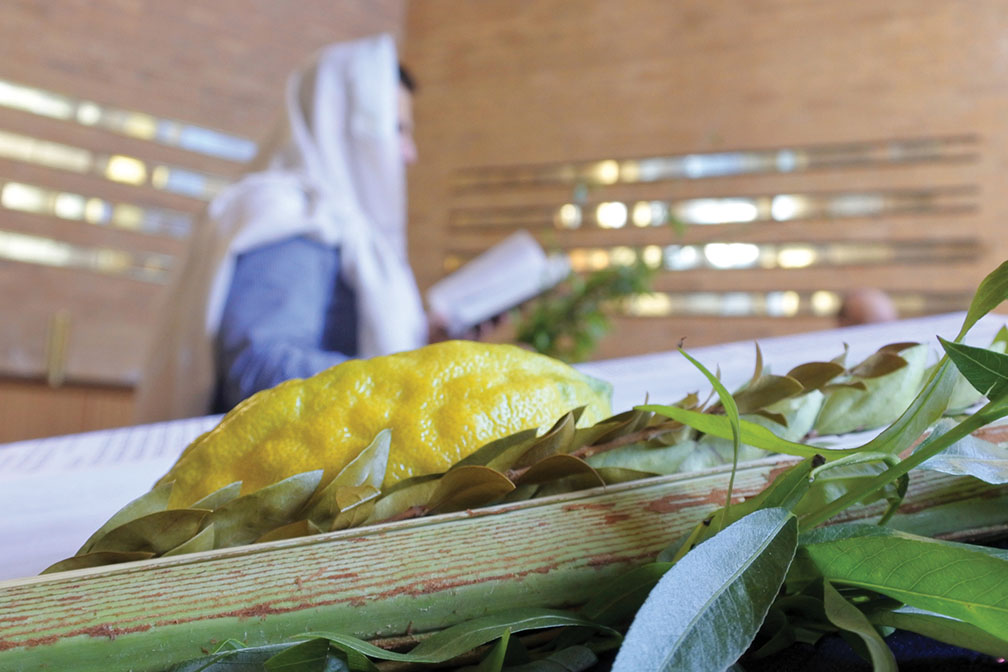
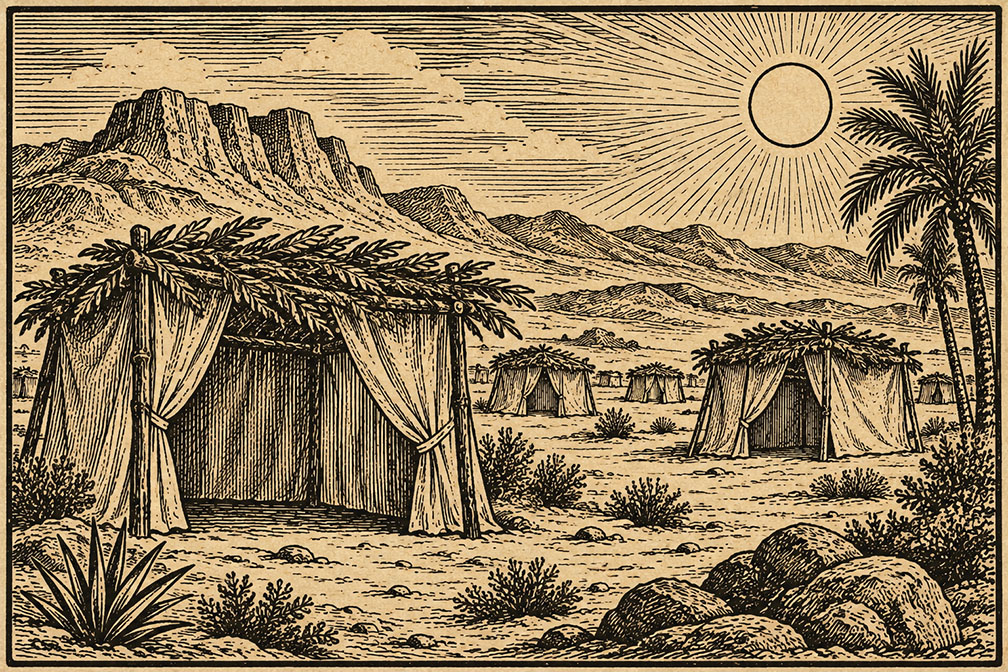
I think I build the only sukkah there, and when we opened our home one Sukkot, I recall the wide eyes of all the children of Jewish parents who had never seen a sukkah in their lives. Introducing Jews who have had little or no contact with Jewish life to Judaism is another mitzvah that a committed Jew living outside a Jewish neighborhood can engage in.
I live in a cul-de-sac, and my immediate neighbors are an Arab-American couple, whom my wife and I adore. The other neighbor is Korean. My cul-de-sac is what America is supposed to be about. It’s still a good idea.
Dennis Prager is a nationally syndicated radio talk-show host (AM 870 in Los Angeles) and founder of PragerUniversity.com. His latest book is the New York Times best seller “Still the Best Hope: Why the World Needs American Values to Triumph” (HarperCollins, 2012).