

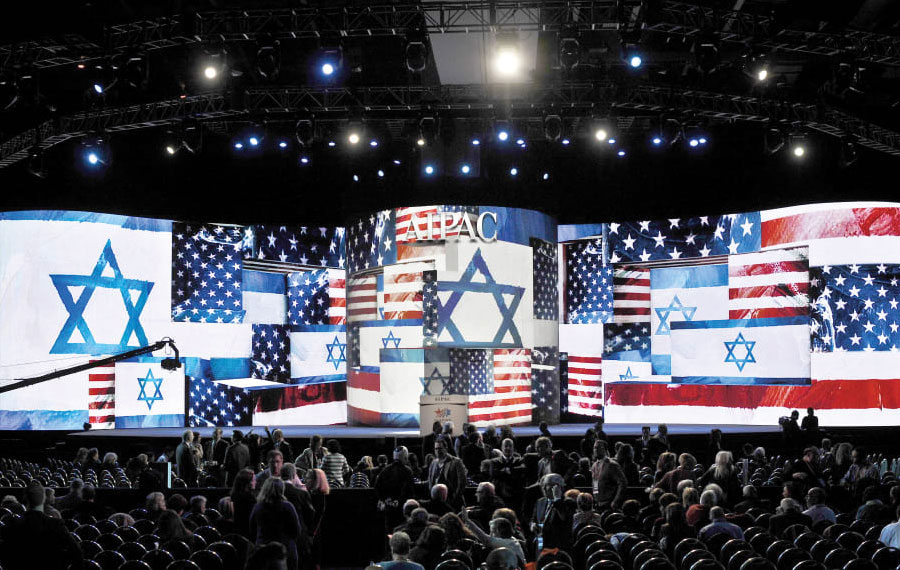
After three days of bumping into hundreds of Israel supporters at the annual AIPAC Policy Conference in Washington, D.C.; attending sessions on the cultural and scientific achievements that come out of the Jewish state; on the philosophical, political and security dilemmas that confront Israel; on the rise of anti-Semitism and the BDS movement; and on the complicated and evolving relationship between Israel and the American Jewish community– including the vexing challenge of maintaining bipartisan political support for the Jewish state– I think I’ve figured out the key value of this 18,000-people schmoozefest, besides the obvious benefit of going home with hundreds of business cards.
It is this: The Israel conversation in America needs this conference.
Over the past decade or so, much of the Jewish conversation on Israel has been hyper-polarized and emotional. Criticism of the right-wing policies of Prime Minister Benjamin Netanyahu has often descended into bitterness and contempt. From their end, Bibi supporters, who are usually also President Trump supporters, have shown how they can be equally bitter and contemptuous. It’s a dynamic of mutual animosity and isolation.
Into this highly charged and unproductive atmosphere comes the AIPAC conference, as a way, perhaps, of calling an annual time-out for reflection on both the value and complexity of Israel.
While you’ll hear criticism of Israeli policies from individual panelists at some of the many breakout sessions, that’s not the main purpose of the conference. The overriding purpose, as I see it, is to encourage supporters of Israel to stay engaged, and to find their own way of staying engaged, for the simple reason that it’s good for Israel and it’s good for America.
There’s so much going on at the conference that one can easily punch holes here and there, especially if the sessions you pick are not to your liking. But maybe I got lucky, because I attended a session on Shabbat that moved me enough that I felt that session alone was worth the whole trip.
“Compromise doesn’t mean a betrayal of your truth,” was the line that stuck with me. Tal Becker, a scholar and Senior Fellow at the Shalom Hartman Institute in Jerusalem, was speaking about how human beings are wired to be tribal. To elevate from a tribal morality to a meta morality, he said, takes work. It takes “thinking slow.” But when you get there, he assured us, compromise becomes an opportunity to access a “higher truth” that is difficult to see when we think fast and tribal. Becker was making a compelling moral case for something that has gone horribly out of fashion these days– listening and honoring the other side.
I felt a sense of liberation coming out of his session. The complexity didn’t phase me; it stayed with me. It freed me to think further.
Not everyone will draw the same conclusions from their experience at AIPAC, but this was mine: The conference offers a kaleidoscope of stories and issues and discussions about Israel and the Israel-American relationship that remind us why it all matters and why we should care.
And of course, there are those stacks of business cards we bring home with us, which no doubt will add complexity to our lives.
































