When it comes to fiction, writers often wonder what if the world were different in some way. What if a young 1950s Jewish woman pursued standup comedy? (“The Marvelous Mrs. Maisel.”) What if there’s a number of points assigned to all your earthly actions, which determines where you go after you die? (“The Good Place.”)
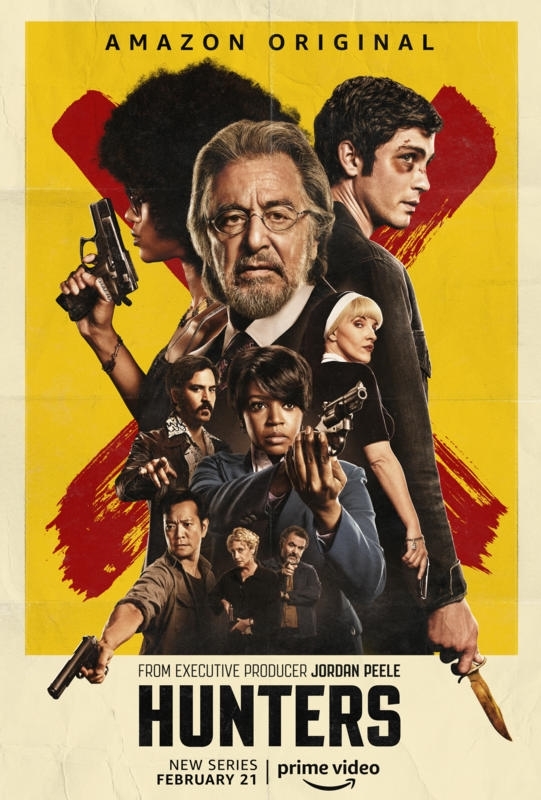
In Amazon’s “The Man in the High Castle,” a “what if the Nazis won the war” series lives alongside HBO’s “Watchmen,” an examination of vigilantism and racism through a surrealistic, graphic novel/sci-fi lens. The upcoming Amazon series “Hunters” with Al Pacino, explores a group of Nazi hunters in 1970s America and the CW’s “Crisis on Infinite Earths,” is a superhero palooza that does indeed deal with a crisis on infinite earths. What is this convergence of multiverse narratives meant tell us?
In “The Man in the High Castle’s” alternate reality, the United States is divided into the Greater Nazi Reich on the East Coast and the Japanese Pacific States to the West, with a Rocky Mountains Neutral Zone — the only place that blacks and Jews can live relatively freely — in the middle.
Each of the four seasons has portrayed a more complicated, chilling and increasingly surreal portrait of this world, in which a series of underground films depicting alternate outcomes to global events are revealed to be from alternate timelines.
The final season featured a surprising journey into the story of John Smith, a former American soldier who became the second most powerful Nazi in the East Reich. Had the Allies won, he would have lived a normal American life. Instead, he rose the ranks, creating and enforcing policies that promoted Nazi ideology.
In today’s climate of increasing anti-Semitism, watching Smith’s journey into institutionalized hate is even more disturbing.
We may think we know ourselves, but if we’re being honest, faced with fascism or global cataclysm, what decisions would we make?
“Watchmen” contains powerful images portraying conflict between groups of people wearing masks, invoking America’s past history of black oppression and the racially-charged conflicts that follow us today. The series asks questions about fascism, authority and power, how these powers are wielded, how history shapes who we are, and how flexible and situational morality can be.
A recent episode revealed that one character had been physically displaced by the Holocaust as a child, and also is temporally displaced — simultaneously experiencing past, present and future. This ability/curse/superpower, brought on by trauma, metaphorically reflects the way some Jews view history as a past that is present in shaping the future.
“Hunters,” due out on Feb. 21, appears set to examine the moral space explored by the pre-crime unit in the 2002 feature film “Minority Report.” Through voiceovers by Pacino, the “Hunters” trailer suggests that people are executing those who have potential for evil. While the Torah says, “If one comes to kill you, kill him first,” this series appears to ask: “But what if that person has not yet tried to kill me, but possesses the family history or memorabilia that indicates they might be so inclined in the future?” Pacino asserts: “This is not murder, this is mitzvah.” (We shall see, Rav Pacino.)
In envisioning other worlds, writers are asking us to consider the hypotheticals: How do we behave when human existence is at stake? Would alternate worlds solve this world’s problems or do they portray the worst versions of who we could have been if we’d made a slightly different choice at a critical juncture?
We don’t have infinite Earths. We only have this one. And as writers consider alternate universes, they challenge us to imagine the consequences of our actions as well as our own relative morality. We may think we know ourselves, but if we’re being honest, faced with fascism or global cataclysm, what decisions would we make? The answers — whatever they are — define our morality and shape our future, in this or any timeline.
Esther D. Kustanowitz is a Journal contributing writer and co-host of the Bagel Report podcast.