
The Shadow Side
Thoughts on Torah Portion Ki Teitzei 2023, adapted from previous versions.
Last week, my Shabbat thought on Torah portion Shoftim focused on the shadow of the law. By this term, I meant that in addition to looking at the contents of different teachings, commandments, statutes and laws, we ought to be inferring the background in which these statements are rooted.
For example, the great charge we are given in last week’s Torah portion, “Justice, justice shall you pursue!” is likely rooted in a time where injustice was rampant. Laws against bribing judges would only make sense in a time where bribery of judges was a concern. Each law is rooted in an unseen background, in a shadow. These laws reflect a crisis of norms and values, of law and disorder, crime and punishment, societal entropy and the moral commitment to make the center hold.
My guiding theme here is that the laws in these two Torah portions, Shoftim last week and Ki Tetzei this week, as righteous and even beautiful as many of these laws are, indicate a culture and a society in crisis. These laws seem to be trying to establish an order against things falling apart.
The idea that laws exist in a background is finely articulated in Robert Cover’s 1982 essay, “Nomos and Narrative” (found in many places on the web). For the non-expert, this article can be daunting. His main point is that the world of law, “nomos,” exists within some social construction of reality, a “narrative.” The most well-known example of this idea is the statement in our Declaration of Independence, which I like to paraphrase in this manner:
It is an obvious truth that our Creator has endowed every human being with rights that are not granted by the state and cannot be taken away by the state. One of the main purposes of the state is to protect these rights, especially the rights to life, liberty and the pursuit of well-being.
Why might we call this well-conceived foundation of the liberal state a “narrative?” It is a narrative in the sense of a myth, not meaning a fable, but rather a brief implied narrative – “God created human beings and endowed those human beings with certain unalienable rights.” The second paragraph of the Declaration contains words as symbols, words that point to deep, inexhaustible meanings that orient our lives.
The terms included in this world view (as I have paraphrased Jefferson) cannot be defined to the satisfaction of a skeptic, but we all know at least roughly what these words mean. These key words cannot be subjected to an empirical analysis. Words such as “truth,” “Creator,” “endowed,” “human being,” “rights,” “life,” “liberty,” and “well-being” all have a symbolic sense. They do not describe things that exist in the natural, physical world. These words describe things that are beyond the physical world. These words are known in the soul, the source of our deepest value systems. These words symbolize the depths of our experiences and visions as human beings and orient some of the foundations of the moral reality in which we live.
The laws, norms and values expressed in our Torah portions indicate a moral reality in the background, but the meaning of that moral reality, any moral reality, is always under dispute. Part of our polarization and culture wars today is concerned with people disputing our nomos, our shared moral reality. Proponents of different views aim to assert their nomos above all others. That is exactly how it is supposed to be in a free country – a free market of ideas. The question is: how do we present our ideas to others? With hatred and venom, which lead to polarization, or with reason and clarity and some measure of truth?
From the perspective of a liberal society (and Jewish ethics), the worst kind of nomos is one in which things can’t even be discussed, where people get “cancelled” when their views (or humor) go against the grain. The reason we have a right to free speech is because there’s always somebody who wants to shut down our speech. A free society requires the free exchange of ideas, as our individual and shared inner worlds develop.
Put simply, when we study the idea of “nomos and narrative,” we are invited into the deep discussion of the meaning of law, especially the moral law, in the symbolic world in which the law exists.
This idea, “nomos and narrative,” may be applied directly to each of our lives. We all live in a “nomos,” a world of values, norms and behavioral rules. We typically don’t reflect on or philosophize about our inner nomos very much. We are unconsciously guided by our inner nomos regarding what we think is right or wrong, what we think our moral obligations are, and what the obligations of others are. Unless we philosophize or reflect, we usually only become aware of our inner moral reality when we believe that someone else has violated our nomos, or when someone is trying to force their nomos upon us, as opposed to reasoning with us.
The other way we become aware of our inner moral reality is purposeful study and reflection, the search for truth. An enlightened person is, minimally, one who realizes that their own thoughts, feelings, speech and behavior are not always aligned with their own values. Their inner life moral reality, their inner nomos, even a person’s set of values, is always under scrutiny and evaluation. A person seeking truth is constantly completing the project of restructuring their inner life. We start with our existence as a human being and build out from there.
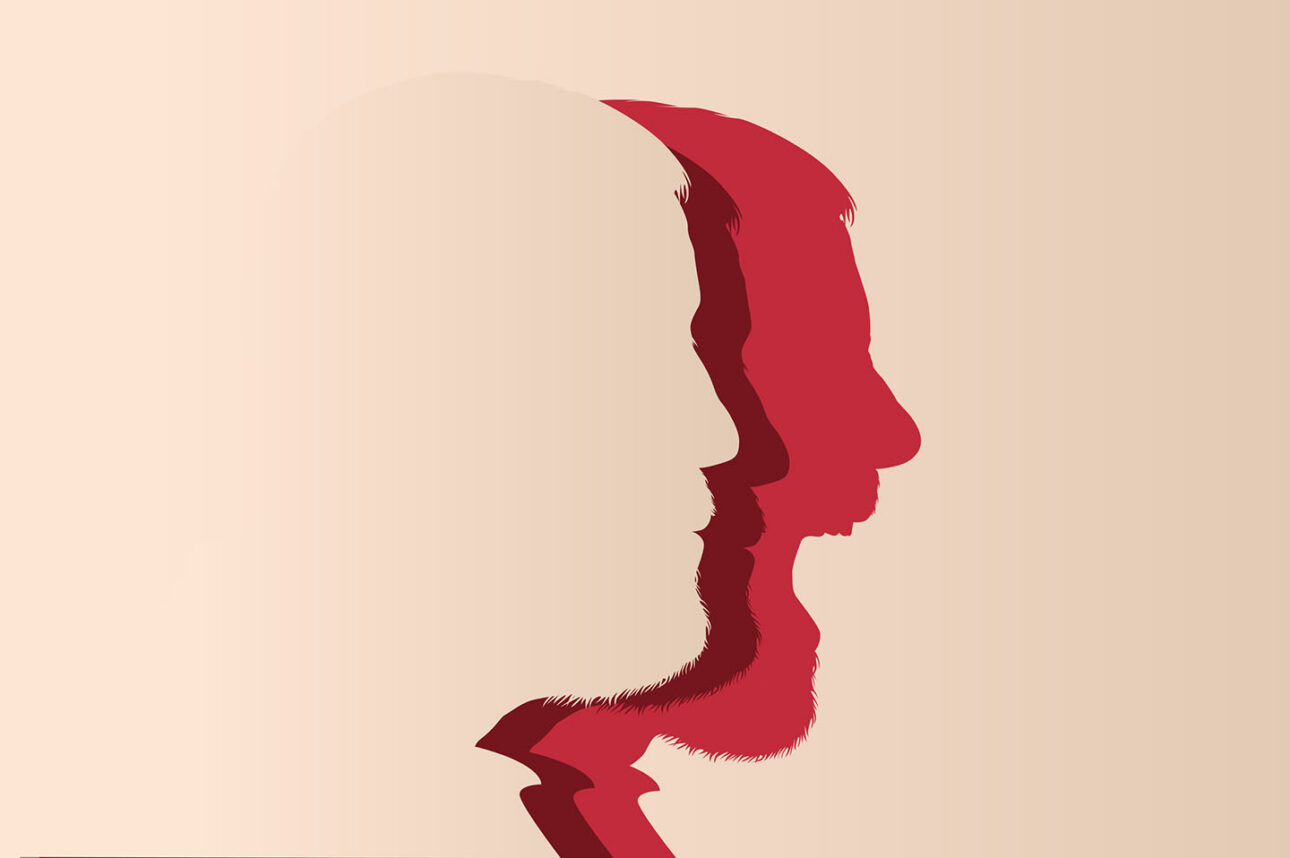
We realize that just as all law has a shadow side, we also have within us an inner world that contains a shadow self. This shadow self, at least partly, exists in direct opposition to our conscious nomos. We often become aware of our shadow self through conflict with others and inner conflict. We think we are pursuing justice, but maybe we are making things worse. We find ourselves at war with our loved ones. We try to dominate other people. We all can become rebellious and spiteful.
For the sake of completeness, I would add that we become aware of the shadow through all manner of art, creativity, and especially poetry, in my mind.
Our Days of Awe, understood poetically, have developed in ways that have us face the questions of human existence. Rosh Hashanah ought to be a deep meditation on our world of values, norms and behaviors. From that contemplating, we can sharpen our vision of our moral world. We can then will upon ourselves a moral commitment to uphold that world. We then spend 10 days meditating on that nomos and our own tendency to live contrary to it. Yom Kippur is the day when we squarely face the shadow, the contrary self. These Days of Awe guide us to seek the truth.
Will we own up to the moments when we break bad from our values, and will we do whatever it takes to bring our destructiveness under control?
The shadow thinks it knows. We have to know better than the shadow.
(I will be discussing these ideas in depth at my upcoming classes, “Preparing the Heart for the Days of Awe.”)