Last week, my husband and I watched with pride as our daughter graduated from pre-kindergarten. While many jokes have been made about little kids putting on caps and gowns (there was no valedictorian or boring speakers!), the ceremony was indeed a milestone as we watched our children—many of whom have been together since before they could sit up on their own—walk up on the stage at the JCC waving and smiling for their families. And, like all other parents in the room, we were asking ourselves where the time had gone. Undoubtedly, the thought has been shared at multiple graduations across the country in recent days.
There is something truly amazing about how we keep track of time. Just as the school year has come to a close, this coming Saturday night will mark the ending of the counting of the Omer, the seven week period between Passover and Shavuot. On two separate study sessions over the past few weeks, I have heard Shavuot referred to as “the forgotten holiday.” It is easy to see why.
Shavuot (literally “weeks” in Hebrew) is one of the three pilgrimage festivals (Sukkot and Passover being the others), mentioned in the Torah as a harvest holiday (Deuteronomy 16:9-10), but only in post-temple times did it become associated with the giving of the Torah. Because its meaning was changed so dramatically, it lacks the tangible rituals of just about every other Jewish holiday (e.g. Passover seder, Hanukkah menorah, shofar at High Holidays). Between that and this being the time of year when school is out, vacations are beginning, and people are beginning to “check out,” it can be easy to overlook this seemingly minor blip on the calendar. It need not be.
While the holiday may lack tangible rituals, it certainly has traditions. Among them include the following:
- The Book of Ruth—reading the story of a woman who chose Judaism
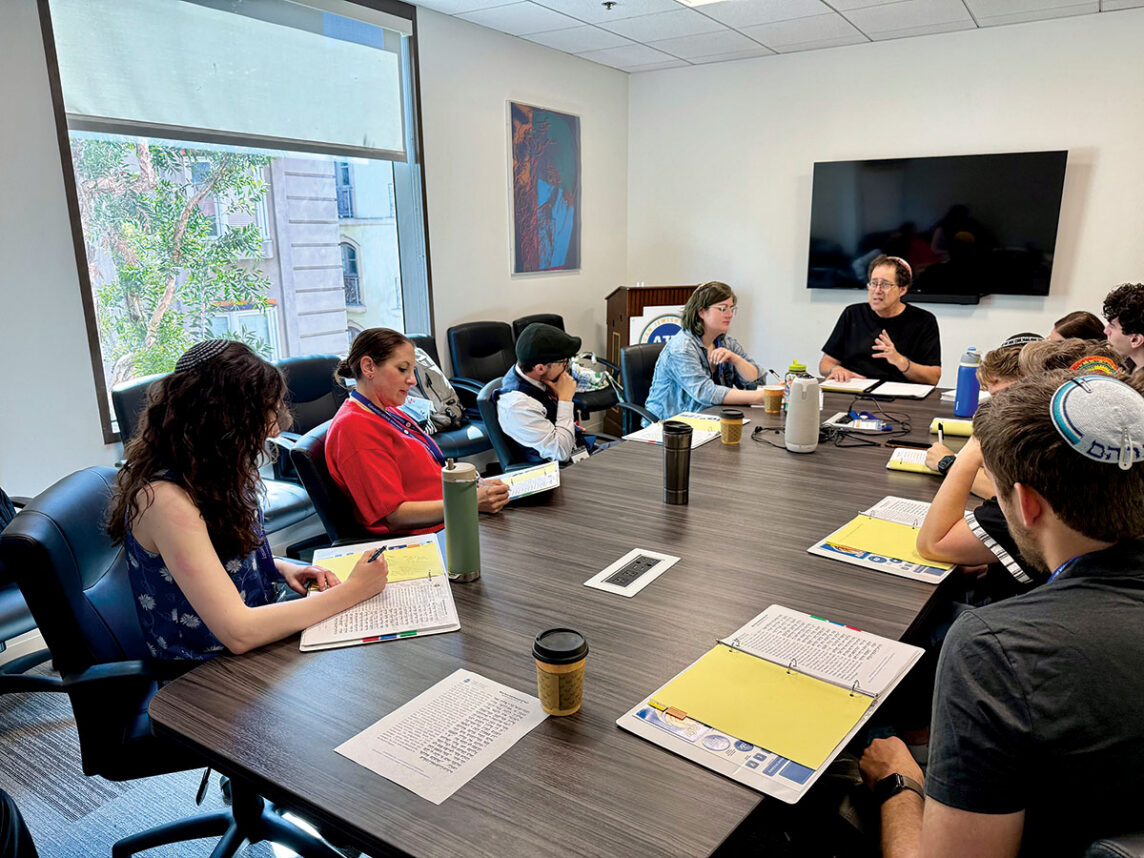
- Tikkun Leil Shavuot—staying up all night to study Torah, presumably to make up for the Jewish people falling asleep at Sinai and missing the Revelation
- Confirmation—in Reform and Conservative congregations, those finishing tenth grade plan and lead the Shavuot service, confirming their Jewish faith before their communities
At first glance, the above may seem to have little in common. Look again and you will notice that they all are in essence the same—choosing Judaism. And just as there is no set rituals for Shavuot, there are no requirements for how these traditions should be followed. Two of my most treasured memories come from Shavuot—my own Confirmation and the year I was in Jerusalem, attending Tikkun at Hebrew Union College, walking down to the kotel, and then back to my hotel as the sun came up—a beautiful streak of blue hitting the Jerusalem stone in a picture forever etched in my memory. What made these experiences so special was that I made them my own. While they have become traditions, there is no prescribed rituals for Confirmation or for Tikkun. They are ours to do what we want with. I have found this to be enormously liberating, a great parallel to the secular world where the rigors of school are now giving way to the less structured days of summer.
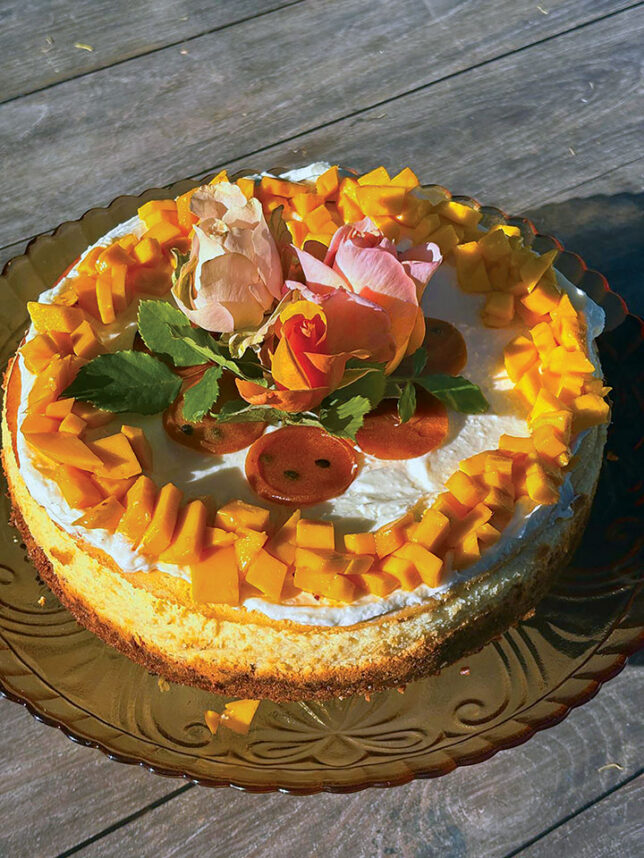
Ruth chose Judaism, making her one of the most famous Jews by choice. I would venture to say that we could all be considered Jews by choice. While the High Holidays challenge us to look inward at our character, Shavuot is a different kind of reflection—a way to look at ourselves as Jews. And to choose our own paths, our own meanings, our own traditions. While it may be more abstract and less tangible, there is no right or wrong way to do it. So whatever path you choose this Shavuot, I hope you find meaningful traditions, as Ruth did. And as Jews will for generations to come. And while you’re at it, enjoy your cheesecake!
Lisa Rothstein Goldberg is a Jewish educator and social worker living in Louisville, Ky. with her husband and two young daughters.