The Jewish Museum Berlin has been bogged down in controversy in recent months for alleged anti-Israel activity.
Even Prime Minister Benjamin Netanyahu sent a letter to Chancellor Merkel, about the “Welcome to Jerusalem” exhibition (which I also critiqued), claiming it politicizes Jerusalem with a pro-Palestinian bias. The Museum and its director, Prof. Dr. Peter Schäfer, is now under fire for holding a meeting with the Iranian Embassy’s Cultural Council in Berlin.
But a small exhibition on display at the entrance of the sister campus across the street from the Museum gives the viewer the best of what the Jewish Museum can offer, a tribute to a relatively unknown German Jew who quietly shaped post-World War I Germany.
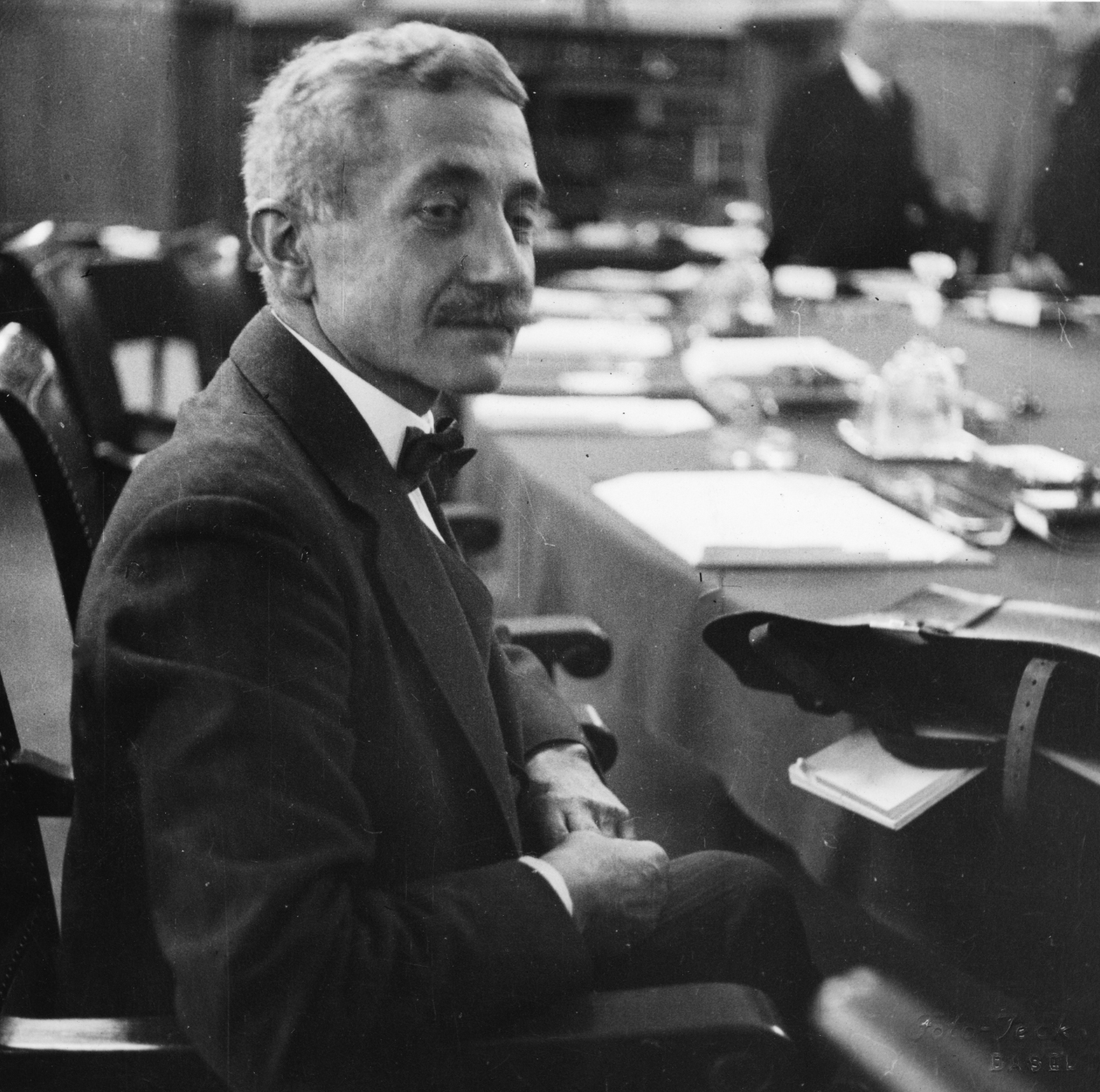
Born in Hamburg in 1871 to a Reform Jewish family with rabbinic roots, Carl Melchior was a banker and judge who was part of the negotiating team sent to the Paris Peace Conference in 1919 at the end of World War 1 to save the German people from the brink of starvation and to rebuild Germany.
The exhibition, entitled “The Jewish Fighter for a European Peace,” is on display through the end of April. Unfortunately, the exhibition and catalogue appear only in German, but English may be added should it travel in the future. The exhibition was curated by Christoph Kreutzmüller and Dorothea Hauser, from the Warburg Archive Foundation, Hamburg.
Kreutzmüller has served as the curator of the Holocaust section of the upcoming new permanent exhibition on German-Jewish Jewry. (The Jerusalem exhibition serves as a “placeholder” while the permanent exhibition is being renovated.) A former banker himself, Kreutzmüller has done extensive research on the Warburg banking dynasty in Hamburg to which Melchior was partner.
Together with the the Warburg Archive Foundation, Hamburg, he conceived of the exhibition to honor what he considers a forgotten peacemaker who sought to negotiate a pan-European peace.
At the Paris Peace Conference, Melchior worked closely with John Maynard Keynes of the British delegation.
“What caught our attention first was that John Maynard Keynes, the most important economist, published a little reflection on Melichor, and those reflections said how much he appreciated his fairness and his coolness,” Kreutzmüller told me at the exhibition. “He seemed to be a very witty—Einstein called him a witty—and fair–person.”
The exhibition features pictures of Melchior’s professional life in Hamburg, his negotiations at the Versailles Palace, and his subsequent meeting with diplomats in Paris over the course of fourteen years intended to improve Germany’s standing.
“Basically, he negotiated the end of the reparation payments,” Kreutzmüller said. “Wow. A few month later, the Nazis come and say: ‘We did it.’ Be he did it.”
For his efforts, Melchior was the second person to received the “Walter Rathenau Medallion” issued by the Weimar Republic for most honorable civil service. Rathenau was Germany’s Jewish foreign minister assassinated by Nazis in 1922. According to Kreutzmüller, Melchior could have also attained a similar position of power, but he preferred to keep a low profile, wary of meeting Rathenau’s fate.
Melchior’s work proves wrong the Nazi accusation that Jews were responsible for what they considered humiliating terms of the Versailles Treaty. In fact, Melchior advised, along with the other members of his German delegation, not to sign the treaty that was eventually accepted by the following Socialist Democrat-led government.
Melchior died of a stroke just a few months after Hitler came to power, but he already took several steps to stop them.
“He wrote a letter to [then President Paul von] Hindenburg saying: You’re tolerating this anti-Jewish policy, and this is ruining the esteem German has regained after World War I, and you ought to stop that. And Hindenburg never answered.”
Melchior founded with Reform Jewish leader Leo Baeck a Jewish welfare organization, and Kreutzmüller believes he would have tried to get as many Jews as possible out of Germany, as did his partner, Warburg.
In 1984, the Hebrew University of Jerusalem established the Carl Melchior Chair for International Policy, but mostly, people have hardly heard of him. If only the Museum would hold true to its name and dedicate more of its resources to such important German-Jewish figures instead of politicized, interfaith exhibitions, then perhaps the legacy of people like Melchior would be more justly redeemed.