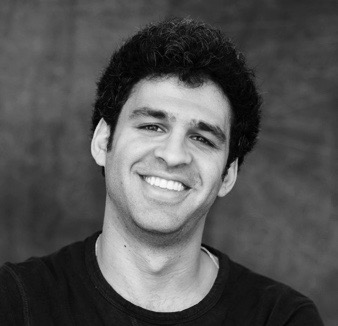
Spoiled children are made, not born — and there’s something you can do about that.
That’s the message of New York Times “Your Money” columnist Ron Lieber’s new book, “The Opposite of Spoiled: Raising Kids Who are Grounded, Generous and Smart about Money.” The 43-year-old’s belief that financial transparency in the household bodes well for a child’s future is at the crux of the 256-page book, which was published by Harper on Feb. 3 to positive reviews.
To that end, Lieber urges parents to speak candidly with their children about their finances, including how much they earn, how much money sits in their bank accounts and what thought processes precede spending decisions. In fact, Lieber told the Journal in a phone interview, it is parents’ responsibility to do so.
“As parents, we’re in the grown-up creation business. We’re trying to wind them up and push them out in the world. And their job as kids is to be curious and ask questions about how that world works, and it’s hard to deny the fact that money is one of the most important forces driving human behavior and human decision-making,” Lieber said.
“So not to answer those questions, not be upfront, not to narrate those decisions when it comes to money — particularly with teenagers — is to do a kid a disservice. They will go out and flounder their way through college and afterward, and they won’t be ready, and it’s not OK to send kids out in the world [with] a lack of financial readiness.”
As the father of a 9-year-old daughter, Lieber understands that these sorts of conversations can be awkward, but he stressed that they need to take place.
“One of the things parents should try and do more of is just narrating their financial decisions on an ongoing basis,” he said.
It makes more sense — and is more effective in raising financially sensible children —than just setting seemingly arbitrary rules about what kids can have and what they can’t have.
“Most … families want to set some kind of limits, but the limits we are setting are all artificial ones, which is a tricky position to be in as a parent because you are drawing these lines and saying on one side of the line is overindulgence or spoiling or creating a sense of entitlement, and on the other side of the line we are not doing that and we are just being good, generous parents, and nobody knows where to draw that line,” he said. “It’s not like you get a manual when you have your first child.”
On his website, Lieber positions his book as a practical guide to handling “the tooth fairy, allowance, chores, charity, saving, birthdays, holidays, cell phones, checking accounts, clothing, cars, part-time jobs and college,” all the while keeping an eye on maintaining and passing on important values.
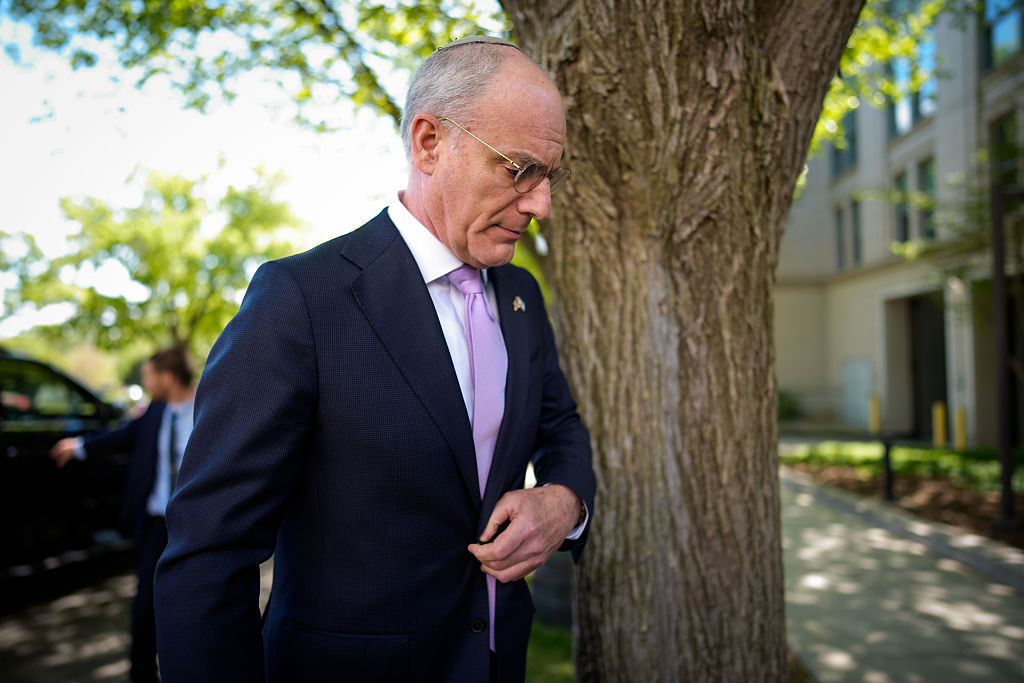
Lieber lives in the Park Slope neighborhood of Brooklyn, N.Y., where he serves on the board of his synagogue and is married to fellow New York Times writer Jodi Kantor (author of “The Obamas”). His previous books include the best-selling 1996 work “Taking Time Off,” which discusses the benefits of taking a break from education, and 1998’s “Upstart Start-Ups” for young entrepreneurs.
He admits to struggling with the challenges of how much to discuss money with his daughter — just like any parent might — but believes it is better to err on the side of too much information than not talk about it at all.
Lieber’s approach in his new book to dealing with kids and money is resonating with the likes of Los Angeles clinical psychologist and author Wendy Mogel (“The Blessing of a B Minus”).
“It’s the first really substantial book anybody has written [about] talking to kids about money and buying and spending in our consumer culture, and it’s just great,” Mogel told the Journal. “It’s a great source.”
Lieber was in Southern California promoting the new book during a February appearance at Viewpoint School, a private school in Calabasas. As a columnist for a major newspaper, it’s part of his job to venture out into local communities, where, he said, he constantly meets parents who are concerned about their children’s attitudes about money. He said it was a request to speak a couple of years ago that led to the writing of “The Opposite of Spoiled.”
“A bunch of parents came to me a couple years ago and said there were all these conversations in their community about who had more and who had less and how that came to be and whether it was fair, and it was happening in private schools and public schools, and they were noticing and asking complicated questions about it. They had seen I had sporadically written about this stuff in the newspaper, and they thought I could come to the schools and set everybody straight,” he said.
“They invited me to speak, and I realized one thing everyone had in common is nobody wants to raise a spoiled child — that is something you as a parent do to them. They are not born that way; it’s a result of parenting. And once I figured that out, I figured … ‘If that is what we are trying to solve for, then what is the opposite of spoiled?’ ”
The book acknowledges there is no sufficient antonym for the word “spoiled,” but its author explained to the Journal what the phrase means to him:
“ ‘The Opposite of Spoiled’ is a constellation of values, virtues and character traits that add up to the decent, grounded children that we all want to push out in the world,” Lieber said. “It’s things like modesty and patience and truth and prudence and generosity and perspective, and I think a subset of perspective is gratitude for what you have, even if you don’t have as much as everyone else. … To me, it’s the opposite of being self-centered.”