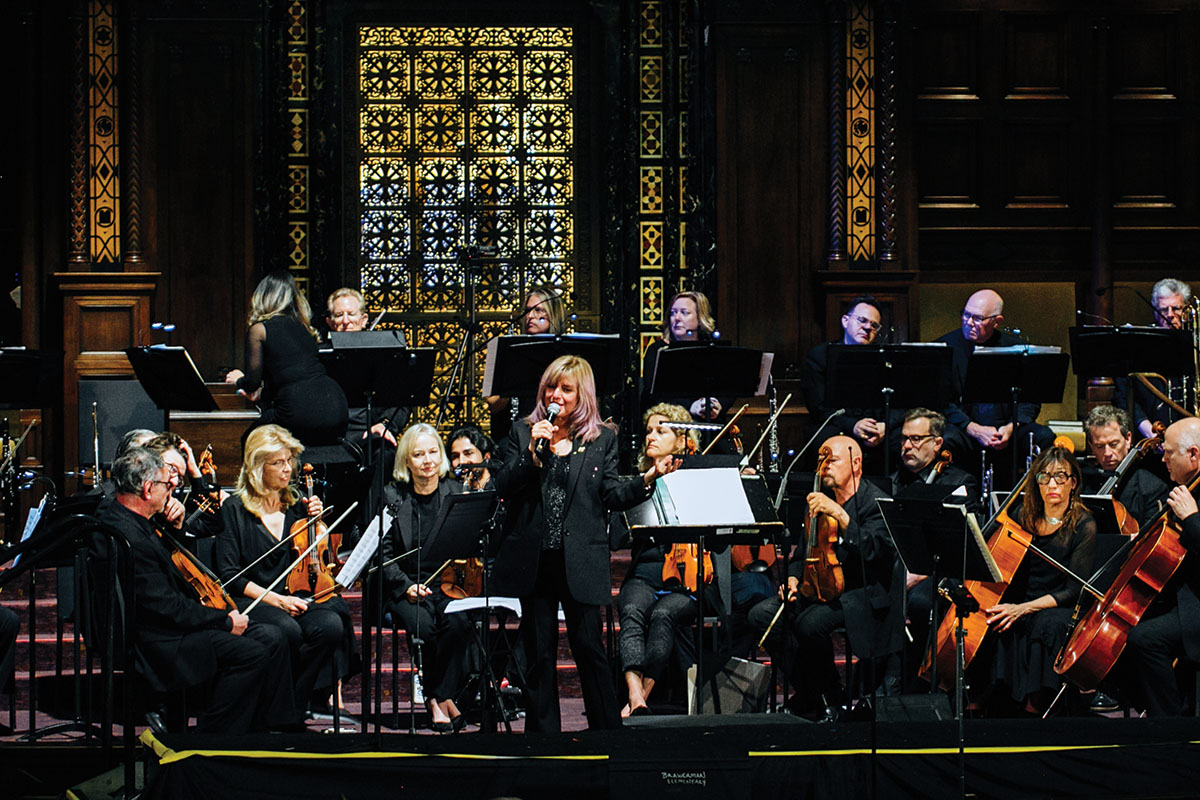
It's Friday night, and as I wander toward the entrance of Temple Emanuel, a Reform synagogue in Beverly Hills, an usher approaches and asks brightly, “Are you with the choir?”
I'm African American, but I'm not with the choir, at least not with the choir of Temple Bryant A.M.E. Church, which is visiting the synagogue tonight. I smile through a twinge of annoyance.
Later, as I search for a seat in the cavernous but crowded temple, another helpful-looking usher with a pile of programs catches sight of me: “You must be with the choir!”
Must I?
To be sure, some of those A.M.E. folks, some of whom are splendidly dressed in West African kente cloth, are looking like they need a little bit of direction. But the first lesson of multiculturalism may be that not all black people are churchgoers and/or singers. I could have been Jewish, for all anybody knew. As it happens, I'm not Jewish, my husband is and my married name, Kaplan, tends to throw people of all colors and religious beliefs when I show up in person. So I've learned to carry a certain sympathy for cultural and ethnic misconceptions.
But still.
Then I remind myself that I like the reason why I'm here on this Friday in February: This concert marks an early step by Temple Emanuel and Bryant A.M.E., from Leimert Park in the Crenshaw District, to develop relationships between their respective flocks. Not political, agenda-driven, public relations-conscious relationships, but ties forged the old-fashioned way — through individual conversations and personal connections over time. The bridge-building is part of a larger effort by the community organizing outfit, One L.A. (the latest iteration of the Industrial Areas Foundation), to unite Los Angeles' disparate populations around conversations on a whole host of common, quality-of-life issues.
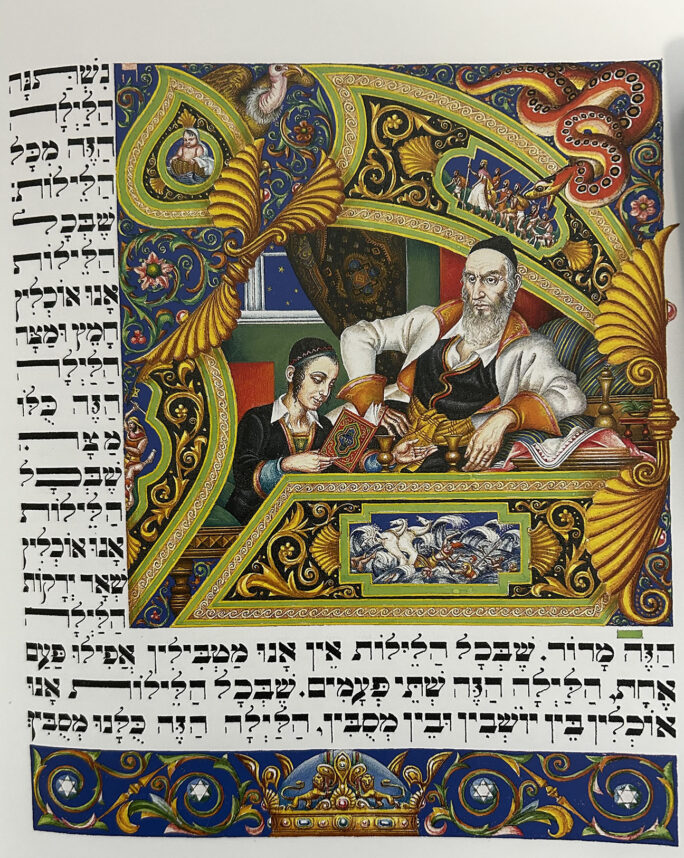
The Rev. Dr. Clyde Oden Jr. of Bryant and Rabbi Laura Geller of Emanuel are putting their own stamp on this, starting with names: Oden calls the project “Shalom in the City,” Geller has dubbed it “Hineni, Here I Am.” Both admit they are on a long journey that has no real road map and that may take years to accomplish, if it is accomplished at all. Yet both are encouraged so far. Geller has taught the Torah at Oden's church, and he brought some congregants to temple last Friday; the two groups have already planned a joint seder and picked an L.A.-resonant theme for it: “Coming out of a narrow place.”
Oden says it's all in the spirit of creating a new model of activism, one rooted not in the leaders or agendas of yore, but in friendships.
“These won't be drive-by relationships,” says Oden, who proposed the crosstown outreach. “Our society promotes distance, and we don't know each other — Jews, gentiles, Latinos, blacks. We're kind of in the wilderness here on this project, but we're going toward the Promised Land.”
Geller says she also wants to deconstruct the management-heavy, '60s model of activism and remake it into something more meaningful and effective for today.
“One of the criticisms of the civil rights model is that Jews were perceived as helping blacks,” she says. “If we start with personal issues that matter to everybody — things like drug addiction, aging parents, emergency health care — then we'll be on equal footing.”
One L.A. organizer, Daniel May, describes the dynamics of the Emanuel/Bryant project, and others like it around town, as “moving from strangers to neighbors. It's not about issues, but commonalities. And also differences.”
I keep that in mind as two musical traditions come together tentatively, somewhat clumsily, before my eyes. Besides the black choir, the service features Jewish singer/guitarist Rick Recht. I have no idea who Recht is, but his name, pronounced “Wrecked,” sounds appropriately rapper-esque.
He turns out to be the furthest thing from that — a smooth, charismatic performer and storyteller with impeccable pop sensibilities and an occasional edge — kind of a Jewish Jim Croce. But he hits a serious sour note when he decides to turn the venerable “Lift Ev'ry Voice and Sing,” a poem-cum-song penned at the turn of the 20th century that evolved into the black national anthem, into a kind of summer camp sing-along, complete with call and response.
I get the good intention, but it's mildly horrifying nonetheless. The black people look a bit stunned, though tolerant.
Then, when the Bryant choir backs up another gospel number, Emanuel's sonorous and dignified cantor suddenly erupts with a funkified solo on “Let My People Go,” complete with hand gestures and foot shuffling that must be meant to echo James Brown.
My Jewish husband seated next to me, puts his head in his hands briefly.
“Look at what my people are doing,” he murmured. “It's embarrassing.”
Maybe. But I hardly expected Jews to have that kind of rhythm, or for anybody nonblack to resist the temptation to boogie when black people give them the chance. But music is not the main point: This evening is facilitating a larger and, I believe, enlightening purpose. For that possibility alone, I'll endure 1,000 more funk faux pas. And I trust the congregants will put up with mine as well.
Erin Aubry Kaplan is a regular Op-Ed columnist for the Los Angeles Times.