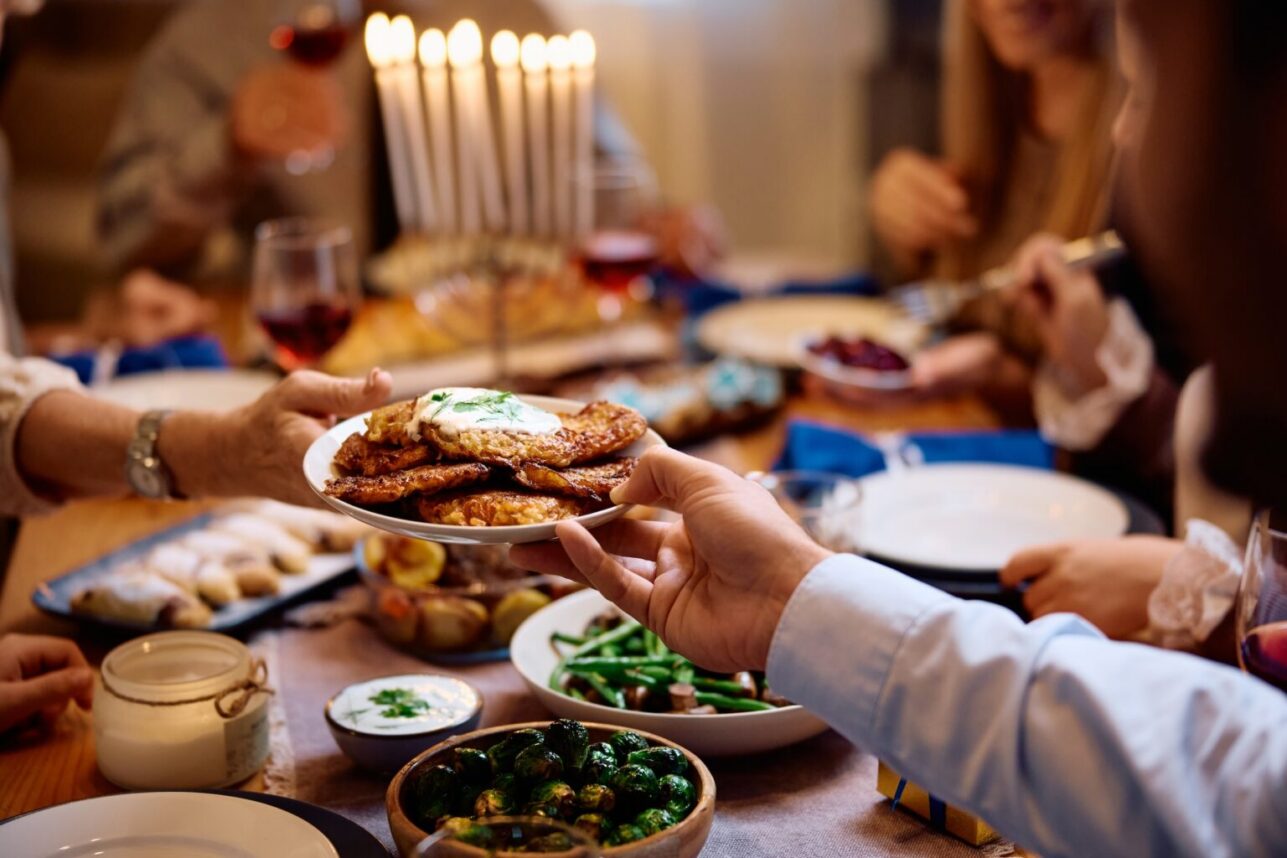
When I traveled to Israel last August, I spent two days appreciating the precariousness of life along the Gaza border. Three times Kassam rockets were shot in my direction, including five minutes after I arrived at Kibbutz Nir-Am to share Shabbat dinner with the Bar-On family.
The Bar-Ons became the focus on my story for The Jewish Journal when I returned, and this past weekend, Marcell Bar-On sent me a long letter detailing how life hasn’t become any safer.
The attacks are unprovoked, unpredictable, and continuous, and their effect has been close to catastrophical for us, both economically and psychologically. Our every action, our every waking moment, is geared toward minimizing the impact of living under enemy fire. Our first concern is always for our elderly and our children. My son Gabi, who turns ten in December, was three years old when the bombings started, and doesnât remember life without Kassam bombs. There are no reinforced rooms in our homes, and the old communal shelters cannot be reached in the 5-10 seconds it takes a Kassam bomb to travel between Beit Hanoun and Nir-Am. So our family does what all the other families do: when we hear the âTzeva Adom â (Red Light) alert, we huddle in a small windowless area (in our case, a small passage between bedrooms), our bodies and the tiled roof the only barriers between our children and the incoming bomb. We silently count the seconds to impact; I often need to remind the children to breathe â they are frozen in total terror. And we pray that this time, too, we will be spared.
The effect has been most obvious on our children. At home: bedwetting, aggressive behaviour, extreme moodswings, insomnia, loss of appetite . . . . and at school: lack of concentration, absenteeism, hyperactivity, outbursts of anger and physical and verbal aggression. But no-one is spared the psychological warfare we are all victims of: almost as many adults are in councelling as are children in an attempt to cope with the harsh reality of our daily lives. In fact, as parents we carry the additional burden of guilt for not being able to protect our children; we feel responsible for what is happening to them.
Driving with car windows open, even in the heat of summer, so that one can hear the alert and perhaps have a chance to stop the car and get to some kind of shelter . . . children playing outside, always acutely aware of exactly where the nearest house or tree is, so that they can run for their lives and find what inadequate and pitiful protection they can . . . cellphones for every child of schoolgoing age, so that we can stay in contact with them when they are not at home , and so that we can call them to see whether they are safe after every bomb has fallen . . . how can I describe the long moments waiting for my child to answer the phone after a Tseva Adom alert?
(skip)
On the first day of Hanukka this year, at 6.30 a.m., a Kassam bomb fell less than five meters from where my son Gabi and daughter Mayan were sleeping. I had been busy in my home office when the Tzeva Adom alarm sounded. I could not hear the children running for our little âsafe cornerâ and I immediately realised that they had not heard the alarm and were still asleep in their beds, even as the bomb was already on its way from Gaza.
I ran in the direction of their bedroom, shouting for them to wake up; as I reached the bedroom door, they jumped from their beds but a second later the bomb struck. It did not explode upon impact, but penetrated deep into the soft earth and later had to be retrieved with the help of a bulldozer.
Our personal Hanukka miracle had just occurred: had the bomb fallen one week earlier, before the first winter rains when the earth had still been hard, it would have exploded on impact and the result could have been catastrophic for our family.