fbpx

japan

Asia

Which Asia Destination Matches Your Travel Style?

Your Ultimate Guide to the Big 5 (and I am not talking about Africa this time!)

Pura Ulun Danu Bratan bali indonesia

If Asia has been on your bucket list, this is your moment. Japan’s cities are topping global trending destination lists, and the entire “Big Five” region (Japan, Thailand, Vietnam, Singapore, and Indonesia) is seeing a lot of interest. The reason? Today’s Asia offers the perfect storm of travel conditions: currency exchanges that make luxury affordable, well-developed infrastructure that eliminates stress, and authentic experiences you will love.

Which Asia Destination Matches Your Travel Style? Your Ultimate Guide to the Big 5

Imagine this: your friend just came back from Japan raving about $20 dinners that rival Michelin-starred restaurants. Your coworker can’t stop showing photos from her Vietnam trip where she stayed at a luxury resort for less than a mid-range hotel in Europe. Meanwhile, that Instagram post of someone swimming in Singapore’s famous infinity pool has you seriously questioning your vacation plans.

Here’s the thing, travelers are discovering that Asia isn’t just trending because it’s exotic, it’s trending because right now, it offers the best value, incredibly authentic experiences, and breathtaking Instagram-worthy adventures. With favorable exchange rates and infrastructure that’s never been better, that Asia trip you’ve been “someday” planning just became a “this year” possibility.

One of the things people love most about Asia is it’s beautifully diversity. Whether you’re a first-time international traveler, an adventure-seeking solo explorer, or planning that special multi-generational family trip, there’s an Asian destination that’s perfectly tailored for your travel style.

Let me walk you through Asia’s “Big Five” trending destinations and help you discover which one calls to your wanderlust.

Japan: Where Ancient Tradition Meets Modern Wonder.

Ideal for: Multi-generational families, culture enthusiasts, first-time Asia travelers, and anyone seeking the extraordinary.

Japan has shed its reputation as prohibitively expensive, and honestly, it’s become one of the most rewarding travel experiences you can have. Imagine staying in a traditional ryokan where you sleep on tatami mats and wake up to a carefully prepared kaiseki breakfast, then spending your afternoon in Tokyo’s ultra-modern districts watching the controlled chaos of Shibuya crossing.

The magic of Japan lies in how effortlessly it blends the ancient with the ultra-modern. You can meditate at sunrise in Kyoto’s golden temples, then spend your evening in an izakaya sharing laughs with locals over incredible food. For families, Japan offers something remarkable – it appeals equally to grandparents fascinated by centuries-old traditions, parents appreciating the impeccable organization and cleanliness, and teenagers excited about anime culture and quirky pop culture experiences.

Safety concerns? Japan consistently ranks as one of the world’s safest countries. Language barriers? Major tourist areas have excellent English signage, and Japanese hospitality (called “omotenashi”) means locals go out of their way to help visitors, even with language differences.

Your Japan experience might include: Staying in a traditional ryokan with hot spring baths, riding the lightning-fast bullet trains between cities, participating in a tea ceremony, exploring both ancient temples and ultra-modern neighborhoods, and discovering why Japanese cuisine earned its worldwide reputation.

Pro tip: Work with a travel advisor who specializes in Japan to discover hidden izakayas (local bars) where “salarymen” (or blue collared workers) unwind after work, or to arrange private temple visits during quiet morning hours when most tourists are still sleeping.

Thailand: Your Gateway to Southeast Asian Magic

Loy Krathong Festival Ayutthaya in Ancient City, Thailand

Perfect for: First-time Asia travelers, beach lovers, food enthusiasts, and anyone wanting variety in one trip

Thailand is like Asia’s greatest hits album – it gives you a taste of everything the continent offers while remaining incredibly welcoming to Western travelers. The infrastructure is well-developed, English is commonly spoken, and the experiences range from budget-friendly to luxurious.

Picture this: mornings spent exploring ornate temples with golden Buddhas, afternoons learning to cook authentic pad thai from a local chef, and evenings watching the sunset from pristine beaches in the south. Thailand delivers cultural immersion without the intimidation factor that sometimes comes with international travel.

For families, Thailand is particularly magical because it offers multiple vacation styles in one trip. Want to combine cultural exploration in Bangkok with beach relaxation in Phuket? Easy. Interested in adventure activities like elephant sanctuaries combined with spa treatments? Thailand has you covered. The food scene alone is worth the journey – from street food tours to cooking classes, you’ll discover flavors that will spoil you for Thai food back home.

Phuket
Phuket

The medical tourism infrastructure also makes Thailand appealing for travelers who want adventure but appreciate having world-class healthcare facilities nearby.

Your Thailand experience could include: Exploring the vibrant chaos of Bangkok’s markets, taking cooking classes with local families, island-hopping in crystal-clear waters, visiting ethical elephant sanctuaries, and discovering that authentic Thai food is of course nothing like what you get at home.

Pro tip: A knowledgeable travel advisor can connect you with local families who open their homes for authentic cooking experiences, or arrange early morning temple visits before the tour buses arrive – experiences you’d never find booking online.

Vietnam: Where Authenticity Meets Adventure

Perfect for: Adventure seekers, cultural enthusiasts, photographers, and value-conscious luxury travelers

Hoi An, Vietnam

Vietnam offers something increasingly rare in today’s world: authentic cultural experiences that haven’t been overly commercialized. The value here is extraordinary! Imagine staying in boutique hotels that would cost a fortune in Europe, dining at restaurants that serve some of the world’s best cuisine, and having private experiences for a fraction of what you’d pay elsewhere.

The scenery alone will leave you speechless. Ha Long Bay’s limestone karsts rising from emerald waters look like something from a fantasy novel. The terraced rice fields of Sapa create landscapes so beautiful they seem painted. Ho Chi Minh City pulses with energy that’s infectious, while Hoi An’s ancient streets glow with lanterns that have lit the way for centuries.

Vietnam appeals especially to travelers who want to feel like explorers rather than tourists. The country’s complex history creates layers of cultural experience that reveal themselves slowly. The food scene is phenomenal – Vietnamese cuisine is fresh, healthy, and incredibly flavorful, with regional variations that keep every meal interesting.

Vietnam

For solo travelers, Vietnam offers excellent tour infrastructure and a backpacker-friendly environment, while couples and families can enjoy private guides and customized experiences that create intimate connections with local culture.

Your Vietnam experience might include: Cruising through Ha Long Bay’s mystical waters, exploring ancient Hoi An’s lantern-lit streets, learning about history in Ho Chi Minh City, trekking through mountain villages, and discovering why pho tastes completely different in its homeland.

Pro tip: Local expertise makes all the difference in Vietnam – a travel advisor with regional connections can arrange private boat trips to hidden caves in Ha Long Bay or reserve tables at hole-in-the-wall restaurants where locals eat but tourists never find.

Singapore: Sophisticated Urban Adventure

Perfect for: Luxury travelers, families with teenagers, business travelers extending their stay, and anyone who loves modern city experiences

The Singapore skyline

Singapore is like stepping into the future while maintaining deep cultural roots. This city-state has perfected urban sophistication – imagine a place where world-class shopping, innovative architecture, incredible dining, and efficient public transportation create a seamless travel experience.

What makes Singapore special is how it blends cultures seamlessly. You can start your day with dim sum in Chinatown, spend your afternoon in Little India surrounded by colorful temples and spice markets, then end your evening at a rooftop bar overlooking the stunning Marina Bay skyline.

For families, Singapore offers modern attractions that teens will love – the infinity pool at Marina Bay Sands, the futuristic gardens and sky bridges at Gardens by the Bay, and shopping that rivals anywhere in the world. Parents appreciate the safety, cleanliness, and English-speaking environment that makes navigation effortless.

Singapore also works beautifully as a stopover destination. Instead of rushing through airport layovers, why not spend a couple of days exploring this incredible city? It’s the perfect way to add an extra destination to your Asia trip without the complexity of planning an entirely separate journey.

Singapore

Your Singapore experience might include: Swimming in the world’s highest infinity pool, exploring futuristic garden conservatories, dining at world-renowned hawker centers, shopping on Orchard Road, and experiencing how a modern multicultural society can thrive.

Pro tip: Singapore’s hawker centers can be overwhelming for first-timers – a travel advisor can arrange guided food tours that take you beyond the tourist stalls to where locals queue for the best laksa and chicken rice in the city.

Indonesia: The Ultimate Customizable Adventure

Perfect for: Luxury travelers, adventure seekers, cultural immersion enthusiasts, and anyone wanting a completely unique experience

Pura Ulun Danu Bratan in Bali, Indonesia

Indonesia is where you go when you want experiences that can’t be replicated anywhere else on Earth. With over 17,000 islands, this country offers incredible diversity – from Bali’s spiritual retreats to Java’s cultural immersion, from Komodo’s prehistoric dragons to private island resorts that redefine luxury.

Beyond the well-known beauty of Bali, Indonesia offers cultural experiences that are profoundly moving. Imagine watching traditional puppet shows in Yogyakarta, exploring ancient temples that rival Angkor Wat, or staying in eco-lodges that work directly with local communities to protect pristine rain forests.

For luxury travelers, Indonesia’s private island resorts and exclusive eco-lodges offer experiences that feel like having your own corner of paradise. Many of these properties focus on sustainability and community support, so your luxury comes with purpose.

Pura Tirta Empul Temple on Bali

Adventure seekers can dive with manta rays, trek to see Komodo dragons in their natural habitat, or explore volcanic landscapes that look otherworldly. Cultural enthusiasts can participate in traditional ceremonies, learn ancient crafts from local artisans, or stay with families to experience authentic Indonesian daily life.

Your Indonesia experience might include: Sunrise yoga sessions overlooking volcanic landscapes, staying in luxury eco-lodges that support local conservation, exploring ancient temples hidden in jungles, diving in some of the world’s most biodiverse waters, and discovering cultural traditions that have remained unchanged for centuries.

Pro tip: Indonesia’s 17,000+ islands hide countless secrets – from private waterfalls to family-run warungs (local eateries) serving incredible food. A travel advisor specializing in Indonesia can unlock experiences that most visitors never discover.

Finding Your Perfect Asia Match

The beauty of Asian travel lies in matching your travel style with the right destination: (suggestions only of course – any of these destinations can be structured for any type of traveler!)

  • If you’re nervous about international travel but ready for adventure: Thailand or Singapore offer comfort with authentic Asian experiences.
  • If safety is your top priority: Japan consistently ranks as one of the world’s safest destinations.
  • If you want luxury experiences without luxury prices: Vietnam and Indonesia offer exceptional value for high-end experiences.
  • If you’re planning a multi-generational family trip: Japan and Thailand excel at offering something meaningful for every age group.
  • If you want to feel like an explorer: Vietnam and Indonesia provide authentic experiences off the beaten path.

The Perfect Time is Now

Here’s something worth considering: the current favorable exchange rates, particularly with Japan, create value that hasn’t existed in decades. These aren’t typical tourist marketing claims – they’re economic realities that make luxury experiences more accessible.

Ready to turn your Asia dreams into reality? The difference between a good Asia trip and an unforgettable one often lies in those hidden gems and authentic local experiences that only come through expert guidance. I can help you discover the secret ramen shop where Tokyo locals line up at midnight, the family-run cooking school in rural Thailand, or the pristine dive sites in Indonesia that aren’t in any guidebook. So the only question is: which destination will you fall in love with first?


About the Author: This comprehensive guide combines insights from leading travel industry reports, destination experts, and real traveler experiences to help you make the most of your experience.

Don’t forget to share this guide with the person (or persons) you want to go on this trip with!

Ready to book your next travel adventure? Contact me today to craft your personalized experience. With exclusive local partnerships, insider itineraries, and seamless logistics handling, I’ll transform your destination into your next unforgettable reality. Reach out to me at the email below. Alternatively, complete the form with your dates and interests for your (and or your loved one’s) upcoming trip. These memories will warm your heart every December for years to come.

Complete the form below for more information about booking your trip, or email me at Contact@luxetravelpartner.com. You can also find more information about my agency at www.luxetravelpartner.com.

Which Asia Destination Matches Your Travel Style? Read More »
Virtual Theater: ‘Fugu’ Tells Little-Known Holocaust Story

In the current absence of live theater, the West Coast Jewish Theater (WCJT) is filling the void by mining its vault of filmed past performances and presenting them online for free. The first of these is “Fugu,” which was staged at the Pico Playhouse in 2017. 

Directed and produced by Howard Teichman who co-wrote it with Steven G. Simon, the play is based on the little-known history of how Japan sheltered 6,000 Lithuanian Jewish refugees in the city of Kobe, to protect them from the Nazis. 

The Jewish community thrived for a while, until Gestapo Col. Josef Meisinger, aka The Butcher of Warsaw, ordered their extermination — and Japan’s Foreign Affairs Minister Norihiro Yasue’s efforts to prevent it.

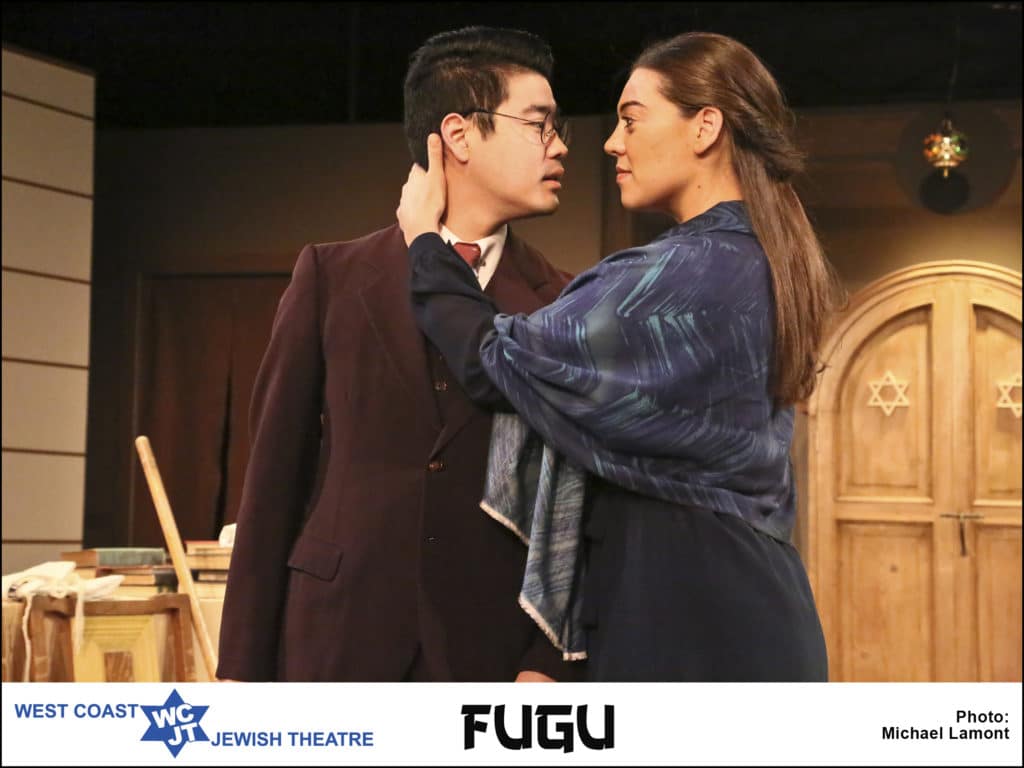
The story also involves a scheme called the Fugu Plan, devised by Yasue to convince Americans of their benevolent, peaceful intentions by sending Jewish community leader Avram Kaufman to the United States on a goodwill mission. There’s also a star-crossed romance between the minister’s aide, Setsuzo Kotsuji, and Kaufman’s daughter, Sarah.

Teichman, the artistic director of the WCJT, first heard talk of Jewish refugees in Japan and Shanghai at a Passover seder in 1992. Intrigued, he did some research and read about the Fugu Plan, which ultimately didn’t come to fruition, but Yasue succeeded in saving the Jews’ lives by sending them to a ghetto in Shanghai, where they lived until the end of World War II. 

“We are seeing the rise of Fascism played out in front of us, in Portland and other places. History keeps repeating itself because we don’t learn from it. People today are losing their moral compass. We have to stand up and speak out.” — Howard Teichman

Starting in 1994, the playwrights began writing while doing further research, including interviews with survivors and visits to Little Tokyo and the Japanese American National Museum. More than two decades later, after a couple of staged readings in New York and Los Angeles, “Fugu” had its world premiere in January 2017.

The play opens with a kimono-clad Japanese woman doing a traditional fan dance and a Chasidic man dancing separately and with her. “It was a way of bridging the two cultures through dance and music,” Teichman said. “It gives the audience a chance to see these cultures in a new way.

front: Marcel Licrea, Ryan Moriarty and Scott I. Takeda; rear: Peter Altschuler and Warren Davis

“The basic concept of the play is communication,” he continued, and the use of multiple languages — English, German, Yiddish, Hebrew, Japanese — underscores that point. Teichman hired a professor from USC as a consultant who spoke the prewar traditional form of Japanese, to ensure that it was historically correct.

Most of “Fugu’s” characters are based on real people, but the character of Sarah Kaufman and an older woman, Ida Dovitch, are inventions. “I did take dramatic license with the women,” Teichman said. “We created Sarah because we wanted to create a romance between two characters from different cultures to show how similar they are.”

At the play’s end, the audience learns what became of the characters. Surprisingly, Kotsuji converted to Judaism and is buried in the same cemetery as Oskar Schindler in Israel. Meisinger stood trial in Poland and was executed for the murder of tens of thousands of Jews. Yasue was captured by the Soviets and died in a labor camp. “He was a religious, moral man who knew right from wrong and stood up for his values,” Teichman said.

He believes that the play’s themes are more relevant than ever in today’s America. “Fascism can rear its ugly head at any time,” he said. “We are seeing the rise of Fascism played out in front of us, in Portland and other places. History keeps repeating itself because we don’t learn from it. People today are losing their moral compass. We have to stand up and speak out.”

The son of a Polish survivor of the Majdanek concentration camp who made his way to Toronto after the war to join his sisters, Teichman recalled the impact of the Holocaust on his family. “My father was always haunted by what happened to him. It’s one of the reasons I wanted to be involved in Jewish theater,” he said. “A lot of the people who survived the camps no longer believed in God and don’t practice the religion, but it wasn’t God that did this. It was man’s inhumanity to man.” 

Teichman’s love of theater traces back to the third grade, when he’d entertain the classroom with little skits. “The teacher would give me five minutes to improvise something. Sometimes I’d get other kids involved,” he said. He got further improvisational training and learned how to write plays at Second City in Chicago, alongside future “Saturday Night Live” stars Bill Murray and Jim Belushi, and earned undergraduate and master’s degrees in theater at UCLA.  

He has been affiliated with the WCJT since he directed “The Value of Names” in 2009. “I wanted to do Jewish theater because I wanted my children to know what it means to be Jewish,” he said. “I’ve always been committed and dedicated to bringing Jewish theater to my audience and I’ll do it till the day I die.”

Although productions are on indefinite hold because of COVID-19, Teichman is writing a new play, a comedy called “Three Coconuts.” “I’m trying to focus on laughing as much as I can. We know that there’s a light at the end of the tunnel and we’ll be able to come back.” He recently became a grandfather for the second time, and in-person and FaceTime family visits keep him going during the pandemic.

He believes that “Fugu” has a hopeful message. “Despite something as horrible as World War II and as manipulative as this Fugu Plan that the Japanese were trying to do, 6,000 lives were saved,” he said. “Something good came out of something bad. Tikkun olam happens when you least expect it.”

“Fugu” is available on YouTube here.

Virtual Theater: ‘Fugu’ Tells Little-Known Holocaust Story Read More »

From JPL to Extreme Sports

Joe Witt, 82

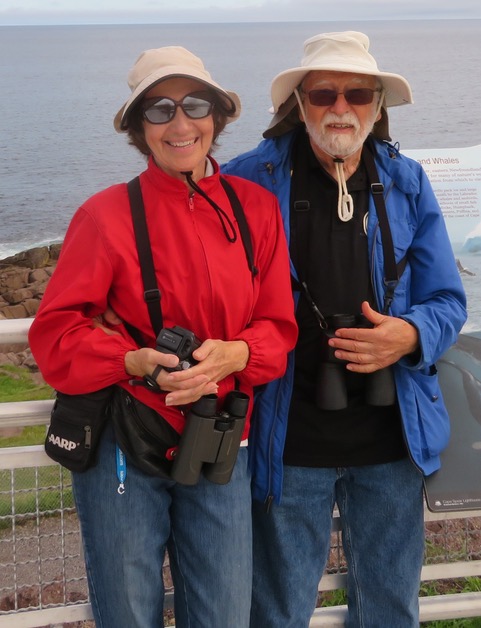
Joe Witt worked at the NASA Jet Propulsion Laboratory (JPL) until 2002. Today, he spends his time with his wife of 60 years, Roz, his son, and his two grandchildren. Every year, Joe and his family go on two major trips. To date, they have traveled to Botswana, Rwanda, Tanzania, Canada and Costa Rica, and are headed to Japan this summer. 

Witt, who attends the Synagogue for the Performing Arts in Hollywood on the High Holy Days, said he loves traveling because he and his wife like to experience nature. “We go to places where we see animals we don’t see here. We go bird-watching and see wildlife. It’s also nice meeting new people, especially from other countries.”

The couple also enjoys skiing on Mammoth Mountain and kayaking in Northern California throughout the year. Having common interests, Witt said, is what has kept their marriage strong for the past six decades. 

“We enjoy doing the same things. We both love to ski and travel. We like to go to the theater, do tai chi, go to meditation, folk dance and go on the same types of trips. We have common interests and respect each other.”

“We have two dogs and they keep you alive. You feed and nurture them, and they also help you.”

Witt keeps busy with another favorite hobby: kiteboarding, which combines aspects of wakeboarding, snowboarding, windsurfing, surfing, paragliding, skateboarding and sailing. He’s been taking classes with his son and grandson since 2013. One of his goals is to get over his fear of the water, which he is doing slowly by practicing kiteboarding in Corpus Christi, Texas, where the water is shallow. 

“I thought I’d be up and riding by this time, but in the Pacific Ocean the water gets deep very rapidly and it’s above my head,” he said. “I panic. My kite is fastened on my waist and I get in the water and start floating and the wind takes me away. I’m doing it down in Texas because I want to be able to ride. I’m pretty sure I can overcome anything else once I know I can get up and ride. It’s important.”

Witt attributes his longevity to his love for his job at JPL, saying he really looked forward to working there every day. He also touts the benefits of eating well, exercising, having two pets and staying centered. 

“I enjoy life,” he said. “We have two dogs and they keep you alive. You feed and nurture them, and they also help you. We take meditation classes, which help our anxieties considering the nature of things in the world right now. I’m learning that I can only take care of what I can for me. I can only do so much. I can’t cure the world. Now I’m hoping my grandsons find something that they can do and enjoy, too.”

From JPL to Extreme Sports Read More »

North Korea Fires Another Missile

North Korea has fired yet another missile, indicating that the hermit kingdom’s pause in missile provocation has now ended.

The missile was fired from Sain Ni at around 3:17 am local time and stayed in the air for around 50 minutes and traveled 620 miles before landing in water that Japan claims exclusive economic rights.

The missile that North Korea fired is believed to be an intercontinental ballistic missile (ICBM) and reportedly went as high as 2,800 miles, 10 times higher than the NASA international space station. It’s reportedly capable of striking any location in the United States.

South Korea responded to the missile launch with their own “precision missile strike drill,” where they launched a missile that traveled the same distance as North Korea’s ICBM.

Japan’s Prime Minister Shinzo Abe responded to the launch by calling in his national security council for a meeting.

“We strongly urge North Korea to change their policy as there will be no bright future for North Korea unless they resolve such issues as the abductions, nuclear program and missiles,” said Yoshihide Suga, Japan’s chief cabinet secretary.

President Trump simply said in a press conference, “We will take care of it. It is a situation we will handle.” Defense Secretary James Mattis called North Korea’s actions as a danger to “world peace, regional peace and certainly the United States.”

Tuesday’s missile launch was the seventh time this year North Korea has conducted such tests, with the previous test occurring in September. The United States believes that North Korea could develop a missile capable of holding a nuclear warhead by 2018, and South Korea is warning that the hermit kingdom is “developing its nuclear weapons at a faster-than-expected pace.”

“We cannot rule out the possibility that North Korea could announce its completion of a clear force within one year,” said South Korean Unification Minister Cho Myoung-gyon.

North Korea Fires Another Missile Read More »

Japan and Israel are invested in having strong ties, former ambassador says

When Israel’s ambassador to Japan took the stage at a special dinner on May 15 in Beverly Hills, the 65th anniversary of the first diplomatic ties between the two countries, she had a historic surprise.

Ruth Kahanoff had done some homework. Having unearthed the minutes of the Knesset’s Foreign Affairs Committee from 65 years ago, she read from then-Prime Minister David Ben-Gurion’s remarks to the Knesset committee.

“Like us, [the Japanese] have no natural resources,” she read “and have managed to achieve great things only with human spirit and wisdom, excellence, hard work. We should be friends.”

The dinner, hosted by the American Jewish Committee (AJC), cast a spotlight on a partnership between that has come a long way since Ben-Gurion’s pronouncement in 1952. The event honored Hideo Sato, Japan’s former ambassador to Israel and a longtime booster for cooperation between the two nations.

In an interview earlier that day, Sato cleared his throat before launching into a history of his personal ties with Israel.

“Where shall I begin?” he said.

His love affair with Israel starts with an actual love affair. He was living in Athens in the summer of 1976 when a Japanese woman brought him a letter of introduction from a mutual friend, an Israeli student whom they had tutored separately in Japanese while living in Tokyo. Soon, the two were married. In 1977, they traveled to Israel to visit that mutual friend, who by then was back in Tel Aviv. The newlyweds were enamored of the place and moved there.

Sato described his early years there as his “best time and experience in Israel,” even as he and his wife struggled as new immigrants to establish their new life. Then in 1985, while working toward a master’s degree in classical studies at Tel Aviv University, he was recruited by Japan’s Ministry of Foreign Affairs, launching a long career in foreign service that culminated in his ambassadorship to Israel.

His diplomatic career evolved alongside the relationship between the two countries.

In the 40 years since Sato first arrived in Tel Aviv, the Japanese-Israeli relationship has improved considerably, he said.

Today, he said, “I would say it’s excellent. If you compare the relationship today with that of, let’s say, even 10 years ago, 20 years ago — it’s hard to imagine.”

Japan was the first Asian country to establish ties with Israel. But the distance of half a globe always  strained the relationship, Sato said. Moreover, while the lack of any appreciable Jewish population in Japan meant there has been little anti-Semitism, it also sometimes results in “a lack of understanding” between the two countries, he said.

So, by 1988, three years after Sato arrived back in Tokyo, the relationship had soured. The long years of the Arab boycott against the Jewish state had made Japanese businessmen hesitant to work in Israel, fearful that they would alienate the much larger Arab market. Anti-Semitic literature, such as “Protocols of the Elders of Zion,” was in vogue in Japan.

That year, “while other American organizations were just criticizing Japan, the AJC decided to send its delegation to talk with us, to see what’s happening and to see whether it’s true or not,” Sato said.

Sato was among the Japanese statesmen who received the delegation, which included current AJC Chief Executive David Harris.

“The ensuing friendship, which I have always cherished, is the reason why I’m here this evening,” Sato said at the dinner.

Sato, 68, received the Madeline and Bruce Ramer Award for Diplomatic Excellence, honoring his “decades long dedication and accomplishments in strengthening the Japan and Israel relationship … and deepening the ties of friendship between Japan and the Jewish people,” according to the award’s inscription.

During his ambassadorship, Sato presided over a number of benchmarks in the relationship. In 2013, he celebrated the dedication of the Jericho Agro Industrial Park, an economic development project to support small Palestinian businesses, which Japan has funded with hundreds of millions of dollars. In 2014, he oversaw the signing of the “Joint Statement on Building a New Comprehensive Partnership” by Japanese Prime Minister Shinzo Abe and Israeli Prime Minister Benjamin Netanyahu, committing to stronger economic and military ties.

Since Sato returned to Japan from his post in Tel Aviv, investment in Israel from Japan has exploded from 5 billion yen to 22 billion yen (or about $45 million to nearly $200 million), and visits back and forth by government ministers have been frequent.

The recipe for economic cooperation between the two countries is simple, according to Sato: “Israel is not a manufacturing country. We are. So, we buy a lot of technologies. And so, here I see a lot of potential between the two countries.”

Sato also is committed to the idea that Japan can help create peace in the Middle East by fostering economic stability for the Palestinians and by helping create conditions for negotiations to proceed between Israel and the Palestinian Authority.

During his address at the AJC dinner, he hinted that the Japanese and Israeli people may be more than just friends — they might be family.

“There are scholars, both Japanese and Jewish, who claim that the Japanese are one of the lost tribes,” he said. “If that were true, we would have to add 127 million to the current world Jewish population.” n

Japan and Israel are invested in having strong ties, former ambassador says Read More »

Episode 31 – Tokyo Vice: A Jewish journalist against the Yakuza with Jake Adelstein

To many of us, Japan is still a mystery wrapped in an enigma. Mysterious of all is the Yakuza, Japan’s notorious crime organization, which has been growing and spreading dread for decades.

When Jake Adelstein, a nice Jewish boy from Minnesota, decided to leave everything behind and follow his passion and fascination to Japan, he didn’t know much about the Yakuza either. But soon enough, he learned more than he’d ever imagined he would. Pursuing a career as a Tokyo investigative crime reporter, he wrote in Japanese for one of the country’s most prestigious newspapers.

Jake visited Israel recently for the first time, as a guest of Penn Publishing, who just printed his 2010 book Tokyo Vice. The book tells the mind boggling real-life incidents that took place throughout Jake’s impressive and dramatic career. 2NJB sat with him to talk Japan, Yakuza, and journalism.

Get the book
Jake’s Twitter

Episode 31 – Tokyo Vice: A Jewish journalist against the Yakuza with Jake Adelstein Read More »

The Fugu Plan: How the Japanese saved Jewish refugees

“You know how when you’re at a seder,  you talk about freedom and slavery and so forth? The conversation was about the Holocaust and how Jews would go to Canada or Mexico or Argentina. And this couple sitting next to me said, ‘Oh, we went to Tokyo.’”

It was at that moment at a friend’s Passover seder in the 1980s, Howard Teichman recalled, that his idea for a play was born. The play, called “Fugu” — about the Japanese plan to offer sanctuary to European Jews during World War II and the bizarre rationale behind that campaign — will be presented Jan. 28 to March 19 by the West Coast Jewish Theatre, where Teichman is the artistic director.

“I did some research and then I realized, my goodness, there’s this story about how Lithuanian Jews were given exit visas so they could come to Japan — and all of a sudden there’s this Fugu Plan. And I became so totally enamored with the story. It just kind of blew me away,” said Teichman, the play’s director and co-writer with Steven G. Simon.

While the couple at the seder had been able to stay in Tokyo posing as Nazis, Teichman learned that other Jews were allowed to settle openly in such cities as Kobe, where the play is set.

The Japanese admiration and friendly feeling for the Jews was solidified during the Russo-Japanese War (1904-05), when wealthy Jewish banker Jacob Schiff helped the Japanese prevail by extending them a multimillion-dollar loan.

Then, in 1922, Japan sided with Soviets who made up the White Army in its war against the Communists. The notoriously anti-Semitic Soviets introduced Japanese Col. Norihiro Yasue (a character in the show played by Ryan Moriarty) to the infamous “Protocols of the Jewish Elders” (also known as “The Protocols of the Elders of Zion”), a fabricated document purporting to be the minutes of a meeting during which prominent Jewish figures formulated plans to take control of the world’s economies, governments and media. However, while the fake document was used to justify anti-Jewish oppression around the world, it prompted the Japanese to admire what they believed was the Jews’ wealth and influence, which they hoped could be used to help advocate for Japan in the United States. Yasue even traveled to what was then Palestine in the 1920s, meeting with Chaim Weizmann and David Ben-Gurion, and later got his foreign ministry interested in the Fugu Plan.

“According to the plan,” Teichman explained, “the Japanese wanted one Jewish man to go to America because they believed [President Franklin D.] Roosevelt was Jewish, and they felt that if they could show Roosevelt that they were being good to the Jews, he would lift the oil embargo that was placed on Japan in 1935 — because Japan had attacked China, and China was an ally of ours. If they showed they were nice to the Jews, somehow that would translate into not going to war. That would translate into, hopefully, getting Jewish-American money to Japan to help the Jews who were in Japan.”

As the play begins, leaders of the Jewish community in Kobe, including Rabbi Shlomo Shapira (Peter Altschuler) and Dr. Avram Kaufman (Warren Davis) — in real life, Dr. Abraham Josevich Kaufman — invite Yasue to Shabbat dinner. Yasue decides the dinner should take place at his home and be overseen by his aide, Setsuzo Kotsuji (Scott Keiji Takeda), who has learned about Judaism and studied Hebrew in Palestine. Also present is another member of the Jewish community, along with Kaufman’s daughter (Rosie Moss) and Captain Matsuoko (Marcel Licera), a fervent Japanese nationalist.

During the dinner, the Japanese pressure their guests to participate in the Fugu Plan or end up in a concentration camp. Although he is bewildered by the idea and knows he has little chance of success, Kaufman agrees to be Japan’s emissary to the United States.

In the play, the three main Japanese characters and the leaders of the Jewish community are all based on historical figures, Teichman said, but the Shabbat dinner is a dramatic invention to further the story line, as is the character of Kaufman’s daughter and a fictional love story between her and Kotsuji.

“We decided that, during our process of writing this play, we wanted to create a sense of urgency,” he said. “And the way we did it was to have everything happen in one day. … And so, the Shabbat dinner was a way of introducing the Fugu Plan to the audience.

“That’s why we set it the way we did. That’s why we took dramatic license the way we did, because the story is a long story. It takes up time and time. We tried to synthesize the story so it could be theatrical.”

Into the mix comes Gestapo officer Col. Josef Meisinger (David Preston), known as “the Butcher of Warsaw,” making an unexpected appearance. His entrance effectively puts an end to the Fugu Plan and poses a dire threat to the Jews. “Josef Meisinger was a real person who had come to Japan to ask the Japanese to kill the Jews,” Teichman said. “And the words that we wrote came from his transcripts.”

But the Japanese, who occupied Shanghai, refused to kill the Jews, opting instead to create a ghetto for them in that city. “Go to YouTube and see these people from Steven Spielberg’s ‘Shoah’ who speak about their time in Shanghai,” Teichman suggested. “These people talk about it being difficult. They didn’t have all the amenities, all the food, but they look back on it as a time when they survived. They were living in conditions that were better than being in a concentration camp. They were able to come and go. They had newspapers. They may not have had fancy clothes and all the amenities, but they were able to survive. And to me, that’s the real story — that these people survive.”

The Fugu Plan: How the Japanese saved Jewish refugees Read More »

Why Sugihara’s selflessness still matters

Most Jewish Americans are familiar with the story of heroism told in Steven Spielberg’s 1993 film “Schindler’s List” about German industrialist Oskar Schindler, who is credited with saving more than 1,000 Jewish lives during the Holocaust. 

Far fewer know the story of how Chiune Sugihara — often called the “Japanese Schindler” — sacrificed his diplomatic career and defied his government to issue thousands of transit visas to Jews in 1940 from his post in Lithuania. It is estimated that 40,000 people are alive today as a result of his actions.

On June 23, the Los Angeles branches of the Japan America Society of Southern California, the Consulate General of the Republic of Lithuania and American Jewish Committee (AJC) joined forces to present a panel discussion regarding Sugihara’s legacy and for a screening of the historical drama about the diplomat, “Persona Non Grata,” at the Japanese American Cultural & Community Center’s Aratani Theatre. 

The film, which had its American premiere in January at the Atlanta Jewish Film Festival, coincides with the 75th anniversary of Sugihara’s survivors arriving at the Port of Tsuruga in Fukui, Japan, and the 30th anniversary of Sugihara’s death at age 86. Other events honoring Sugihara include debuting a street named for him in Netanya, Israel, on June 8. 

“It is extremely important to highlight this kind of story, especially as the film details a uniquely positive chapter in a period of history known for its immeasurable inhumanity,” said Janna Weinstein Smith, AJC regional director. “This event is a part of our ongoing efforts to build greater understanding between Jewish and non-Jewish communities here and throughout the world.”

Oriha Sugihara, great-granddaughter of the late Japanese diplomat, opened the panel, welcoming Weinstein Smith, Lithuanian Consul General in Los Angeles Darius Gaidys, Japanese Consul General in Los Angeles Harry Horinouchi and Akira Kitade, author of “Visas of Life and the Epic Journey,” about a Japan Tourist Bureau employee who helped ferry Jews with Sugihara visas to Japan. 

But it was Holocaust survivor Nathan Lewin, attorney and lecturer at Columbia Law School, who provided a living — and lively — testament to Sugihara’s legacy. 

Born in Lodz, Poland, in 1936, Lewin came onstage with a warm smile and a spring in his step. He immediately had the capacity crowd rapt when he announced, “The film starts out with the statement, ‘Based on a true story.’ Here is another true story, told by somebody who remembers almost none of it, as it happened before I was 5 years old.”

During his presentation and in a subsequent interview with the Journal, Lewin, 80, credited his parents for making sure he was well versed in the details of the family’s carefully planned escape from World War II Europe via Poland, Lithuania, the Trans-Siberian Railway and, finally, a boat to Japan. 

Lewin described how, when he was born, the newspapers were full of Hitler’s threats, and his mother, Pessla “Peppy” Sternheim, feared Poland would not be a good place to stay. She convinced her husband, Dr. Isaac Lewin, to agree that if the Germans crossed into Poland, the family would head east. 

In September 1939, the family escaped over the border in the middle of the night with other Jews. Lewin’s paternal grandfather, Aaron Lewin, a respected rabbi who was elected twice to the Polish parliament, made an attempt to escape but was murdered.

“The story I was told years later was that as a 3-year-old carried through the forest, they warned me if I made any sound, the wolves would come out from behind the trees and eat me up,” Lewin said. “We made our way across the border into Lithuania and headed to Vilnius, which not only had a historic Jewish community but also many other refugees who came in before us. I even attended the kindergarten there. However, my mother intuited that Vilnius was also not a good place to stay.” 

Years later, he and his older daughter (and law practice partner), Alyza D. Lewin, discovered that Lewin’s Dutch-born mother played a key role with Netherlands Consul General Jan Zwartendijk in the logistics that would allow Jews to make it out of Lithuania through Sugihara.

Upon learning Lithuania was about to be annexed by the Soviets, Lewin’s mother eventually convinced the Dutch ambassador in Riga to write in her passport that permitted her to enter Suriname, Curacao and other possessions of the Netherlands in the Americas without an entry visa. She then went to Zwartendijk and asked him to copy the same words onto the travel documents of family members. Based on Zwartendijk’s notation, Sugihara then granted them transit visas through Japan on the purported trip to Curacao. This strategy, in turn, eased the way for other “visa” holders — despite orders to the contrary from the Japanese government. 

According to Yad Vashem’s website, none of these refugees ever arrived in Curacao — more than half went to free countries while about 1,000 ended up in Shanghai, where they survived the war.

Lewin still has a Sughiara visa as a family heirloom — it is said that the diplomat continued to hand out visas from the window of his train even as he departed Lithuania after consuls and embassies were closed — and stressed that it’s crucial to remind the world of what people like Sugihara and Zwartendijk did.

“Once Sugihara was recognized at Yad Vashem among the Rightious Among Nations in 1985, the question of Zwartendijk’s involvement in the whole Sugihara episode came to the forefront of my consciousness. There were also several other survivors who knew about Zwartendijk. We wrote to Yad Vashem to ask he also be listed. On the basis of testimonials we provided, he was recognized in 1997,” Lewin said.

The influence of Sugihara’s actions reverberated long after the war, according to Lewin, who explained that his father was involved in rescue efforts for Jewish refugees and that he himself dedicated some of his law career to supporting Jewish causes and arguing cases on behalf of the Jewish community (especially Orthodox Jews), going all the way up to the Supreme Court.

“I have done many of those cases pro bono, and people ask me who financed them,” he said. “I argued these cases out of my own volition, and these choices can be attributable to the example my father set in the years after he arrived in the United States and, perhaps, to the Sugihara story, as well. If I knew I existed because a Japanese man did the right thing when his government told him not to do it, that does have an influence to some extent.” 

Lewin concluded his pre-screening speech with a reflection on the appropriateness of Sugihara’s first name: “Chiune is a very interesting name, especially if you’re Jewish and know Hebrew,” he said. “Although you can pronounce it ‘Chee-un-eh’ in Japanese, in Hebrew you could pronounce it ‘Chi-uni,’ which means, ‘You’ve given me life.’ ”

Why Sugihara’s selflessness still matters Read More »

JDC mobilizes Ecuador, Japan relief efforts

The American Jewish Joint Distribution Committee is organizing relief efforts in response to a 7.8 magnitude earthquake in Ecuador that has killed at least 272 people and injured more than 2,500.

The New York-based JDC said in a statement released Monday that it has begun assessing needs and coordinating relief efforts with the Ecuador Jewish community and Heart to Heart International focusing on medical care, medical supply provision, and water purification efforts.

In addition to the group’s response in Ecuador, a $25,000 JDC grant for emergency supplies including food and non-food items was made to JDC’s longstanding partner, the Japanese humanitarian agency JEN, to aid people impacted by the recent earthquakes in the Kumamoto province.

“As devastating images from Ecuador surface, JDC extends its deepest condolences and joins our partners to deploy a speedy response that ensures relief to survivors at their greatest time of need,” JDC CEO Alan Gill said in a statement. “Our response in Ecuador, and in Japan, are proud expressions of the Jewish value of tikkun olam, repairing the world, and are fortuitous as we lead up to the Passover holiday when we celebrate our redemption from great odds. May all those impacted by these crises experience the same solace and strength that can be found in family and community.”

JDC’s disaster relief programs are funded by special appeals of the Jewish Federations of North America and tens of thousands of individual donors to JDC. The organization coordinates its relief activities with the U.S. Department of State, USAID, Interaction and the United Nations.

Donations for these efforts can be made at www.jdc.org/ecuador

JDC mobilizes Ecuador, Japan relief efforts Read More »

Major quake hits near Japan’s Kumamoto; tsunami advisory lifted

A magnitude 7.1 earthquake struck southern Japan early on Saturday, just over 24 hours after a quake killed nine people and injured at least 1,000 in the same area.

The Saturday quake triggered a tsunami advisory, though it was later lifted and no irregularities were reported at three nuclear power plants in the area, Japanese media reported.

There were no immediate reports of casualties in the Saturday quake though there were several reports of damage, including some collapsed buildings and cracked roads.

The epicenter of the quake was near the city of Kumamoto and measured at a shallow depth of 10 km, the U.S. Geological Survey said.

The quake on Thursday evening in the same region was of 6.4 magnitude.

“Thursday's quake might have been a foreshock of this one,” Shinji Toda, a professor at Tohoku University, told national broadcaster NHK.

The Japan Meteorological Agency said the Saturday quake was 7.1 magnitude and it initially issued a tsunami advisory, which identifies the presence of a marine threat and asks people to leave coastal regions, for the Ariake and Yatsushiro seas.

NHK said the advisory suggested a possible wave of one meter in height. The advisory was later lifted.

Several aftershocks rattled the region later on Saturday, including one of 5.8 magnitude.

NHK quoted an official at a hospital near the epicenter as saying it had lost power after the Saturday quake and had to use its generators.

Most of the casualties in the Thursday quake came in the town of Mashiki, near the epicenter, where several houses collapsed.

A magnitude 9 quake in March 2011, to the north of Tokyo, touched off a massive tsunami and nuclear meltdowns at Fukushima. Nearly 20,000 people were killed in the tsunami.

Major quake hits near Japan’s Kumamoto; tsunami advisory lifted Read More »