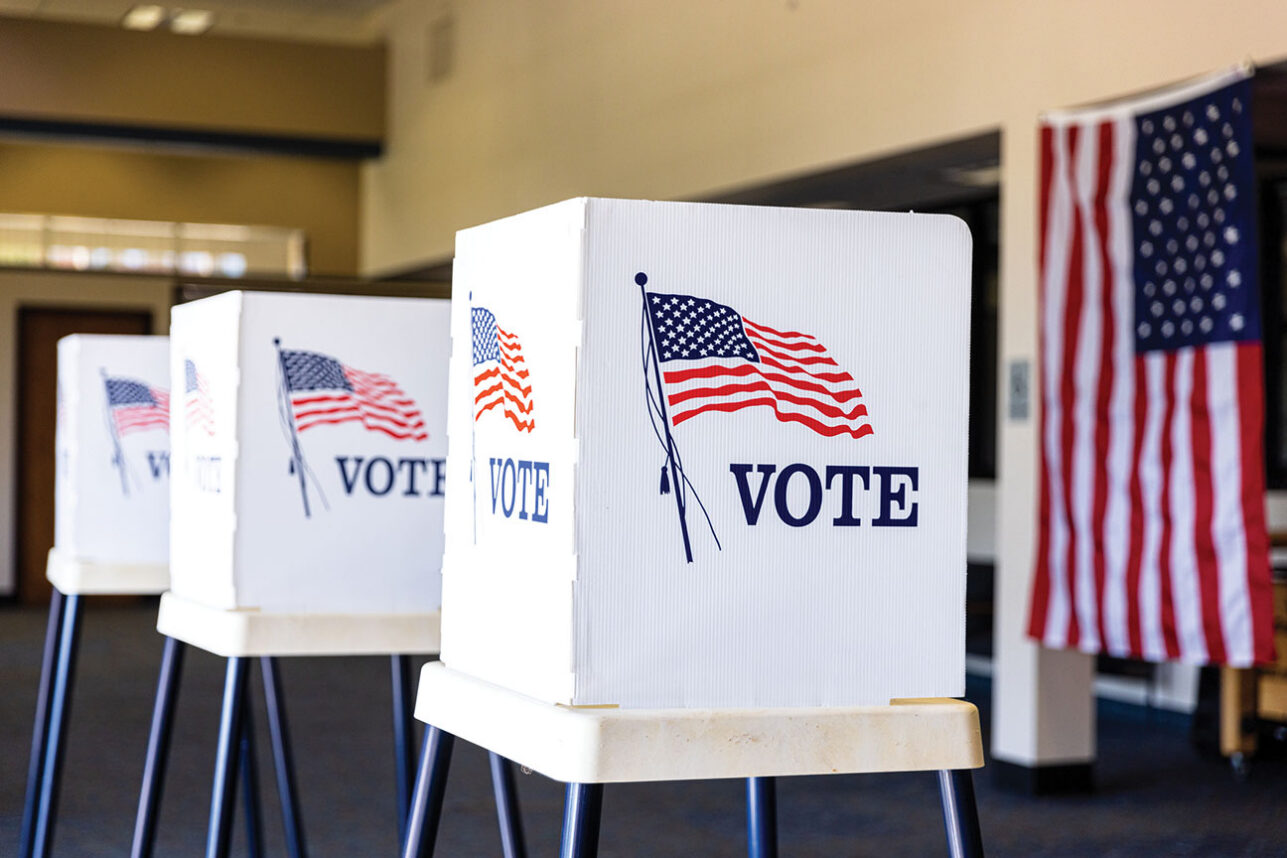
A bill targeting the Boycott, Divestment and Sanction (BDS) of Israel took a final step towards passage in the California legislature as the state Senate voted 34-1 to approve Assembly Bill 2844 on Aug. 24.
The bill faced a long and winding path to approval by the Senate, passing through a number of iterations in an attempt to satisfy concerns about free speech.
Whereas other state bills aimed at rebuking the BDS movement may violate First Amendment rights, AB 2844 skirts those concerns, said Sen. Marty Block (D-San Diego), who introduced the bill to the Senate.
“We carefully crafted this bill to not fall into any of those pits,” he said.
The idea behind AB 2844 when “>dub it “no longer a pro-Israel bill.” Bloom encouraged his colleagues to pass it anyway so that it could be salvaged in the Senate, and it passed without opposition.
Then, on June 20, the Senate Judiciary Committee tweaked the bill into roughly its current form.
Now, the measure doesn’t forbid contractors from boycotting Israel. Instead, it requires that companies certify they don’t violate state civil rights law in the course of boycotting a sovereign nation recognized by the United States – including Israel, the only country mentioned by name.
“We are looking not at people’s individual rights to speak, but whether or not what they’re doing violates existing California laws against discrimination,” said Sen. Hannah-Beth Jackson, who chairs the judiciary committee.
Block said the bill was intended to target boycotts rooted in anti-Semitism. He pointed out that proponents of BDS don’t seek to boycott Russia, China or Saudi Arabia, which he called far worse human rights violators than Israel.
“They don’t propose boycotting those nations for political reasons, only the Jewish state,” he said on the Senate floor. “Why only the Jewish state?”
The BDS movement, said Sen. Jeff Stone (R-Riverside), is “rooted in the same anti-Semitism that has surrounded Israel since its founding.”
Sen. Bill Monning (D-Carmel) was the only legislator to vote against the measure.
“Those standards already apply,” he said of the anti-discrimination measures proposed by the bill. “So we have a bill on the floor that seeks to affirm laws that already exist and people are held accountable for already.”
He went on, “I would have much rather seen the energy generated around this bill be directed towards bringing stakeholders together on our campuses and in our communities to model the type of dialogue that is so desperately needed.”
The bill has until Aug. 31 to gain re-approval in the Assembly before the legislative session ends.
From the beginning, the bill received strong support from the mainstream Jewish community. Block dismissed as “fringe groups” the Jewish organizations, such as Jewish Voice for Peace, who have denounced the measure.
“Now we have another tool in our toolbox” in the fight against BDS, said Shawn Evenhaim, chairman of the Israeli-American Coalition for Action (IAX), which has led the move to pass AB 2844.
Evenhaim said that once the bill becomes law, IAX would look to see that it’s used to halt discriminatory boycotts against Israel.
“We’re not just going to frame [the bill] and hang it,” he said. “It’s a much longer fight and a much longer process.”
Dillon Hosier, the national director of state and local government affairs for IAX, said the federal government is producing a list of companies “engaged in a coercive political boycott against Israel.”
Once that list is composed it “will be a strong resource” in using AB 2844 to combat BDS in California.
In a joint phone interview, both officials praised the efforts by the legislature to fine-tune the measure.
“The bill was modified to really be very strong and secure from a constitutional perspective while also frankly confronting directly BDS and its effects,” Hosier said.
He said he’s continuing to work with Bloom and expects the bill to receive a vote in the Assembly on Aug. 29.
But the updates made to the bill as it wound its way through the legislature failed to quiet its opponents.
“From the start, the aim of AB 2844 has been to punish and chill First Amendment protected conduct – BDS campaigns for Palestinian freedom,” Rahul Saksena, staff attorney at Palestine Legal, said in an emailed statement. “The sponsors have jumped through hoops and hurdles trying to amend the bill to make it ‘less unconstitutional,’ but you can't fix a fundamentally flawed bill.”