
The Media Line — Very early-stage technology startups’ fundraising potential will get a boost from a new 80 million shekel ($25 million) Israel Innovation Authority program following three years of stagnation in seed funding, the independent public agency said.
The new Hybrid Seed Incentive Program created by the Economy and Industry Ministry’s Israel Innovation Authority (IIA) encourages seed investors by limiting their investment risk in early ventures after a funding slowdown was exacerbated by the pandemic.
Since 2017, figures show an average annual decrease of about 25% in the number of startups formed in Israel, a trend that the coronavirus crisis has intensified.
“New startups are the future of the Israeli innovation ecosystem, and supporting them during their early stages is critical for their progress. This reality risks causing long-term hardship, limiting the ability of our innovation ecosystem to flourish,” IIA Chairman Dr. Ami Appelbaum said in a news release.

The program’s timing, amid the pandemic, is not accidental.
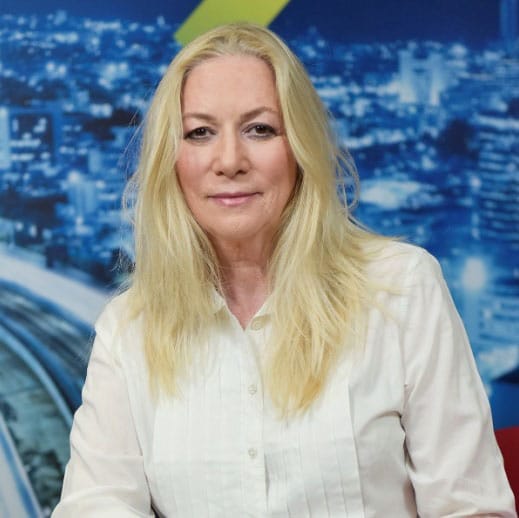
“It is the government’s task to invest in areas not currently attracting private investment, to invest against the cycle so to speak, so now is the right time,” IIA Vice President Anya Eldan told The Media Line.
“We have seen fewer seed rounds over the last three years, so we are preparing the pipeline for growth in the years coming out of the crisis. This program will increase the number of seed-funding rounds in diverse sectors and will motivate veteran VCs [venture-capital funds] to invest in seed rounds,” said Eldan, who heads the IIA Startup Division.
The initiative is not targeting specific industries. Instead, it is seeking the most innovative, disruptive and high-risk startups.
“The IIA is looking to support startups involved in deep technology [such as quantum], new sectors [like foodtech], sectors where there is a paucity of VCs [such as climatetech], and sectors with high regulation” like bio-convergence,” she said.
Seed investing is difficult and relatively risky because funding comes before the product stage and before anything has been marketed to customers. Seed funding can enable the entrepreneur or team to develop a beta-product or prototype and potentially take the idea to a pilot program, depending on the industry.
Often seed is the first institutionalized funding in an idea or company and follows angel investors or families and friends who invest.
Because entrepreneurs have an idea but not always a track record or history with other companies, seed investors tend to be wary. Thus, there are generally fewer seed than later-stage venture-capital investors.
“There is a long time horizon for seeing results from seed funding. Investors can easily go five to 10 years without knowing whether they will recoup their initial investment or succeed in receiving more value,” Oded Caspi, co-founder of Cyrus Ventures seed-investment firm, told The Media Line.
Since its founding in 2011, Cyrus has been the first investor in 25 seed-stage companies.
The new program, Caspi said, “is an amplifier,” enabling funders to see increased returns from a small, early investment. “They will see their investment be larger than it actually was, thereby qualifying them to reap higher rewards if the company succeeds.”
Caspi likes the new program, telling The Media Line, “We will be happy to try to participate in this.”
Seed rounds took a big hit during the first half of 2020 because of financial-market uncertainty; however, by the end of the year investments picked up, according to the Israel Venture Capital Research Center.
Whereas median seed-round investment fell 80% to a low of $120,000 in Q2 2020, it jumped to $1.5 million by Q4 2020, the report said. Median-seed investment was $900,000 to $1 million in 2019, it added.
If successful, the Hybrid Seed Incentive Program will increase the number of startups established in Israel and help nurture companies so that within three years, close to 65% of the participants reach a further funding stage.
Moti Elyashiv, co-founder of NewRocket, a startup developing environmentally friendly “green propulsion” rocket engines based on gel propellant technologies, also likes the new IAA program.
“This is very good for ‘deep-tech’ startups, those that take more time for their technologies to reach certain milestones,” Elyashiv told The Media Line.
He should know. NewRocket founded in 2014 is a “deep-tech” space-industry startup backed by Incubit Ventures, an incubator owned and supported by Elbit Systems that has backing from the IIA. In late November, the company secured a $1 million investment from UK-based Consensus Business Group, led by investor Vincent Tchenguiz.
“We are happy that we had the backing of the IIA and Incubit in our long R&D track. This enabled us to develop our technology and brought us to point that we now have $6 million in backlog orders.”
The IIA said that with this new program, the public will see more successful startups within a few years.