Jamie Milne, the Toronto-based recipe developer and founder of Everything Delish, has built a devoted following of 2.5 million on TikTok and nearly 900,000 on Instagram by making home cooking approachable, flavorful, and fun. Known for her bold flavors and simple steps, Milne has turned everyday meals into culinary adventures, inspiring thousands to try recipes they might have thought were “too complicated.”
On Sept. 1, 2026, Milne will publish her debut cookbook, “Everything Delish: 100+ Simple Recipes for Making What You Want to Eat — and Nailing It Every Time.” She shares the story behind her recipes, her approach to cooking, and even a special dish perfect for Passover.
JJ: Can you tell me about your childhood Passover? How did it look, and what were your favorite dishes and do you still make them?
Milne: Passover growing up was always very family-focused, hosted at either my parents’ house or my Bubbe’s. It meant long Seders, a full table of both family and friends, and so many meaningful traditions. My favorite dishes were always the classics: matzah ball soup, brisket and anything my mom and Bubbe made that felt comforting and nostalgic. I still make so many of those dishes today, but with my own spin, which makes it feel really special to carry those traditions forward, especially now with my growing family.
JJ: What do Passovers look like in your home today?
Milne: My Seders are very warm, welcoming and full of energy, with all our family and friends, lots of food and a mix of tradition and modern touches. It’s all about creating a warm table, serving dishes that feel abundant and comforting and making sure everyone feels included. There’s always a balance of the classics with a few newer recipes that keep things exciting.”
JJ: What are your own must-have dishes on the Seder table?
Milne: Matzah ball soup is a nonnegotiable for me, along with a really good brisket. I always include a few fresh, vibrant sides to balance everything, like roasted vegetables, big herby salads, and something with a little crunch. Also, of course, a standout dessert moment is key. Can’t forget those kosher sour dill pickles, too.
JJ: Do you usually host or are you more often a guest at someone else’s Seder?
Milne: I do a mix of both, but I love hosting when I can. There’s something so special about bringing everyone together and creating that experience from start to finish! However, with baby number two on the way, we are spending one night with my parents and the other with my in-laws.
JJ: How many days in advance do you start cooking for the Passover Seder?
Milne: I usually start prepping a few days in advance, things like soup, brisket and sauces that can be made ahead. It helps take the pressure off so I can actually enjoy the Seder and be present with everyone.
JJ: Passover cooking can feel limiting for many — how do you approach creating recipes that still feel exciting within those constraints?
Milne: I really do love the “challenge” of Passover cooking, as it pushes me to get more creative and think outside the box. Instead of focusing on what we can’t use, I lean into bold flavors, fresh herbs, vibrant sauces and really thoughtful textures. It becomes less about restriction and more about elevating simple, beautiful ingredients in a way that still feels indulgent and special.
JJ: What does a “modern” Passover menu mean to you, and how do you balance tradition with creativity?
Milne: To me, a modern Passover menu is all about honoring tradition while making it feel fresh and exciting. I always keep the core elements that were passed down to me by all my fellow seder hosts: my mom, and both of my bubbe’s. These include matzah, brisket and traditional sides, but I love adding unexpected twists, whether that’s a new flavor profile, a fun presentation or a lighter, brighter approach. It’s about honoring where it comes from while still making it feel like you.”
JJ: Your recipes often go viral — what’s your process for taking a traditional Jewish dish and turning it into something fresh and shareable?
Milne: I always start with the heart of the dish, which is what makes it nostalgic and meaningful, and then build from there. I think about how to elevate it visually and flavor-wise, whether that’s adding texture, layering flavors or presenting it in a way that feels really craveable on camera. If it feels approachable, simple and delish and something people want to recreate at home, that’s usually when it really resonates.
JJ: Do friends and family ever feel intimidated inviting you over, given your reputation in the kitchen?
Milne: Honestly, I hope not! I always say the best meals are the ones shared with people you love, no matter what’s on the table. I’m just as happy showing up as a guest and enjoying someone else’s cooking, especially since it’s never about perfection; it’s about the experience.
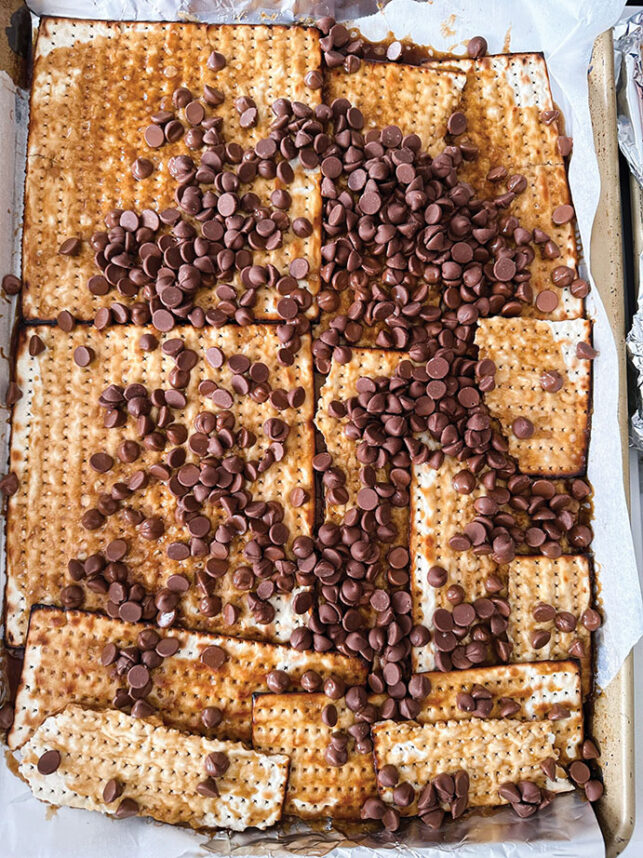
Matzah Crunch
Jamie Milne is sharing her viral Matzah Crunch recipe with Jewish Journal readers.
“It’s sweet, salty, chocolatey and honestly, one of those recipes everyone becomes obsessed with. It’s super simple, but it feels really special, and it’s one of those dishes that people make year after year,” Milne said.
Serves 6
8-10 sheets matzah
2 ½ sticks unsalted butter
2 ½ cups brown sugar
1 tsp vanilla extract
2 cups chocolate chips
¼ cup Skor bits
¼ cup sprinkles
¼ cup slivered almonds
1 tsp flaky sea salt
1. Prep the Matzah
Preheat oven to 350°F. Line two 9 x 13 baking sheets with parchment paper and lightly spray with cooking spray. Arrange the matzah in an even layer, breaking pieces as needed to cover the entire surface with no gaps.
2. Make the Caramel
In a small saucepan over medium heat, melt the butter. Add the brown sugar and stir continuously until fully combined. Once the mixture begins to bubble, reduce the heat to low and stir in the vanilla. Continue stirring until thickened and glossy, about 2-3 minutes.
3. Assemble + Bake
Immediately pour the caramel over the matzah and spread evenly to fully coat. Bake for 10 minutes, until bubbly and slightly deepened in color.
4. Add the Chocolate
Remove from the oven and sprinkle chocolate chips evenly over the matzah. Let it sit for 3-4 minutes to melt, then spread into an even, smooth layer.
5. Top + Chill
Sprinkle over the Skor bits, sprinkles, slivered almonds and flaky sea salt. Transfer to the fridge and chill for at least 1 hour, until fully set.
6. Break + Serve
Break into pieces and serve. Store in the fridge or at room temperature. Enjoy and Chag Sameach!