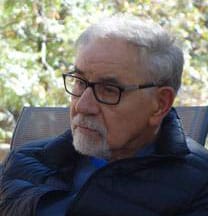
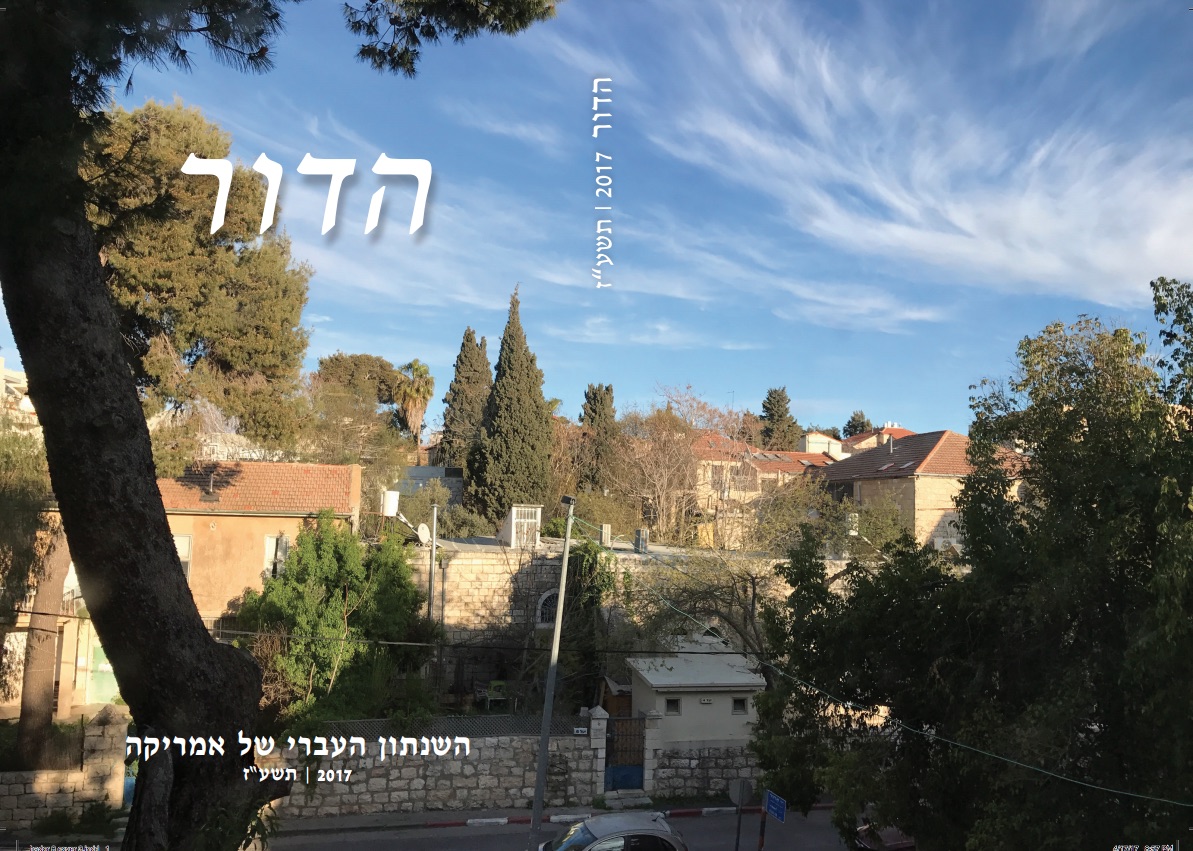
In his office on the third floor of UCLA’s Humanities Building, professor Lev Hakak proudly displays copies of Hador (“The Generation”), believed to be the only Hebrew literary periodical currently published in the United States.
Founded by Hakak in 2006, each yearly issue is filled with more than 200 pages of poems, essays, book chapters, literary reviews, stories and commentary — all in Hebrew. Most of the contributors live in the U.S., and some of the pieces are written by celebrated authors and thinkers like A.B. Yehoshua and Yigal Schwartz.
But this year’s installment of Hador, which came out in June, may be its last.
Since Hador’s inception, the endeavor has been supported primarily by annual grants of $8,000 from the Lucius N. Littauer Foundation, a New York-based organization whose mission includes promoting Jewish studies. That funding is set to end this year, according to Littauer’s program director, Alan Divack, who told the Journal that its board decided to stop funding literary projects and instead “focus on educational and medical institutions,” some of them in Israel.
The other source of funding for Hador comes in the form of $3,000 to $3,500 per year from Herb Neuman, an East Coast real estate developer and devotee of Hebrew. Hakak said he has made “limited efforts” to raise funds for the periodical but without success. With few prospects for replacing Hador’s financial backing, Hakak said he is dismayed at what could be its imminent demise.
“Once Hador disappears, there will no longer be any Hebrew-language literary journal published in the U.S.” — Lev Hakak
“Once Hador disappears,” Hakak said, “there will no longer be any Hebrew-language literary journal published in the U.S. There are authors published in it who have a hard time publishing in Israel, making the contacts. It’s not easy to travel to Israel and become part of the [Hebrew] literary scene, even though [some of Hador’s writers] are major scholars and very good poets, so it’s good for them to have a periodical here in the U.S. that publishes their work.”
Perhaps the only reason Hador made it this long on such a modest budget is because Hakak, who serves both as editor and publisher, has donated many hours of unpaid labor to the project. For the UCLA professor, Hador has been nothing less than a labor of love.
Hakak’s fondness for Hebrew was instilled at an early age. In 1951, when he was 7, he and his family fled Iraq and moved to Israel, a country struggling to absorb hundreds of thousands of new immigrants. Once there, the Hakak family lived in tents and shacks, in areas with meager facilities. When he arrived at the transit camp in Nahalat Yehuda, Hakak said his knowledge of Hebrew was limited, but like many youngsters immersed in a world they want to be a part of, he devoured the language of his new country.
“I loved Hebrew literature,” Hakak said. “I used to sit behind the shack where we lived and read any book I could find.”
It wasn’t long before Hakak was writing poems in Hebrew and getting his work published in Israeli publications as a teenager. He received a bachelor’s degree in Hebrew literature at the Hebrew University of Jerusalem and a doctorate in modern Hebrew literature from UCLA. After teaching for two years at UC Berkeley — where he met his wife, Carole — Hakak returned to UCLA, where he has been a professor of Hebrew language and literature since 1976.
Hakak’s scholarly work often has focused on Hebrew stories, poems, fables and essays written by Mizrachi Jews who, like Hakak himself, are neither Ashkenazi nor Sephardic, and whose ancestors lived in the Middle East for hundreds, even thousands, of years. The professor has written more than a dozen books about Hebrew literature and been honored with numerous accolades, including the Friedman Award for Contribution to Hebrew Culture in America.
But Hador has been Hakak’s pet project. He pointed out that besides a sizable community of Israelis in the U.S., for whom Hebrew is the mother tongue, there also are many American Jews who know the language and appreciate Hebrew literature.
“Here we have almost the same number of Jews as in Israel,” Hakak said, “so we [should] have a literary magazine that represents American Jewry’s love for Hebrew. The continued existence of Hador would make a statement that Hebrew literature is alive and well in America.”