fbpx

December 1, 2017

A Moment in Time: There’s Always Opportunity to Start Again

OLYMPUS DIGITAL CAMERA

Dear all,

Last summer, Ron and I visited the incredible Olympic Museum in Switzerland.   The self-guided tour begins with this “START” marker.

It reminded me of the Wizard of Oz, when Glinda, the good witch, reminds Dorothy that when we are lost, it’s  always best to start at the beginning.

It reminded me of Maria in The Sound of Music, when she teaches the children, “Let’s start at the very beginning, a very good place to start.”

And it made me realize that throughout life, there is always opportunity to start.

We start over.
We sometimes need a jump start.
We often are off to a running start.
And yes, every once in a while we start off on the wrong foot.

But we can always start again.

In the late 18th Century, The Hassidic Master, Rabbi Nachman of Breslav was famous for saying, “The whole world is a narrow bridge.  What’s most important is not to allow fear to prevent you from starting the journey to cross it.”

Are you ever afraid to move forward?  You are not alone  And just remember: today is your moment in time to start.
With love and shalom,
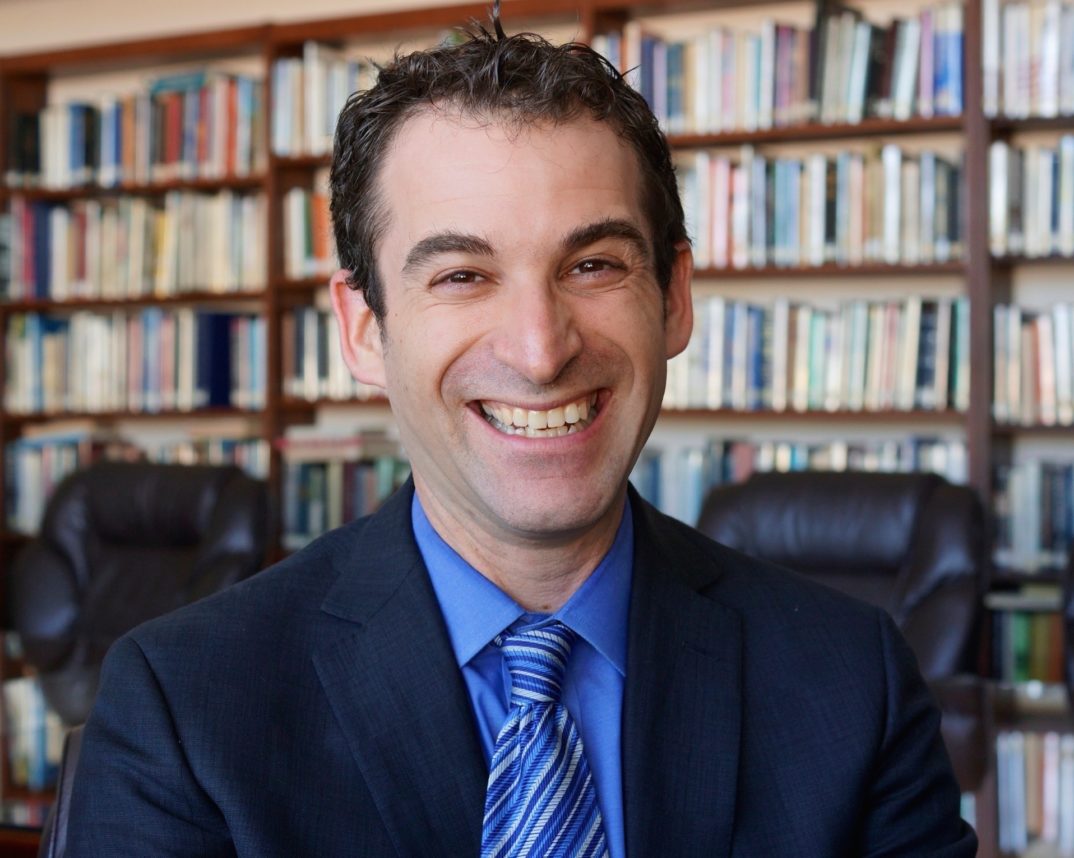
Rabbi Zach Shapiro

A change in perspective can shift the focus of our day – and even our lives.  We have an opportunity to harness “a moment in time,” allowing our souls to be both grounded and lifted.  This blog shows how the simplest of daily experiences can become the most meaningful of life’s blessings.  All it takes is a moment in time.
Rabbi Zach Shapiro is the Spiritual Leader of Temple Akiba, a Reform Jewish Congregation in Culver City, CA.  He earned his B.A. in Spanish from Colby College in 1992, and his M.A.H.L. from HUC-JIR in 1996.  He was ordained from HUC-JIR – Cincinnati, in 1997.

A Moment in Time: There’s Always Opportunity to Start Again Read More »

Kate Steinle’s Killer Acquitted of Murder Charge

Jose Inez Garcia Zarate, the illegal immigrant who shot and killed Kate Steinle in the summer of 2015, was acquitted of a murder charge on Thursday evening.

A San Francisco jury found Zarate to be not guilty of first and second-degree murder as well as assault. He was, however, found to be guilty of illegally possessing a firearm.

Zarate’s lawyer, Matt Gonzalez, stated that the verdict doesn’t diminish “in any way the awful tragedy that occurred” and it “should be respected.”

“They heard the evidence,” said Gonzalez. “They deliberated as a group. They heard read back testimony. They looked at the physical evidence and they rendered a verdict to the best of their abilities in accordance with the law.”

Steinle’s father, Jim, who was with his daughter during her last moments, lamented, “Justice was rendered, but it was not served.”

President Trump criticized the verdict on Twitter:

On Friday, the Department of Justice announced that they would be arresting Zarate. Immigration and Customs Enforcement (ICE) said on Thursday that they would deport Zarate.

Steinle was killed by a gun shot in San Francisco in July 2015 as she was walking along Pier 14 with her father. According to Jim Steinle, his daughter’s last words were, “Help me Dad.”

The prosecution argued that Zarate had intended to murder Steinle since he was playing some sort of “Russian roulette.” The defense countered that the gun accidentally discharged and Zarate threw it into the bay because he was startled by its noise. Some have argued that Zarate should have been found guilty of involuntary manslaughter.

Zarate was deported five times prior to the shooting, but was allowed to walk the streets of San Francisco as a homeless illegal immigrant due to the city’s sanctuary city policy, igniting a nationwide debate about the policy.

Kate Steinle’s Killer Acquitted of Murder Charge Read More »

Vayishlach: Let’s Talk About Dinah, Consent, and Justice

Genesis/Bereishit ch. 34:

“וַתֵּצֵ֤א דִינָה֙ בַּת־לֵאָ֔ה אֲשֶׁ֥ר יָלְדָ֖ה לְיַעֲקֹ֑ב לִרְא֖וֹת בִּבְנ֥וֹת הָאָֽרֶץ׃

Dinah, daughter of Leah, borne to Jacob, went out to see the daughters of the land.

2

וַיַּ֨רְא אֹתָ֜הּ שְׁכֶ֧ם בֶּן־חֲמ֛וֹר הַֽחִוִּ֖י נְשִׂ֣יא הָאָ֑רֶץ וַיִּקַּ֥ח אֹתָ֛הּ וַיִּשְׁכַּ֥ב אֹתָ֖הּ וַיְעַנֶּֽהָ׃

Shechem son of Hamor the Hivite, prince of the country, saw her, and laid her, and abased her.

3

וַתִּדְבַּ֣ק נַפְשׁ֔וֹ בְּדִינָ֖ה בַּֽת־יַעֲקֹ֑ב וַיֶּֽאֱהַב֙ אֶת־הַֽנַּעֲרָ֔ וַיְדַבֵּ֖ר עַל־לֵ֥ב הַֽנַּעֲרָֽ׃

His soul cleaved to Dinah, daughter of Jacob, and he loved the young woman, and he spoke to the heart of the young woman.”

A woman goes out to meet other women, so not looking for male company. A man forces himself on her. He then gets all sentimental and decides that a beautiful thing just happened. As to what the woman thought, we don’t know, because the text does not tell.

Welcome to this week’s parashah, vayishlach.

As the text goes on, Shechem decides to do the “right thing” according to ancient standards and asks Yaakov, Dinah’s father to “give” her to him as a wife. Dinah’s brothers, Levi and Simeon, are, understandably, still outraged. So they hatch a terrible plot. They tell Shechem that his family will intermarry with their family and all of those in the town if only they agree to be circumcised. The men agree (Shechem the prince is really really hot for seconds). After the operations are performed and the local men are not at their best, Levi and Simeon rally their forces and kill every last male mofo in the town.  Had they stopped at the rapist, this might have been a rough justice story. As is, it’s a story of murderous excess, and the text puts just this judgement into the mouth of Yaakov who rebukes his sons on his deathbed. So that part is pretty clear.

Many of my sisters and brothers see the first three verses as a complicated text. (See The Red Tent AKA 50 Shades of Wishful Thinking and the scholarship of Tikva Frymer-Kensky, Shawna Dolansky et al). They point out that the abasement cited in the text (the verb onah does not always mean rape) might be, from the point of view of Levi and Simeon, simply the pollution of an Israelite woman by an outsider. But see also Elana Sztokman’s cry of solidarity and pain.

By the pshat (plain meaning) of this text, Shechem does some horrendously bad thing to Dinah who did not in any way, shape, or form ask for it, his sentimental afterglow and self-justification notwithstanding. The text, tellingly, has nothing to say about her heart responding to him. Sadly, we never hear from Dinah at all. When I read these verses, I see in my mind a terrible graphic: a woman gagged and bound, bloody and bruised and a man chillin next to her, speaking casually, captioned, “You what I love about you, babe? You’re such a great listener.”

Recently we have been treated to a parade of men, speaking to the hearts of women they’ve abused. Some (Louie CK, Al Franken) appear to be sincere. They are the ones who admit that they did bad things. They take responsibility for what they did. They apologize. Period.

Then we see those other apologies. “I’m sorry you felt that way about what I, with perfectly pristine intentions, did. I’m sorry you misconstrued. I’m sorry if any one (any one out in the ether….) has hurt feelings. I’m sorry you’re such a delicate little snowflake, but I’m a big guy, so sorry.”

This latter group reminds me of Shechem who brought calamity on all the men connected to him (“Hey, I did the right thing, she would have got to marry me!”). What can we learn from this?

We cannot be like Levi and Simeon, generalizing revenge on all the men in this or that group or responding to outrages against “our” women as we would to theft of property. We cannot be silent like Dinah. And we must acknowledge that ours is not Yaakov’s generation. We are a generation of Jews who have articulated a robust view of cavod ha-briot (human dignity) that does care about Dinah’s consent, no matter what her brothers were upset about.

When there is a lacuna in a text, our rabbis bequeathed us the tool of midrash, inquiry, filling the silence. So here is my midrash, my imagining of what Dinah might say to us now:

“You want to avenge me? Then don’t have it. Fill my silence with your testimony. I went out to meet the women of the place. I went looking for friends. You be my friends by changing laws and regulations and even customs of long standing so that what happened to me does not happen to anyone else. Don’t make it acceptable or the price of employment or our internal secret for a person to appropriate the body of another. Don’t normalize it any more for men to inscribe their contempt for one another on the bodies of women in war or in private.

“I went out to see other women. I want other women to see me. Not to look away. Not to make it pretty. See me and see the woman next to you and see yourself and tell the truth.”


Vayishlach: Let’s Talk About Dinah, Consent, and Justice Read More »

Find Your Homemade Holiday Gift

Find Your Favorite Holiday Gift at The Clayhouse

CLAYHOUSE HOLIDAY SALE

The Clayhouse 2017 Holiday Sale


Please join me at the Clayhouse for our annual holiday sale! I am honored to again be a part of this sale with this wonderful community of artists. If you are looking for a homemade holiday gift, this is the place fine handmade, one-of-a-kind, affordable gifts including pottery, sculpture, glass and more.


WHERE:

The Clayhouse, 2909  Santa Monica Blvd, Santa Monica CA 90404

WHEN:

Friday December 8, 2017 4pm-9pm and
Saturday December 9, 2017 10am-6pm
WHERE:
2909 Santa Monica Blvd, Santa Monica 90404
2017 SALE PARTICIPANTS
Alia Ollikainen Joslin * Amy Dov * Amy Kivnick
Cheryl Silver * David Stone * Deborah Levin * Diana Ungerleider
Jamie Hansen * Janet Domino * Janet Grings
Jennica Atkinson * Karin Swildens * Kathy Mudgett
Kerri Price Katsuyama * Kristi Sherman * Linda Flo *Lisa Niver * Loriann Stevenson* Marilyn Haese * Nani Grennell * Narayan De Vera
Polly Osborne * Sam Dixon * Sara Winkle * Sierra Pecheur * Stephanie Sea * Valerie Moreland  * William Pitcher


More information:

About The Clayhouse Studio & Gallery:

The Clayhouse, established in 1971, is the oldest high fire pottery studio on the Westside. There are fewer and fewer studios of this nature due to limited space and obstacles in using gas-burning kilns. Gas kilns produce rich, beautiful glaze colors and unique visual effects with universal appeal. The unassuming storefront of The Clayhouse on Santa Monica Blvd displays some of the works of its 50 artist members. In the back of the storefront, there is a wide open studio with tables, wheels, kilns and pottery in various stages of completion. Classes are offered during week and weekend.

Take art class with David Stone. Photo by Mark Dektor

Take a Class:

Wheel classes

Beginning Wheel, David Stone, Sunday  mornings from 10 to 12 noon. Starts Jan. 14, 6 weeks, to Feb. 18.

Beginning Wheel, Diana Ungerleider, Saturday mornings, 10 to 12:30, starts Jan. 20, 6 weeks, to Feb. 24.

Students will learn how to use the potter’s wheel to  “throw” functional items such as mugs, bowls, vases
and more. Glaze instruction is also included.
The class fee is $280 which includes a 25-lb. bag of clay and tools, access to the studio anytime, plus the firing. An advance deposit is required to hold a space in class.
All classes last six weeks and include clay, tools 
firing, glazing and access to the studio. 
Classes are small to allow individual attention. 
Call soon to reserve a spot in a class! 
Advance deposit required.   
call 310-828-7071 for more info or to sign up
 Store hours: Tuesday – Saturday, 10 am – 3 pm
As Henry Moore said, “To be an artist is to believe in life.”
shapeimage3
“Every child is an artist. The problem is how to remain an artist once we grow up.” Pablo Picasso
shapeimage2
I hope to see you at the Studio! Lisa Niver

Photos from Summer Sale and 2016 Winter Sale

Lisa Niver, Artist and Author Photo by Mark Dektor

Find Your Favorite Holiday Gift at The Clayhouse Read More »

Flynn Pleads Guilty to Lying to FBI About Discussions With Russian Ambassador

Retired Lt. General Mike Flynn, President Trump’s former national security adviser, is pleading guilty to lying to the FBI and is willing to testify against Trump in the Russia investigation.

Flynn faced charges of lying to the FBI that he didn’t tell Russian ambassador Sergey Kislyak to vote against a United Nations resolution in December declaring all Israeli settlements in Jerusalem to be illegal. He also faced charges of lying about telling Kislyak to hold off any retaliation against sanctions and that he didn’t remember Kislyak telling him that Russia would indeed “moderate its response.”

Flynn refused to cooperate with Special Counsel Robert Mueller at first due to his loyalty to Trump, but eventually acquiesced due to increasing legal bills and the feeling that Trump was leaving him out to dry.

The former national security adviser issued a statement that read, “It has been extraordinarily painful to endure these many months of false accusations of ‘treason’ and other outrageous acts. Such false accusations are contrary to everything I have ever done and stood for. But I recognize that the actions I acknowledged in court today were wrong, and, through my faith in God, I am working to set things right.”

The charges Flynn plead guilty to have a maximum sentence of five years in prison, however given Flynn’s cooperation with Mueller it’s unlikely that he’ll receive significant jail time.

Flynn is expected to testify that Trump told him to talk to the Russians about cooperation between the two countries on Syria and ISIS. It is also being reported that Jared Kushner, Trump’s son-in-law, was the one who ordered Flynn to contact every foreign representative and lobby against the anti-Israel U.N. resolution.

Ty Cobb, Trump’s lawyer, claimed that Flynn’s plea is of no significance.

“Nothing about the guilty plea or the charge implicates anyone other than Mr. Flynn,” said Cobb. “The conclusion of this phase of the Special Counsel’s work demonstrates again that the Special Counsel is moving with all deliberate speed and clears the way for a prompt and reasonable conclusion.”

However, the White House was reportedly “caught off guard” at the news of Flynn’s guilty plea.

“What they’re freaked out about is that there are no leaks,” a source told Politico. “[George] Papadopoulos didn’t leak. Flynn didn’t leak. They feel like they can’t trust anyone. Their own counsel didn’t know.”

Flynn Pleads Guilty to Lying to FBI About Discussions With Russian Ambassador Read More »

Report: Trump Will Recognize Jerusalem As the Capital of Israel

A new report is stating that President Trump will recognize Jerusalem as the capital of Israel in a speech on Wednesday.

According to Axios, two sources have confirmed that Trump will be issuing this statement, although the White House did not directly confirm it to Axios.

“The President has always said it is a matter of when, not if,” a spokesperson told Axios. “The President is still considering options and we have nothing to announce.”

Earlier in the week, it was reported that Trump is leaning toward moving the United States embassy from Tel Aviv to Jerusalem. White House officials are indicating that the president won’t be moving the embassy yet out of concern that the move would inhibit a peace deal between Israel and the Palestinians, however, according to the Los Angeles Times, Trump will be ordering “a review of the best way to move the U.S. Embassy from Tel Aviv.”

If Trump does eventually move the embassy to Jerusalem, it would fulfill a campaign pledge and be a victory for Israel.

In 1949, Jerusalem was divided under the armistice lines follow the war for independence, but was eventually reunited after Israel’s victory in the Six Day War. The United Nations has made every effort to try and prevent Jerusalem from being recognized as the undivided capital of Israel, even going as far as passing a resolution in 1980 that Israel declaring Jerusalem as the capital was in violation of international law.

In 1996, Congress passed a law recognizing Jerusalem as the capital of Israel and that the embassy would be moved to Jerusalem. The law requires that the president either conduct the move or issue a waiver every six months; every president since the law’s passage has issued the waiver.

Jerusalem is considered to be the ancestral capital of the Jewish people, which is substantiated by archaeological evidence. Ever since King David conquered the city, Jerusalem has been the hub of Jewish life. The Jewish Temple on the Temple Mount is the holiest site in Judaism and the city itself has had a Jewish majority dating back to the 1840s.

“Jerusalem was only ever the capital of the Jewish people, not of any other people,” Israeli Prime Minister Benjamin Netanyahu said in 2015. “Here our path as a nation began, this is our home and here we shall stay.”

Report: Trump Will Recognize Jerusalem As the Capital of Israel Read More »

Israeli Soldier Murdered by Palestinians in Likely Terror Attack

An Israeli soldier has been murdered by Palestinians in what is believed to be a terror attack.

The 20-year-old soldier, who has yet to be identified, was fatally stabbed in his upper torso at a bus stop outside a mall in the city of Arad at approximately 9:30 pm on Thursday. The soldier proceeded to try and get help by stepping in front of a car, where he began vomiting blood.

“He was conscious and tried to say something but couldn’t,” the driver of the car told Ynet News. “We tried to help him, he fell to the ground. We called Magen David Adom and put a towel on him.”

By the time paramedics arrived, the solider was no longer breathing and didn’t have a pulse.

“We provided life-saving medical care and performed advanced resuscitation techniques, but we were ultimately forced to declare him dead at the scene,” said MDA paramedic Ziv Shapira.

Video footage of the scene of the attack can be seem below:

There are two Palestinian suspects connected to the murder and they are still at large. The police, Shin Bet and Israel Defense Forces are all working together in trying to find them, even going as far as setting up roadblocks and sending out a helicopter.

The preliminary investigation suggests that the attack was “nationalistically motivated.” Arad Mayor Nissan Ben-Homo said, “The working assumption is that this was a terror attack.”

Israeli Soldier Murdered by Palestinians in Likely Terror Attack Read More »

Hebrew Literary Journal in Danger of Shutting Down

In his office on the third floor of UCLA’s Humanities Building, professor Lev Hakak proudly displays copies of Hador (“The Generation”), believed to be the only Hebrew literary periodical currently published in the United States.

Founded by Hakak in 2006, each yearly issue is filled with more than 200 pages of poems, essays, book chapters, literary reviews, stories and commentary — all in Hebrew. Most of the contributors live in the U.S., and some of the pieces are written by celebrated authors and thinkers like A.B. Yehoshua and Yigal Schwartz.

But this year’s installment of Hador, which came out in June, may be its last.

Since Hador’s inception, the endeavor has been supported primarily by annual grants of $8,000 from the Lucius N. Littauer Foundation, a New York-based organization whose mission includes promoting Jewish studies. That funding is set to end this year, according to Littauer’s program director, Alan Divack, who told the Journal that its board decided to stop funding literary projects and instead “focus on educational and medical institutions,” some of them in Israel.

The other source of funding for Hador comes in the form of $3,000 to $3,500 per year from Herb Neuman, an East Coast real estate developer and devotee of Hebrew. Hakak said he has made “limited efforts” to raise funds for the periodical but without success. With few prospects for replacing Hador’s financial backing, Hakak said he is dismayed at what could be its imminent demise.

“Once Hador disappears, there will no longer be any Hebrew-language literary journal published in the U.S.” — Lev Hakak

“Once Hador disappears,” Hakak said, “there will no longer be any Hebrew-language literary journal published in the U.S. There are authors published in it who have a hard time publishing in Israel, making the contacts. It’s not easy to travel to Israel and become part of the [Hebrew] literary scene, even though [some of Hador’s writers] are major scholars and very good poets, so it’s good for them to have a periodical here in the U.S. that publishes their work.”

Perhaps the only reason Hador made it this long on such a modest budget is because Hakak, who serves both as editor and publisher, has donated many hours of unpaid labor to the project. For the UCLA professor, Hador has been nothing less than a labor of love.

Hakak’s fondness for Hebrew was instilled at an early age. In 1951, when he was 7, he and his family fled Iraq and moved to Israel, a country struggling to absorb hundreds of thousands of new immigrants. Once there, the Hakak family lived in tents and shacks, in areas with meager facilities. When he arrived at the transit camp in Nahalat Yehuda, Hakak said his knowledge of Hebrew was limited, but like many youngsters immersed in a world they want to be a part of, he devoured the language of his new country.

“I loved Hebrew literature,” Hakak said. “I used to sit behind the shack where we lived and read any book I could find.”

It wasn’t long before Hakak was writing poems in Hebrew and getting his work published in Israeli publications as a teenager. He received a bachelor’s degree in Hebrew literature at the Hebrew University of Jerusalem and a doctorate in modern Hebrew literature from UCLA. After teaching for two years at UC Berkeley — where he met his wife, Carole — Hakak returned to UCLA, where he has been a professor of Hebrew language and literature since 1976.

Hakak’s scholarly work often has focused on Hebrew stories, poems, fables and essays written by Mizrachi Jews who, like Hakak himself, are neither Ashkenazi nor Sephardic, and whose ancestors lived in the Middle East for hundreds, even thousands, of years. The professor has written more than a dozen books about Hebrew literature and been honored with numerous accolades, including the Friedman Award for Contribution to Hebrew Culture in America.

But Hador has been Hakak’s pet project. He pointed out that besides a sizable community of Israelis in the U.S., for whom Hebrew is the mother tongue, there also are many American Jews who know the language and appreciate Hebrew literature.

“Here we have almost the same number of Jews as in Israel,” Hakak said, “so we [should] have a literary magazine that represents American Jewry’s love for Hebrew. The continued existence of Hador would make a statement that Hebrew literature is alive and well in America.”

Hebrew Literary Journal in Danger of Shutting Down Read More »

Rosner’s Torah Talk: Parashat Vayishlach with Rabbi Pam Frydman

Our guest this week is Rabbi Pam Frydman. Rabbi Frydman was the spiritual leader and founder of Or Shalom Jewish Community in San Francisco and also served as Interim Rabbi of Congregation P’nai Tikvah in Las Vegas.  She is a leader in the Jewish Renewal Movement and was the first woman to serve as president of OHALAH, the Renewal clergy association. She chairs Ruach Hiddush, Rabbis and Cantors for Religious Freedom and Equality in Israel. She also coordinates the Beyond Genocide Campaign, which earned a 2016 Global Citizen Award from United Nations Association, East Bay Chapter for raising consciousness about Yezidis, an ancient monotheistic people facing genocide at the hands of ISIS. She is the author of Calling on God, Sacred Jewish Teachings for Seekers of All Faiths. She is also a Holocaust researcher and is writing a book on the subject.

This week’s Torah portion — Parashat Vayishlach (Genesis 32:3-36:43) — features Jacob’s meeting with Esau, his wrestling with an angel, the defiling of Dinah, the death of Isaac and Rachel, and the renaming of Jacob. Our talk focuses, among other things, on the interesting moral ambiguities the stories of Jacob’s relationship with Esau and the rape of Dina.


Our past discussions of Vayishlach:

Rabbi Robin Nafshi on the turmoil behind the Jacob and Esau reconciliation scene

Rabbi Susan Leider on the meaning behind Jacob’s reconciliation with Esau

Reb Mimi Feigelson on the idea of Jacob as Esau’s twin and how it impacts Jacob’s life

Rabbi Gideon Sylvester on Rashi’s description of Jacob’s preparation for his meeting with Esau


Rosner’s Torah Talk: Parashat Vayishlach with Rabbi Pam Frydman Read More »

How To End Your Tax Debt This Year-End

As we approach the end of the year, it’s time once again to begin preparations for Hanukkah. That’s just the fun part of the year-end, though. It’s also time to start worrying about gathering all of your yearly financial information to turn over to your tax preparer. Some people put off this yearly ritual for as long as possible, but that’s hardly advisable.

This is especially true if you have a history of tax issues. You may have heard that IRS tax enforcement is weaker than ever, enfeebled by a decade of cuts and a looming massive additional budget reduction. While it’s true that the IRS only examined 0.7% of individual returns last year, there’s more for taxpayers to worry about. The fact is that since the IRS is conducting fewer audits, they’re also being far less lenient towards those that they find not in compliance.

The Tax Gap and You


Most taxpayers try not to think about the IRS when they can avoid it, but some background information may be illuminating. As of 2010 (the last time data was released), the IRS estimates that only 81.7% of taxpayers voluntarily comply with the U.S. tax code. This leads to a shortfall in collections of approximately $458 billion per year. This number represents the difference between the total amount owed and what is actually collected and is referred to as the tax gap.

It’s a staggering number that accounts for most of the federal government’s annual budget shortfall. It also guarantees that the IRS won’t be going easy on taxpayers no matter how much their budget shrinks. They continue to spend the bulk of the money they do have on enforcement and are cutting taxpayer assistance services instead. This means that anyone that they do target for enforcement had better be prepared to pay.

I Owe Back Taxes, Now What?


Even though the IRS is working harder than ever to squeeze every dollar they can from anyone that they find to be not in compliance with the tax code, they do realize it’s not always possible in every case. If you do owe them money, they won’t do you any favors, but there are some things you can do to get out from under a burdensome IRS debt.

The first step is for you to make sure that you’ve filed appropriately, including all previous years. The IRS won’t even begin to negotiate with you until you do. Next, you’ll need to contact them as soon as you possibly can to discuss your situation. Every moment you wait means fewer options and more late fees. Depending on your situation, you may attempt to get the IRS to agree to:

  • Payment Agreements – The terms will vary based on your financial situation and your means to pay.
  • Penalty Abatement – The IRS may waive penalties if you can demonstrate good cause for having become delinquent.
  • Offer In Compromise – An agreement where the IRS allows you to settle your outstanding tax debt for less than the original amount.
  • Currently Not Collectible Status – If your financial situation is dire, the IRS may suspend all collection activity until your finances improve.

Waiting is Not an Option


Nobody likes to deal with the IRS, but much like visiting a dentist, the pain will only get worse with any delay. It’s very easy to have a tax debt snowball into a financial catastrophe in short order. That’s why time is your enemy whenever an IRS bill comes due. Most of the time, individuals can find at least some relief through the options mentioned here. If your debt is particularly large, it’s also best to seek professional help to get resolution. As the saying goes, “In this world, nothing can be said to be certain except death and taxes.”, so avoidance will never be a possibility.

How To End Your Tax Debt This Year-End Read More »