Are we not one people, but many?
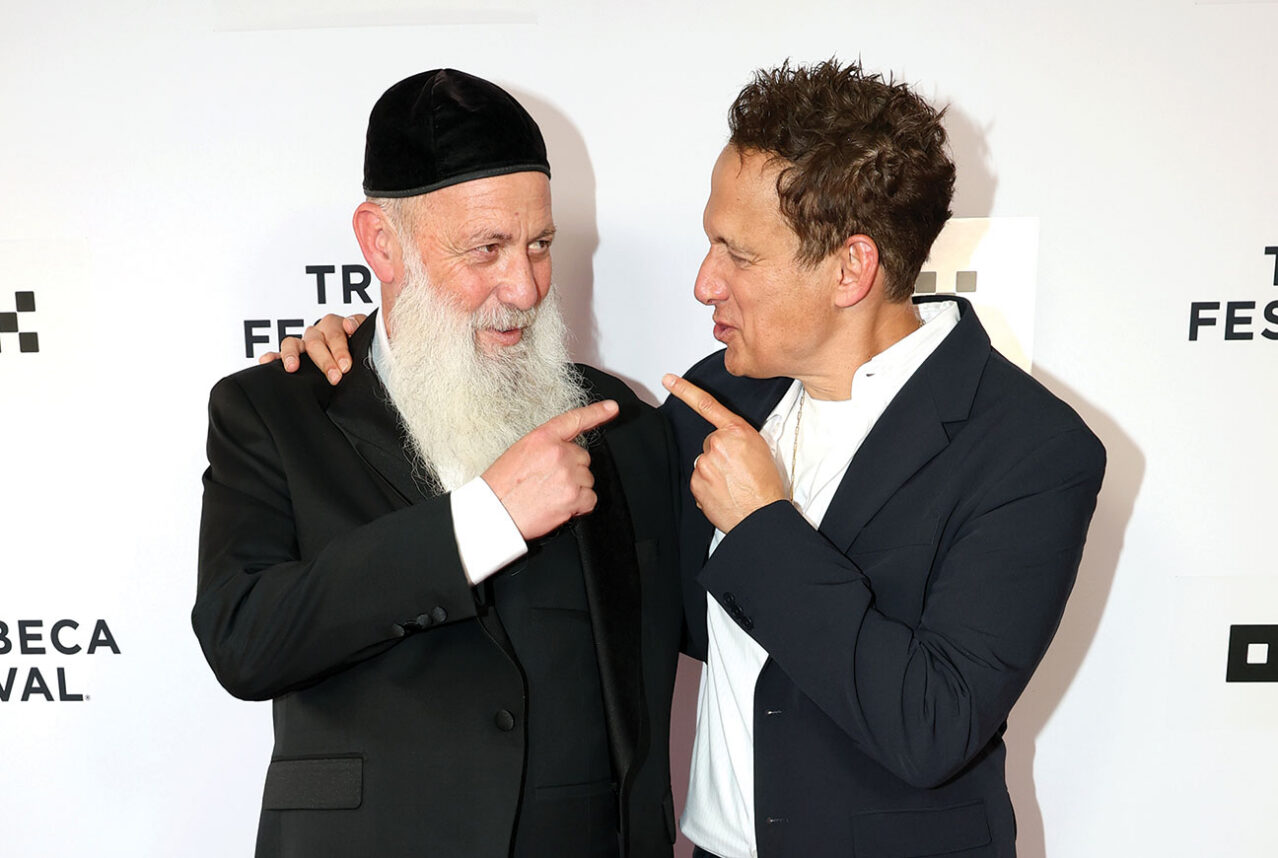
Today’s Jewish population is incredibly diverse. World Jewry includes people of all races and nationalities. It includes honorary members such as interfaith spouses who are not Jewish and don't intend to convert. We disagree, often bitterly, about belief and observance. The headline “Orthodox rabbi says Reform isn't Jewish” has become a regular occurrence.
It’s hard to find the unity in all that diversity. Some influential writers say we shouldn’t try.
We commonly think that Jewish peoplehood is an old idea, but Jewish Studies scholar Noam Pianko argues that it's a new one. In his book Jewish Peoplehood: An American Innovation, he traces the term's origin to American Zionist Mordecai Kaplan in the early 1940s.
Kaplan wanted to build support for Zionism, and until 1942 he did it by talking about Jews as a nation. However, he worried that calling Jews a nation would invite accusations of dual loyalty. He needed an alternative term without the anti-Semitic implications. By 1948, “peoplehood” had become his term of choice. Pianko observes that it was hardly used at all before then, and it did not appear in English dictionaries until the late 1960s.
In Pianko’s view, the idea of peoplehood was too closely related to nationhood. It misled us into looking for Jewish unity that wasn't there. To replace it, he proposes “peoplehood in a new key” that doesn't require unity.
Instead of asking who is Jewish, what values unite us, and how we differ from non-Jews, he would ask what we do in the Jewish community and what parts of Judaism are meaningful to us. Pianko sees it as a decentralized “neighborhood model” of Judaism:
“A neighborhood model [seeks] to build collective consciousness by recognizing the organizing power of specific groups to develop different, and sometimes even mutually incompatible, visions of what it means to be part of the Jewish people. A sense of connection to a larger entity is generated most authentically— and enduringly— from the bottom up.” (Jewish Peoplehood)
That passage made me uneasy. It sounded too much like something from another book, this one by renowned biologist Ernst Mayr:
“What happens in the isolated population? There may be new mutations, certain genes may be lost owing to accidents of sampling, recombination results in the production of a diversity of new phenotypes … The isolated population will diverge increasingly from the parental species. If this process continues long enough, the isolated population changes enough to qualify as a different species.” (What Evolution Is)
In biology, the neighborhood model results in the evolution of new species and the possible disappearance of the parent species. In the case of the Jewish people, it might not work out that way, but the analogy is uncomfortably close.
To understand each other, people must have something in common. To be loyal to each other, they must have a relationship. Explicitly separate Jewish neighborhoods, doing different things and holding incompatible values, do not have that kind of relationship. They will not long remain united by nothing but a name. Soon, the name itself will disappear. And then what is left?
Why should we care if our people continue to exist as a distinct group? Does it really make a difference?
Yes, it makes a big difference. Goodness in human life never appears in the abstract. It always appears in specific social, religious, and historical contexts.
Our people and tradition have brought goodness into the world in unique ways that no other group can replace. For us to give up existence as a separate people and forsake our unique tradition would deprive not only us but everyone else in the world of something precious that only we can provide. “Peoplehood” might be a new word, but our people have been around for millennia. That’s not new at all.
All humans band together in groups that provide a safer, richer, and happier life than being alone. It gives both our families and us as individuals a better chance to survive and prosper. Our ancestors struggled to give us that chance. We should pay it forward to our children and to the generations that follow.
Political philosopher Edmund Burke said it well: “History is a pact between the living, the dead, and the yet unborn.”
N.S. Palmer is a graduate student in Jewish Studies at Hebrew College, Newton Centre, Massachusetts. He has degrees in mathematics, economics, and philosophy. He has written about the epistemology of Jewish belief, the history of mathematics, international economics, computer programming, and the coherence theory of truth, among other topics.