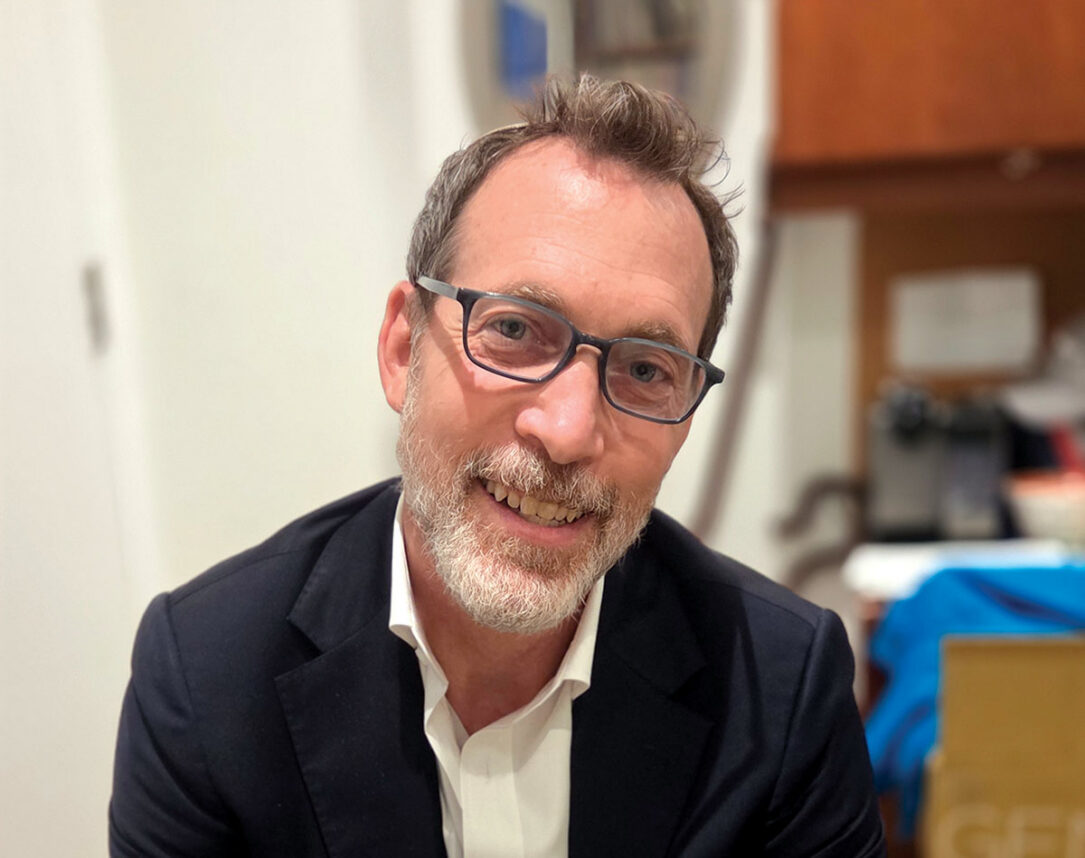
Eddie Goldstein, longtime resident of Boyle Heights, died on Jan. 5. Goldstein is remembered as having been the last Jewish resident from the original Jewish community of Boyle Heights, living there for almost eight decades. According to the LA Times, his funeral was attended by several family members and a large group of his Mexican American neighbors.
The following passage is an excerpt from a July 2011 profile of Jewish Boyle Heights (by Irwin Weiser):
The story of Eddie Goldstein is somewhat different. Goldstein, 78, was born and raised in Boyle Heights, where he has lived his entire life. He has lived in the same house on Folsom Avenue for more than 50 years, since he moved there with his mother and brothers after they were displaced by the construction of the Golden State Freeway, as were many other Boyle Heights residents in the 1950s. They used the proceeds from the government’s eminent domain actions to purchase their home. Goldstein attended Hollenbeck Junior High School and Roosevelt High School, though he says he was expelled from the latter before he could graduate, due to conflicts with teachers and other students. Long retired from the meat-packing business, these days he wiles away his time watching television and visiting with his children and grandchildren, and occasionally venturing onto iconic Ceasar Chavez Avenue to pay some utility bills or buy groceries.
Goldstein also has a strong connection to the predominant Latino community in the neighborhood. He married a Mexican-American woman and helped raise her children from a prior marriage. They adopted a child, Steve, who took his father’s last name. In his living room, Eddie displays the symbols of both cultures — a statue of the Virgin Mary and a replica of the flag of Israel. He says he feels quite comfortable sharing both cultures, though he straddles the edges of the two faiths. Since his children and grandchildren have been raised in the Christian traditions, he will attend church services for a family function, but makes it clear he cannot kneel before the symbol of Christ. “I’m Jewish” he says, “and we don’t kneel to Jesus.”
But he enjoys celebrating the special foods of Passover, eating matzah brought to him by Chabad missionaries, and buying horseradish and gefilte fish. The celebrations seem to have become more important to him over the years, especially since his beloved wife, Esther, died.
Goldstein’s uncle Louis Schwartzman once owned the Ebony Room on Brooklyn Avenue, one of the few bars on the street. The bar remained in operation until about 1980, according to Goldstein. For a time during his youth, Goldstein’s job was to stand lookout at the front door, keeping an eye out for the police, since the upstairs rooms were used sometimes for illegal purposes. He says that proprietor Schwartzman befriended some of Boyle Heights more infamous residents during the pre- and post-wars years –— known gangsters Mickey Cohen and Benjamin “Bugsy” Siegel. The Ebony Room, like so many other landmarks of Jewish Boyle Heights, has long since faded into history. “We had a lot of crazy stuff going on in those days” Goldstein recalls with a sly chuckle.