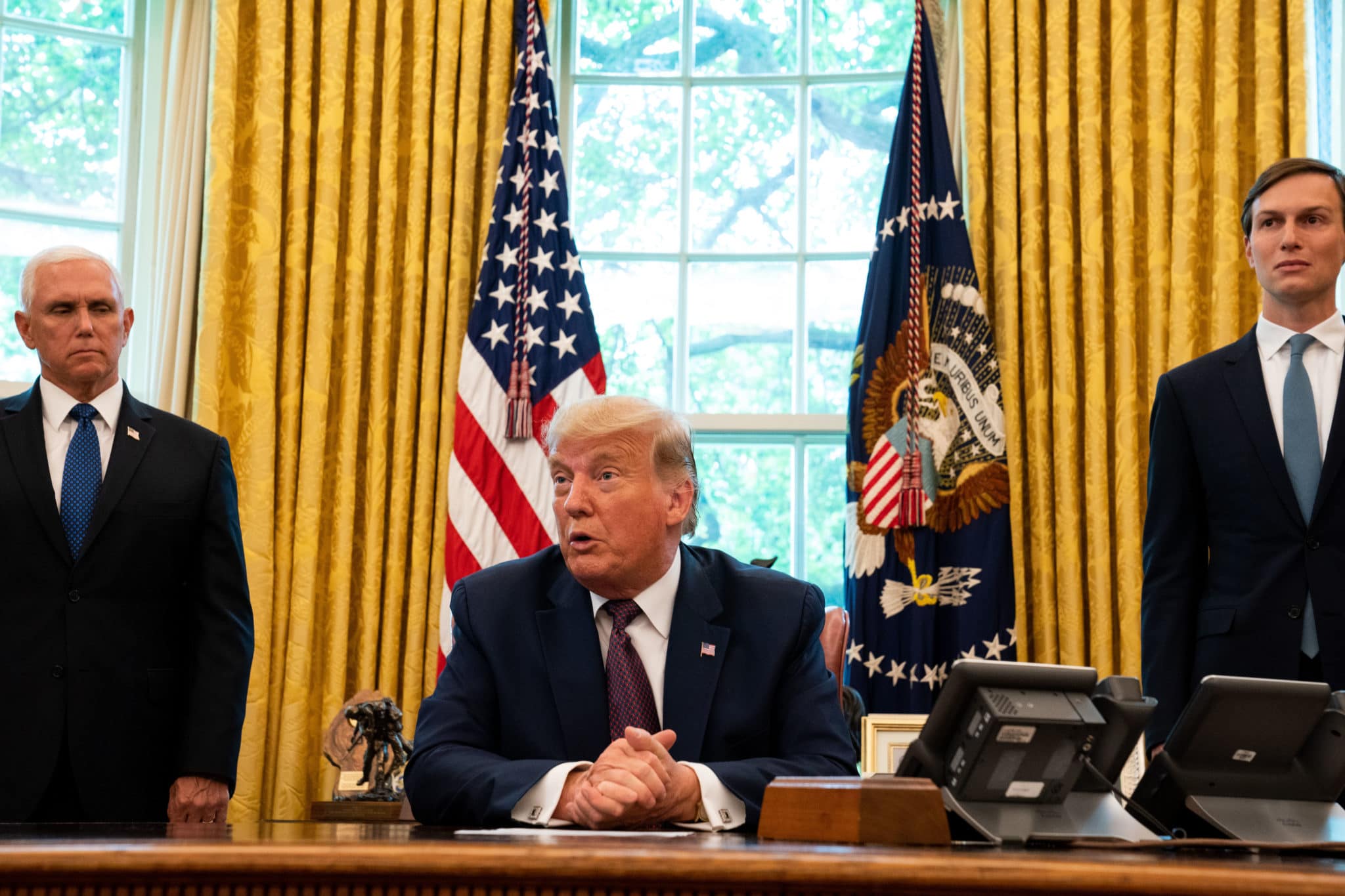
On September 11, Israel and Bahrain agreed to normalize ties in a United States-brokered agreement.
In a joint statement from the U.S., Israel and Bahrain, the agreement was hailed as “a historic breakthrough to further peace in the Middle East. Opening direct dialogue and ties between these two dynamic societies and advanced economies will continue the positive transformation of the Middle East and increase stability, security and prosperity in the region.”
The statement added that all the parties involved remain committed to achieving “a just, comprehensive and enduring resolution to the Israeli-Palestinian conflict” and that Bahraini Foreign Minister Abdullatib Al Zayini will be present for the official signing ceremony of the agreement between Israel and the United Arab Emirates (UAE).
“Another HISTORIC breakthrough today!” President Donald Trump tweeted. “Our two GREAT friends Israel and the Kingdom of Bahrain agree to a Peace Deal – the second Arab country to make peace with Israel in 30 days!”
Joint Statement of the United States, the Kingdom of Bahrain, and the State of Israel pic.twitter.com/xMquRkGtpM
— Donald J. Trump (@realDonaldTrump) September 11, 2020
Another HISTORIC breakthrough today! Our two GREAT friends Israel and the Kingdom of Bahrain agree to a Peace Deal – the second Arab country to make peace with Israel in 30 days!
— Donald J. Trump (@realDonaldTrump) September 11, 2020
Israeli Prime Minister Benjamin Netanyahu said in a statement, “It took us 26 years to get from the second peace agreement with an Arab state to the third peace agreement, and it took us not 26 years but 29 days to reach the peace agreement between the third Arab state and the fourth Arab state, and there will be more.
“This is a new era of peace. Peace in exchange for peace. Economy in exchange for economy. We have invested in peace for many years and now peace will invest in us. It will lead to very large investments in the Israeli economy, which is very important.”
Jewish groups praised the agreement between Israel and Bahrain.
“On our many visits to Bahrain, and meetings with Bahraini officials in the United States, we have seen the evolution of its leaders’ deep-seated interest in advancing peace and regional cooperation, culminating in this bold decision to fully embrace Israel,” American Jewish Committee CEO David Harris said in a statement. “Historically, sustainable Arab-Israel peace agreements have been achieved with active United States leadership. The back-to-back agreements between Israel and the United Arab Emirates, and now Bahrain, were achieved with the full engagement of the U.S. Administration. We thank President Trump and his team who saw these possibilities, and welcome the winds of change in the Middle East that lay the foundation for greater peace, cooperation, and prosperity.”
Simon Wiesenthal Center Founder and Dean Rabbi Marvin Hier and Associate Dean Rabbi Abraham Cooper similarly said in a statement, “From our first meeting with King Hamad at his palace in Bahrain we knew he was a leader committed to peace not only between two sovereign nations but between two peoples. During our February 2017 meeting, King Hamad publicly denounced the Arab Boycott of Israel, cleared the way for twenty-four interfaith leaders to visit Jerusalem and authored the trailblazing Bahrain Declaration on Religious Tolerance — which was signed at a ceremony in Los Angeles with Prince Nasser and 400 interfaith leaders.”
They added that Bahrain has stayed strong against Iran despite being a small country.
“Today’s announcement will bolster its ability to better secure its defense and expand its economic opportunities,” Hier and Cooper said.
The pro-Israel NGO European Leadership Network (ELNET) similarly celebrated the agreement in a tweet, stating: “The realignment between the Arab world and Israel offers a unique opportunity for a new chapter in Europe-Israel relations.”