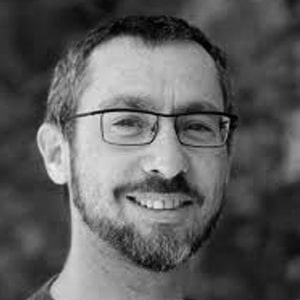
Rabbi Dr. Reuven Hammer is a Conservative rabbi, scholar of Jewish liturgy, author and lecturer. Rabbi Hammer, who earned his ordination from the Jewish Theological Seminary, is a founder of the “Masorti” (Conservative) movement in Israel and a past president of the International Rabbinical Assembly. He served many years as head of the Masorti Beth Din in Israel. Rabbi Hammer is a prolific writer, and his articles appear often in the Israeli press and elsewhere. Two of his books, Sifre, A Taanaitic Commentary on Deuteronomy and Entering the High Holy Days, were awarded the National Jewish Book Council prize as the best book of scholarship for the year. Rabbi Hammer is the 2003 recipient of the Simon Greenberg Award for Lifetime Achievement in the Rabbinate by the Zeigler Rabbinical School of the University of Judaism.
The following exchange will focus on Rabbi Hamer's book Akiva: Life, Legend Legacy, an account of the life of the great Jewish sage Rabbi Akiva. Part one can be found right here.
***
Dear Rabbi Hammer,
In your first answer you said the following about the protagonist of your book:
More than any other Sage, he reminds me of modern rabbis with his care for individuals, and even of the Hasidic Rebbe but without the court-like trappings. I would hold him up as the model of what a rabbinical leader should be.
This is a strong statement, of course, and a curious one to consider in relation to his role in the disastrous Bar Kochva rebellion against Rome. As you state in your book, Rabbi Akiva was not simply an Ivory Tower Scholar, but a deeply influential political figure. One can’t help but wonder how supporting a highly problematic military campaign with little chance of success, a campaign that ended in a massive loss of human life, fits your description of Akiva as a paradigm of what a compassionate rabbinical leader should be…
Can you please clarify?
Yours,
Shmuel.
***
Dear Shmuel,
In the first place, I am looking at the totality of Akiva's life's work and activities prior to the revolt and at his personal attributes. Judged in that way I believe that he showed himself to be a man of great compassion, concerned with the lives of his pupils, helping the poor and needy, caring for the indigent, comforting people, interpreting laws in innovative ways and preaching love and care for one another. He was also a great preacher and pastor. In a way similar to Hassidic rebbies, Akiva did things that were unusual and gave answers and decisions that were unexpected. His parables and stories were examples for later such compositions.
Secondly, your question is based upon an unproven assumption that Akiva played a major role in fomenting the revolt and in its conduct. Therefore he is greatly responsible for the death and destruction it caused. There is no proof of that in the sources we have. Some historians and many writers of popular fiction have assumed this and people have taken it for granted that it is true, but as I tried to make clear in the book, his role in the rebellion was extremely limited, not at all what some have tried to make it seem. Yes, he thought Bar Kosiva was going to be able to lead a successful revolt and therefore endorsed him. This was a tragic error, based on his belief that the current situation would not last longer than the first exile had lasted. He had always believed that Roman rule was limited and would come to an end in his own lifetime. To us that seems absurd, but it did not seem so then considering previous experience. He also had the Maccabees as an example of a revolt against a great power that succeeded. Could it not happen again? Unlike the Great Revolt, this one had one leader who appeared competent and in control. Indeed, the fact is that the B.K. revolt was very costly to the Romans. It was not easily put down, as the Romans admitted. But in any case the sources show clearly that Akiva himself was not part of the leadership of the revolt and certainly died before it had gone very far. He certainly did not initiate it. He was wrong, but cannot be blamed for the revolt. It would have taken place without him. Yes, he showed poor judgment in that matter, but when I see him as an excellent model for a rabbi it is because of his actions throughout most of his life, which was so rich and productive, and not through the lens of the end of it when he made that tragic error.