fbpx

October 2, 2026

This Just Makes It Worse

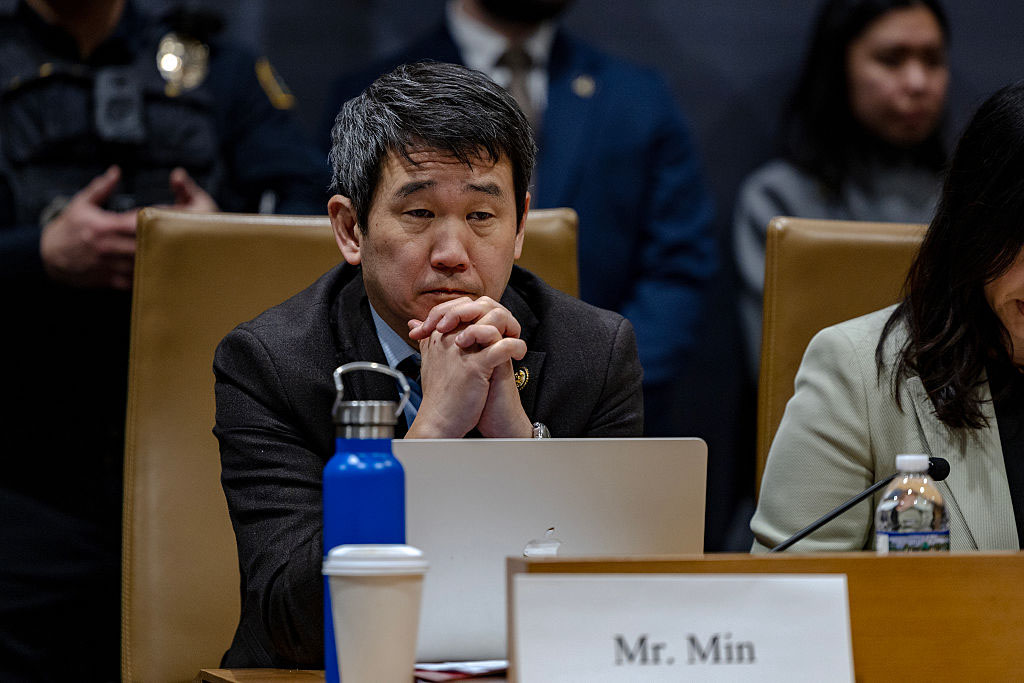
When Congressman Dave Min addressed the Jewish Community in a forum last month, he said much that should have made us hopeful:  he recognized the recent spike in antisemitism and acknowledged the human cost of harassment and threats of violence.  He promised he would “continue to call it out.”

Yet, in those moments when we have needed leadership most, our Congressman has been silent.

To take one stark example:  the Council on American Islamic Relations (CAIR)–a group that was an unindicted co-conspirator in one of the largest terror finance trials this country has ever seen–doxxed my Rabbi earlier this year.  As a result, he was threatened and targeted in ways that left our community shaken.  [To prevent drawing still more internet traffic to the hateful campaign targeting him, I have omitted his name from this piece and referred to him only as “my Rabbi.”]

For those unfamiliar with the group:  CAIR’s founder and current Executive Director Nihad Awad, put it plainly, saying: “I am in support of the Hamas movement.”  Since 2009, the FBI taken the position: “until we can resolve whether there continues to be a connection between CAIR or its executives and HAMAS, the FBI does not view CAIR as an appropriate liaison partner.”  To date, that relationship has not been restored.

Multiple CAIR leaders around the United States, including Executive Director Nihad Awad, celebrated the October 7 attacks.  And, just earlier this year, the group made headlines again when reporters uncovered that CAIR was promoting a K-12 curriculum that included Usama bin Laden’s letter justifying the September 11 attacks as a recommended resource for students.  (CAIR retracted the recommendation only after the curriculum was exposed by a national publication.)

CAIR targeted my Rabbi because he had insisted that a statement condemning Islamophobia should not also include libelous smears against Israel.  Rather than remove the libels, the decision was made to paint my Rabbi as “Islamophobic.”  To anyone who knows him, the claim is absurd.  He has led years of interfaith efforts, visiting local mosques and supporting our Muslim neighbors in times of crisis.  Our shul—under his leadership—rallied to support Muslim Afghan refugees arriving in this country.  Our congregation paid a year’s worth of rent, got them jobs, schooling, medical care, therapy, and had them speak at Temple on more than one occasion.  His perspective was: “Human life is human life – no matter one’s religion – it was our honor to help this family in need.”

On the handful of occasions when I have heard a fellow congregant make a remark that might be unfair to our Muslim neighbors, my Rabbi gently but firmly corrected the congregant and tried to educate him or her.

In sum, my Rabbi is warm-hearted, fair-minded, and generous.  To call such a leader Islamophobic is beyond dishonest; it is grotesque.  And it serves a purpose.  Doxxing him puts the rest of our community on notice:  if we dare to speak in defense of Israel, we too can expect doxxing, threats, and harassment.

Yet in the face of CAIR’s hateful targeting of a beloved Jewish community leader—and though the Congressman knows my Rabbi well enough to know that CAIR’s claims are just defamatory bullying—Congressman Min has said nothing at all.

This is not the result of ignorance.  My Rabbi alerted the Congressman when the doxxing occurred, and the Congressman was silent.  He could easily have spoken of my Rabbi’s leadership in interfaith efforts, and his decades of service in Orange County.  He could also have spoken out against the ugly practice of doxxing and CAIR’s public intimidation campaign.  He did neither.

Instead, when we raised the subject in a meeting, Congressman Min claimed ignorance and acted shocked.  My Rabbi sent him the troubling video again, and again the Congressman was silent.

To the contrary, when CAIR identified Congressman Min as their preferred candidate in their voter guide—using his likeness in their materials—he did nothing to distance himself from the group.  Our community reached out to him and walked him through the group’s alarming history; the FBI’s disassociation; the doxxing of my Rabbi and many other troubling facts, any one of which should have been sufficient to cause a leader truly committed to fighting antisemitism pause about the association.  Yet, again, Congressman Min was silent.

At the same meeting, I flagged a remark demonizing Israel, by CAIR LA’s leader— on Congressman Min’s own Facebook page—explaining:  a real step to fight antisemitism would be responding to and correcting that comment.  To this day, the smear remains online and unrebutted.

Just a couple weeks later, when a community member attending the Jewish community candidate forum inquired about CAIR LA’s leader, the Congressman claimed ignorance and quickly changed the subject.

His silence has been disappointing, and his speech on Israel has been worse.

The Congressman has been careful to say that he supports Israel’s right to exist and defend itself.  But, in the next breath he repeats astonishing falsehoods about the war.

For example, when he posted a statement explaining his co-sponsorship of legislation that would block the sale of certain arms to Israel, he declared that “an unprecedented number of civilians” had been killed in Gaza.  The total number of deaths he cited was 70,000, including combatants and civilians.  The claim that this represents an “unprecedented number” of civilian deaths is demonstrably false.  In the Korean War, about 54,000 civilians were killed each day.  Nearly 200,000 civilians were killed in the Syrian Civil War.  Over 180,000 civilians were killed during the Iraq War.  The list goes on.  This is tragic, but it is the reality of war.

We had this conversation.  And yet, the Congressman’s claim that the IDF is doing something uniquely evil in Gaza, that there is an “unprecedented” civilian death toll in Gaza, remains on his website.

Moreover, the Congressman appears not to know that Hamas intentionally imbeds in civilian infrastructure.  When he addressed the Jewish community, he characterized Israel as using “excuses” to attack Gazan hospitals.  An audience member pointed out that her son had served in the IDF and seen weapons embedded in a hospital.  In response, the Congressman doubled down:  “You’re telling me there’s one. That was not something that I’ve been advised by or briefed on, you know?  I’m just saying I’m sure there are some, right?  But like, are we saying that every hospital in Gaza has that?”  He asked the question with disbelief, as if the claim were absurd on its face.  Much of the audience rose to its feet for emphasis: “YES!”  But to no avail.  Even after that exchange, the Congressman persisted in characterizing Israel as using “excuses” to destroy Gazan hospitals.

When a Congressman repeats such libels, he effectively endorses the view that Israel is a uniquely evil actor in the world.  This is especially so when he claims to stand with the Jewish community and supports added funding for our communal security, for example, via the Jewish American Security Act.  Observers can conclude that, if even someone so friendly to the Jews believes Israel to be uniquely evil, then it must be true.

This only strengthens the conviction of our attackers.  And when they do attack us—as CAIR has done with my Rabbi—and the Congressman is silent, this invites still more attacks.

I spent much of Yom Kippur with one eye on the perimeter of our shul, thinking of the synagogue shooting that had occurred the night before as congregants had arrived for Kol Nidre.  Around lunchtime, a child dropped a book, and half the room jumped at the resultant “bang.”

All of us can feel the charged, changed atmosphere today.

We need our elected officials, now more than ever.  This does not mean declaring opposition to an amorphous concept like “antisemitism” or “hate.”  Our adversaries rarely think that they hate us for no reason.  Rather, there is some terrible (and fabricated) sin of which our tribe is accused.  In prior centuries, it was often the alleged murder of Christian children. Today, those calling us “baby killers” and the shouters yelling “Free Palestine” cite Israel’s alleged depravity.  Each day, there is some new headline about an arson; a planned poisoning; someone thinking they are doing the world a favor by trying to rid the world of its Israel-supporting Jews.

To tackle this aggressive hate movement, we need leaders willing to learn and correct the record.  (“No, Jews do not use the blood of gentiles to make matzah.”  “No, Israel is not looking for excuses to destroy Gazan hospitals.”)  Otherwise, there may come a time when no level of security funding is enough.


Julie Heiman is director of policy, legal, and government affairs for the Jewish Community Action Network (JCAN) in Orange County.

This Just Makes It Worse Read More »
Oct. 7 Makes Me Grateful for the Secular Calendar

The happiest moment of the Hebrew calendar— a time when we rejoice, sing and dance with Torah scrolls as we begin a new Torah cycle—begins tomorrow night on Simchat Torah.

There are no inhibitions on Simchat Torah. Everybody lets loose. We celebrate another year “in the books” as we begin a new one.

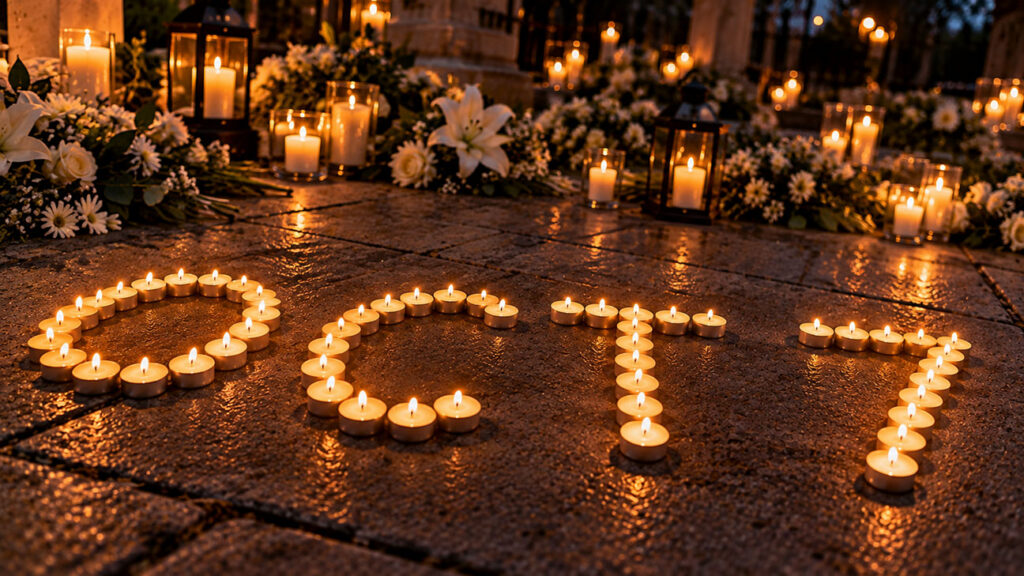
The problem, the horrible, unsolvable problem, is that the worst day in Israel’s history happened on that very day of Simchat Torah three years ago.

I know all the cliches, and they’re all true. No matter what happens, Jews must turn darkness into light. The intense joy of Simchat Torah can overcome the darkest memories. Joy is not just a good idea, it’s an obligation. And so son.

But we’re also human. We can try to temporarily forget an impossibly painful moment as we sing and dance tomorrow night, but who are kidding?

That’s why, as much as I love honoring the Hebrew calendar, in this case I’m oddly grateful for the secular calendar. I’m grateful that the official date to commemorate the Hamas massacre is not Simchat Torah but Oct. 7. Just as Sept. 11 has become the designation for the worst attack on U.S. soil, Oct. 7 has taken its own place in Israeli history.

In truth, it’s hard to imagine commemorating such a dark event on a day of joy. The cognitive dissonance would be unbearable. Maybe that’s why Oct. 7 has naturally become “the day.” It saves us from adding even more pain to our collective memory.

I have little doubt, however, that for many Jews, dancing on Simchat Torah will never, could never, be the same. The pain may not be obvious, or even visible, but it will be there.

Tomorrow night, then, will be a silent commemoration of a singular tragedy drowned out by the sounds of joy.

Four days later, on Oct. 7, there will be no joy and no dissonance. We will be free, without any inhibitions, to cry and grieve as we should.

Until then, let’s do our best to sing and dance and remember that when we reach the end of the Torah cycle at Simchat Torah, we immediately start again.

Shabbat shalom and chag sameach.

Oct. 7 Makes Me Grateful for the Secular Calendar Read More »

October 7th and the Secret of Simchat Torah

Every story has a beginning, a middle, and an end. Both Aristotle and my fourth-grade teacher Mrs. Epstein agreed about that. Of the three, the end matters most. Psychological studies confirm this.

Daniel Kahneman explains that we fixate on conclusions because humans live life both as “experiencing selves,” meaning what we perceive in the moment, and “remembering selves,” meaning what we remember afterwards. The “remembering self” is a storyteller who holds on to snapshots of the past and builds a narrative from them. Since the “remembering self” reconstructs memories into stories, it focuses especially on the ending.

That is why we intuitively seek a feel-good ending in books and movies. Even the Bible is mindful of the importance of a good ending. The Talmud notes that “the prophets concluded their books with words of praise and consolation.” Four books (Isaiah, Malachi, Lamentations, and Kohelet) do end with a final verse that is negative. But that was later changed. Rabbi Eliezer ben Yoel HaLevi of Bonn, who lived in the 12th century, says one should repeat the second-to-last verse at the end of reading these four books; this way these books will also end with consolation.

The Jewish calendar is built to end on a positive note. Its final holiday has two names. Shemini Azeret, “the Eighth Day of Assembly,” is its biblical name. Simchat Torah, “the Joy of the Torah,” came later, when Jews began completing the annual Torah reading on this day. In Israel, both names belong to a single day; in the diaspora, the holiday stretches over two days, and the second is called Simchat Torah.

It is the most joyous of all the holidays, and it is the last holiday of the year. It is not only the end of Sukkot; it is also the final day of the three pilgrimage festivals and the three Tishrei holidays. And Simchat Torah is when we complete the Torah reading, with the closing parsha, V’Zot HaBrachah.

It is puzzling why the Torah reading concludes on a holiday rather than on a Shabbat. But the reason for this, too, has to do with creating a positive ending.

V’Zot HaBrachah contains Moses’s farewell blessing to the Jewish people. Rabbi Avraham ben Yitzchak of Narbonne notes that V’Zot HaBrachah echoes Solomon’s farewell blessing after dedicating the Temple, which took place on Shemini Azeret. Solomon’s blessing was then added as the passage for the haftarah.

This is closure in the best sense of the word: We conclude a full cycle of holidays on the perfect note, with Shemini Azeret/Simchat Torah, a holiday of pure joy, being celebrated with reading Moses’s and Solomon’s blessings.

That is a happy ending.

All of this is beautiful in theory. But unfortunately, life doesn’t always work that way. Tragedy intrudes, upending best-laid plans. When that happens, listening to stories of redemption with happy endings is painful; they mock the grieving and heartbroken who have no comforting closure to grasp on to.

At times, there seems to be no way to escape an unhappy ending. Or is there?

Some writers and filmmakers have rebelled against the tyranny of a compulsory ending. They tell their stories out of chronological order, placing the conclusion anywhere but at the end. Or, they simply refuse to resolve anything at all, ending an engrossing story with a black screen that leaves one wondering what happens next.

Simchat Torah grapples with the meaning of endings as well. As mentioned, Simchat Torah ostensibly embraces a conventional happy ending. But lurking beneath the surface is the tragic awareness that all is temporary. Moses will die at the end of the Torah; the Talmud says the last words of the Torah reporting his death were written with tears. And according to several medieval sources, Satan is ready to denounce the Jews on Simchat Torah, claiming that once they have finished reading the entire Torah, they will neglect it.

After every happy ending, there is a void filled with vulnerability.

Shemini Azeret/Simchat Torah offers a fascinating way to escape the ending’s iron grip. It insists that no ending is final. Let me explain how.

The holiday of Shemini Azeret takes place on the eighth day of Sukkot; this makes Sukkot one day longer than its sibling holiday of Pesach. Rashi cites a Midrash that accounts for this anomaly: “It is similar to the case of a king who invited his children to a banquet for a certain number of days. When the time arrived for them to take their departure he said, ‘Children, I beg of you, stay one day more with me; it is so hard for me to part with you!’”

With Shemini Azeret, the yearly holiday schedule comes to a close. So the Torah adds an eighth day to offer a final farewell to the holidays. However, the Midrash itself raises a question. How will staying one more day make it easier to say goodbye? The problem will simply return the next day! If anything, the delay will only intensify the pain of parting.

I think the answer is this. By staying one more day beyond the end, we have demonstrated that the end is not the end. With an extra day, the last day of Sukkot is no longer the last day of Sukkot. And when a last day is not a last day, then no ending is a real ending. In other words, Shemini Azeret is an attack on the very notion of endings.

It is no accident that medieval Jews added two traditions to the holiday of Simchat Torah. First, right after concluding V’Zot HaBrachah, we return to read the first chapter of the Torah in Parshat Bereishit. Second, a new haftarah was introduced: the first chapter of the Book of Joshua.

To immediately read Bereishit after finishing the Torah defies the idea of endings altogether. It makes the statement that although the Torah has a final chapter, it has no end. We will return again and again to the Torah.

It never ends.

Then we read from the Book of Joshua. Moses has died, but that is not where the story ends. His disciple Joshua will carry on his traditions. The people he loved will enter the land of Israel, something Moses could only dream of.

Even after their teacher dies, the people continue on their mission. The Book of Joshua reminds us that Jewish history doesn’t have a final chapter. Simchat Torah carries a powerful message of resilience: that tragedy does not define the never-ending story of a never-ending people.

It was on Simchat Torah in 2023 that Hamas attacked Israel. Three years later, the Jewish world is still traumatized. Israel endured deaths, rapes, injuries, and bereavements; the turmoil that followed has led to an increase in bankruptcies and divorces. Around the world, antisemitism has come roaring back. Jews now bear the mark of Cain, marginalized by TikTok-educated ignoramuses who incessantly repeat the genocide libel as if it were a mantra.

As in the Yom Kippur War, Israel’s counterattack won an exceptional victory, but at a very high price. The wounds run deep and have left Israel reeling in pain. It feels like we are stuck in limbo, with different versions of the same bad news arriving every day.

Right now, there is no closure, no happy ending possible. Simchat Torah is no longer just a holiday; it’s also a yahrzeit, the anniversary of a national tragedy.

But the message of Simchat Torah is particularly fitting for a moment like this, on a holiday now tinged with grief. We celebrate with the awareness that no matter what Satan or the Angel of Death may want, it is up to us to decide what the future holds and where the story ends.

For generations, the Jewish people have refused to read their own obituary. We won’t start now.

In the last three years, so many heroic people have decided that October 7th will not be the tragic end. Edan Alexander was a hostage for 584 days; after his release, Edan promptly re-enlisted in his unit. Ben Binyamin and Gali Segal, who each lost their right leg in the Nova Festival attack, learned how to walk again with a prosthesis. They got married a few months later, and to everyone’s shock, they marched down the aisle and shared a first dance. Another young woman, who lost both her parents that day, has gotten married since. This summer, I got a text from my friend Naava informing me that this young woman had just given birth to her first child.

These people are starting over from Bereishit and writing a new beginning.

Perhaps the most remarkable of all is the story of Gadi Moses. On that day, at age 79, he was taken hostage. Gadi was held in captivity for 482 days; his partner, Efrat Katz, was killed in the attack. In an interview, Gadi recounted: “The terrorists asked where I would return to. I said, to my home in Nir Oz. They said, ‘But we burned Nir Oz.’ I answered, ‘Then I will return to burned Nir Oz.’”

And he did. Right now, Gadi is once again farming the fields of Nir Oz. Gadi knows the secret of Simchat Torah: In Jewish history, there are no bad endings; we simply start a new chapter and rebuild.


Rabbi Chaim Steinmetz is the Senior Rabbi of Congregation Kehilath Jeshurun in New York.

October 7th and the Secret of Simchat Torah Read More »