fbpx

May 19, 2026

Shavuot: The Middle Child of Jewish Festivals

Shavuot has middle-child syndrome in that it is largely invisible to most liberal American Jews. Although it is one of the three major festivals in the Jewish calendar, Passover takes top billing in American-Jewish culture. Sukkot, the other festival, is not nearly as well known as Passover, but there seems to be more awareness of this holiday in some liberal Jewish communities because of an increased interest in building a sukkah, the portable backyard structure symbolizing this festival.

But unlike Passover and Sukkot, Shavuot doesn’t have a home-based set of rituals that promotes a wider cultural recognition. Observance of Shavuot largely involves synagogue services, which can include an all-night study session on the first evening known as the tikkun leil Shavuot.

According to rabbinic tradition, Shavuot is when God gave Jews the Torah.  Although the Torah does not explicitly mention this as the basis for the holiday, the sages of the Talmud understood this explanation to be the festival’s primary meaning. However, this theological grounding does not enhance Shavuot’s appeal.

People often ask me where faith in God fits into the picture of Jewish identity and transmission. This topic is complicated. It seems to be the case that among many Jews, including some who profess to be religious, faith and observance do not necessarily go hand in hand. In my experience, faith is not a subject many liberal Jews are comfortable openly discussing. In today’s highly secularized American society, many Jews prize autonomy and personalization. Liberal Jews do not respond well to being told what to do and how to believe.

In theory, Judaism demands loyalty to a monotheistic perspective, but in practice, the Jewish religion largely focuses on actions rather than belief. Many people believe actions influence emotions; therefore, Judaism largely focuses on what a person does rather than what he or she believes. Although studies show both faith and observance are stronger among the traditional end of the denominational spectrum, there is evidence of individual choice even among traditionally observant Jews.

Many people don’t realize that freedom of choice regarding observance isn’t a novel concept with respect to Jewish tradition. In fact, the element of choice dates the Revelation at Mount Sinai. According to the Torah, when Moses told the people all of God’s commandments, the people answered with one voice, saying, “We will do.” It was their collective choice to obey.  Also, an ancient rabbinic source — Midrash Rabbah (Exodus 5:9) — tells us that even at the time of Revelation, God’s voice came “to each Israelite with a force proportioned to his individual strength.” This source underscores the importance of human individuality with respect to how humans received the Torah.

On Shavuot, we read the Book of Ruth, a text furnishing one of the most renowned examples of the importance of choice. Ruth, a Moabite woman, married one of Naomi’s sons, who later died. Ruth refused to return to her own people and instead, uttered the famous pledge of loyalty: “For wherever you go, I will go … your people shall be my people, and your God my God.”

This Biblical narrative concludes with Ruth marrying Boaz, a relative of Naomi’s deceased husband, and bearing a son named Obed, who was the grandfather of King David. The placement of this lineage at the end of the text is particularly significant because according to lore, the Messiah will be a descendant of King David and of Ruth, the woman who chose to be Jewish.

As a practical matter, we live in an era where cultural forces make it difficult to secure a balance between fluidity and choice versus preservation of tradition. Liberal Jews need to contemplate how they can accomplish successful transmission of Jewish tradition outside a framework based on obedience to divine command.

The festival of Shavuot, coming as it does after the frenzy of Passover but well before the High Holy Days, provides a well-placed opportunity to contemplate the choices we make on our Jewish journeys and how they will impact the next generation.


Roberta Rosenthal Kwall is a law professor, author and Jewish educator with a focus on American Judaism. Her latest book is “Polarized: Why American Jews are Divided and What to do About It” (October, 2026, Bloomsbury Press).

Shavuot: The Middle Child of Jewish Festivals Read More »

Hollywood’s ‘Rushmore’ Celebrates ‘Seinfeld’

International “Star Wars” Day (May 4) fell on the first Monday in May this year, which meant it shared global headlines with this year’s Jeff Bezos-funded, attention-seeking philanthropic annual Met Gala in New York City. On the West Coast, Netflix launched its annual “Netflix is a Joke” Festival. The X-partnered podcast “Rushmore” kicked things off with a beloved Jewish themed, ballpark billionaire taping of an episode at the Saban Theater in Beverly Hills.

“Rushmore” was started by the most powerful (Jewish) agent in Hollywood, Ari Emanuel, alongside manager Ben Persky. They invite guests on to debate their “Mt. Rushmore” on any number of topics. What righteous Jew doesn’t like a good debate? This episode, recorded live in front of a live audience, featured the Mt. Rushmore of “Seinfeld” episodes. Would “The Soup Nazi” make the cut?

If you’re a “Seinfeld” freak, you could say you’ve yearned for this moment. No official word, as of yet, when or where this episode might be available to the general public. The set-up was simple. Each of the four men on stage (Larry David, Jerry Seinfeld, Emanuel and Persky) took turns in naming their top four episodes. As you might imagine, they did not all find the other’s choices “sponge-worthy.”

Only one episode made each of the panel’s top four. “The Contest” (Season 4, Episode 11) topped everyone’s ultimate list. And rightfully so – it did win an Emmy. No other episode landed on three of the four’s lists. Three episodes showed up on at least two lists: “The Boyfriend” (Season 3, Ep. 17), “The Puffy Shirt” (Season 5, Ep. 2) and “The Opposite” (Season 5, Ep. 22). Other nominees in play for the mountain were “The Marine Biologist” (Season 5, Ep. 14), “The Note” (Season 3, Ep. 1), “The Soup Nazi (Season 7, Ep. 6) and “The Pen” (Season 3, Ep. 3).

The foursome quickly settled on the second spot going to “The Opposite.” The conceit alone of George acting completely opposite of his normal persona is genius. Add in him getting hired by the New York Yankees and Elaine turning into George – well, that’s one storyline.

The third spot also came without much argument. “The Marine Biologist” could not be denied. Even though the series is technically centered around Jerry’s character, George (played by Jason Alexander) was the heart and soul of the show. And this one was George at his best. Alexander’s monologue at the end of the episode, showing the Titleist golf ball, deserved, in itself, a place on “Seinfeld’s” Mt. Rushmore.

Seinfeld added a footnote that they never connected Kramer’s golfing into the ocean with George’s whale until the night before the taping. It was one of the quintessential “Seinfeld” moments where everything came together at the end.

David pointed out this was a concept they first came up with in “TheBusboy” (Season 2, Ep 12). David said, “this (stories converging) is something to shoot for (going forward).”

Seinfeld acknowledged his greatest regret was not convincing David to work the phrase “Oy, the vault!” (a play on “Oy, gevalt!”) into an episode.

Naturally, the final spot to be carved into the mountain would generate the most dissection. David immediately ruled against “The Boyfriend” because he called it a “parody” episode. The “JFK” style plot made it an atypical episode, therefore not qualifying it for authentic top four status. Seinfeld did reveal he was proudest of his speech in the episode recapping the spitting incident. He boasted, “Nothing is more thrilling in all of show business than getting laughs from a live audience and (then) it goes out to millions at the same time.” I guess that’s when he found his serenity.

David tried his best to convince the others to vote for “The Pen,” but the rest of the group noted that both George and Kramer were absent from the episode, so how could it be seriously considered? Larry shared his main reason for liking it so much was that it arose from Seinfeld’s manager showing up to the office one day with an astronaut pen. David was so fond of it, Seinfeld’s manager just gave it to him. After some spitballing, they realized they could do something with that pen involving Jerry’s parents in Florida, because, as Seinfeld stated with a laugh, “We had an affinity for how things worked down there (in Florida retirement communities).”

Emanuel insisted “The Note” contained “the funniest bit in ‘Seinfeld.’” When George got a massage from a male masseuse, he declared “it moved.” The others were not swayed by Emanuel’s singular passion.

Sorry, “Soup Nazi” – no mountaintop for you! “The Puffy Shirt” won out as the fourth definitive “Seinfeld” episode. David’s fondness for it was personal and because it was just “so silly!” He went on to explain, “The essence of the show was taking something really small and blowing it up.” The idea for the episode came about after David had a dinner conversation with a woman he could barely hear (a very low talker). And at the same time, he was quite fond of a white flowing blousy shirt he bought on Melrose Avenue. Apparently, he loved the shirt much more than anyone else did.

Here’s a fun fact no one mentioned — The “Puffy Shirt” shirt now resides in the Smithsonian. Maybe one day, it can be displayed next to one of President Trump’s shirts from “The Apprentice.” After all, both shows were on NBC. I bet Emanuel can get that deal done. (By the way, guess who pushed “The Puffy Shirt” over the top? Ari Emanuel! Beyond his affinity for billion-dollar deals, he’s also a pretty, pretty, pretty good salesman. Perhaps, even better than Art Vandelay!)

With the four episodes settled by this supreme court, Emanuel announced some special guests would now be joining us. Elaine? … George? … Kramer! Not exactly.

Instead, Emanuel introduced a champion “Seinfeld” trivia team (named “Venetian Blinds”) from New York City who were going to test Seinfeld and David’s knowledge.

When they appeared on stage, David remarked what a perfect cast it was – four of the most Jewish-looking male Seinfeld fans. Everyone laughed at that one. Jews joking about fellow Jews in front of a pro-Jewish crowd is never not funny. For the record, David and Seinfeld went a combined 5-for-11 in the round of trivia questions. Eh. Those numbers will get you into the Baseball Hall of Fame, but as far as winning trivia contests — no prizes for (you) Seinfeld and David! After it was over, David declared, “These guys (the trivia freaks) are nuts!”


Steve Matoren is currently directing “Bagels & Elvis,” a documentary that focuses on why everyone’s so obsessed with who’s Jewish.

Hollywood’s ‘Rushmore’ Celebrates ‘Seinfeld’ Read More »

From Poisoned Wells to ‘Rape Dogs’: The Medieval Logic Behind Modern Anti-Israel Lies

There was a time when Jews were accused of poisoning wells, spreading plague, murdering Christian children for ritual purposes and concealing monstrous moral depravity beneath a civilized exterior.

The details changed by century and geography. The structure rarely did.

And one of the most uncomfortable truths about those episodes is that the accusations were never sustained solely by illiterate mobs or obvious fanatics. Clergy repeated them. Intellectuals rationalized them. Political elites circulated them. Many people who may not have fully believed the claims, found them useful enough to amplify or excuse.

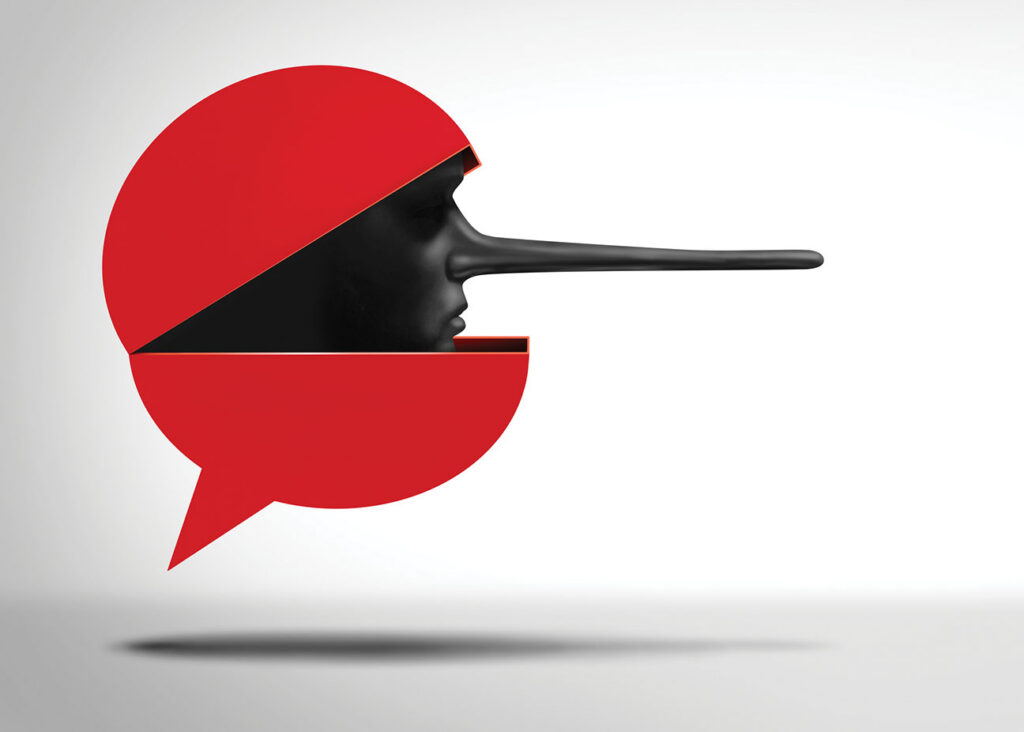
Which brings us – absurdly, but predictably – to the latest anti-Israel atrocity narrative entering mainstream Western discourse: the allegation that Israel trained dogs to rape Palestinian prisoners.

Not anonymous Telegram channels. Not neo-Nazi forums. Not David Duke pamphlets.

Prestige journalism. Including amplification from The New York Times – the supposed “paper of record.”

In any healthy intellectual culture, the allegation would have been laughed out of an editor’s office within minutes. Not because abuse allegations should be dismissed categorically, but because this specific claim collapses under basic anatomy, animal behavior and common sense. Experts in canine behavior noted the allegation was effectively impossible. Anyone remotely familiar with military working dogs understood immediately that this belonged in the realm of medieval grotesque fantasy, not serious reporting.

Instead, much of the media ecosystem approached it the way anti-Israel allegations are routinely approached: emotional receptivity first, skepticism later – if skepticism arrives at all.

Critics quickly noted that the broader New York Times reporting about alleged systematic prisoner abuse rested on weak sourcing, activist-linked amplification chains, and recycled disinformation networks that had already circulated anti-Israel fabrications involving organ theft and other lurid claims. Analysts also pointed to the absence of corroborating forensic evidence despite the severity of the accusations. Yet the allegation still traveled globally because it fit a familiar moral template: Jews, now embodied collectively as Israel, cast as uniquely sadistic and monstrous.

Wars produce propaganda, manipulated imagery, exaggeration and lies. But allegations against the Jewish state now routinely bypass the filtration systems supposedly governing journalism, humanitarian discourse and elite opinion. The more grotesque the allegation, the faster this often happens.

The Jenin “massacre” in 2002 remains one of the clearest examples.

At the time, the world was flooded with slaughter claims. Palestinian officials threw around casualty figures in the hundreds. Saeb Erekat initially spoke of 1,000 dead before revising downward to 500. Commentators, NGOs, diplomats and editorial boards adopted the language of massacre long before investigators entered the camp.

The actual death toll ultimately turned out to be roughly 54 Palestinians – the overwhelming majority combatants affiliated with terror organizations such as Islamic Jihad – alongside 23 Israeli soldiers killed in brutal house-to-house combat.

Nothing remotely resembling the industrial slaughter sold to the world. But the correction came after the emotional verdict hardened. With Israel, the accusation matters more than the correction.

The same pattern repeated after the Al-Ahli Hospital explosion in Gaza in October 2023.

Within minutes, major international outlets declared that Israel had bombed a hospital and killed 500 civilians. The number alone should have triggered skepticism. No credible forensic assessment producing anything close to 500 fatalities could possibly have been completed within minutes.

It did not matter. Demonstrations erupted worldwide. Diplomats condemned Israel. Editorials appeared. Moral judgments hardened instantly.

Subsequent intelligence assessments, intercepted communications, blast analysis and video evidence pointed instead to a failed Palestinian rocket – likely from Islamic Jihad – that struck a parking area rather than the hospital itself. The likely death toll was dramatically lower, reportedly several dozen or fewer.

Again, the correction arrived after the narrative had conquered the world.

Then came the famine libel.

To be clear, post-Oct. 7, 2023, Gaza has experienced severe wartime hardship and disruption. No serious person denies that.

But what increasingly emerged in Western discourse was the assertion that Israel was deliberately engineering genocidal starvation. That claim was often treated not as an extraordinary allegation requiring overwhelming evidence, but as settled fact.

Meanwhile, contrary context received little attention: Hamas theft and diversion of aid, massive quantities of food entering Gaza, failures of internal distribution, fluctuating famine projections, political incentives shaping NGO narratives and discrepancies between apocalyptic claims and available supply data.

Researchers examining aid figures noted that caloric deliveries into Gaza frequently exceeded famine-threshold requirements on paper, even while looting, corruption, distribution failures and Hamas interference distorted internal access. Analysts also documented repeated cases in which catastrophic famine projections were quietly and materially revised downward after receiving sensational coverage.

Perhaps nothing captured this pathology more clearly than the now-famous New York Times photograph of an emaciated looking Palestinian child presented globally as emblematic proof of Israeli-engineered starvation.

The image spread because it perfectly satisfied the emotional architecture of the accusation: skeletal child, evil Jews, deliberate starvation – a medieval archetype repackaged for Instagram feeds, NGO campaigns and Pulitzer juries.

Only later did crucial context emerge: the child suffered from severe congenital medical conditions that dramatically affected his appearance and development. In wider images excluded from the iconic framing, his mother and siblings did not resemble famine victims at all. They actually appeared well-fed.

That omitted context fundamentally changed the image’s meaning.

Yet by then the image had already fulfilled its purpose.

And astonishingly, rather than becoming a cautionary tale about emotional manipulation and journalistic failure, the work was elevated within elite media culture itself. The photographer received a Pulitzer Prize for what was, in effect, emotionally manipulative propaganda built around misleading framing.

That is what should frighten people – not propaganda, which every conflict produces, but the inability or unwillingness of major institutions to apply ordinary skepticism to allegations involving Israel, especially allegations portraying Jews as sadistic, malevolent and inhuman.

Over time, the catalog of crazy anti-Israel claims becomes surreal: Israel trained sharks to attack Egyptian tourists. Israel released wild boars into Palestinian villages. Israel kills to harvest organs. Israel poisons food and water. Israel intentionally targets children as policy. Israel commits “genocide” while simultaneously warning civilians to evacuate combat zones, facilitating aid convoys and supporting polio vaccinations for hundreds of thousands of Gazan children during an active war.

Some allegations are obviously deranged. Others arrive wrapped in the sterile language of NGOs, “human rights” reports, casualty modeling and selectively framed imagery.

Blood libels were never about evidence. They were about moral conditioning – preparing societies to see Jews as uniquely sinister, corrupting and deserving of suspicion.

And historically, that process was rarely led by mobs at the outset.

It was legitimized first by educated society: clergy who treated grotesque accusations as morally plausible, intellectuals who “only raised questions,” political elites who found the hysteria useful and respectable institutions convinced they were merely reporting on serious concerns.

Medieval blood libels did not become historically catastrophic because peasants whispered them in alleys.

They became catastrophic because influential people validated them.

Because scholars, clerics and ruling classes failed to extinguish obvious lies and instead granted them legitimacy, circulation and prestige.

In medieval Europe, an accusation was that Jews poisoned wells.

In 2026, the accusations include that the Jewish state engineers famine, trains rape dogs and deliberately murders children.

Which leads to a key question for much of today’s media and institutional class: Do they understand the historical tradition into which they are now stepping?

Because history does not remember kindly the “respectable” people who mainstreamed blood libels. It remembers them as the people who normalized civilizational madness one allegation at a time.


Micha Danzig served in the Israeli Army and is a former police officer with the NYPD. He is currently an attorney and is very active with numerous Jewish and pro-Israel organizations, including Stand With Us and the FIDF, and is a national board member of Herut North America.

From Poisoned Wells to ‘Rape Dogs’: The Medieval Logic Behind Modern Anti-Israel Lies Read More »