fbpx

April 8, 2026

America First and Israel

There are already enough different types of antisemitism in the world that it would seem that we have little need for any more. But that is what we are going to get. And while this newest strain is a direct result of the war in Iran, it will not disappear when the conflict has ended.

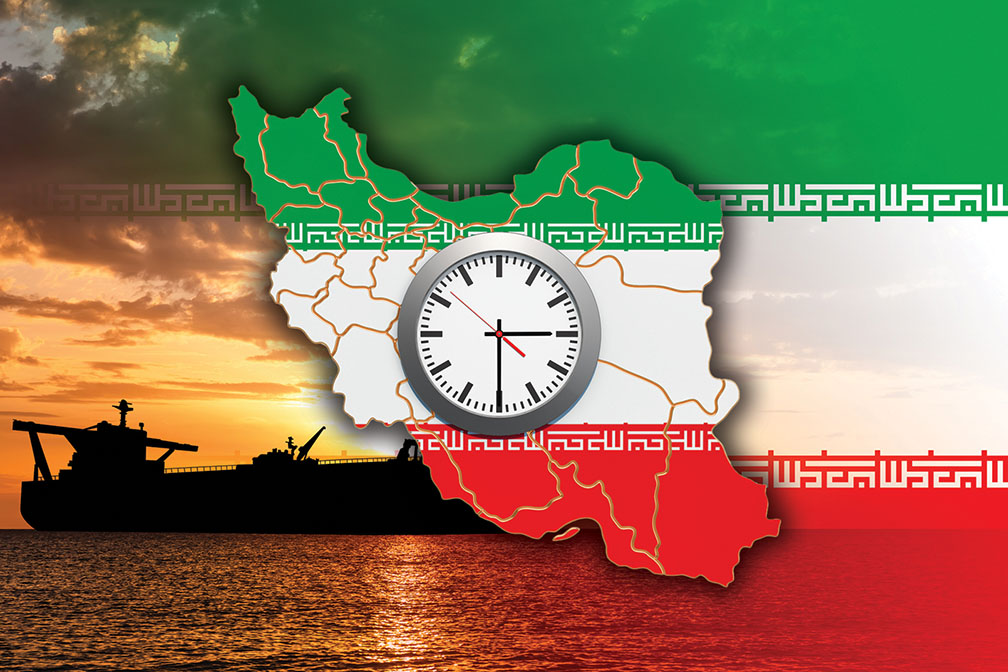
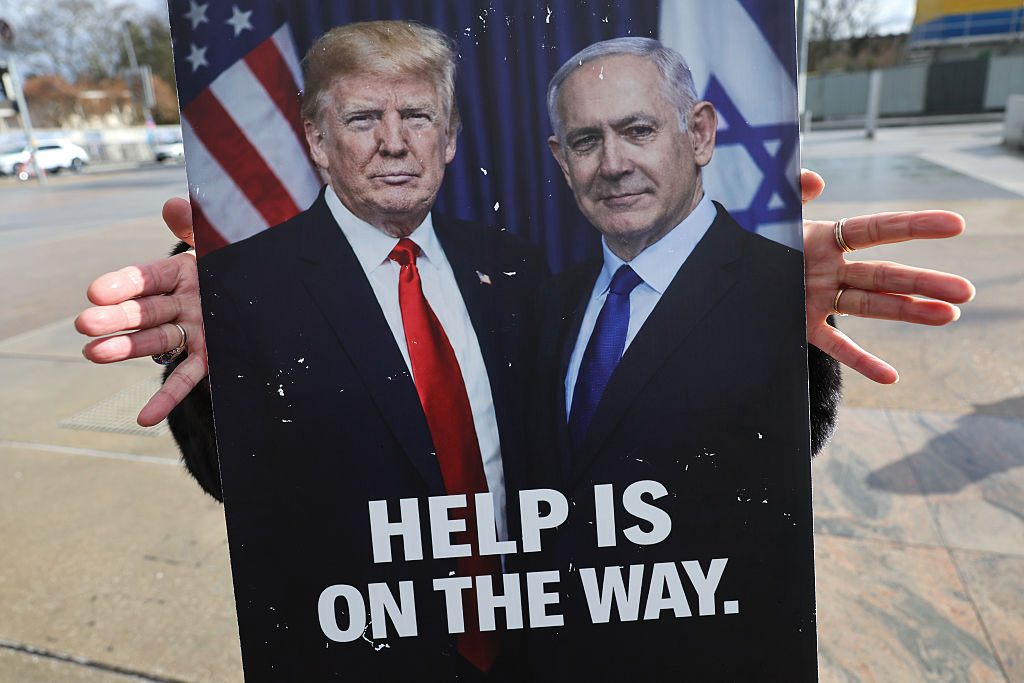
As Donald Trump continues to struggle to explain his goals there, his backers have begun casting about for scapegoats to blame for the president’s decision to enter the war. Not surprisingly, a growing number of conservative fingers are now pointing at Benjamin Netanyahu, whom they accuse of convincing Trump that another round of attacks against Iran could be just as quick and painless as his recent foray into Venezuela and his missile strikes against Iran last summer. But the Iranians have proved to be much more tenacious than expected, and while U.S. and Israeli forces have mercilessly battered Iran’s military capability, the Iranians’ ability to close off the Strait of Hormuz has created global economic havoc. For all practical purposes, the result is a stalemate.

Secretary of State Marco Rubio unintentionally laid the groundwork for criticism on Netanyahu in the war’s opening days when he asserted that imminent Israeli military plans had forced the U.S. to act. While Rubio, a longtime Israel ally, quickly retracted his comments, it opened the door for speculation, quickly followed by allegations, that Netanyahu had drawn Trump into a new war that was not in either the president’s or his country’s interest.

While we will never know the details of these private conversations between the two men, it’s unlikely that Netanyahu would have needed to push very hard to convince Trump that an attack on Iran would be to his benefit. Ever since returning to office last year, Trump has been far more aggressive on the world stage than during his first term. U.S. military action, either actual or threatened, in Ukraine, Venezuela, Greenland and, possibly, Cuba, along with assertive roles in Gaza and Ukraine, has consumed much of Trump’s second term in office.

The president has redefined his “America First” slogan from the neo-isolationist retreat from global responsibilities that characterized his first term in office, to a far more aggressive display of American international authority. As working with Congress and most domestic policy has lost its allure, Trump has turned his attention overseas.

But this new focus has led to a growing feeling among Americans that the president is not giving sufficient attention to inflation and other domestic policy concerns, and the unexpected duration of the war with Iran is making this problem worse for him and GOP candidates preparing to face voters this November. Trump’s inability to explain his goals for the war has caused him even more significant political harm. He devoted almost no time to explaining his motivation before the war began. His speech to the nation last week offered little new information and had no real impact on public opinion.

Trump and his advisors understand the need to get out of Iran as quickly as possible, but they also recognize that they must be able to present some plausible case that they achieved victory. The current gridlock in the Strait of Hormuz suggests just the opposite, so Trump has alternated between talking about how the war is almost over and threatening major new attacks against Iran.

The challenge is further complicated by growing evidence that the U.S. and Israel have different goals for how the war should conclude. Trump wants to be out of Iran, the sooner the better, for domestic political purposes. But Israel, now joined by Saudi Arabia and United Arab Emirate, believes that the Iranian threat will not be truly compromised without broader regime change and a more sweeping military victory. While this has not impeded close military and diplomatic cooperation between Israel and the U.S., it does strengthen the perception that Netanyahu is taking Trump for a ride. That perception will remain long after this war has ended, further fueling the post-Oct. 7, 2023 antisemitism that continues to sweep this country.


Dan Schnur is the U.S. Politics Editor for the Jewish Journal. He teaches courses in politics, communications, and leadership at UC Berkeley, USC and Pepperdine. He hosts the monthly webinar “The Dan Schnur Political Report” for the Los Angeles World Affairs Council & Town Hall. Follow Dan’s work at www.danschnurpolitics.com.

America First and Israel Read More »

Defending Israel in an Age of Madness

For the past 50 years, in capacities both official and voluntary, before the American press, on campuses and in a corpus of op-eds, I have spent most of my time defending the state of Israel. Though not always keen to justify its policies, I never lost faith in the justness of the Zionist project and the public’s openness to its case.

Challenging even in the quietest of times, standing up for Israel became especially daunting after Oct. 7, 2023, when the victims of a verifiable genocide were baselessly accused of perpetrating one. Still, there remained my bedrock belief that most Americans, when presented with the facts, would come down on Israel’s side. But while the hostility in much of the media was nothing new, the open-minded audiences I usually addressed had changed. Conspiracy theories once considered fringe had become mainstream, and age-old antisemitic tropes had resurfaced in a not-so-subliminal presumption of Jewish wickedness. Inexorably, I came to understand that the cogent nation I once knew and appealed to, where a basic rationality could always be assumed, had fallen into lunacy.

Proof of that descent can be seen in this year’s most celebrated movies — “One Battle After Another,” “Marty Supreme” and “Bugonia” — which are similarly about obsessiveness, radicalism and paranoia. “If I Had Legs I’d Kick You” is entirely about a woman losing her mind. Even the breathtaking “Sinners,” which begins as an elegy to the blues and a vivid retrospective on the Jim Crow South, sinks into blood-sodden insanity. Quality films are often reflective of their times, and these productions are no exceptions. The America they depict, whether in the future, past or present, is unhinged.

Much of that madness is hardwired into a country founded largely by outcasts, a society detached from Old World concepts of normality. “He clutches everything, he holds nothing fast,” wrote Alexis de Tocqueville of the typical American he met in 1831. “[He] soon loosens his grasp to pursue fresh gratifications.” The cavalcade of American craziness — clairvoyants, snake-handlers, geeks and gurus, Heaven’s Gate and Jonestown — has since proved prodigious.

Yet what was marginal in past generations has moved into the center. A mere 15 years of social media sufficed to transform America’s built-in propensity for mania into a new national reality. Not only in Hollywood but permeating throughout society is a sense that delirium now reigns. In politics especially, those on the other side of the aisle are no longer merely wrong but psychotic, not misguided but deranged. Was it really so long ago that a presidential election could pit a Barack Obama against a John McCain or a Mitt Romney? Would such a matchup even be conceivable today?

America’s national derangement poses myriad challenges to those not yet caught up in it. The anomie is daunting enough for the general public — if that term still makes sense in this fragmented age — and it is virtually insurmountable for the defenders of Israel. To refute the accusation that Israel committed genocide in Gaza, one can marshal facts such as the nearly one-to-one civilian-to-combatant casualty ratio or the millions of leaflets and text messages dispensed by the IDF warning of impending operations, but it’ll be like firing ping-pong balls at a tank. Though readily disproven, Israel’s guilt for annihilating an entire people is today accepted by more than half of that general public. An even larger majority favors the Palestinians — even the misogynist, homophobic, anti-American terrorists — over America’s only dependable, democratic, military ally. Rational?

For many decades, advocates for Israel — and before its birth, for Zionism — wielded the weapon of truth. We produced volumes of “myths and facts” about the conflict. Our world was fundamentally distinct from the Middle East, where a ruler’s word, spoken or echoed in the press, immediately became reality. Iraq could have its Baghdad Bob, the Ba’athist propagandist who, during the First Gulf War, insisted that the U.S. Marines had been decimated even as they raided his office. Israel, by contrast, would have its Rabins and Shamirs, paragons of veracity. But what should we do today when Israel’s leaders are no longer taken on their word, even by a sizable share of Israelis? What should we do when much of the world — and America, most maddeningly — is populated by Baghdad Bobs?

How should we react, moreover, when rampant unreason is infused with antisemitism, history’s longest-lived lunacy? Jews — and their metonym, Israel — are today not only targeted by the madness but also stand accused of causing it. Consider, for example, the viral five-minute video that employs vivid AI to show how a triumvirate of Benjamin Netanyahu, Henry Kissinger and David Ben-Gurion orchestrated 9/11, the Iraq and Afghanistan wars, poverty, drugs, pedophilia rings, the Manson murders and Operation Epic Fury. “Everybody knows the good guys lost / Everybody knows the fight was fixed,” thrums the soundtrack sung by Leonard Cohen, a Zionist Jew. More than a million people have viewed the clip and countless others like it are proliferating.

In this new, twisted American universe, Oct. 7 was a false flag operation in which Israel massacred and kidnapped its own people as a pretext for occupying Gaza, ZAKA volunteers staged the rape scenes at the Nova Festival and, most recently, Netanyahu is dead. Ayman Mohamad Ghazali, the terrorist who drove his car into a Michigan synagogue, was portrayed by NPR as a gentle, otherwise law-abiding citizen with genuine grievances. The New York Times eulogized Ayatollah Ali Khamenei, who butchered his own people, denied the Holocaust, and tried to perpetrate another, as “the hardline cleric who made Iran a regional power.”

The Iran war further deepened America’s delirium. Amid such bedlam, try to advance a logical argument about why Israelis, threatened by a regime sworn to annihilate us and industriously producing the means of doing so, might not want to sit passively until it strikes. Try to explain how, given Israel’s urgent need to preempt and Iran’s pledge to retaliate for any Israeli attack by bombing U.S. bases, President Trump didn’t need a reason to go to war — the war was coming to America. Advance those clear-eyed arguments and hear, in reply, that Netanyahu wanted war with Iran to deflect attention from his annexation of the West Bank. You might also hear how a cabal of pro-Israel donors, media moguls and Chabad pushed America into war to destroy al-Aqsa and rebuild the Third Temple. The classic antisemitic canard of the cunning Jew winding the unwitting gentile around his crooked finger has been embraced whole hog by most of the American press, with Bibi in the role of Fagin and Trump, however improbably, as Oliver.

Even if the Iran war ends today, the inanity will surely continue. Many of my veteran Israel-defending friends, meanwhile, are simply willing to give up. Why gird yourself with logic, they reasonably ask, only to battle an army of absurdities? Yet my answer remains unchanged: We must continue to fight. Armed with those same weapons of truth — sharper now, more piercing — we must continue to battle the madness. Even if we can only dent it here and there, even if it sometimes feels like firing ping-pong balls at a tank. Cutting through, we can reach those who, like the clandestine book readers in “Fahrenheit 451,” still cling to sanity. We can reinforce those who remain moored in morality and believe in the need to defeat evil in the world. Most crucially, we can bolster the many who, despite any differences with its government, continue to believe in Israel’s justness.


Michael Oren, formerly Israel’s ambassador to the United States, Knesset Member and Deputy Minister in the Prime Minister’s Office, is the author of the Substack, Clarity and the founder of the Israel Advocacy Group.

Defending Israel in an Age of Madness Read More »

By the Time You Read This … Who Knows?

One of the foibles of publishing in print is that you can write stuff that becomes irrelevant once the paper comes out.

Take this week, for example.

President Trump has warned that Iran will “lose every power plant and every other plant they have in the whole country” and “every bridge will be decimated” if they do not agree to open the Strait of Hormuz by Tuesday night.

Guess what? We go to press Tuesday morning.

Which means that by the time you read this, it’s possible that all hell will have broken loose … or not. This is Trump, after all.

But because the war in Iran seems to be on everyone’s lips, I feel compelled to weigh in.

So, what can I add to the conversation that will be relevant regardless of what happens with the showdown Tuesday night?

Maybe I can fill in a few gaps.

As I see it, the biggest gap is that if you follow the mainstream media, the Iran War looks like the biggest military blunder since Napoleon tried to invade Russia.

Don’t get me wrong. There are plenty of good reasons to critique the war, from the sloppy way it was launched to objectives that kept changing to alienating our allies to not involving Congress to not anticipating the resilience of the enemy … I can go on.

But I’m not talking about critiques. I’m talking about a brazen, politicized assault from the anti-Republican Industrial Complex that seems to revel in American losses. Indeed, if America losing means the Democrats retake Congress in the midterm elections, well, you know what they say about breaking a few eggs to make an omelet.

Thus, instead of balanced reporting, criticism has been magnified beyond all proportion. Toughness from Iran and mistakes from the U.S. are just signs that America is losing. People who loathe Trump want to drown him in a never-ending mess of his own making that will send Republicans packing in the fall.

If I wasn’t so acutely aware of how politicized our country has become, I wouldn’t show this much cynicism. But I would also be dishonest. I owe you the truth as I see it.

When political warfare becomes a religion, the truth becomes optional. And in a war with such high political stakes, the partisans have shown only the truth that helps their team.

What have they not shown, or at best shown reluctantly?

Oh, only that an evil regime is getting severely weakened, and why that is very good for the world.

“The fall of the Islamic Republic would be an epochal development. The United States and Israel are methodically paving the way for such an event,” Noah Rothman writes in National Review Online. “If they succeed, a better world awaits all of us. Whatever setbacks American and Israeli forces experienced in the pursuit of that outcome will be seen through posterity’s lens as a small price to have paid.

“But even if the regime does not collapse, its offensive capabilities have been degraded and its value to the anti-American axis is far more limited than it was on Feb. 27. Whichever way you look at it, the U.S. and Israel are advancing their interests and strengthening international security.”

That side of the truth may be inconvenient to political partisans, but it’s deeply irresponsible to exclude it.    

You could despise Trump and believe he has bungled every aspect of this war and still recognize the immense value of degrading the threat of a genocidal regime that is rabidly anti-American.

You could despise Trump and still root for America to win, even if it won’t help your political team.

Just as we all rooted for the success of the daring mission that rescued the U.S. airman, we ought to find a place in our political hearts to root for the only team that should count — our country.

That is relevant regardless of what happens after we go to press.

By the Time You Read This … Who Knows? Read More »

Jewish Rapper Hosts a Seder on NYC Subway Car

Rapper Kosha Dillz has long impressed with his freestyle rapping skills.

Last week, he applied those same inventive abilities to organizing an unusual ritual-filled event: a Passover seder held on a New York City subway car.

The rolling seder—which started in Manhattan at Union Square and wrapped somewhere in the Bronx—featured Dillz, born Rami Matan Even-Esh, gathering nearly 100 participants for what he later called on Instagram the “third ever @subwayseders.” Partnering with the advocacy campaign Stand Up to Jewish Hate, Dillz set out to create “the most inclusive Seder of all time.”

He might’ve just succeeded. The April 1 pop-up, coinciding with the first night of Passover, drew notable attendees including Princess Superstar, a Jewish rapper, singer and DJ; New York City-based Rabbi Arielle Stein; and Yiddish singer Riki Rose.

Among the other seder-goers was a man who described himself as a “Dominican Jew,” which underscored the eclectic mix of identities drawn to the event. Additionally, there were longtime New Yorkers, curious tourists and commuters who had boarded expecting a routine ride and instead found themselves in the middle of an ancient Jewish ritual.

It was part flash mob, part street performance. Strangers became participants as the seder unfolded in abbreviated but recognizable form. There were tiny cups of grape juice passed carefully between riders, sheets of matzah cracked and shared and even containers of matzah ball soup sourced from Katz’s Delicatessen—a nod to old-world tradition in a contemporary setting.

At one point, Dillz, dressed in a backwards cap and a long tunic that Moses might’ve worn, shepherded his flock in a call-and-response chant that could’ve easily been happening inside a hip-hop club.

“When I say ‘subway,’ you say ‘seder!’”

“Subway!”

“Seder!”

“Subway!”

“Seder!”

Yes, this was a subway car—the six train, to be precise. At one point, a young participant stood and recited the Four Questions before others joined in. Passengers sang “Dayenu” in bursts, with Rose accompanying the group on acoustic guitar.

Dillz later posted video from the seder to his Instagram account, where it quickly gained traction, racking up nearly 2,000 likes as of press time. The footage captures a cross-section of the city—diverse, animated, chaotic—united for a moment in shared storytelling.

In a phone interview, Dillz was asked if he was granted city permission for the event. “Nope,” he said, “always just do it,” a mindset that explains his rare ability to get on the mic in public places and rap for strangers.

The idea for the subway seder was inspired by the “10 Minute Seder,” an abbreviated Haggadah created by Los Angeles-based Rabbi Yonah Bookstein. Originally designed for music festivals, where Bookstein incorporated it into “Shabbat Tent” programming that offered Jewish attendees a way to mark the holiday in unconventional environments, the rapid seder found new usage during pandemic-era Zoom seders.

The streamlined format distills the essentials: the symbolism of the seder plate, the blessings over the four cups, the Four Questions, the Four Children, the ten plagues and the central obligations of Passover—matzah, maror and the retelling of the Exodus story.

For Dillz, the subway was simply the next frontier.

Given the current charged climate of increasing antisemitism, the first year of the subway seder was met by a few commuters who responded to the highly visible event with chants of “Free Palestine.” The past two years, however, have gone off without incident, the rapper said.

The subway is not the first unusual environment that Dillz has transformed into a home for a seder. Years ago, when based in Los Angeles, he ventured out to the desert and hosted seders at the Coachella Music Festival, whenever the high-profile event overlapped with Pesach. Bringing together Jewish festivalgoers, he dubbed the program “Matzahchella.”

Now that Dillz is based in New York, he’s had to find a new home and creative expression for his freestyling abilities, passion for community and love of Judaism.

The subway seder was born.

Jewish Rapper Hosts a Seder on NYC Subway Car Read More »

The Jewish Kingdom of Southern Arabia

Looking back at the history of the Middle East, the mind’s eye usually skips over the six centuries that elapse between the destruction of the Second Temple in 70 C.E. and the rise of Islam with Prophet Mohammed in the seventh century. Yet the area was continuously inhabited. What was it politically? Whom did it worship?

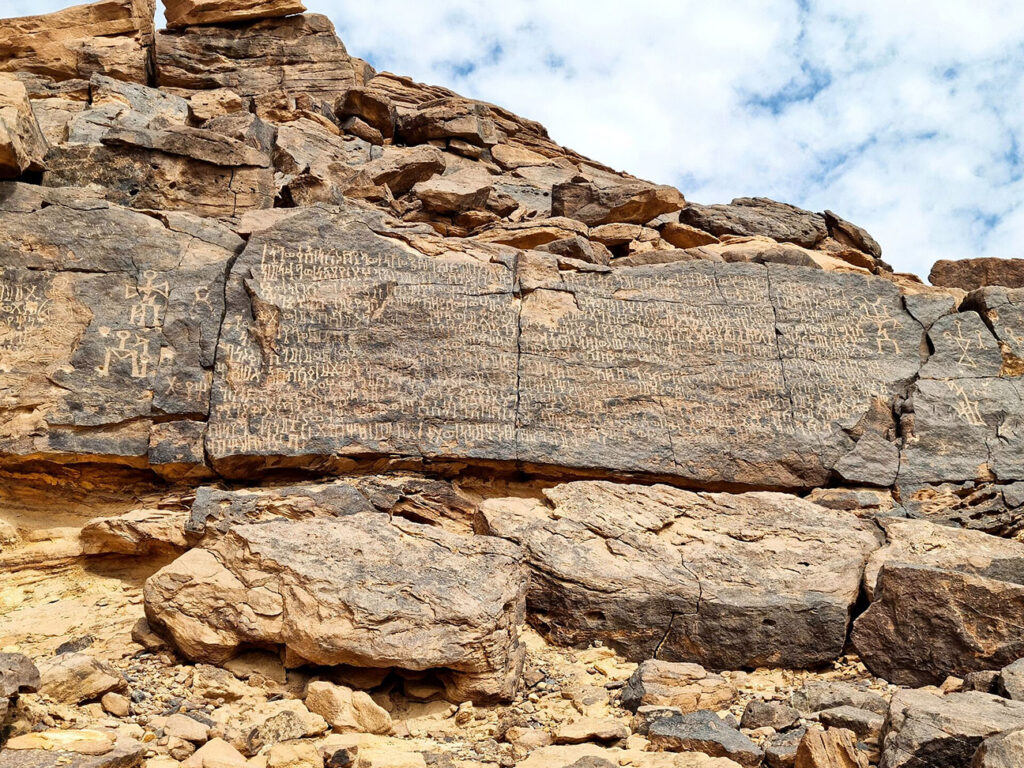
Two well-documented academic works shed light on the mysterious kingdom: “The Throne of Adulis: Red Sea Wars on the Eve of Islam” by G. W. Bowersock (Oxford University Press) and “The Judaism of the Ancient Kingdom of Himyar In Arabia: A Discreet Conversion” by the French historian Christian Robin in volume 3 of Cambridge Semitic Languages and Cultures. Their scholarship is based on historical chronicles written in Arabia and Ethiopia, contemporary reports from Indian and Syrian travelers, Byzantine diplomatic dispatches, as well as hundreds of stone inscriptions found on both sides of the Red Sea.

For much of the 3rd-6th centuries C.E. and through the time of Mohammed’s birth, two empires battled over the control of the Arabian Peninsula: Byzantium and Persia, with much of the conflict played out through smaller local proxies. The Coptic Christian kingdom of Axum (Ethiopia) aligned with the Christian Byzantium, while the Jewish communities throughout the region aligned with Persia. Independent Arab tribes controlled various parts of the peninsula, and their alliances shifted constantly.

Religiously, before Islam, G. W. Bowersock explains, those tribes divided into those that practiced indigenous, polytheistic cults, Arab Christian denominations, and Arab Jews, that is Arab tribes that converted to Judaism, alongside, or likely connected with, diasporic ethnic Jewish communities of Judean origin.

Contributing to the political and religious instability was the recurring Ethiopian migration into parts of the Arabian Peninsula: the Strait of Bab el-Mandeb dividing East Africa from Yemen is barely 18 miles, four times closer than Florida and Cuba.

In the 4th century C.E., Himyar becomes the leading power in Arabia, imposing its rule on the large part of the peninsula, specifically in the south and the west, and later conquering eastern Arabia in 474 C.E. It is during that time, in the 380s C.E., that an abrupt religious change takes place in the kingdom. Mentions of polytheistic gods disappear from historical evidence, replaced by consistent references to a single God, named as “Rahmanān” (“The Merciful,” a name for God frequently used in the Talmud and similar in meaning to “El Maleh Rahamim,” the Jewish funeral prayer), “Eln” (God), and the descriptive “The Lord of the Sky and the Earth.”

In some inscriptions, Bowersock adds, “He is also explicitly invoked as the ‘Lord of the Jews’, and persons with Jewish names are found imposing burial regulations designed to segregate Jews from non-Jews. . . The Himyarites took over such words as Amen and Shalom, and a Himyarite seal, now in a private collection, bears a representation of a menorah.”

Christian Robin counts at least 10 Himyarite inscriptions referring to the mikrāb, a new word denoting a synagogue, which also survives in the Ethiopian Ge’ez language. One such inscription made by King Madikarib Yun’im (c. 480–485 C.E.) commemorates the construction of a mikrāb while also using the word knesset, apparently, to denote an assembly room within the synagogue.

The inscription of Hasi in the vicinity of Yemen’s present-day capital Sanaa, cited by Robin, describes “the transformation of four plots to create a cemetery only for Jews. It details that a fourth plot was added to the three plots and the well . . . The mikrāb, which is entrusted to a custodian (hazzān), drawing its subsistence from the revenues of a well, owns landed estates.”

Such a radical shift to Judaism as a state religion allows Himyar to set itself apart. Twice during the 4th century, the Byzantine Empire sends delegations with sumptuous gifts to convince the Himyarite kings to convert to Christianity, but to no avail. Probably, as Robin surmises, it is because Himyar’s main enemy, the Ethiopian kingdom of Axum is already Christian and an ally of Byzantium. Describing one of these embassies, “The Ecclesiastical History” by Philostorgius notes “quite a large number of Jews are living among them” and blames them for the mission failure.

From 470 C.E. onwards, Christian chroniclers report the rising anti-Christian repression in Himyar and mention the trial against the Christian priest Azqīr of Najrān in the country’s north, accused of “introducing a new religion into the country.”

Around the start of the sixth century, the Himyar kingdom falls under Ethiopian control, but, in 522 C.E., their local Jewish appointee, King Yusuf (Joseph), rebels. He massacres the Ethiopian garrison in the capital and goes on a rampage through the Christian areas of his kingdom. Yusuf’s policies provoke the Christian rebellion in Najrān, but he represses it with massacres well documented by his contemporaries.

Assisted by the Byzantines, the Ethiopian king sails with his army across the Red Sea to aid the Christians. “Upon their arrival sometime after Pentecost Day, 525 C.E., [Yusuf] was killed. Himyar’s conquest,” Robin adds, “was followed by the systematic massacre of Jews. The country then became officially Christian. Churches were built and an ecclesiastical hierarchy was established.”

The story of the Jewish kingdom, however, does not end here. Around year 570 C.E., Persians invade Arabia directly and expel the Ethiopian rulers from Himyar. They go on to capture Jerusalem in 614, where the Jewish population welcomes them as liberators. In Arabia itself, the Jewish community endures in the southwestern corner, Yemen, all through the creation of the State of Israel.

The tale of Himyar reminds us of the ongoing Jewish presence in the Middle East, its important history, but also of the danger of religion interwoven with state politics. Then and now, empires inevitably enter the fray of the conflict after a period of proxy fights. It may also be a lesson in how the political alliances in the region can sweep and sway unpredictably like the shifting sands of the desert.


Lane Igoudin, Ph.D., is the author of the memoir “A Family, Maybe.” He teaches English and linguistics at Los Angeles City College and is a past Andrew W. Mellon Fellow with UCLA EPIC-Humanities. Find him @laneigoudin or at laneigoudin.com.

The Jewish Kingdom of Southern Arabia Read More »