fbpx

January 11, 2026

Time to Take Civil War Seriously

Who would ever have guessed that frigid Minneapolis, situated in America’s great north, would become the battleground for the kind of rising national temperature that in 1861 precipitated a civil war? Minneapolis may become the new Antietam.

The city, after all, is where rioting ensued after the death of George Floyd in 2020. And this past week Renee Good, a mother of three, was shot and killed there by an ICE agent while obstructing the roundup of local illegal immigrants. Her death set off violent clashes in New York, Oakland, Kansas City and Portland, where two illegal immigrants with Venezuelan gang affiliations were shot and killed, as well.

Overall, American solidarity seems a bit shaky these days. Patriotism is at an all-time low. It’s entirely fashionable to downgrade American exceptionalism and achievement. If the Trump administration is behind it, nearly half the country can’t stomach it.

Peaceful protest in America has gone the way of the respectful debate. It simply is no longer done. Earlier generations of political crusaders would be ill-equipped for today’s sanctioned bloodbaths. Martin Luther King, Jr. would find himself helpless in Minneapolis; Malcolm X would fit in quite nicely.

Notice how Malcolm X’s “By any means necessary” became the rallying cry of pro-Hamas agitators who defaced posters of Israeli hostages, turned college campuses into pogrom programs, and shut down Christmas tree lighting ceremonies and public thoroughfares.

Immigration roundups required calling out the National Guard, and even military troops, in several major cities.

The CEO of a health insurance company was murdered in Manhattan while his assailant is treated like a folk hero to be feted, not imprisoned. Last week protests erupted in support of a communist Latin American dictator who was abducted to stand trial for narcoterrorism and drug trafficking against the United States. Obviously, some believe he was deserving of a Nobel Peace Prize.

Nihilism has become the new national ethic. There were two assassination attempts on the life of then presidential candidate Donald Trump. And an actual assassination of Turning Point USA founder, Charlie Kirk.

Nihilism has become the new national ethic.

The Unite the Right Rally and the storming of the United States Capitol on January 6 revealed the other side of what might become a looming civil war. Both political extremes are comfortable causing chaos—whether it involves torching police precincts, desecrating monuments or crashing federal buildings.

Mask-wearing in such heated environments is positively de rigueur. Islamist and socialist mayors and city councils are redefining the contours of American freedom. Illiberal, Sharia-friendly, anti-white, anti-capitalist, anti-American policy planks surely would have surprised the Founding Fathers who staked everything on free markets, liberal ideals and representative democracy.

New York City’s newly appointed housing czar doesn’t believe in the ownership of private property. That won’t go well in arguably the priciest real estate market in the world. Crime is spiking in sanctuary cities governed by officials who are dubious of law enforcement. A critical mass will flee such municipalities seeking safer streets and tax havens.

All told, these social upheavals and cultural tensions have resulted in a rewiring of American minds and a rewriting of the rule book for radicals.

The pro-Hamas college encampments and the more recent anti-ICE mobs are not mere protests. The participants are openly provoking fights with federal officials. They arrive at the scene planning aggressive resistance, encouraged to bring items that can be used to barricade streets—especially automobiles. Renee Good was at the wheel; and that’s how she ended up dead.

The Department of Homeland Security reports a 3,200 percent increase in cars being used to impede ICE agents from doing their job. Vehicular attacks against ICE agents have surged, too. Was that on the mind of the ICE agent in Minneapolis last week?

Was Renee Good “murdered,” or was she the tragic victim of a species of activism that refuses to follow the directions of arresting law enforcement officials?

Was Renee Good “murdered,” or was she the tragic victim of a species of activism that refuses to follow the directions of arresting law enforcement officials?

She was allegedly a member of ICE Watch, a group dedicated to disrupting ICE raids. Another, more radical group in Minneapolis is called Twin Cities Ungovernables.

So much for law and order.

What is it that is so precious about people who are in the United States illegally? Aren’t there more noble causes out there? Social activism these days resembles a death wish. Many of those being sheltered possess rap sheets that disqualify them as productive members of society and even less worthy as good neighbors. Throughout the Biden administration, between 10 and 15 million people entered the United States illegally. Of course, not all were lawbreakers, but surely some have made up for lost time while in the United States.

Why would a mother of three risk her life by flooring the gas pedal and swerving her car with a federal law enforcement officer pointing a gun right at her? Failing to follow the instructions of law enforcement has caused far too many meaningless deaths.

What we clearly see on the streets during the Black Lives Matter, pro-Hamas, anti-ICE demonstrations are agitators engaged in full provocation: antagonizing, egging on, throwing rocks and garbage cans, blocking traffic, resisting arrest. This past October, Border Patrol agents shot an armed woman in Chicago who tried to run them over with her car. They were hemmed in by ten other vehicles all revved up.

How many have ever been in that predicament—just doing their job?

Ironically, these anti-ICE actions are reminiscent of the Boston Massacre of 1770, when 300 Colonialist civilians surrounded, shouted at and threw clubs and oyster shells at eight British soldiers—literally daring them to shoot. In the heat of that moment, the soldiers fired and killed five. Represented by future president John Adams, six of the soldiers were acquitted of all crimes, and two received light sentences. The jury found that the crowd instigated the shooting.

You don’t need to be a social justice savant to know we are in desperate need of a refresher course on what constitutes lawful protest in America. Somewhere along the line, we lost our way with the First Amendment.

Antagonizing federal officers to scuffle with and sometimes fire upon citizens who are there to pick a fight, never ends well. And local politicians prejudging dicey law enforcement scenarios and inflaming crowds might score votes but will not contribute to the marketplace of ideas.

If things don’t change sometime soon, we’ll end up having to pray for the second coming of Appomattox.


Thane Rosenbaum is a novelist, essayist, law professor and Distinguished University Professor at Touro University, where he directs the Forum on Life, Culture & Society. He is the legal analyst for CBS News Radio. His most recent book is titled, “Beyond Proportionality: Israel’s Just War in Gaza.

Time to Take Civil War Seriously Read More »

Why Is the International Holocaust Remembrance Alliance Definition of Antisemitism “Controversial”?

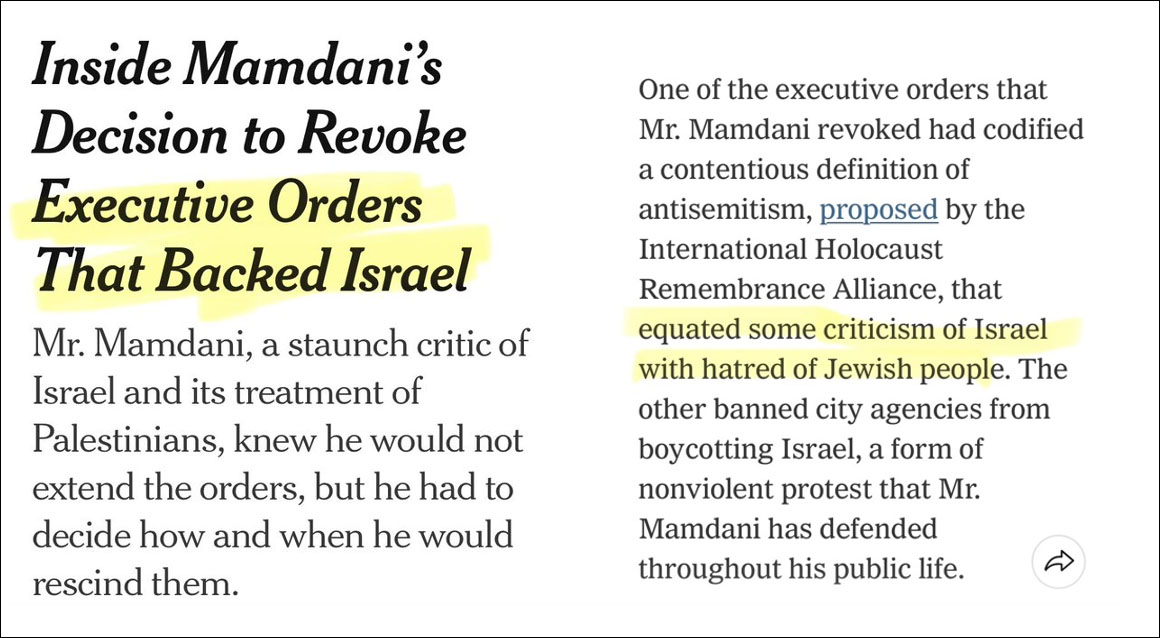
On Jan. 4, 2026 The New York Times published a news story about Mayor Zohran Mamdani’s revocation of executive orders intended to protect the city’s Jews. Here’s the headline: “Inside Mamdani’s Decision to Revoke Executive Orders That Backed Israel” (emphasis mine).

The article described three specific executive orders. One was described as banning “city agencies from boycotting Israel.” Another came about as a response to a protest right in front of the Park East Synagogue. The goal of that EO was for the NYPD to potentially create measures like buffer zones in front of houses of worship while still allowing peaceful protests. And a third was described as having codified “a contentious definition of antisemitism.

The article claims that Mamdani would go on to “reissue some orders verbatim, including one that established the city’s office to combat antisemitism, but the two Israel-related orders [emphasis mine] would be among those erased from the books.”

But which two are “Israel-related”?

Did a now-revoked executive order about buffer zones in front of houses of worship “back Israel”? Clearly not. Was the order “Israel-related”? Well, Jews pray facing Jerusalem and our liturgy includes many mentions of Zion. So, yes, it is related to Israel in that way. But it’s highly unlikely that’s what was meant.

Is another now-revoked executive order that bars municipal actors from engaging in nationality-based discrimination in procurement, investment or official policy (the BDS prohibition) the one that “backed Israel”? No, it is not. That is non-endorsement neutrality, not “backing.” In U.S. law, there is a recognized difference between “backing” or affirmative support (subsidies, partnerships, advocacy), and anti-discrimination constraints on government actors. Was it Israel-related? Yes.

Is the establishment of an office to combat antisemitism in New York City something that “backs Israel”? Absolutely not. Is it Israel-related? Probably not in the way the authors of the piece meant.

But what about the now-revoked executive order that codified the International Holocaust Remembrance Alliance (IHRA) definition of antisemitism? The writers claim that it “equated some criticism of Israel with hatred of Jewish people.” This is a widely circulated accusation.

Let’s take a look at the definition to see if it’s true.

The IHRA definition of antisemitism reads: “Antisemitism is a certain perception of Jews, which may be expressed as hatred toward Jews. Rhetorical and physical manifestations of antisemitism are directed toward Jewish or non-Jewish individuals and/or their property, toward Jewish community institutions and religious facilities.”

Is this the best possible definition of antisemitism? Maybe not. (Bret Stephens offers another one here.) But it is better than bad definitions, and it’s better than having no definition at all.

Importantly, however, there is nothing in that definition that “equates criticism of Israel with hatred of Jewish people.”

To “guide IHRA in its work,” the organization’s website adds examples that “may serve as illustrations.” Let’s look at whether they “equate criticism of Israel with hatred of Jewish people.”

“Manifestations might include the targeting of the state of Israel, conceived as a Jewish collectivity. However, criticism of Israel similar to that leveled against any other country cannot be regarded as antisemitic [emphasis mine].”

Does this “equate criticism of Israel with hatred of Jewish people”? No.

As the website plainly says, actual criticism of Israel cannot be regarded as antisemitic, just like criticism of any other country is not regarded as bigotry targeting members of any other country’s ethnic group.

It continues: “Antisemitism frequently charges Jews with conspiring to harm humanity, and it is often used to blame Jews for ‘why things go wrong.’ It is expressed in speech, writing, visual forms and action, and employs sinister stereotypes and negative character traits.”

Does this “equate criticism of Israel with hatred of Jewish people”? No.

“Calling for, aiding, or justifying the killing or harming of Jews in the name of a radical ideology or an extremist view of religion.”

Does this “equate criticism of Israel with hatred of Jewish people”? No.

“Making mendacious, dehumanizing, demonizing, or stereotypical allegations about Jews as such or the power of Jews as collective—such as, especially but not exclusively, the myth about a world Jewish conspiracy or of Jews controlling the media, economy, government or other societal institutions.”

Does this “equate criticism of Israel with hatred of Jewish people”? No.

“Accusing Jews as a people of being responsible for real or imagined wrongdoing committed by a single Jewish person or group, or even for acts committed by non- Jews.”

Does this “equate criticism of Israel with hatred of Jewish people”? No.

“Denying the fact, scope, mechanisms (e.g. gas chambers) or intentionality of the genocide of the Jewish people at the hands of National Socialist Germany and its supporters and accomplices during World War II (the Holocaust).”

Does this “equate criticism of Israel with hatred of Jewish people”? No.

Accusing the Jews as a people, or Israel as a state, of inventing or exaggerating the Holocaust.”

Does this “equate criticism of Israel with hatred of Jewish people”? No. And anyone who believes that accusing the state of Israel of inventing or exaggerating the Holocaust is “criticism of Israel” has thoroughly drained the word “criticism” of meaning.

 Accusing Jewish citizens of being more loyal to Israel, or to the alleged priorities of Jews worldwide, than to the interests of their own nations.”

Does this “equate criticism of Israel with hatred of Jewish people”? No.

“Denying the Jewish people their right to self-determination, e.g., by claiming that the existence of a State of Israel is a racist endeavor.”

Does this “equate criticism of Israel with hatred of Jewish people”? No. In case it isn’t crystal clear, claiming that the mere existence of the State of Israel is racist in and of itself is not criticism of Israel.

“Applying double standards by requiring of [Israel] a behavior not expected or demanded of any other democratic nation.”

Does this “equate criticism of Israel with hatred of Jewish people”? No. Applying a standard to Israel not expected of any other democratic country is not criticism.

Using the symbols and images associated with classic antisemitism (e.g., claims of Jews killing Jesus or blood libel) to characterize Israel or Israelis.”

Does this “equate criticism of Israel with hatred of Jewish people”? No. Classic antisemitic tropes do not constitute criticism of Israel.

“Drawing comparisons of contemporary Israeli policy to that of the Nazis.”

Does this “equate criticism of Israel with hatred of Jewish people”? No. The Nazis were a genocidal regime unique in history for the systematic, industrial extermination of roughly two-thirds of European Jews—about one-third of all Jews on earth. Invoking them when describing Israel is not policy critique but moral vandalism and Holocaust inversion.

Holding Jews collectively responsible for actions of the state of Israel.”

Does this “equate criticism of Israel with hatred of Jewish people”? No.

Finally, while the above examples distinguish between antisemitic rhetoric and legitimate criticism of Israel, even most antisemitic expression is legally protected speech in the United States—including all of the above wherever it does not involve illegal conduct such as vandalism, defamation, true threats, intimidation, incitement to imminent lawless action that’s likely to happen, etc.

To make this point, the IHRA website concludes by explaining how to determine when antisemitic acts are criminal, when criminal acts are antisemitic, and what antisemitic discrimination is.

Antisemitic acts are criminal” it explains, “when they are so defined by law (for example, denial of the Holocaust or distribution of antisemitic materials in some countries).” This does not apply in the United States, where Holocaust denial is constitutionally protected speech.

Criminal acts are antisemitic when the targets of attacks, whether they are people or property—such as buildings, schools, places of worship and cemeteries—are selected because they are, or are perceived to be, Jewish or linked to Jews.” Vandalism and destruction of property are crimes regardless of any connection to Jews or Jewish institutions. They are antisemitic when the targets are non-incidentally Jewish.

Antisemitic discrimination is the denial to Jews of opportunities or services available to others and is illegal in many countries.” Antisemitic discrimination is illegal for the same reason as discrimination based on any other protected category is illegal. (In many Muslim-majority countries it is either not prohibited in law, not enforced in practice, or rendered inoperative by other legal frameworks.)

That’s it. That’s the entire definition and all its listed examples.

What makes the IHRA definition controversial (or “contentious,” to quote the NY Times) is not that it conflates criticism of Israel with antisemitism—it explicitly avoids doing that—but that it attempts to pry open a moral system that is closed where Jews are concerned.

In a closed moral system, guilt is not something to be established through evidence, intent or proportionality; it is assumed in advance. Denial is proof of culpability. Providing context is merely evasion. Pointing to parallel examples is avoidance of responsibility. Applied to Israel, this logic renders Jewish sovereignty itself a standing offense, impervious to exculpatory facts or alternate explanations.

In a closed moral system, guilt is not something to be established through evidence, intent or proportionality; it is assumed in advance.

Opposition to the IHRA definition tends to come from two distinct directions. The first is within the closed moral system. For those who start from a position that treats Israel, and often Jews more broadly, as guilty by definition, any attempt to name and shine a light on antisemitism is decried as not only censorship (despite the legal protections afforded to even antisemitic speech), but also “anti-Palestinian racism,” which is in part defined by “failing to acknowledge” that Palestinians without Israeli citizenship have “rights” to Israel (which they call “occupied and historic Palestine”).

In other words, according to this paradigm, if Mamdani acknowledged Israel’s right to exist as a sovereign Jewish state, he would be considered guilty of engaging in “anti-Palestinian racism,” since Jewish sovereignty includes determining who counts as a citizen and who has a “right of return.”

In addition, because the IHRA definition includes as antisemitic “calling for, aiding, or justifying the killing or harming of Jews in the name of a radical ideology or an extremist view of religion,” the IHRA definition is considered “anti-Palestinian racism.” Referring to those who engage in “the killing or harming of Jews in the name of a radical ideology or an extremist view of religion” (for example, Hamas) as a “terrorist threat,” and referring to Hamas supporters (“calling for, aiding, or justifying the violence described above) as “terrorist sympathizers” are both definitionally treated as “anti-Palestinian racism, as is “excluding or pressuring others to exclude Palestinian perspectives,” even if they are annihilationist—and even if they deny the actual history of the region, the Kingdom of Israel, and the 1948 war.

In other words, acknowledging the factual history of the region is considered “anti-Palestinian racism,” as is calling Hamas and other terrorist organizations “terrorists” and calling their supporters “terrorist supporters,” and so is accepting the State of Israel’s legitimacy as a sovereign Jewish nation.

The other type of objection comes from a basic misunderstanding: These critics misapprehend naming antisemitism as preventing discourse. Not only does the IHRA definition not foreclose criticism, but also it doesn’t even prevent antisemitic speech. It merely identifies it. It is designed specifically for a moral system in which innocence has been rendered conceptually unavailable a priori. Its ambition is not to shield Jews or Israel from actual criticism, but to rescue moral reasoning from a framework in which guilt precedes facts, and judgment is immune to evidence.

The IHRA definition does not target criticism of Israel. Nor does it criminalize or even censor anti-Israel speech. It merely insists that what is understood to be legitimate (i.e. not antisemitic) discourse about Israel remains subject to the same basic conditions that make moral reasoning possible: falsifiability, distinguishing between political criticism and bigotry, and applying a single standard that includes Israel rather than creating a separate standard unique to the world’s only sovereign Jewish state.

Why is that so hard?


A social psychologist with a clinical background, Dr. Paresky serves as Senior Advisor to the Open Therapy Institute, Advisor to the Mindful Education Lab at New York University, Senior Fellow at the Network Contagion Research Institute, and Associate at Harvard University. In addition to The Jewish Journal, her work appears in Psychology Today, The Guardian, Politico, Sapir, The New York Times, and elsewhere. She has taught at Johns Hopkins, the University of Chicago, and the United States Air Force Academy, and writes the Habits of a Free Mind newsletter on Substack. Follow her on Twitter at @PamelaParesky

Why Is the International Holocaust Remembrance Alliance Definition of Antisemitism “Controversial”? Read More »

Hollywood Must Remember Altadena

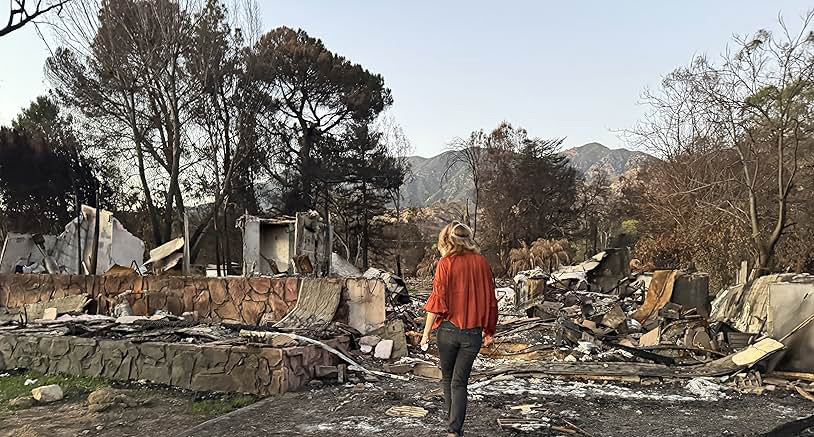
A year after the disastrous fires that flattened thousands of homes in west Altadena and took 31 lives, we have mostly silence from the elite creative class of Los Angeles. These are the folks who routinely fight for justice for victims halfway around the world but can’t seem to do the same for fellow Angelenos burned by a bureaucracy running away from accountability.

On the one-year anniversary of a nightmare, this is the news that matters most: the shameful failure of civic leadership to deal with an emergency made worse by sheer incompetence.

We can get a sense of that failure from an investigative report in The Los Angeles Times, which asks:

“Why were timely evacuation alerts not issued for west Altadena, which accounted for almost all of the Eaton fire deaths and experienced the most widespread devastation?

“Why were there almost no fire trucks in west Altadena, known to be a historically Black, less affluent section of the unincorporated town?

“And why have repeated probes resulted in almost no answers? No accountability?”

I saw the human cost of these failures in a private screening for a short but powerful documentary, “All the Walls Came Down.”

The filmmaker, Ondi Timoner, goes inside devastated Altadena neighborhoods to tell the stories of people who have lost their homes and are fighting a bureaucracy that shows little mercy. She has a personal stake: she lost her beloved home in one of the neighborhoods.

What stands out in the film is that despite the hardships and the outrage and the injustice, neighbors unite in hope and solidarity.

“The film began as a meditation on impermanence and the fragility of everything we assume to be stable,” Timoner writes in a personal account in The Times. “But then, amid the devastation, I found something remarkable: We became more aware and caring of each other as neighbors than we ever were when we lived next door to one another.”

This solidarity is made more poignant by a sense of urgency and even desperation. Homes must be replaced. Initial aid is running out. Mortgages turn into nightmares. Families need places to stay and money to buy food.

“I didn’t realize as I faced my own ruins, that I would end up documenting an urgent situation regarding the future of Altadena,” Timoner writes. “The story turned toward many long-established Black and Latino families who have called Altadena home for generations and now face displacement. That’s when I became determined to finish the film as quickly as possible, so that it could have an impact on the future of my community.”

The next few weeks and months will be critical in helping the countless Altadena victims who long to have their homes back, or at least a livable place for their families.

I understand why Pacific Palisades got so much more attention for its devastation. It is home to many of the Hollywood elites who themselves saw the crumbling and loss of their neighborhoods. The leadership failures that exacerbated the Palisades fires are no less than the failures in Altadena.

This offers a unique opportunity for civic solidarity. I hope Hollywood leaders will see “All the Walls Came Down,” and be moved enough to launch a solidarity campaign demanding justice and immediate assistance for the victims of Altadena.

It’s a good thing to care for flattened neighborhoods in places 8,000 miles away.

It’s also a good thing to care for the flattened neighborhoods of our fellow neighbors a few miles away, and let them know that we’re all in this together.

Visit allthewallscamedown.com to find screening times and more information about Altadena.

Hollywood Must Remember Altadena Read More »

Celebrate Early and Often

I love to say celebrate early and often—and I live it. Birthdays, milestones, Tuesdays that feel like Saturdays. I don’t wait for a single date on the calendar to give myself permission to feel joy. I spread it out. I stack it up. I let it travel.

This year, celebrating my birthday became a journey—across cities, with people who know me in different chapters of my life. Each place held its own meaning. Each celebration felt distinct. Together, they reminded me how lucky I am to be here, to be healthy, and to have people who show up.

Philadelphia: History, Friendship, Roots

Philadelphia has been part of my story since I first arrived for school in 1985, and celebrating there always feels deeply grounding. This time, being in Philly meant revisiting a city that continues to evolve while honoring its past. Spending time at the newly opened Calder Gardens—so intentional, so rooted in legacy and space—felt like the perfect backdrop for reflection and renewal. Philadelphia understands reinvention without erasure. It’s a city that holds memory, art, and momentum all at once. A powerful place to begin a season of celebration.

New York City: Sisters, Stories, and the Stage

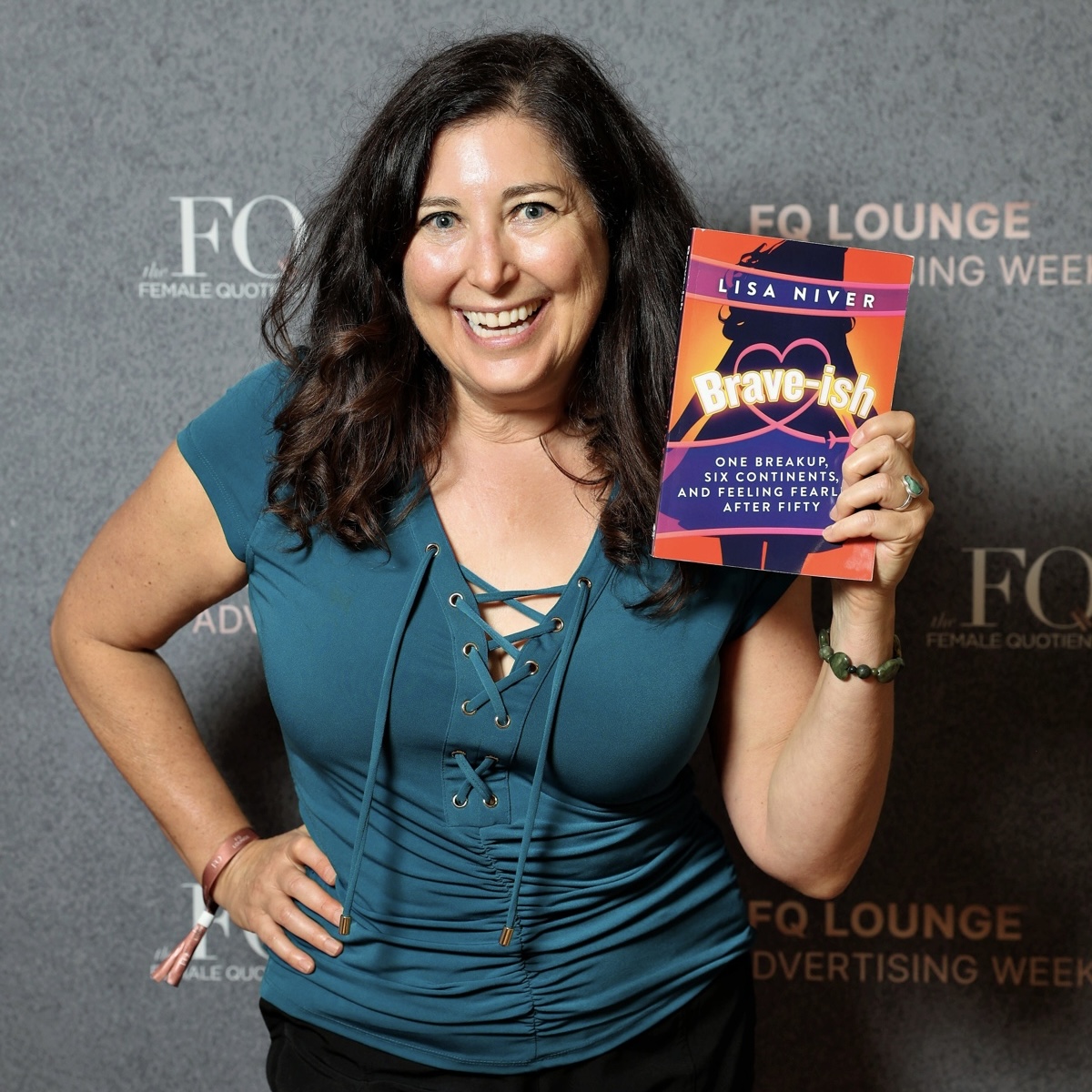
New York with my sister was pure energy—fast, funny, and full of shared history. We saw Oh, Mary!—sharp, fearless, and laugh-out-loud brilliant. I was also in NYC for AdWeek, connecting with the Female Quotient community and celebrating women, media, and leadership. One of the highlights? Signing my book and sharing that moment with people who understand how much work, heart, and persistence goes into putting words into the world. New York doesn’t whisper joy—it amplifies it. New York doesn’t whisper joy; it belts it out.

Toronto: Chosen Family and New Traditions

Toronto with Carolann was a celebration of chosen family—friends who became family through years of traveling the world together. It was my first Canadian Thanksgiving, and we packed the weekend beautifully: hiking the Dundas Peak Trail in Spencer Gorge, cheering at a Toronto Marlies hockey game, and seeing Adam Sandler live—funny, musical, generous, and full of surprise guests.

We visited White Meadows Maple Farm, a third-generation family farm, where we learned how real maple syrup is made—from sap to bottle—and even made our own maple syrup lollipops and tasted a maple syrup charcuterie board. And because Carolann is extraordinary, she made my birthday dream come true with cake tasting in a box—sampling flavors together, laughing, and celebrating in the most joyful way. Proof that friendship, when nurtured, only grows richer.

Los Angeles: Home, Community, and Celebration

Los Angeles is home—and home deserves a party. This was where friends gathered to celebrate together, where laughter filled the room, and where milestones were honored. I had my Telly Award statue and my Southern California Journalism award out at the party, tangible reminders of creative work, persistence, and showing up again and again. Celebrating in LA felt full-circle—surrounded by people who know the everyday version of me and still cheer the loudest.

Orlando: Firsts, Play, and Saying Yes

Orlando added something joyful and unexpected to this season of celebration. I dove at EPCOT, a surreal experience that blended travel, performance, and play in a way only Disney can. Being underwater—focused, present, and calm—felt like a reminder of how lucky I am to be healthy and able to say yes to experiences like this.

And then there was my first-ever airboat ride. Skimming across the water, wind in my face, surrounded by nature—it was pure exhilaration. A true first. Another reminder that celebrating early and often means staying open to new experiences, no matter how many candles are on the cake.

At Sea: Cruising, Scuba, and Wonder

And then—back to cruising, with NCL. Returning to the ocean always feels like coming home. This celebration included scuba diving, that rare, grounding experience where breath, movement, and awe align. I loved adding my book to the ship’s library, a small but meaningful way to leave a piece of myself behind. Celebrating life at sea—through exploration, curiosity, and wonder—felt like the perfect reminder of why travel continues to shape who I am.

The Real Celebration

What I’m celebrating isn’t just a birthday.

I’m celebrating being alive.

I’m celebrating health—because health is a treasure, and not one to be taken for granted. I’m celebrating the privilege of movement, of curiosity, of connection. I’m celebrating the people who say yes, who show up, who make time.

Celebrating early and often isn’t indulgent. It’s intentional. It’s a reminder that joy doesn’t need permission and gratitude doesn’t need a schedule.

If there’s one thing I know for sure, it’s this: life is the gift. And I plan to keep celebrating it—early, often, and with my whole heart.

Celebrate Early and Often Read More »