fbpx

September 16, 2025

Dreading the Holidays

My daughter-in-law recently asked me what I looked forward to during the upcoming Jewish holidays. “Nothing!” I replied, “I dread them.” 

When I think about any Jewish holiday, all I can think about is cooking – and cooking – and serving and clearing and cooking some more. I’ve been doing this for nearly 40 years. 

Every year, when the holidays begin, I realize that I’ve done nothing to prepare for them spiritually. All I did was cook. I tell myself that cooking for family and guests is a kind of avodat Hashem, or divine service, but the fact remains that I was making roast chicken and noodle kugel and mango avocado salad; I was not thinking about the inner meaning of the holiday. I felt that I was at the effect of my own beliefs about what it meant to be a Jewish homemaker.  So I kept on sweating over the stove.

If I can pull myself away from the kitchen, I choose one trait to work on every Elul. I find something that does not serve me or God, and that I need go let go of. In previous years, I have focused on anger, blame, gossip, and other less than delectable habits. I do this because a teacher once told me that we should not go into Rosh Hashanah “empty-handed,” that is, without showing Hashem that when the time comes, we will return to Him a soul that is a little more refined than when He popped us into this sphere. 

This year, instead of choosing one of the Seven Deadly Sins, I chose something closer to home: Victimhood. I will no longer play the victim card when the holidays approach.

When I got married 40 years ago, it was fun to plan menus, cook and have Shabbat and holiday guests. However, the grind grows old, and long ago, I started to chafe under the burden. But I kept on cooking, making a martyr of myself and exasperating my husband.

A few weeks ago, my husband saw me leaning on the sink, sweat pouring down my face, as I prepared to make yet another side dish for Shabbat. He exclaimed, “Why didn’t you buy takeout?” He keeps telling me that, living in a sea of kosher restaurants, I really don’t have to cook at all if I’m willing to pay the price. 

Yet I slog on. 

The only reason to do this is my need to be a martyr to the cause of Jewish wifehood. I see now that these needs are ridiculous. Sure, there is a price to having someone else prepare the food, but the price of my preparing it is greater: Not experiencing the joy of the holiday, not delving into Torah learning about the holiday and not fully enjoying my guests. This year, I’ve decided that the price is not worth the cost. 

That’s why this year, I’m going to do one of four things: 

1. Buy prepared food from one of the multitudes of kosher sources in the city. 

2. Make meals pot-luck. When cooking responsibilities are shared, the burden on everyone is reduced. 

3. Simplify menus. One Sukkot, I bought a ten-pound brisket and baked it overnight at a low temperature. In the morning, voila! A treasure trove of tasty meat. I divided the brisket into different-sized bags and thus had a main course for every meal. Granted, my husband got tired of eating brisket, but he much preferred repeating meals if it meant having a relaxed wife. 

4. Choose to make a meal because I want to, not to make a good impression on others or make a martyr of myself.

So that’s it: If I don’t want to cook or do anything that seems like a burden, I will either delegate it, simplify it or accept it with grace. 

And if you come to my house on Yom Tov, don’t ask me to give you the recipe for that delicious kugel. I won’t know it because I didn’t make it.


Elizabeth Danziger is the author of four books, including “Get to the Point,” 2nd edition, which was originally published by Random House. She lives in Venice, California.

Dreading the Holidays Read More »

With AB 715, Jews Take What They Can Get

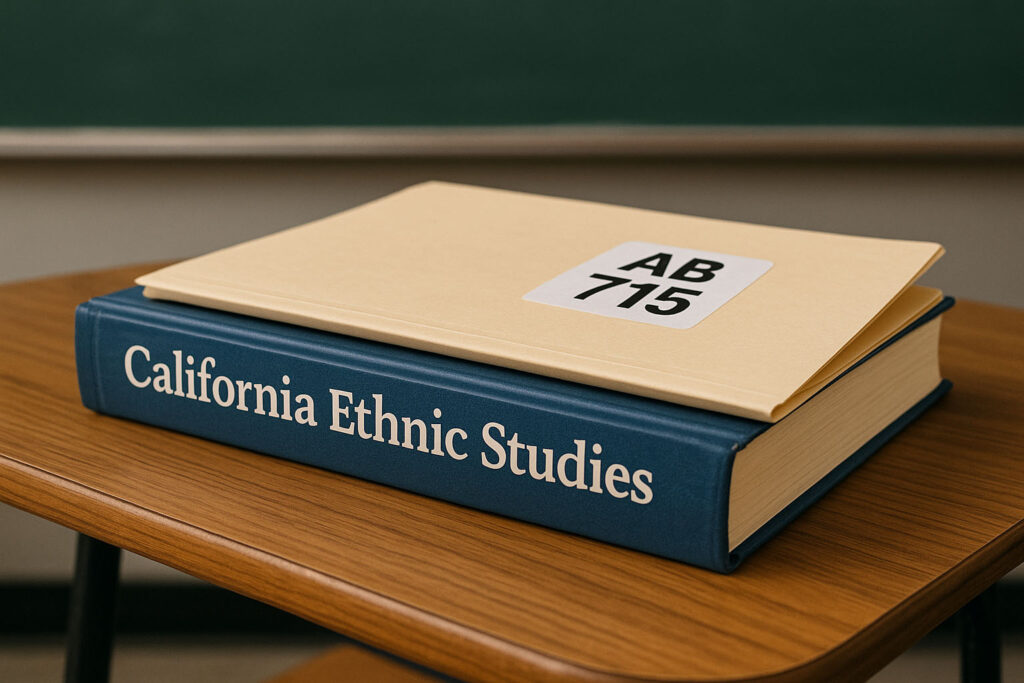
When you are parched from thirst, even a half-full glass of water seems like a gift. So we should be grateful that the California state legislature took its fitful and fractional steps toward protecting the state’s Jewish public school students from the type of hate and vilification that is routinely provided to children from other underrepresented communities. But certainly not satisfied.

Over a year ago, Assemblymembers Dawn Addis (D-Morro Bay) and Rick Zbur (D-Hollywood) introduced legislation that would have addressed shortcomings in the state’s new ethnic studies class requirement by providing statewide standards that would have protected against anti-Zionist and anti-Semitic content. This spring, they wisely shifted their approach, realizing that the uphill fight to protect ethnic studies classes from overt politicization in the aftermath of the Hamas terrorist attacks on Israel was less likely to succeed than a broader effort to address anti-Jewish sentiment throughout the public school system rather than just in one specific class. 

But while the change may have represented a retreat, taking on the broader scourge of antisemitism on a much larger educational landscape still seemed like a wise decision. The new strategy also aligned the Jewish Legislative Caucus with representatives from other minority communities, representing a commendable effort to align with other groups in a broader fight against discrimination.

Predictable foes such as the Council on American Islamic Relations (CAIR) quickly spoke out against the new bill, arguing that it could restrict the rights of Israel’s opponents to criticize the Jewish state’s conduct of a war that began when over 1,200 of its citizens were killed and approximately 250 more were kidnapped during a predawn raid by Hamas militias. More discouraging was the equally vehement opposition from the powerful California Teachers Association, who listed a series of concerns that could have easily defeated the bill.

So the authors retreated again, while still preserving their core goals. They deleted examples of criticism of Israel that crossed the line into antisemitism, as well as a requirement stating that instruction on the Israeli-Palestinian conflict must use “accurate, balanced, and objective language.”  Opponents also insisted that other seemingly unobjectionable language be removed, including the definition of  an “antisemitic learning environment” in the classroom, along with several examples, including “equating Jews or Israelis with Nazis or Nazi Germany,” “collective blame of Jewish people for the actions of the Israeli government,” and “language or images directly or indirectly denying the right of Israel to exist.” 

It’s difficult to see the problems that any of these examples could cause, and the case can be made that they would provide more reliable guidelines for potentially inappropriate conduct. But the watered-down bill that is now on Governor Newsom’s desk still represents progress in the effort to combat antisemitism in California’s public schools. It increases protections for students’ abilities to learn and speak freely by giving schools additional tools to identify, respond to, prevent, and counter antisemitism and to increase the likelihood that classroom content and materials are unbiased and respectful. The legislation will create a staff position to educate teachers and school leaders about antisemitism, track incidents, and advise on accountability measures.

But the continuous objections and concessions has understandably frustrated the bill’s supporters. “I have increasingly come to the conclusion that if we had introduced a bill with three words — antisemitism is bad — a bunch of these people would still oppose the bill,” lamented Jewish Caucus co-chair, State Sen. Scott Wiener (D-San Francisco).

The bill does represent progress, but the determination of the opposition is a sobering reminder of the challenges that the Jewish community still faces to make necessary improvements.

We are a patient people. We waited 40 years to get through the desert to the Promised Land. We will be celebrating Israel’s 80th anniversary in a few years, still waiting for the peace, safety and security we deserve. So we can continue this fight until the California state legislature finishes the job they started.

But we won’t wait forever. This legislation is a good start and it provides a solid foundation on which to build. But there is still much, much more work to be done.


Dan Schnur is the U.S. Politics Editor for the Jewish Journal. He teaches courses in politics, communications, and leadership at UC Berkeley, USC and Pepperdine. He hosts the monthly webinar “The Dan Schnur Political Report” for the Los Angeles World Affairs Council & Town Hall. Follow Dan’s work at www.danschnurpolitics.com.

With AB 715, Jews Take What They Can Get Read More »

Why There Should Be No Flags in Schools

As a child of a Holocaust survivor, I know the power of symbols. For me, the Israeli flag represents hope, resilience and the story of our ancient people who continue to thrive in the face of hatred and violence. At a time when antisemitism is rising in America, seeing the shield of David feels reassuring, even protective. I know many Jewish families feel the same way.

But does that mean that schools should display the Israeli flag as a sign of welcome and reassurance for Jewish students? As an educator who cares deeply about creating healthy and truly inclusive learning environments for all students, I believe the answer is, firmly, no. No flags, other than the American flag, should appear in classrooms. Schools must stay neutral, both because it’s good for America and because neutrality will ultimately protect our own kids from indoctrination by bad actors in the schools.

Recently, the Beverly Hills school board faced controversy after it moved to support Jewish students with a resolution called Combating Antisemitism through Education, Awareness, Remembrance and Support, which included the decision to “display the Jewish Israeli flag at each school and facility” to “signify support for the Jewish community.” In response, the Council on American Islamic Relations (CAIR) sent out a call to action to followers to urge the board to remove the flag because it stands for genocide of the Palestinian people. Under pressure, the board unanimously rescinded the resolution, citing “threats and disruptions” and clarified that it would not be flying the Israeli flag outside on a flagpole. It then adopted a new resolution: a neutral policy allowing only official flags — the U.S., California, city, district and school site flags — while prohibiting all others.

We should broadly condemn CAIR’s despicable and patently false claims of Israeli genocide and other rhetoric designed to end the display of the flag. At the same time, we should also welcome the board’s resolution of neutrality. This principle of neutrality serves students better than a learning environment in a constant battle over competing symbols and political doctrines. 

Neutrality, however, should not stop at the flagpole. Inside classrooms, flags tied to political messages, including the flags of other nations, should be displayed only for educational purposes — for example, in a language or social studies classroom when the topic of discussion is that country. Beyond that, political symbols have no place on classroom walls or in the schoolhouse. 

Any display of a political flag in a school risks dividing the very students it aims to unite and undermines the very purpose of education. When teachers display political symbols, they send a message — intentionally or not — that a side has been chosen. That kind of signaling can chill open inquiry and discourse. Schools should be laboratories of ideas — places where students wrestle with complexity and experiment with competing viewpoints. Students who see a political symbol on the wall — such as a raised fist or a confederate flag — may hesitate to speak freely. They may censor themselves out of fear that their perspective runs against the prevailing view. That is the opposite of what education should cultivate in our students.

Despite a school’s good intentions to create an inclusive space, symbols meant to affirm or welcome one identity group can signal exclusion to others. The Israeli flag, for example, represents identity, resilience and connection to history. But it is also the flag of a sovereign nation, bound up in political controversy and international conflicts. A similar tension exists with other symbols, such as the rainbow flag. To some, it communicates acceptance and safety; to others, it signals that the school has taken a stance on ongoing cultural battles. When classrooms endorse symbols with political weight, they inevitably create an in-group and an out-group. Consistent neutrality is the only way to preserve an open and truly inclusive environment.

If not flags, what should decorate the walls and halls of our classrooms? When I was teaching, I thought carefully about this issue. I wanted my students — diverse in background, identity and opinion — to see messages that were inspiring, unifying, and thought-provoking. Children spend hours staring at posters on classroom walls, absorbing their messages and internalizing what they see every day. That is why I filled my room with posters to spark both thought and courage: “I am stronger than fear” (Malala Yousafzai); “If there is a book that you want to read, but it hasn’t been written yet, then you must write it” (Toni Morrison); “Nothing will work unless you do” (Maya Angelou). These kinds of universal messages seep in. They remind students of what they need to succeed — resilience, imagination and hard work.

If we open the door for our perspectives to be highlighted in one school setting, that opens the door to radical activists who want their political views and symbols to be put up in bright lights.

At a personal level, I love seeing the Israeli flag wherever and whenever it appears. It’s chicken soup for my Jewish soul. But schools cannot be governed by the feelings they generate in some people. We need to insist on neutrality, even when we have strong preferences for advancing our own identity, viewpoint or cause. Because if we open the door for our perspectives to be highlighted in one school setting, that opens the door to radical activists who want their political views and symbols to be put up in bright lights. We can’t fight in favor of displaying the Israeli flag in one classroom and fight against displaying the Palestinian flag in another. And given the demographics, we will surely end up with more of the latter than the former. 

The United States flag represents our shared civic community. It stands for pluralism, individual liberty and opportunity for all. It reminds us that, despite our differences, we are bound by shared democratic values and institutions. That is the kind of message that schools across our nation must get behind. 


Dana Stangel-Plowe, an educator and attorney, serves as Chief Program Officer at North American Values Institute (NAVI). 

Why There Should Be No Flags in Schools Read More »

Sanctuary Pulpits Should Not Be Political

Sara Litt’s recent call in eJewish Philanthropy for congregations to “stop censoring your rabbi” has struck a chord in parts of the Jewish community. Litt argues that rabbis should be free, even  encouraged, to speak out politically from the pulpit, especially during the High Holidays when sanctuaries are full and communal attention is focused. She frames this as an act of prophetic moral courage in a time of fear, polarization and rising antisemitism.

Litt’s background matters here. She is not a rabbi but a lay leader: the emerita chair of the board of trustees at B’nai Jeshurun in New York City and the emerita co-chair of the board of T’ruah: The Rabbinic Call for Human Rights. Both institutions are known for their activist orientation, especially on issues of social justice and Israel. Litt thus approaches the synagogue not only as a house of worship, but also as a platform for advocacy.

That vision is deeply misguided. A synagogue is not a campaign rally, and the rabbi is not a partisan pundit.

The sanctuary exists so Jews can reflect, pray, and bind themselves to the continuity of Jewish tradition. When rabbis turn this sacred space into a political stage, even for causes they see as righteous, the result is not prophetic clarity but civic division. Congregants who come seeking Torah and community often leave feeling judged or excluded.

Jewish life has always been political in the broadest sense. From the prophets of ancient Israel to the rabbis of Eastern Europe to the American Reform movement’s Pittsburgh Platform, Jewish leaders have spoken about justice, charity, and communal responsibility. But there is a categorical difference between teaching timeless moral values and endorsing specific positions on Gaza, presidential elections, or climate policy. The first binds Jews together across time and space. The second reduces synagogues to ideological factions. In today’s polarized climate, the Jewish community needs spaces of sanctuary, not more division.

Litt’s essay leans heavily on her work with T’ruah, which recently convened 80 rabbis to “strengthen their ability to serve as moral leaders.” She reports that many confided they wanted to speak with a strong moral voice but felt constrained by their communities; some even feared losing their jobs if they addressed contentious topics. One Conservative rabbi put it bluntly: “I don’t like saying things from the bima that I don’t believe. I also don’t like to say things that would get me fired. So I never say anything from the bima about Israel.” Litt sees this as a failure of courage. In reality, it reflects a proper understanding of the pulpit’s role.

Refusing to politicize sermons is not censorship; it is restraint. A rabbi may teach Torah, articulate enduring values, and invite congregants to reflect on justice and human dignity. But using the pulpit to advance personal political convictions under the mantle of religious authority is an abuse of that sacred trust.

Rabbi Anchelle Perl captures this idea powerfully: “When a Jew walks into shul, especially on Rosh Hashanah and Yom Kippur, they’re not searching for another opinion about political candidates or policies. They are yearning for meaning, moral clarity, and connection to the Divine. Our task is to give them that.” Perl warns that politics separates people while Torah speaks to what unites them: “These holy days are about lifting people above the fray, not dragging them into it.”

“These holy days are about lifting people above the fray, not dragging them into it.”

The reality is that rabbis who refrain from partisan commentary are not failing their congregations; they are respecting them. In any thriving Jewish community, people will disagree about policy and ideology. The pulpit should never be used to silence some voices or make others feel unwelcome. Its power lies in elevating what transcends politics: repentance, compassion, humility, and the eternal lessons of Torah. A sermon that veers into electoral choices or foreign policy diminishes that sacred mission.

Activists often invoke Jewish continuity as justification for political sermons. They argue that Judaism itself is inherently prophetic and activist, with principles rooted in tikkun olam. There is truth here. From Isaiah to Rabbi Abraham Joshua Heschel, Jewish tradition has always emphasized moral responsibility beyond the self. Activism is indeed part of our heritage. But this does not mean the pulpit should become an activist stage.

The sanctuary is one of the few spaces where Jews of profoundly different backgrounds can sit side by side and still feel part of a single people. When rabbis use sermons to advance political causes, that unity frays. The prophetic voice should be expressed in civic life, in coalitions and the public square—not in the sanctuary where the community gathers to pray.

Keeping these spheres separate protects both. Activism is stronger when pursued in civic spaces, free from the responsibility of holding together a fragile, diverse congregation. The pulpit is stronger when devoted to Torah and timeless values, not the controversies of the moment. Jewish continuity demands both: a people acting in the world and a sanctuary where that same people can return for solace, renewal and transcendence. Collapse the two and you risk losing both.

The experience of American universities offers a clear caution. In 1967, the University of Chicago issued the Kalven Report, which argued that institutions should refrain from taking political positions even while guaranteeing maximal freedom of inquiry to individuals. The reasoning was simple: A university must remain a home for diverse perspectives. Once it begins issuing political statements, dissenters feel alienated, debate is chilled, and the institution’s mission compromised.

In recent years, many universities abandoned this principle. They now release statements on wars, social movements and elections. The results have been predictably corrosive. Faculty and students feel pressured to conform to institutional orthodoxy. Communities fracture along partisan lines. Trust in higher education, once the envy of the world, has plummeted.

Synagogues risk the same fate. When rabbis insist on setting the political tone from the pulpit, the sanctuary ceases to be shared space. It becomes ideological space. People who don’t fit the prevailing ideology leave. Ironically, Litt’s call for “freedom” ends up demanding conformity: rabbis who stay silent or focus on Torah are cast as failures. In truth, they may be safeguarding the very conditions that keep synagogues inclusive and vibrant. Sometimes restraint is not cowardice. It is wisdom.

The impact varies by region. In New York, Jews who want political sermons can find congregations that lean progressive or conservative, activist or traditional. A robust marketplace of synagogues allows for self-selection, much like choosing a university aligned with one’s outlook.

But in suburban and small-town America, a synagogue is often the only Jewish institution within miles. The rabbi presides over an entire Jewish population: families with divergent politics, histories, and priorities. In these contexts, the responsibility to keep the sanctuary broad and inclusive is even greater. The New York model of activist pulpits simply doesn’t fit. Importing it into communities with fewer options risks alienation and decline.

Rabbis are not supposed to be political operatives. Their calling is higher: to guide Jews through celebration and grief, to teach Torah in ways that illuminate enduring questions of justice and responsibility, to model humility before God, and to remind us of repentance and renewal. None of this is apolitical, but it is not partisan. Speaking about teshuvah (repentance), tzedek (justice), or chesed (lovingkindness) is profoundly moral and often countercultural. But it does not require choosing sides between Democrats and Republicans or Israelis and Palestinians.

Rabbis are not supposed to be political operatives.

American Jewish life is already fractured. Pew Research Center data show wide ideological gaps between Orthodox, Conservative, and Reform Jews; between younger and older generations; and between urban and suburban communities. Injecting more partisanship into sermons will deepen these divides. Congregants who feel their synagogue has become hostile to their worldview will leave, accelerating trends of disengagement and decline. A rabbi who uses the High Holidays to take sides on controversial issues may find fewer people in seats next year.

Defenders of Litt’s vision often cite Abraham Joshua Heschel, who famously marched with Martin Luther King Jr. Heschel remains a model of prophetic Judaism in action. But even Heschel distinguished between personal activism and synagogue leadership. He marched with his feet, but he didn’t turn Rosh Hashanah sermons into political rallies. His activism was rooted in Torah but expressed in the public square, where persuasion and protest belonged. That distinction matters.

The costs of politicized pulpits are real. Just as trust in universities collapsed when they chose sides, trust in synagogues will suffer if rabbis consistently preach partisan positions. When Jewish teaching is reduced to political advocacy, Torah is no longer the central text. It becomes replaced by politics. That inversion hollows out Judaism itself. Synagogues cannot afford to lose more members, but politicized pulpits virtually guarantee they will.

When Jewish teaching is reduced to political advocacy, Torah is no longer the central text.

The answer is not silence. Rabbis should speak passionately about justice, compassion and humility. They should connect Torah to contemporary moral challenges and equip congregants with frameworks to navigate a complex world. But they should stop short of endorsing partisan positions. They must leave room for Jews across the political spectrum to see themselves in the community and model the humility to acknowledge that no rabbi has a monopoly on political truth.

This might mean sermons that focus on the timeless lessons of Yom Kippur—repentance, forgiveness, accountability—without prescribing how congregants should vote. It might mean acknowledging the pain of war in Israel or Gaza without turning the sanctuary into a battlefield of slogans. Above all, it means remembering that the pulpit is sacred, not performative.

Litt is right about one thing: Rabbis face immense pressure, and many feel constrained. But the solution is not to unleash partisan speech. It is to reclaim the synagogue as a place of refuge and transcendence—a space for Torah and conscience, for spiritual renewal and communal unity.

The Jewish community will not be strengthened by rabbis who act like activists. It will be strengthened by rabbis who remind us that Judaism transcends politics. In an age of division, the sanctuary must remain a sanctuary. When a Jew walks into shul, they should find not a battleground of ideologies but a haven of reflection, prayer, and renewal. The pulpit is not a soapbox. It is, and must remain, a sacred space.


Samuel J. Abrams is a professor of politics at Sarah Lawrence College, a senior fellow at the American Enterprise Institute, and a scholar with the Sutherland Institute. 

Sanctuary Pulpits Should Not Be Political Read More »

Why Jews Make Such a Big Target for Haters

Jews aren’t only the chosen people. They’re also the people chosen to be impossibly difficult to describe.

Are we a religion? A nation? A culture? A race? A people? An ethnicity? A civilization?

Yes, yes and yes.  We are all that.

I guess this can be both good and bad. Good because it reinforces the depth and breadth of the Jewish identity; but bad because it gives Jew-haters more targets to shoot at.

That thought was on my mind when I read a recent essay by Liel Leibovitz in First Things where he takes the gloves off discussing the shapeshifting nature of Jew-hatred.

“Anti-Semitism works best when Jews are treated as both anti-matter and matter,” he writes. “They’re the Marxist fiends who plot communist uprisings and also the capitalist pigs who own all the factories; they’re effeminate little creeps who can never achieve true and noble masculinity and also libidinous sexual predators who seduce the women and corrupt the young; they’re pathetic because they’re so powerless and dangerous because they’re all-powerful.

“These blatant contradictions aren’t a bug—they’re a feature, allowing the haters to cast the Jews as the ultimate shapeshifting villain.”

We know all too well about this malleable aspect of Jew-hatred. Haters can always find a reason to hate Jews, and they often do. But until I read Leibovitz’s essay, it didn’t dawn on me that maybe the multi-faceted nature of our identity itself might have something to do with it.

It’s clear that the fact that Judaism is so many different things has spawned so many different kinds of Jews; from hard-core communists to hard-core capitalists is only the most glaring example of this range.

This shapeshifting aspect of Judaism and Jewish identity also makes us unique. You don’t find it in other religions because they are religions. For better or for worse, Judaism and Jewish identity are uniquely complicated and fluid and are impossible to put in neat boxes.

Tragically, this uniqueness has nourished the poison of antisemitism. Jew-hatred is not just the world’s oldest hatred, it’s also unlike any other, both in its longevity and malleability. We’re hated in part because we’re so bloody different.

It’s disheartening to think that this difference, this unique aspect of the Jewish identity which I personally love—its kaleidoscope of choices and possibilities—would contribute to a kaleidoscope of Jew-haters and Jew-hatred.

But hiding our difference never helped, although many Jews never stopped trying. Why embrace our uniqueness if it will only get us in trouble? For many Jews traumatized by a violent history of persecution, assimilating and fitting in was seen as the safe choice.

The problem is that the haters never stop reminding us that we’re different, and in the anatomy of hatred, difference is the lead virus.

We can never stop Jew-hatred, just as we can never stop being different. But if we can find a healthy way to embrace our uniqueness—without arrogance but simply by accepting a historical and theological truth—we’ll be better equipped to confront the haters.

Marxists? Capitalists? Weak? Strong? Powerful? Powerless? Radical leftists? Radical conservatives? People of the book? People of the farms? White? Brown? Africans? Zionists? Super religious? Super secular?

Yes, yes, yes and yes. Yes to all of it.

You got a problem with that?

Why Jews Make Such a Big Target for Haters Read More »

Toxic Triangle: The NGO Industry, State Funding, and Media Manipulation

Documents leaked to the website Jewish Onliner exposed what many in Israel and beyond have long suspected: the existence of a tightly coordinated, well-funded, international campaign to delegitimize Israel under the facades of freedom of the press and human rights.

A campaign led by France-based NGO Reporters Without Borders (RSF) and activist platform Avaaz, and accompanied by an alliance of 150 media outlets from 50 countries launched on September 1st. Their shared goal: to promote a narrative that Israel deliberately targets journalists in Gaza. Participants were provided with prepackaged content, uniform graphics, time-zone-based publishing instructions, and synchronized hashtags. The messaging was not just meant to be spread widely – it was coordinated with military precision.

Included among the so-called “independent” media outlets participating in the campaign are well-known names such as Qatar-controlled Al Jazeera and The Independent (UK).

As with the cynical libels regarding genocide and starvation, which are forms  of Holocaust inversion, this media manipulation presents a one-dimensional prepackaged storyline with the obvious intention of vilifying the IDF and denying Israel’s right to self-defense. It erases Hamas’ complete weaponization of civilian infrastructure in Gaza and systematic manipulation of media presence. More specifically, it ignores the clearly documented exploitation of journalists and press credentials by terrorist organizations like Hamas. Inadvertently, RSF highlights the very real ethical dilemma posed by combatants disguising themselves as journalists, including donning “press” vests).

Perhaps most disturbing is the revelation that this campaign is underwritten and funded –  indirectly but undeniably – by European taxpayer money. Roughly 70 percent of Reporters Without Borders’ annual income  (€13.3 million in 2024) comes from European governments, including the European Union, France, and the Netherlands. In 2022-2025, France alone allocated €5.3 million to RSF for a project euphemistically titled “Protecting and Promoting the Right to Reliable Information.” Within the project’s stated objectives is the promotion of “influence campaigns” intended to protect journalists in “high-risk areas.”

Using this largesse, RSF’s political activities extend well beyond the September 1 media blitz. The organization has submitted four separate complaints against Israel to the International Criminal Court (ICC) – actions that position RSF not as an altruistic supporter of press freedom, but as an active participant in the legal and political campaign to delegitimize the Jewish State. Submitting one-sided legal briefs to the ICC attacking a democracy defending against the genocidal terror group that conducted the October 7 atrocities is not journalism advocacy; it is lawfare.

This incident shines a spotlight on the toxic triangle in which organizations claiming moral and human rights agendas, followed by media platforms and political leaders, coalesce to launch lethal political campaigns targeting Israel. In parallel, they erase and ignore the heinous terror-driven realities in Gaza under Hamas, including mass slaughter, torture and sexual violence.

The complicity of some NGOs in this process is structural. These organizations, often recipients of large government grants, project an image of neutrality and humanitarian concern while adopting poisonous political narratives. When these narratives are repeated by self-proclaimed “independent” media, without transparency on funding sources, coordination, or intent, the result is not journalism – it is propaganda.

We must also consider what we don’t see. If this one campaign was uncovered thanks to leaked documents, how many similar campaigns take place under the radar? How many fabricated stories and misleading headlines have molded international opinion and government policies without being questioned?

The list of media outlets involved in this recent campaign has now been published. The question for Israel is not merely one of public relations but of national security: How should a democratic state respond when its enemies leverage foreign funding, civil society platforms, and the language of journalism to wage an information war?

Israel and its supporters must take a proactive approach in exposing these campaigns, challenging their legitimacy, and making clear that the misuse of journalism for political warfare not only endangers Israel, but endangers the very principles of a free press and democracy.


Gerald Steinberg is the president, and Itai Reuveni the communications director, of NGO Monitor.

Toxic Triangle: The NGO Industry, State Funding, and Media Manipulation Read More »

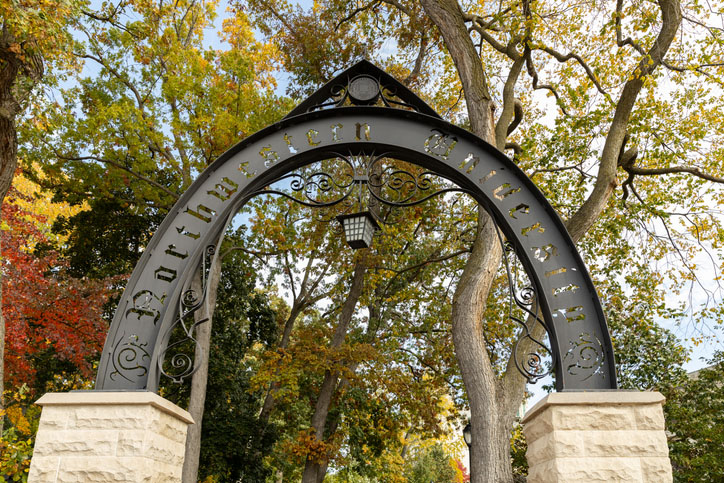
Repairing Northwestern University: Saving Western Civilization

On September 4th, my phone lit up with messages congratulating me on the resignation of Northwestern University President Michael Schill. The pings came because my 2021 book, Conspiracy U: A Case Study, first brought wide attention to the intellectual and moral rot devastating my beloved alma mater. But I feel no joy in Schill’s resignation, and congratulations are not in order. His departure will neither reverse nor slow the university’s deterioration.

As I explained in my book and articles, Northwestern’s problems are systemic and longstanding. They stem from humanities faculty  in the humanities and some of the social sciences that has too often abandoned the search for truth in favor of ideological crusades. Many faculty members, and some entire departments, are fanatically committed to doctrines that cast Western, American, and Judeo-Christian ideas as the root of all evil. Others are simply terrified of transgressing these dogmas. In either case, they routinely violate their obligations as scholars.

This ideological conformity is ruthlessly enforced. Graduate applicants and potential faculty who dissent from orthodoxy on key issues are screened out, ensuring a monolithic culture that pollutes syllabi and administrative policy. As has been demonstrated repeatedly, academia is no longer a place for open debate. Too many faculty members embrace a dangerous double standard: words they dislike are “violence,” but actual violence against their opponents can be justified. Professor Ibrahim Abusharif on the Evanston campus has been directly linked to funneling money to Hamas -and is being defended by other faculty. On the NU-Qatar campus, the situation is worse.

What happens on campus doesn’t stay on campus. The ideological training masquerading as education has poisoned public discourse, leading directly to a society where political opponents are ostracized or branded as dangerous rather than engaged in debate. The results are alarming: over a third of college students now say violence is acceptable to stop a speaker they disagree with, and 20% believe it is generally acceptable to suppress political views. If you are concerned by pervasive intolerance, social media mobs, and plummeting student proficiency in basic math and reading, then we must fix our universities now.

The students are real victims here. The estimated cost of a year at Northwestern exceeds $92,000.  Overall test results at US universities, have demonstrated that students leave campus with no better reasoning skills than when they arrive.  Multiple studies demonstrate that students self-censor in both the classroom and in their personal relationships on campus.  Sadly, they leave campus not having been taught how to engage with, or evaluate opposing views, but rather charged with the ideological convictions of the faculty.

Repairing Northwestern is the right place to start.  The NU Board of Trustees must now take command to rescue Northwestern from its conversion to social justice warrior and internally centered focus. I applaud the board’s first step in appointing Henry Bienen as interim president. He is a leader who values academic standards and possesses a much-needed backbone. But this is not nearly enough. Here is an abridged “to-do” list for the board.

First, overhaul the presidential search committee. It cannot be the same group of board and faculty members who oversaw NU’s decline, chose and supported Schill long after it made any sense, and put NU’s funding and its reputation at risk. The committee must be comprised of at least 50% outside members with diverse political views, united by a commitment to restoring academia’s core mission: the ardent pursuit of evidence-based truth. The board would retain final approval, but this structure would ensure that capable, non-traditional candidates from think tanks, industry, or public service are considered. Northwestern needs a reformer, not an apologist for the status quo.

Second, terminate the contract with Qatar. Northwestern’s unhealthy relationship with the Qatari regime has subverted its integrity. NU initially claimed the partnership would help modernize Qatar; the reverse has happened. After 17 years, it is difficult to distinguish Qatar’s foreign policy, as espoused by its media outlet Al Jazeera, from mainstream faculty opinion at Northwestern. NU is contractually obligated to serve and not criticize a regime that utilizes slave labor, supports terrorist groups, denies rights to 85% of its residents, quashes free speech, and prescribes the death penalty for LGBTQ individuals. The contract must be ended at the earliest possible date.  I believe all foreign donations to universities should be scrutinized or, like political donations, banned entirely.

Third, enforce intellectual rigor. While many NU researchers, particularly in the hard sciences, do world-changing work, other departments lack meaningful peer review. Too many faculty publish books and articles built on a limited vocabulary of ideological buzzwords—settler-colonialism, Zionism, white supremacy—rehashed endlessly without regard for evidence or falsifiability. Some of this scholarship is incomprehensible without first subscribing to a conspiracy theory camouflaged as an academic theory.

Fourth, mandate a course in scholarly methods. Every Northwestern student must be required to take a class on ethics and scholarship. This course would teach the fundamentals: what constitutes evidence, how to evaluate primary sources, how to weigh contradictory data, and the principles of the scientific method. It should also include a history of how scholars have lied, misled, and falsified research in the name of ideology or personal glory.

Fifth, reform the administration. The provost’s office requires outside supervision for a substantial period to repair the deep flaws in admissions, faculty hiring, and research standards. This will likely mean that some entire “Studies” departments must be sunsetted, combined, or radically reformed.

The trustees have a clear choice. They can return Northwestern from a indoctrination training ground for activists to a world-class institution dedicated to truth, open and robust debate, and political neutrality—one that graduates students who can think for themselves.


Scott A Shay is the author of Conspiracy U: A Case Study (Wicked Son, 2021) and of In Good Faith: Questioning Religion and Atheism (Post Hill Press, 2017).  He has two degrees from Northwestern University and for many years a proud advocate of it. 

Repairing Northwestern University: Saving Western Civilization Read More »

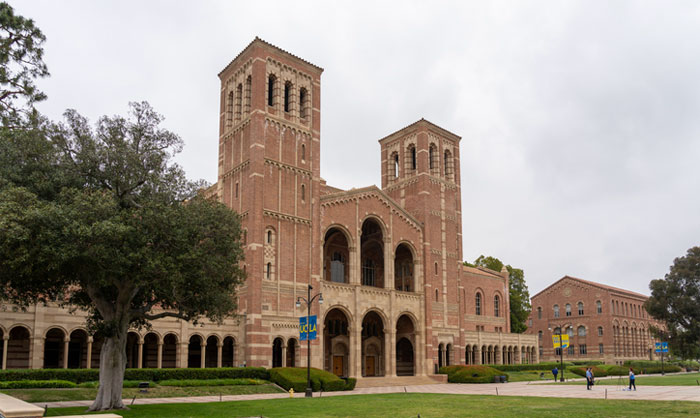
Trump’s UCLA Funding Cut Hurts Science and Fails to Protect Jewish Students

President Trump’s decision to strip federal research funding from UCLA, framed as a measure to crack down on antisemitism, is not just wrong—it’s dangerous.  Let’s be clear: there has been a troubling rise in antisemitism in recent years, and it demands action. Jewish students deserve to learn in an environment free from hate, intimidation, and discrimination. But targeting research funding doesn’t advance that goal, make Jewish students safer or address the root causes of prejudice.

At its core, Trump’s policy is not aimed at combating antisemitism. It’s a thinly veiled attack on higher education. UCLA is a nationally recognized public research institution, responsible for groundbreaking work in medicine, climate science, engineering, and countless other academic fields. Pulling its federal funding will not only stall research and hurt students and faculty on their campus, but it will have ripple effects across the entire UC system.

Trump’s approach sets a dangerous precedent by punishing universities under the facade of protecting civil rights, without implementing any protections for victims. If the federal government truly wanted to safeguard Jewish students, it would follow the lead of UCLA Professor Stuart Gabriel’s Task Force to Combat Antisemitism and Anti-Israel Bias, which prior to the decision to end research funding, made multiple recommendations to UCLA including enhancing training and education, improving the campus’s complaint system and expanding cooperation with stakeholders. Chancellor Julio Frenk is already acting on these recommendations and has tasked Professor Gabriel with mobilizing the UCLA community and implementing the recommendations.

There is zero contradiction in standing firmly against antisemitism while defending the role of public education. In fact, the two go hand in hand. Universities thrive when they are diverse, inclusive, and safe for all students. Attempts to weaponize antisemitism for political gain threaten that mission, and they ultimately leave all students, Jewish and non-Jewish alike, more vulnerable.

So, what does real action look like? It starts by recognizing that antisemitism, like all forms of hate, must be confronted with education and accountability. Schools should strengthen their anti-discrimination protections so that students feel safe regardless of their religion, nationality, or background. Curriculum must be free from bias, rooted in truth, and designed to teach students the dangers of bigotry throughout history. Universities must also track incidents of hate and respond transparently and consistently.

Equally as important is that students and faculty are able to access clear avenues to report discrimination and harassment. Far too often, Jewish students who raise concerns are left to navigate complex bureaucracies or are met with silence from administrators worried about bad publicity. A real commitment to combating antisemitism means ensuring that complaints are taken seriously and that perpetrators are held accountable. This strengthens protections for all communities. Discrimination and hate do not exist in a vacuum. Antisemitism, Islamophobia, anti-Asian hate, anti-Black racism, xenophobia and all forms of hate are often interconnected. When schools build strong systems of accountability and inclusion, all students benefit.

Education is the most powerful tool in the fight against hate. By teaching an accurate history, including the Holocaust, the persistence of stereotypes, and the many contributions of Jewish communities throughout history, students are less likely to fall prey to conspiracy theories. When classrooms highlight diverse perspectives and foster critical thinking, they cultivate resilience against bigotry and scapegoating.

Critics may argue that funding cuts are necessary to force universities to take hate seriously. But cutting research dollars doesn’t punish antisemites. It punishes science. It punishes medical innovation. It punishes environmental progress. And it punishes the students whose education depends on federally funded labs. It weakens our communities and our democracy by undermining the very public institutions designed to serve everyone, regardless of race, religion, or background.

In the fight against antisemitism, symbolism matters, but substance matters more. Stripping UCLA of federal research funding sends the wrong message—that universities are the enemy, that academic freedom is expendable, and that political leaders can use marginalized communities as a shield for unrelated goals. Real action requires a solitary focus on making campuses safer, classrooms more inclusive, and schools more accountable.

Combating antisemitism isn’t a partisan issue, it’s a moral imperative. If we truly mean it, our policies and politics must be guided by evidence and be aimed at solutions. We cannot become trapped by opportunistic attempts to dismantle the very institutions that make our democracy strong. UCLA’s researchers, students, and faculty are not the enemy here. Hate is the enemy. And hate is best fought with education, accountability, and an unwavering commitment to the truth.


Josh Fryday is a candidate for Lieutenant Governor. State Senator Henry Stern represents California Senate District 27.

Trump’s UCLA Funding Cut Hurts Science and Fails to Protect Jewish Students Read More »