fbpx

June 21, 2025

‘Very successful’ US strikes on Iranian nuclear sites at Fordow, Natanz, Isfahan, Trump says

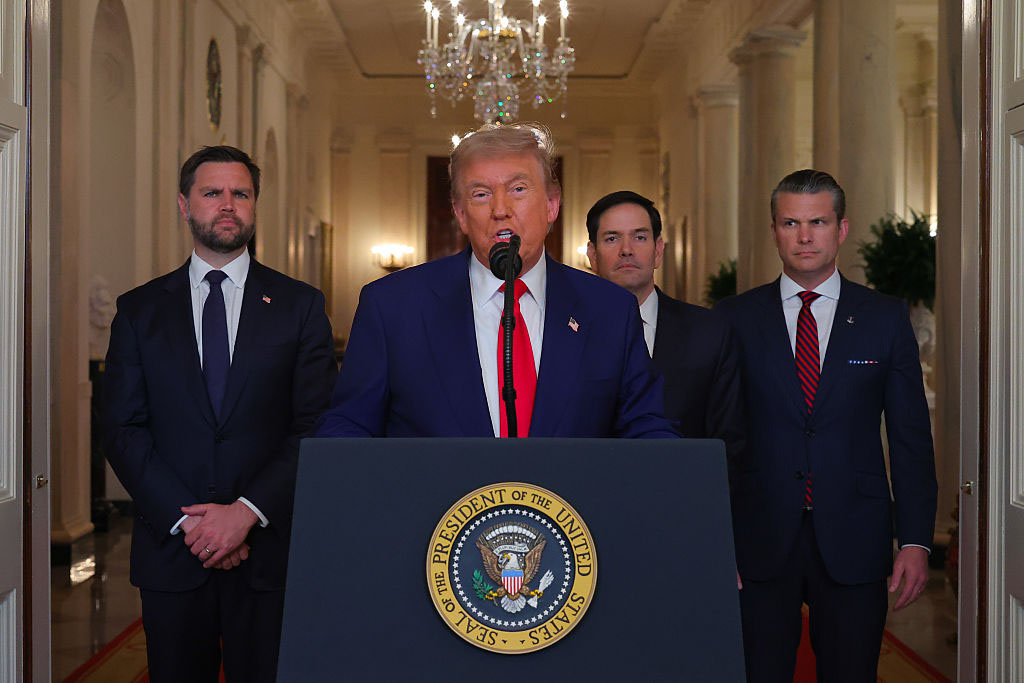
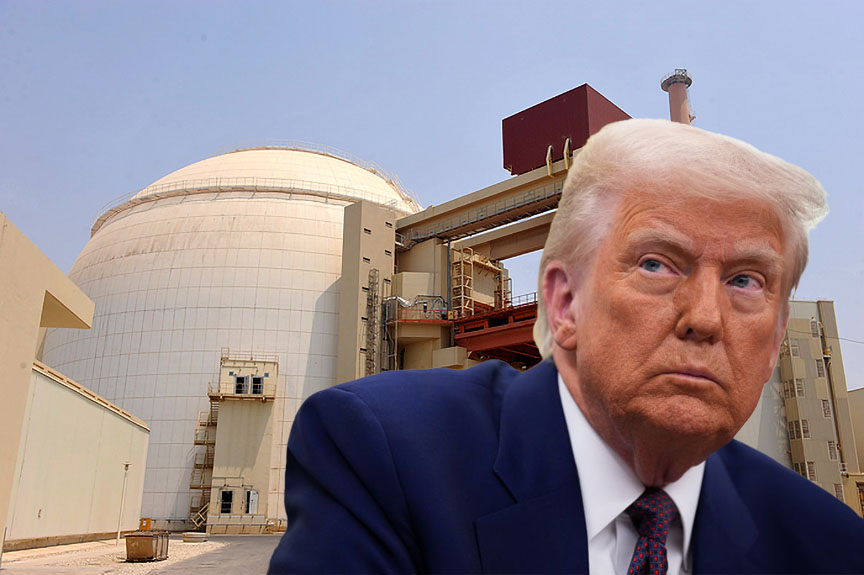
The U.S. military attacked Iranian nuclear sites on Saturday, U.S. President Donald Trump stated.

“We have completed our very successful attack on the three Nuclear sites in Iran, including Fordow, Natanz and Isfahan,” Trump wrote. “All planes are now outside of Iran air space.”

“A full payload of bombs was dropped on the primary site, Fordow,” he added. “All planes are safely on their way home.”

Fordow was widely regarded as Iran’s best-defended nuclear site, as it was buried hundreds of feet under a mountain. Those protections raised questions about whether Israel was capable of eliminating the site in the absence of a U.S. attack using large bunker buster munitions delivered from American bombers.

Trump also shared a post stating that “Fordow is gone.”

Israeli Prime Minister Benjamin Netanyahu stated that “President Trump and I often say: ‘Peace through strength.’ First comes strength, then comes peace.”

“Tonight, President Trump and the United States acted with a lot of strength,” Netanyahu stated.

“Today, President Trump proved that ‘Never Again’ is not just a slogan,” stated Danny Danon, the Israeli ambassador to the United Nations. “It’s a policy.”

‘Historic decision’

“This is a decision that will change Iran, the region and have major implications for America’s position in the world,” stated Jason Brodsky, policy director of United Against Nuclear Iran. “It sends a message to China and Russia, reinforces American credibility and bolsters U.S. deterrence.”

“This is a historic decision by President Trump,” Brosky added. “Every president since Bill Clinton has said Iran can’t get a nuclear weapon. President Trump is the only one to have authorized military strikes to prevent one.”

Ali Khamenei, the Iranian regime’s supreme leader, “has always known the United States has the capability to destroy his nuclear program,” Brodsky stated. “But he has long doubted the American will to do so after a series of underwhelming and non-responses to Iranian provocations since 1979. The U.S. strikes tonight reset the deterrence equation for America in the Middle East in a big way.”

“Wow. The United States has bombed Iran’s nuclear sites,” stated John Spencer, chair of urban warfare studies at the Modern War Institute at West Point, which is part of the U.S. Military Academy, in New York.

“The program is now set back,” Spencer stated. “Now is the chance for Iran to end the conflict with an agreement to end their nuclear pursuits. President Trump has done what was needed to end the violence.”

Many U.S. politicians welcomed the attack.

“As I’ve long maintained, this was the correct move by the president,” Sen. John Fetterman (D-Pa.) wrote. “Iran is the world’s leading sponsor of terrorism and cannot have nuclear capabilities.”

“Good. This was the right call,” stated Sen. Lindsey Graham (R-S.C.). “The regime deserves it. Well done, President Trump. To my fellow citizens: We have the best air force in the world. It makes me so proud. Fly, Fight, Win.”

Others urged the president to halt strikes on Iran.

“Trump’s strikes against Iran are not only unconstitutional but an escalation that risks bringing the U.S. into another endless and deadly war,” wrote Rep. Sara Jacobs (D-Calif.).

Rep. Thomas Massie (R-Ky.), a libertarian who typically opposes all foreign policy legislation, called the attack unconstitutional.

The leaders of the Conference of Presidents of Major American Jewish Organizations stated that “this decisive action represents a critical and justified step to confront the existential threat posed by the Islamic Republic of Iran’s pursuit of nuclear weapons.”

“These defensive strikes, executed with precision and purpose, reflect the seriousness of the threat and the necessity of preventing Iran from reaching a nuclear threshold,” the umbrella group’s chair and CEO said. “We commend the United States for its leadership at this historic moment. We commend President Trump in particular for his clear-eyed recognition of the danger and for taking bold, preventative steps that may reshape the strategic landscape for generations.”

The leader also said that they are “deeply concerned about the potential for Iranian-inspired retaliation, both in the region against U.S. forces and allies, and globally against Jewish communities and institutions.”

“We urge heightened vigilance, coordination with security authorities and proactive measures to protect Jewish life and property around the world,” they said.

The Jewish Federations of North America applauded “the decisive and historic action taken to dismantle Iran’s key nuclear facilities, including the critical site at Fordow.”

“We thank President Trump and the brave women and men of the United States Armed Forces for this historic action,” the Federation said. “We could not be prouder to have the United States join together with the State of Israel in defense of the free world.”

“We are actively coordinating with partners across government and civil society to ensure our communities remain vigilant, prepared and protected at this critical time,” the Federation said.

The Republican Jewish Coalition applauded what its CEO Matt Brooks said was Trump’s “taking historic, decisive action to prevent the terrorist regime in Iran from having a nuclear weapon.”

“Today’s successful, targeted military action proves once again that nobody has been tougher on Tehran, or a better friend to Israel, than President Trump,” Brooks said. “Tonight will go down in the history books as one of the most consequential orders ever given by a U.S. president. God speed to our heroic war fighters.”

“The world is a far safer place thanks to President Trump,” Brooks added.
‘Very successful’ US strikes on Iranian nuclear sites at Fordow, Natanz, Isfahan, Trump says Read More »

Trump Bombs Amalek

Why did President Donald Trump finally decide to bomb three nuclear sites in Iran on Saturday, including the formidable one in Fordow?

Here’s one possibility: Iran kept insulting him by rejecting his offers or demanding conditions. They were acting like the wily mullahs who ran circles around Obama and Biden. They thought they could still play their old games with Trump, even though Trump was wily enough to know they had no leverage given Israel’s massive assault.

So, when Supreme Leader Ayatollah Ali Khamenei kept uttering his usual defiant bluster in recent days, Trump saw right through the bluff. If there’s one thing Trump can smell, it’s weakness.

The dam broke on Friday, when Iranian Foreign Minister Abbas Araqchi, acting like he was calling the shots, brazenly announced that negotiations with the US wouldn’t happen “until Israeli aggression stops.”

According to a report in The New York Post, that was when Trump said enough and decided to strike Iran with “overwhelming force,” which he did the following day.

What will Iran do now to save face?

“The Iranian regime had warned that if America attacked, the US bases in the region would be targets. They threatened to block the Strait of Hormuz, creating a global oil crisis,” Mideast expert Dan Perry wrote on his Substack. “If that happens, then this war will move to a new phase in which the goal of the US is to topple the Islamic Republic and free the people of Iran. I’m not sure the regime will be stupid enough to pursue that avenue.”

Remember, Iran’s massive nuclear program was its pride and joy. It was worth all the money, it told its people, because it brought prestige and benefits to the nation.

But with an economy in shambles, the loss of its influence throughout the region and now the decimation of its main nuclear facilities, what do the mullahs have to offer their people except for the brutality of its troops?

Maybe a deal with Trump?

“Iran, the bully of the Middle East, must now make peace,” Trump said on Saturday night. “If they don’t, future attacks will be far greater and far easier.”

Given how little leverage Iran has, and how Trump has shown that he doesn’t bluff, Perry thinks it’s more likely that “talks will commence after the US (and Israel) declare victory. In those talks, Iran will be requested to hand over any remaining fissile material, disavow uranium enrichment beyond 3% civilian levels, end its missile program and cease any further undermining of Arab countries – meaning an end to support for Hezbollah, the Houthis, the Shiite militias of Iraq, Hamas, and more.”

That’s a lovely scenario, but of course we can’t discard the darker ones, which, Perry concedes, can “plunge the global economy into chaos” and “trigger a wider war, possibly even drawing in Gulf states or forcing the U.S. into deeper conflict.” There are already reports that Iran is planning a retaliation.

Over the next few days, we’re sure to hear from Trump haters, anti-Zionists, isolationists, political partisans and others for whom no military action, however successful, was a good idea.

For now, though, let’s take a little moment to reflect on what has happened.

In the Bible, Amalek is depicted as a sworn enemy of Israel and an archetype of evil. After decades of living in fear of a nuclear Amalek, Israelis today are seeing real hope that an existential burden was lifted. For the benefit of Israelis as well as peace lovers everywhere and the good people of Iran, we can only hope that this Amalek will take Trump’s advice before he gets angry again.

Trump Bombs Amalek Read More »

The Year Badass Israel Made a Comeback

In Alcoholics Anonymous, they say you have to hit your own bottom before you can make any progress.

Israel hit its own bottom on Oct. 7, 2023.

It’s impossible to overstate the monumental security breakdown that allowed a ragtag gang of Hamas terrorists to invade the Gaza border and massacre 1200 Israelis.

In a region where power rules and a fearsome reputation is a life insurance policy, Israel never looked so weak and vulnerable.

After 77 years of being the “strong horse” of the Mideast jungle, 77 years of miraculous rescues, technological marvels and victories over enemies sworn to its destruction, in one fateful day, powerful Israel suddenly became weak Israel.

In all the noise of recent events, from the horrors of Oct. 7 to the continuing tragedy of the hostages to daily political battles to the war against a nuclear Iran and to the U.S. bombing of three Iranian nuclear facilities, it’s easy to overlook one extraordinary development: After the nadir of Oct. 7, a fearsome Israel has returned to the Middle East.

I say this not with a sense of triumphalism but for the simple reason that I want the Jewish state to survive, and there’s no way it can do so if it looks weak.

The return of Israel’s mystique began in Lebanon on Sept. 17, 2024.

If you recall, that was the day thousands of pagers exploded in the hands of Hezbollah terrorists, the kind of terrorists who would have loved nothing more than to murder every Jew in Israel.

Notice what has happened since that “pager day” 10 months ago: Israel has never looked so strong and its enemies so weak. Slowly and methodically, Israel has incapacitated the major threats to its borders from Lebanon, Gaza and Syria. And today, with U.S. help, it is incapacitating the head of the snake, the Islamic Republic of Iran, whose stated mission has always been to eradicate the “cancerous tumor” of Israel.

When we follow Israel’s historic war with Iran, we tend to forget that Israel also fought Iran when it fought its proxies in Gaza, Lebanon and Syria – what constituted the “ring of fire” Iran had spent years preparing to finally extinguish the Jewish state.

The Hamas invasion of Oct. 7 was meant to kick off that final solution.

“The Oct. 7, 2023, offensive suggested that Iran — through its proxies, chiefly Hamas and Hezbollah — sought to translate its longstanding vision of Israel’s destruction into reality,” former head of IDF Military Intelligence Amos Yadlin wrote in The New York Times. “Documents seized in Gaza show that Hamas believed it had the support of Iran and Hezbollah as part of a broader plan: a multifront offensive designed to overwhelm and destroy Israel.”

So it’s not just Israel’s reputation that was at stake on Oct. 7, it was also Israel’s existence.

The phrase “existential threat” has been bandied around so much over the years it’s almost gotten stale. Not in Israel. There, it is as palpable and alive as ever. Maybe that’s why Israelis overwhelmingly back their country’s military campaign against Iran, according to a poll released last week from Hebrew University. Despite having to brave daily missile onslaughts and duck into bomb shelters, 83% of Jewish Israelis support the war.

The cowardly targeting of civilian areas only reinforces the genocidal nature of Israel’s enemies, which in turn only reinforces the imperative of a formidable Israel that its enemies will fear.

What happened with the U.S. bombing of three nuclear facilities in Iran, including the big one at Fordow, has accelerated Iran’s regional decline. “What we’re witnessing now across the region is nothing short of the collapse of Iran’s decades-long strategy and ability to project influence,” said Firas Maksad, a senior fellow at the Middle East Institute in Washington in an interview with The Times.

Depending on what happens with the “ceasefire” Trump has negotiated, the next few days and weeks will be consequential. We still don’t know the extent of the damage to Iran’s nuclear program. Much remains up in the air.

But no matter how a weakened and isolated Iran reacts, one thing is no longer up in the air: As far as Israel’s neighbors are concerned, from its sworn enemies to its potential allies, the weak and vulnerable Israel that hit rock bottom on Oct. 7 is long gone, and in its place is a Badass Israel that is ready to help transform the region.

Badass, you see, doesn’t only mean a powerful army. It also means that the safer Israel feels, the more it can use its power to become a force for good; the more it can unleash its multiple resources to benefit the countries of the region. It means that even an imperfect Israel with many flaws can offer its neighbors an aspirational model with more freedoms and economic opportunities.

It means, in short, that the Abraham Accords can one day become the Middle East Accords, when the heroes will no longer be evil theocrats who oppress their people and terrorists who live to destroy, but good neighbors of a Mideast Union who live to grow and create.

We’re still far from that ideal, but the aspiration is also badass.

The Year Badass Israel Made a Comeback Read More »

President Trump says US struck 3 Iranian nuclear sites in overnight operation

US President Donald Trump announced late on Saturday that American forces carried out what he called a “successful” strike on three of Iran’s key nuclear facilities: Fordo, Natanz, and Isfahan.

In a post on Truth Social, Trump wrote that a “full payload of BOMBS was dropped on the primary site, Fordo,” an underground enrichment facility built deep into a mountainside and considered one of Iran’s most fortified locations.

“All planes are now outside of Iran air space [and are]… safely on their way home,” he added. “Congratulations to our great American Warriors. There is not another military in the World that could have done this.” Trump concluded his message by writing, “NOW IS THE TIME FOR PEACE!”

According to Axios, the United States notified Israel in advance of the attack, a senior Israeli official said.

President Trump says US struck 3 Iranian nuclear sites in overnight operation Read More »

How to Hold on to Eternity

The commandment of tzitzit should have disappeared long ago. Jewish law requires tassels to be put on four-cornered garments like cloaks and shawls; but jackets and coats, which have no corners, have no such obligation. And as fashions changed, four-cornered garments disappeared from the wardrobe. Tzitzit were poised to become a relic of the past.

But that did not happen. The commandment of tzitzit tells the story of a relationship between the Jews and God, one that would never go out of fashion. And each generation has added a new strand to its meaning.

Jacob Milgrom, in his article Of Hems and Tassels, explains the symbolism of tzitzit in the ancient world. He writes:

The hem of the outer garment or robe made an important social statement. It was usually the most ornate part of the garment. And the more important the individual, the more elaborate and the more ornate was the embroidery on the hem of his or her outer robe…Thus, the significance of the tassel (as well as the elaborate hem) is this: It was worn by those who counted; it was the “I.D.” of nobility. The requirement of a blue cord (tekhelet) in the tassels lends further support to the notion that the tassels signified nobility because the blue dye used to color the threads was extraordinarily expensive…..The requirement of the blue thread—royal blue—is a sign that Israel is.… a “kingdom of priests and a holy nation” (Exodus 19:6). Every Israelite wears his priestly clothing, the tsitsit. The tassels are a reminder of this holiness, as the passage from Numbers makes clear… Though Israelites who are not of the seed of Aaron may not serve as priests (Numbers 17:5), they may—indeed, must—strive for a life of holiness by observing the Lord’s commandments.

Hems and tassels declare a person’s status; and the blue tekhelet thread in the tzitzit bespeaks royalty. But, unlike other nobility, the hem of the Jewish garment is no ordinary status symbol; it demands that the wearer prove themselves worthy of their status, to pursue a life of holiness.

Later generations saw the tzitzit through a very different lens. The Babylonian Talmud refers to the fringes of tzitzit as a “seal of mud,” which Tosafot explains is the symbol of slavery; all slaves wore a seal on their garments to publicize their status. Yishai Kiel adds that during that historical era, similar ideas arose in Zoroastrian thought regarding the ritual garment known as a kustig; it was also seen as a symbol of constant servitude. Rabbi Ovadiah Seforno summarizes this idea when he writes: “Remember that you are servants of God…this [is signified] by seeing the tzitzit, which is like the king’s seal upon his servants.”

In the Babylonian Talmud, tzitzit is not about being a member of royalty; instead, tzitzit are the stamp of slavery. A new perspective on the mitzvah was revealed.

At some point, people stopped wearing four-cornered garments. The Talmud already reports a conversation an angel had with the 3rd century Rabbi, Ketina; the angel says to him: “Ketina, Ketina, if you wear a linen cloak in the summer (which the rabbis exempted from tzitzit) and a coat of two corners in the winter, what will become of tzitzit with tekhelet?

In response to this, special ritual garments were developed to fulfill the mitzvah of tzitzit: the tallit, a cloak worn during the prayer service, and the tallit katan, or miniature tallit, worn as a shirt.

Each of these garments carries a different message.

The tallit is symbolic of one’s complete immersion in prayer. The Rambam writes regarding the tallit:

One should always try to be wrapped in a garment that requires tzitzit so that he will fulfill this mitzvah. In particular, care should be taken regarding this matter during prayer. It is very shameful for a Torah scholar to pray without being wrapped in a tallit.

One commentary to the Rambam adds that the tallit is the fulfillment of the words in Psalm 35:10: “All my bones exclaim, ‘Lord, who is like You.” Wrapping the body in a religious garment symbolizes that the person is devoted in their entirety to God.

The purpose of the prayer tallit is transcendence. There are several passages in the Talmud that reinforce this point. In one, Rabbi Shimon bar Yoḥai says that by looking at the tzitzit, one “merits receiving the Divine Presence.” In another, Rabbi Meir explains that the blue of the tekhelet is similar to the blue in the divine throne; contemplating the blue strands focuses us on the transcendent and the divine.

The tallit enables our hearts to take flight.

Yehuda Amichai captures this feeling quite powerfully in his poem One Who Wrapped Himself In A Tallit In His Youth:

 …wrapping the whole body in it,
Tightly, tightly,
And curling up like a butterfly’s cocoon,
And opening like wings
And flying.

And why is the tallit striped?
And not checkered black and white like a chessboard?
Because squares are finite and without hope,
While the stripes
Come from infinity and go to infinity.
Like the runways
In an airport for the landing and takeoff of angels.

One enters the cocoon of the tallit, and leaves ready to fly into eternity.

This is a wonderful vision. But it is incomplete.

The Torah says that the purpose of tzitzit is to keep us focused on the performance of the mitzvot; and that is a constant, 24/7 task. Ibn Ezra criticizes the emphasis on the prayer tallit in his commentary, and writes:

Those who pray with a Tallit at times of prayer do so because they read in the Shema, “and you shall have tzizit”; however, to my opinion, it is more of an obligation in the other hours of the day, so you remember and do not falter and sin at other times; in the times of prayer one doesn’t sin…

Because of this, another form of tzitzit was introduced, the tallit katan, or small tallit; it is meant to be small, and worn comfortably like a shirt. Most importantly, it can be worn all day, with the tzitzit as a constant reminder of one’s mission and responsibilities. The problem with it is that the tallit, at a minimum, must be large enough to be a temporary covering for an adult; the tallit katan may be considered too small. For this reason, Yemenite Jews didn’t have the custom to wear them.

But this small tallit has a big purpose. Several Chasidic authors, including the Sefat Emet, Netivot Shalom, and Shem MiShmuel, quote a fascinating Midrash. It compares the person wearing the tallit to a man who has fallen off a ship.  “The captain extends a rope to him and says: ‘Grab this rope in your hand and do not let it go, because if you do you will not live.’”

It is inspiring to reach for transcendence. And we must. But much of the day we are drowning in details, distracted by the pursuit of petty pleasures. For the vast majority of our lives, we aren’t taking flight to another realm.

This powerful Midrash reminds us that even when we are immersed in banality, we can still grasp eternity. Take hold of the strings of this little tallit; take hold of the small mitzvot we can do all day, from offering a kind greeting, to saying a blessing, to grabbing a glance at some words of Torah. Even in the middle of the work day, even when we feel incredibly uninspired, our souls are not lost.

With our little tallit, we can always grab hold of eternity.


Rabbi Chaim Steinmetz is the Senior Rabbi of Congregation Kehilath Jeshurun in New York.

How to Hold on to Eternity Read More »