fbpx

February 28, 2025

Iranian Solution: End Appeasement, Support the Resistance

Global Condemnation of the Iranian Regime

In its latest stance, the G7 members have unequivocally condemned the Iranian regime’s destabilizing actions. These actions include accelerating uranium enrichment without a credible civilian justification, supporting terrorist organizations in the Middle East and the Red Sea, expanding ballistic missiles and drones, suppressing dissidents beyond its borders, and violating fundamental human rights at home.

In line with this, the White House has released a document referencing the implementation of a maximum pressure policy against the Islamic Republic of Iran. This document, signed by President Donald Trump on February 4, emphasizes that the Iranian regime has committed severe human rights violations, taken foreign citizens hostage, and subjected them to torture without fair trials.

Additionally, the document identifies Iran’s nuclear program—including its uranium enrichment and reprocessing capabilities, as well as the development of missile systems capable of carrying nuclear warheads—as an existential threat to the United States and the entire civilized world.

The Iranian Regime Cannot Survive Without War and Repression

The theocracy ruling Iran cannot survive without military intervention in the region, support for terrorism, hostage-taking, and fueling fundamentalism worldwide. It is naive to believe that this regime will ever abandon its war-mongering and oppressive policies. The Iranian society resembles a powder keg, ready to explode at any moment.

In 2024 alone, the Iranian regime executed at least 1,000 people, a stark indicator of how it uses regional crises to conceal its internal repression. With its strategic defeats in the region, including the loss of influence in Syria and the weakening or destruction of its proxy forces, the regime has intensified its pursuit of nuclear weapons.

This development has heightened international concerns, with Israel threatening to bomb Iran’s nuclear facilities with U.S. support. Under these circumstances, a critical question arises: Can a military strike on Iran’s nuclear facilities provide a definitive solution to end the religious dictatorship?

Iranian Solution: Confronting Religious Fascism by the Iranian People

The adoption of a new policy toward the Islamic Republic has long been debated among policymakers, analysts, and think tanks. Recently, U.S. Secretary of State Antony Blinken affirmed that Iran plays a role in every international crisis. In this context, the most cost-effective and effective solution is to leave the fate of the Iranian regime in the hands of the Iranian people.

However, before this can happen, the destructive policy of appeasement toward the Islamic Republic must come to an end. For decades, Western appeasement has not only failed to curb the regime’s aggression but also has emboldened it in domestic repression and regional adventurism.

A prime example of this was the 2015 nuclear agreement, which, despite lifting certain sanctions, allowed the Iranian regime to expand its influence in Yemen, Syria, and Lebanon and advance its missile program. Ending appeasement is the first step in confronting the regime.

The next step is supporting the organized resistance of the Iranian people.

The next step is supporting the organized resistance of the Iranian people.

A Resistance with a Clear Vision for Iran’s Future

The Iranian Resistance advocates for freedom, women’s rights, the autonomy of Iranian nationalities, equality between Shiites and Sunnis and other religions, the separation of religion from state, the abolition of the death penalty, and a non-nuclear Iran.

This resistance is committed to establishing a free and democratic Iran that continuously supports peace in the Middle East. According to the National Council of Resistance of Iran (NCRI), the democratic alternative to the regime consists of forces that reject both forms of dictatorship—whether that of the Shah or the mullahs.

Following the overthrow of the Islamic Republic, a six-month transitional government will be established with the primary task of holding elections for a Constituent Assembly and transferring sovereignty to the people’s representatives.

A Historic Opportunity for Change in Iran

General Keith Kellogg, former special envoy for Trump in the Ukraine-Russia war, stated at an Iranian opposition gathering in Paris:I believe this year should be the year of hope, action, and change. The Iranian regime is now weaker and more vulnerable than at any time in past decades. Change must happen, and it must happen now.”

At the same conference, Liz Truss, former UK Prime Minister, described 2025 as a pivotal moment in Iran’s history, stating: “This is a real opportunity for change in Iran. Change must come from within and be led by the Iranian people. We must confront those in our own countries who appease or support the Iranian regime.”

A Well-Organized Resistance, Rooted in Iranian Society

John Bercow, former Speaker of the UK Parliament, also emphasized the existence of a democratic and organized alternative in Iran: “Thousands of resistance units across Iran have emerged from within society. They are deeply intertwined with the people because they are part of the nation.”

Conclusion: End Appeasement, Support the Resistance

The Iranian regime is at its weakest point in decades. However, without ending appeasement and without supporting the democratic alternative, this historic opportunity will be lost. The organized Iranian resistance, with thousands of active units across the country, has the capacity to lead this change. The fight of the resistance units for the regime’s overthrow must be supported, just as the French Resistance was supported against Nazi fascism.

Now, more than ever, a real opportunity exists to achieve a free and democratic Iran.


Hamid Enayat is a political scientist, specializing on the topic of Iran, who collaborates with the Iranian democratic opposition.

Iranian Solution: End Appeasement, Support the Resistance Read More »

Edlavitch JCC Is a Model for Building Community

I recently visited the Theater J in Washington, D.C. to see a sublime piece of theater—Ari’el Stachel’s “Out of Character.” While I cannot recommend the show enough, what truly surprised me was the fact that Theater J is a world class, state-of-the art theatrical venue embedded in the Edlavitch Jewish Community Center (JCC).

In fact, I was pleasantly surprised to realize that the entire Edlavitch complex is truly a dynamic “third place”—a social and communal space outside of home or workplace—that anchors communities and helps foster and sustain relationships and friendships. The way in which the D.C. JCC has been designed means that it has the capacity to build real, lasting social capital and anchor diverse communities.

I left the show with an important realization: The Edlavitch JCC in D.C. should be a model for other Jewish community centers nationwide.

Over the years, I’ve spent quite a bit of time in JCCs and, while they do vary quite a bit, I’m often disappointed that these “community centers” rarely offer much beyond narrow, used spaces and fail to create settings that can develop into vibrant third places. To be sure, these centers provide numerous offerings, serving millions of people nationwide in areas such as physical fitness, early childhood education, senior programming, summer camps, film festivals, public lectures and so much more. But too often JCCs are little more than spaces of consumption. In my experience, amid all their high-quality services and programming, few provide places where diverse cross-sections of Jews—different generational cohorts, levels of religiosity, or political preferences—and others can socialize and connect and create community; there is little for people to do and few places to simply spend unstructured time.

The fact is that many Jewish community centers rarely nurture dynamic connections between Jews and are not set up to promote informal gathering, solidarity, sociability across multiple generations and the varied and diverse needs of today’s Jewish Americans. In light of today’s widespread antisemitism, the Jewish community needs safe spaces for gathering and decompressing, places that are open and welcoming, spaces for social life and solidarity where networks can grow and develop.

In contrast with many centers (and synagogues for that matter), the Edlavitch Jewish Community Center stands out. As you enter, you are immediately welcomed into a living room space with couches, tables, and a café style bar for drinks, food and refreshments. There are quite a few areas to chat, unwind and socialize and the space serves as a vibrant third space and “public square” for the many generations of Jews and community members who are in the building. The space allows people to read or have a drink privately or engage in a larger conservation; it serves as a hub and pass through for all of the Center’s activities and is distinctive and unique.

The space is well-populated since, like many JCCs, Edlavitch platforms a programming schedule that takes place from morning to night. The varied and extensive classes, events and facilities ensure that there is always a mix of people and communities with varied needs and interests—some that overlap and many that live life in parallel—passing through this central square in the building. From parents dropping off their children for early childhood classes and preschool, to seniors taking fitness classes in the gym or pool in the morning, to hundreds attending a vibrant theater season in the evening along with countless other activities involving arts, music, family programming, and education, the Edlavitch has created a formula that brings diverse groups into their building and creates the conditions for so many to truly connect. And unlike so many other community-focused buildings like libraries, which are often closed when their communities may need or be free to actually use them, such as early mornings and late evenings, the Edlavitch building is open from 6 AM through 10 PM (as are other JCCs for that matter).

Without question, JCCs draw in large numbers of people from the community, which is a good thing. But we can do even better. With attention to space, food, ambiance and aesthetics—as demonstrated by Edlavitch—much more could be done to create, support and promote social connections in informal settings. Now would be a good time for many Jewish community centers to re-think their physical spaces and better serve those who need community and solidarity. Centers need to reimagine some of their spaces as public squares and offer food, drinks, and comfortable lounge, recreational and working spaces.

Now would be a good time for many Jewish community centers to re-think their physical spaces and better serve those who need community and solidarity.

Imagine what could happen if more JCCs had such facilities: Instead of dropping their young children off for school and leaving, parents could come in, have coffee, and connect with each other, older generations and young adults. New relationships won’t form overnight, but repeated interactions and time spent in the overlapping space with shared core Jewish values could create new and meaningful relationships of varying degrees and truly help push back against the loneliness and isolation that many of our community members experience.

The Jewish community collectively has the physical buildings and spaces across our country to help it thrive and become more vibrant. Now it needs to deliberately and thoughtfully repurpose those spaces and programming to help revive and fortify community.


Samuel J. Abrams is a professor of politics at Sarah Lawrence College and a senior fellow at the American Enterprise Institute.

Edlavitch JCC Is a Model for Building Community Read More »

Illinois Treasurer Stands Firm Amid in the Face of BDS Attacks

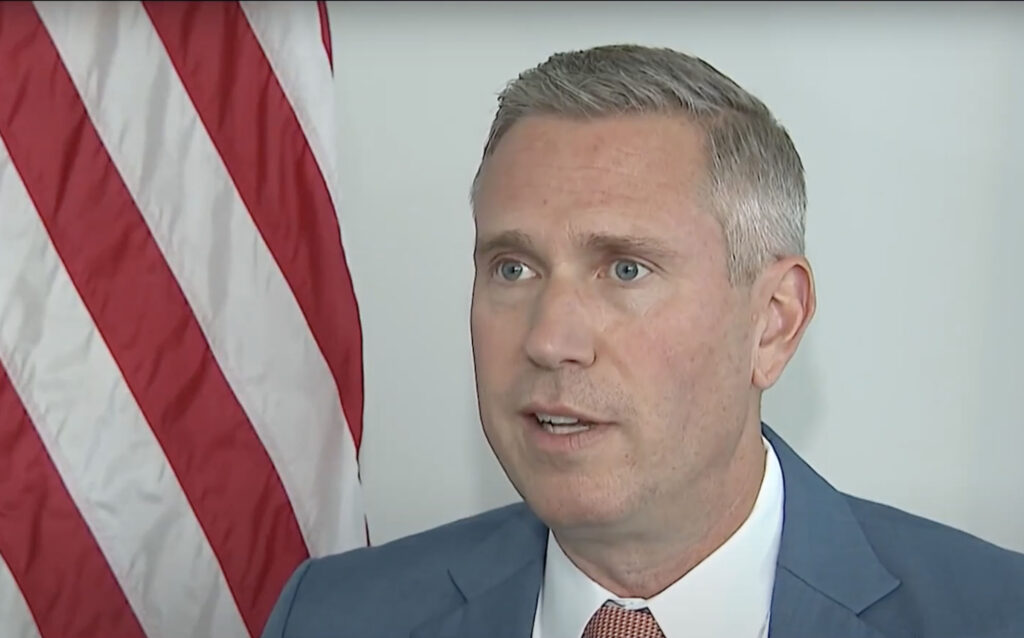
In the early hours of a quiet October morning last year, residents of the serene Lakeview neighborhood in Chicago’s North Side awoke to the sound of people shouting. It was 4 a.m. and an anti-Israel group was protesting outside the home of Illinois State Treasurer Mike Frerichs, shouting anti-Israel slogans and vandalizing his property with red paint. One woman was yelling threats about his one-year-old twin boys through a bullhorn.

“She was calling out saying she knew that they were at home, knew that they were in their cribs, and they shouldn’t be allowed to sleep,” Frerichs told the Jewish Journal in a recent interview. “There’s a profound difference between peaceful protest and intimidation tactics that bring hostility to my family’s doorstep.”

The October 2024 incident was a response to the treasurer over his office’s investment in Israel bonds—a standard practice for many state investment portfolios across the country. Illinois has invested about $120 million since Frerichs took office in 2015.

The episode marked an escalation in a growing pattern of scare tactics from anti-Israel groups demanding that Illinois divest from all Israeli financial instruments, particularly following heightened tensions in the Middle East since Hamas terrorists attacked Israel on October 7, 2023, and Israel launched a retaliatory offensive in Gaza.

Just a few months before Treasurer Frerichs home was defaced by protesters, the Highland Park home of Rep. Brad Schneider, who represents Illinois’ 10th District, was also the target of an act of vandalism. A group of pro-Palestinian demonstrators gathered in the middle of the night using drums and bullhorns to chant antisemitic, anti-Israel slogans. A month later, in July 2024, the posters of hostages held by Hamas in Gaza (including 8 Americans) that hung outside his Capitol Hill office were found “ripped from the wall, shredded and tossed across the hallway,” Schneider posted to X.

“It’s a punch in the gut,” Schneider told NBC5 Chicago about the incident at Frerichs’ home. “That’s not for persuasion, that’s for intimidation. That’s for scaring and terrorizing the neighborhood.”

Treasurer Frerichs has maintained that his office’s investment decisions are based on sound financial principles rather than political considerations.

“State investment in Israel bonds has been part of Illinois’ diverse portfolio for decades, spanning multiple administrations from both parties,” Frerichs explained. “These bonds consistently offer competitive returns with minimal risk, fulfilling our fiduciary responsibility to Illinois taxpayers.”

“When criticism of investment policy veers into age-old tropes about Jewish financial influence or dual loyalty, we’re no longer in the realm of legitimate policy disagreement,” said Rabbi Pini Dunner. “Unfortunately, we’ve seen protesters using language that draws from this toxic well again and again.”

Rather than retreating, Frerichs has responded by becoming more vocal about the investment policies of his office and the importance of standing against intimidation.

“Public officials must be able to make decisions based on what’s best for their constituents without fear of personal threats,” Frerichs stated during a press conference following the incident. “I won’t be bullied into making financial decisions that would shortchange Illinois taxpayers.”

Frerichs has consistently emphasized that his office evaluates all investments based on three critical factors: security, liquidity, and rate of return. Israel bonds, he notes, have maintained their AAA rating even during periods of regional instability.

“Our investment in Israel bonds makes up a small but important part of our overall diverse portfolio,” said Frerichs. “We made these investments because these bonds consistently provide strong returns and in more than 70 years they’ve never defaulted. This allows us to meet our obligations to the people of Illinois.”

As Frerichs continues his work as State Treasurer, he remains resolute in his approach to managing Illinois’ investments with an eye toward financial responsibility rather than political pressure.

“My door remains open to anyone who wants to discuss our investment strategies,” Frerichs said. “But those conversations must happen in good faith, without threats or intimidation. That’s not just my right as a public official—it’s essential to the functioning of our democracy.”

For now, the Treasurer continues his work with renewed determination, turning what could have been an intimidating experience into a moment of principled resilience.

Illinois Treasurer Stands Firm Amid in the Face of BDS Attacks Read More »

Shouting Match in the Oval Office: Can a Deal to End the War Be Saved?

The reality show of Trump TV hit peak cringe Friday morning when our bully-in-chief got into a shouting match with the feisty Ukrainian warrior Zelensky…in the Oval Office!

So much about Trump’s presidency has been chaotic and unprecedented that even something as crazy as a verbal altercation in the White House feels par for the course.

But this isn’t a TV show. The stakes are enormous. We’re talking about an ugly war between Russia and Ukraine that has claimed hundreds of thousands of lives.

I’ve been an admirer of President Zelensky since the day he refused to flee for his safety during Russia’s ruthless invasion three years ago. Since then, I’ve seen him lead his nation against all odds in a defensive war against a brutal and predatory enemy, doing everything possible to garner allies and traveling the globe to obtain military and financial assistance– always wearing his casual warrior attire. His biggest donor country was the United States under President Biden, who was clearly on his side.

Things have obviously changed under President Trump, who has flipped the script by being hostile to Zelensky and friendly with the tyrant Putin, but the overall goal remains the same— reaching an end to an interminable war.

This is why I felt bad for Zelensky when he got baited into losing his cool in the Oval Office. As Peter Baker reported in The New York Times, “Mr. Trump and Mr. Vance castigated Mr. Zelensky for not being grateful enough for U.S. support in its war with Russia…Talking over the Ukrainian leader, Mr. Vance told Mr. Zelensky that it was ‘disrespectful’ for him to come to the Oval Office and make his case in front of the American news media and demanded that he thank Mr. Trump for his leadership. Mr. Trump jumped in and told the Ukrainian leader, ‘You’re not really in a good position right now’ and that ‘you’re gambling with World War III.'”

It was an ugly scene. Trump and Vance ganged up on the little guy and ambushed him. Given that they hold most of the cards, that was shameful and undignified.

But there’s a concept in life called reality and a related concept called keep your eye on the ball. Maybe Zelensky got so used to being received with deference and respect by world leaders, he lost sight of the new reality in the White House.

I wonder what went through Zelensky’s mind after Trump cancelled the press conference and the feisty Ukrainian leader departed the White House. I hope he realized this is a loss for Ukraine and a win for Russia. I don’t want to pretend to be an expert in diplomacy, but I got to believe there was a savvier way to approach the White House meeting.

We saw an example of that diplomatic tap dance earlier this month, when Jordan’s King Abdullah II had to smile and grit his teeth in the Oval Office while Trump pushed an idea the King hated: resettling millions of Palestinians out of Gaza to Jordan and Egypt.

Abdullah told Trump he could take in 2,000 Palestinian children from Gaza who are very sick or have cancer, but he waited until later to confirm to reporters his longstanding position against displacing millions of Palestinians from their homes. Integrity maintained, and Oval Office debacle avoided.

Zelensky doesn’t look the type to grit his teeth and fake a smile, and who can blame him? In the midst of an existential war to save his nation, he probably figured the niceties of diplomacy were a luxury.

That candor met a buzzkill on Friday morning.

Trump is a bully who loves to throw his weight around. That’s one reality. The other is that the world’s biggest ego wants to be the hero who finally ends the world’s ugliest war.

For Zelensky, however, the biggest reality is simply this: Right or wrong, Trump is the only leader who has the power to push a deal through.

Once Zelensky internalizes this reality, he can seek out another meeting with Trump and start working him for a better deal. He does have some leverage: The judges for the Nobel Peace Prize would look a lot more kindly at a peace agreement that had Zelensky’s full endorsement.

Zelensky’s post after his meeting suggests he’s ready for a better visit: “Thank you America, thank you for your support, thank you for this visit. Thank you POTUS, Congress, and the American people. Ukraine needs a just and lasting peace, and we are working exactly for that.”

But before he returns to the White House, Zelensky may want to visit a tailor. Knowing Trump, I have no doubt he’d be impressed with the new look. A nice suit and tie, after all, looks so much better on TV.

Shouting Match in the Oval Office: Can a Deal to End the War Be Saved? Read More »

Our Dear Children

Rabbi Yisrael Meir Lau survived the Holocaust as an eight-year-old child. After the war, he was sent to a displaced children’s center in Ecoius, France. One day, a group of local politicians came to tour the center, filled with the youngest survivors of the Holocaust. At the end of the visit, the visitors addressed the children. The children resented being props for the politicians’ speeches, so they sat silently with their heads down. But then the final speaker got up. As Rabbi Lau describes him, the man “was a Jew who had survived Auschwitz, where he had lost his wife and children. Since the liberation, he had dedicated all his time, energy, and resources to war orphans.”  

Rabbi Lau describes what happened next:

“At that moment, without any advance planning, five hundred pairs of eyes lifted in a look of solidarity toward the Jew standing on the stage.  He was one of us. We looked at him, and he saw hundreds of pairs of eyes fixed on him in a powerful gesture of empathy. Tears choked his throat. He gripped the microphone, and for several long seconds, the microphone broadcast only the sounds of his hands shaking. He tried to control himself, but managed to say only three words in Yiddish:  “Kinder, taiyereh kinder” (“children, dear children”). Then he burst into tears.……We all considered it unmanly to cry, since, after all, we had survived the concentration camps. Yet each boy sitting on the grassy plaza stealthily wiped his eyes with his sleeve….then the dam broke.  All at once, the lawn of [the orphanage] was transformed into a literal vale of tears.” 

This survivor of Auschwitz, alone in the world, had devoted himself to the remaining Jewish children in Europe. In three tear-choked words, he summarized his mission: “Children, dear children.”

On Thursday, the words “children, dear children” kept repeating in my mind. Ariel and Kfir Bibas, aged four and nine months, were laid to rest with their mother Shiri. They were murdered, killed for the crime of being a Jew. Ariel loved Batman because he dreamed of saving those in need, just like Batman does. Because of this, the entire Bibas family had dressed as Batman on Purim. When Kfir was born, Ariel came to visit him, and embraced him with love; they were a beautiful pair of redheads, cute and carefree.

Ariel and Kfir are our dear, sweet children. We are so heartbroken that they are gone.

Jews love their children. This is not a given; children are not loved in every culture. Phillipe Aries has argued that deep bonds of love between parent and child were uncommon in Medieval and Early Modern Europe. While he has many detractors, Aries marshals significant evidence for his point of view. In one example, a woman in the 17th century gives comfort to her neighbor who had just had her fifth child by saying: “before they are old enough to bother you, you will have lost half of them, or perhaps all of them.” Aries’ insight is that parental instinct alone isn’t enough to ensure that parents love their children; the culture of the community plays a significant role as well.

Ephraim Kanarfogel points out that Medieval Jewish culture was very different. Multiple sources, both Jewish and Christian, portray the love of children in the Jewish home.  Rabbeinu Asher, (1259 – 1327) the 13th century German Rabbi, criticizes the common phrase “the pain of raising children” by saying that “children do not bring one pain, only joy”. Even when children are a challenge for us, we must see them as a joy.

Kanarfogel notes that one of the greatest contrasts between medieval Jews and Christians is in the area of education. In the early 12th century, a student of Peter Abelard writes that unlike Christians, “a Jew, however poor, would put even ten sons to letters, not for gain, as Christians do, but for the understanding of God’s Law, and not only his sons but also his daughters.” (Even Jewish daughters are being taught in the 1100’s in France, and that is notable.)

Judaism places children at the center; they play a starring role on Pesach and Purim, and their education is a priority. Judaism may be rooted in the past, in our history and traditions; but it is particularly focused on the future. And that makes children central to the Jewish story.

In Parshat Terumah, the construction of the Mishkan, the first Jewish sanctuary is outlined. At the very center of this sanctuary is the Ark of the Covenant, and on top of it are the keruvim, two winged creatures. Elsewhere in the Tanakh, the keruvim are associated with God’s throne or chariot; God resides above the keruvim, who carry His throne and protect it.

But what are the keruvim?  Commentaries search for textual clues to reconstruct their image. Because it has wings, the Rashbam says it is a bird of prey. Bekhor Shor writes it is an “angel in the form of oxen.”(He bases this on the similarity of the word keruv to the word for plowing.) Rabbi Isaac Reggio says it is the image of a hybrid creature, much like a sphinx or griffin, with characteristics of various powerful animals.

All of these theories make sense in terms of the function of keruvim. They are meant to project strength, as they stand around God’s throne. Similarly, King Solomon’s throne had 12 lions surrounding it, standing as symbolic guards.

Rashi offers a very different interpretation, which is found in the Talmud.  He says the keruvim had a child’s face, and bases this interpretation on a similarity between keruv and the Aramaic word for child. The Talmud’s interpretation ultimately influences the English word “cherub,” which is an innocent, child-faced angel.

But Rashi’s interpretation seems incongruous. The keruvim stand guard at God’s throne. How do innocent looking children symbolize divine power?

But that precisely the lesson. Rashi’s interpretation teaches us that the greatest power in the world is the power of children. Each child offers the possibility of a better future, of taking another step closer to redemption.

When Isaiah describes the Messianic era, he says:

The wolf shall dwell with the lamb,

The leopard shall lie down with the young goat…

And a little child shall lead them.

It is our children who lead the way to redemption. And that is why each child is so dear to us.

Kfir and Ariel were brutally murdered; and then the way Hamas returned their bodies was an ugly disgrace. But these two little angels are finally home, buried with their mother Shiri in one casket. They will now be together for eternity.

Israelis lined the streets to bid the Bibas family farewell; orange banners, orange buttons, and orange kippot were worn by a country in mourning, mourning for their children, their dear children.

But this grief will not hold us back. On the very day that Kfir and Ariel’s bodies were brought back from Gaza, a baby in Netanya, Israel, has been named “Kfir Ariel” in their honor. And despite these tragedies, we will continue to build a better future, and have more and more Jewish children.

And we will love and cherish every one of these beautiful children.

They are our children, our dear children.


Rabbi Chaim Steinmetz is the Senior Rabbi of Congregation Kehilath Jeshurun in New York.

Our Dear Children Read More »

From Stormy Speeches to Seven Continents: Niver’s Feb News 2025

From Stormy Speeches to Seven Continents: Feb 2025 Newsletter 182

Thank you to everyone who joined me for an unforgettable Galentine’s Day event at the Adventurers’ Club, where I spoke in the pouring rain—so much rain, we nearly needed an ark to get there! Despite the storm, it was a full-circle moment as two dear friends from my cruise ship days flew in to join me, bringing back memories of past adventures on the high seas. I sold and signed books and we had an amazing discussion! In case you missed it, see the livestream video below!
This month, I’m celebrating my journey across all seven continents, with more videos coming from my epic Quark Expeditions trip to Antarctica. I’m also excited to share new articles on my trip to Puerto Vallarta where I stayed at Grand Velas and Casa Velas Resorts as well as Secrets Bahia Mita by Hyatt. More adventures include homecoming in Philadelphia at Penn and Halloween on the Ruby Princess. On my podcast, watch as I hit the road for a Genesis road trip to Death Valley, and my Spectrum TV News segment dives into my 7th continent adventure and BRAVE-ish.
The heartbreak surrounding the Bibas family—murdered in cold blood—and the hostages who have endured more than 500 days in hell is almost impossible to put into words. As a Jewish author, it’s deeply painful to witness such unimaginable suffering, especially as the world’s attention shifts while families remain trapped in terror, grief, and uncertainty.
In these challenging times, being Jewish means carrying both resilience and sorrow, standing firm in our history while advocating for humanity and justice. The pain is raw, but so is the urgency to speak, to remember, and to push for the safe return of every hostage. While I’m grateful for these milestones and the incredible experiences I’ve been able to share, my heart is also heavy. This moment is a painful reminder of the fragility of joy and the brutal reality we cannot ignore. Storytelling matters—not just to capture the beauty of the world, but to bear witness to its pain, ensuring that no story, no family, and no truth is forgotten.

Galentine’s Gathering at the Adventurers’ Club

ANTARCTICA with Quark Expeditions: 45 videos and more coming

RECENT ARTICLES:

Learn more about my events: click here and my articles here

Want to travel more? I have a Travel Writer 101 class on Udemy. CLICK here for a coupon to take my class for FREE!

I have students in 9 countries so far: Australia, Canada, India, Italy, New Zealand, Philippines, Portugal, Thailand, USA! Join us on the adventure of travel writing!
THANK YOU for watching my award-winning podcast, Make Your Own Map: Are YOU ready to be BRAVE? It has now been seen and heard in 56 countries on 7 continents.

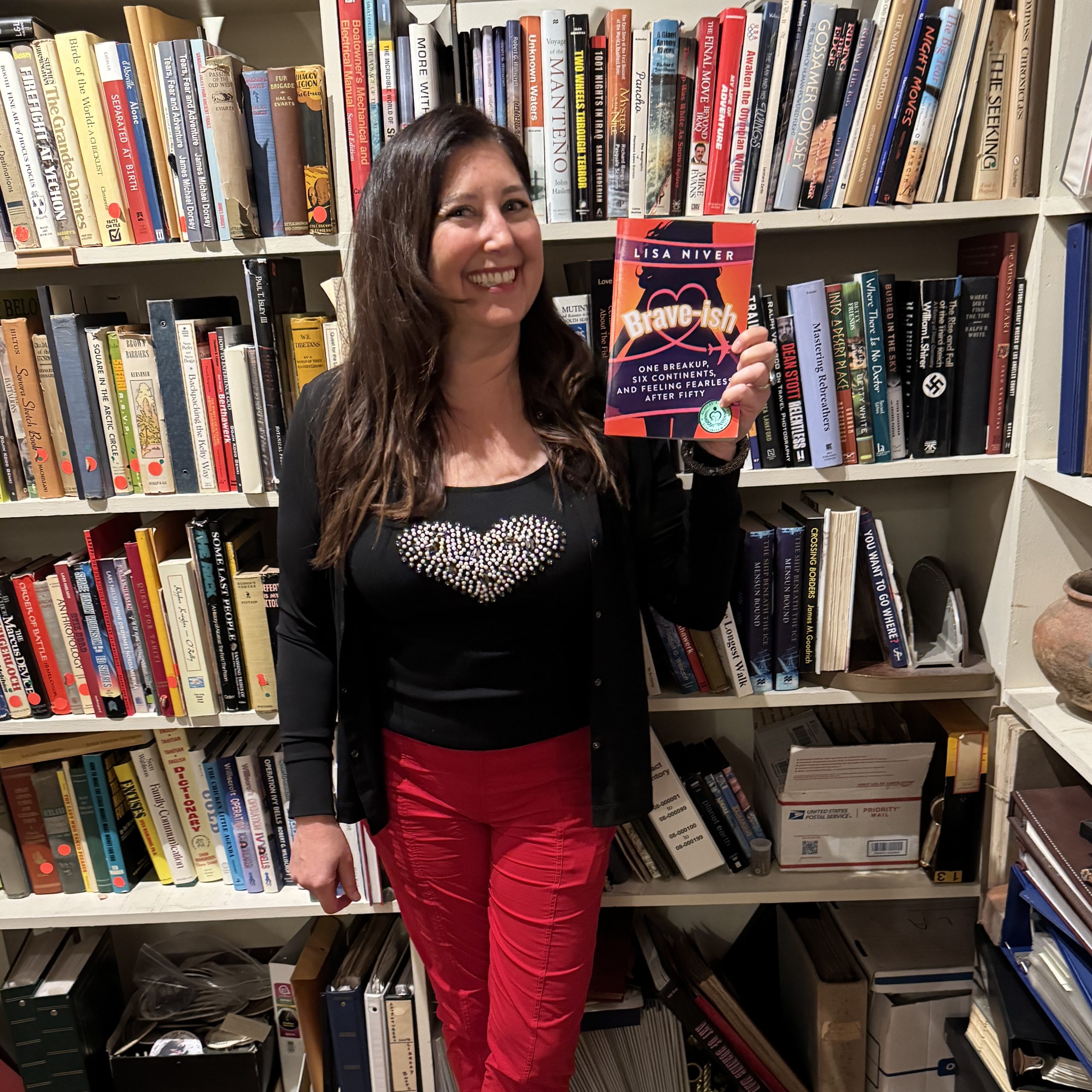
Have you heard my recent podcast episode? Spectrum News interviewed ME! Thank you to Catalina Villegas for interviewing me about my award-winning book, BRAVE-ish, and my recent adventures in Antarctica with Quark Expeditions! Segment called: “Transforming Life for THE BETTER!”

WATCH my podcast, “MAKE YOUR OWN MAP: ” on Spotify, Apple Music, Amazon Music, YouTube PodcastGoogle Podcasts, Audacy, Audible, Anchor, PandoraiHeart Radio

WHERE CAN YOU FIND MY TRAVEL VIDEOS?

Here is the link to my video channel on YouTube where I have over 2.25 Million views on YouTube! (now at: 2,305,000). Thank you for your support! Are you one of my 4,500 subscribers? I hope you will join me and subscribe! For more We Said Go Travel articles, TV segments, videos and social media: CLICK HERE Find me on social media with over 150,000 followers. Please follow me on social @LisaNiver TikTok, X  Instagram, FacebookPinterestYouTube, LinkedIn, BlueSky and at LisaNiver.com.

EPIC JOURNEY Crossing the Antarctic Circle with Quark Expeditions. Click here to see all of my videos so far!

Do you LOVE my book BRAVE-ish? PLEASE WRITE A REVIEW!! Click here to go directly to rate or review BRAVE-ish on Amazon (now at 61 reviews. Help me get to 75) You can find my book on Amazon, Barnes & Noble, Simon & Schuster, Post Hill Press, Target, Walmart, BookShop, BAM! and wherever you get your audiobooks! People always ask me where is it best to buy my book. I recommend you go into or call your favorite local book store and ask them to order it for you and pick it up IN THE STORE! You never know what other treasures you will find. Any bookstore can order my book because my publisher is Post Hill Press and it is distributed by Simon and Schuster. My book is now in the library on Quark Ultramarine and in the store at Dubray bookstore on Grafton in Dublin, Ireland! Brave-ish is available all over the globe!

From Stormy Speeches to Seven Continents: Niver’s Feb News 2025 Read More »

Recovering from the Trauma of Mangled Meaning – Shabbat Studies 28 Feb 2025


Recovering from The Trauma of Mangled Meaning

Rabbi Mordecai Finley / 28 Feb 2025


One way that I have defined trauma is the “loss of soul.”  By soul, I do not intend a religious sense, for example, “the eternal soul.” I do mean a pure soul, a crystalline essential sense of self. Imagine that this crystalline essence is surrounded by a penumbra that affords the soul the function of “the meaning maker.”  The soul, in its penumbra, takes in the events of life and tries to construct a coherent sense of self and the world, a sense of past, present, and future.


At some level, the penumbra of the soul is wise. When we struggle in life, in our conscious mind we do as much reflecting as we can dealing with the external world, and then deliver our work down to the mute and mysterious region of the essential soul. The soul then works to find a way forward, to forge a path where an ideal version of the self can emerge. In doing so, the soul can help birth a self-as-yet-unknown, as the pain of life’s struggles is processed to create a new, healed, and annealed self, just as heated metal is cooled to form a stronger, more resilient form.


But at some other level, the penumbra of the soul is naïve. Unless trained carefully, assiduously, and even ruthlessly, the penumbra of the soul believes in a myth of stability and justice. Life is fair. People mean what they say.  Those whom I love will remain. The world will remain stable. If I am good, no harm will come to me.


There is a threshold, however, when the events of life are so outrageous that they strip us of what we had deemed possible. The penumbra of the soul is, generally speaking, not prepared for vicious depredations and injurious randomness. The penumbra of the soul becomes paralyzed. The penumbra of the soul is damaged and must be healed. We can experience ourselves as hanging in space without the foundation of a coherent world, without handles of meaning to hold on to.


The healing of the penumbra comes from the essential soul, a force within that lies dormant until awakened to work with the impossible but real, the unreal made manifest.


For example, I think of an abused child of an addict, a child who has an innate sense of their own loveable goodness and an instinct that life is orderly and fair. Their lived life violates their soul’s knowledge that they are worthy of love and that life is good, fair, just, and orderly. The addict’s child works frantically and, eventually, neurotically to be worthy of love and to create an orderly world. The child’s soul cannot make sense of life with an addicted parent. Trauma sets it. To heal, the adult’s essential soul must be activated. The traumatized adult needs to know that, at times, the parents were evil. While the act is not justified, the hidden urge to kill the “evil parent” was.


Normally, the urge to kill is evil until we are confronted with evil. The laws and rules of the normal world no longer apply. When confronted with evil, the urge to kill evil can be the only thing that saves us. We don’t need to act on the urge, nor do we discount it. By admitting to the evil and repressed will to destroy the evil, the trauma can be worked through.


We are all children of such a time, especially here in Israel.


Israelis were brutalized and traumatized by the events of October 7th and the aftermath. Complete families were annihilated. Children were butchered in front of their parents. Hostages were taken. Fine soldiers have died in an unprovoked fight against evil. How is this trauma worked through?


We in the United States and elsewhere were not physically massacred but were nevertheless astonished at the demonization of Israel after 7 Oct 23. The spearhead of that demonization was aimed at college campuses, led by intellectual elites whose own souls had been possessed by an evil farrago of neo-Marxism and post-modernism, Critical Theory-gone-psychotic, led by so-called Diversity, Equity, and Inclusion cells, mislabeled in Orwellian terms. DUI would be a better acronym – trying to Drive society to self-annihilation Under the Influence of destructive ideologies.


Societies such as ours, rooted in ideas such as reason, morality, law and justice, are ill-prepared for social psychosis. We believed that the path through disagreement is reasoned argumentation. We try to reason, but then are solemnly informed that reasoned argumentation is just another tool of domination.


The right to protest was deformed into the power to defame, silence, exclude and attack, all in order to set morality on its head. Rape, murder, and butchery became means of liberation and achieving justice. War against evil became evil in itself. Some satanic algorithm of splitting the moral difference (“both sides are bad”) became a means to shut down moral reasoning and excuse depravity.


Two and half years later, we see that some sanity is finally reasserting over the debris of mangled meaning. The work is unfinished.


Here in Israel, we suffer from that mangling of meaning continuously. We read in the world press how maniacal butchers are valorized. Excusing depravity is an exercise in Diversity. The aim of destroying Israel and murdering its citizens is an exercise in Equity. The strangling of innocent children with the murder of other hostages is now Included in the lexicon of just war theory.


We in Israel are suffering three traumas: the trauma of the actual butchery and torture of our citizens, the trauma of losing a world where a future of coexistence with our neighbors was possible, and perhaps most deeply, the trauma of losing trust in a part our world that has gone evil, led by so-called intellectual and moral elites.


To recover from this threefold trauma, we must find our way to the core, crystalline essence of our souls, and find meaning in a world that has become devoid of meaning.


In a strong sense, we must all channel Victor Frankl’s ideas on meaning, resilience, and the importance of embracing life even in the face of great evil. This Shabbat, I will begin a course of talks on the works of Victor Frankl – finding meaning in a mangled world.


Recovering from the Trauma of Mangled Meaning – Shabbat Studies 28 Feb 2025 Read More »