fbpx

February 21, 2025

Anne Frank’s Baby Brothers

The off-Broadway experience on everyone’s radar these days, surprisingly, is showing at the Center for Jewish History. In commemoration of the 80th anniversary of the death of Anne Frank, they have mounted an installation that includes a full-scale replica of the secret annex in Amsterdam where she, her family and a few others hid until they were betrayed by the Dutch and arrested by the Gestapo.

Anne Frank The Exhibition at the Center for Jewish History (Photo by John Halpern)

“Anne Frank: The Exhibition” was scheduled to close on April 30, 2025, but due to overwhelming demand, has been extended to October 31, 2025.

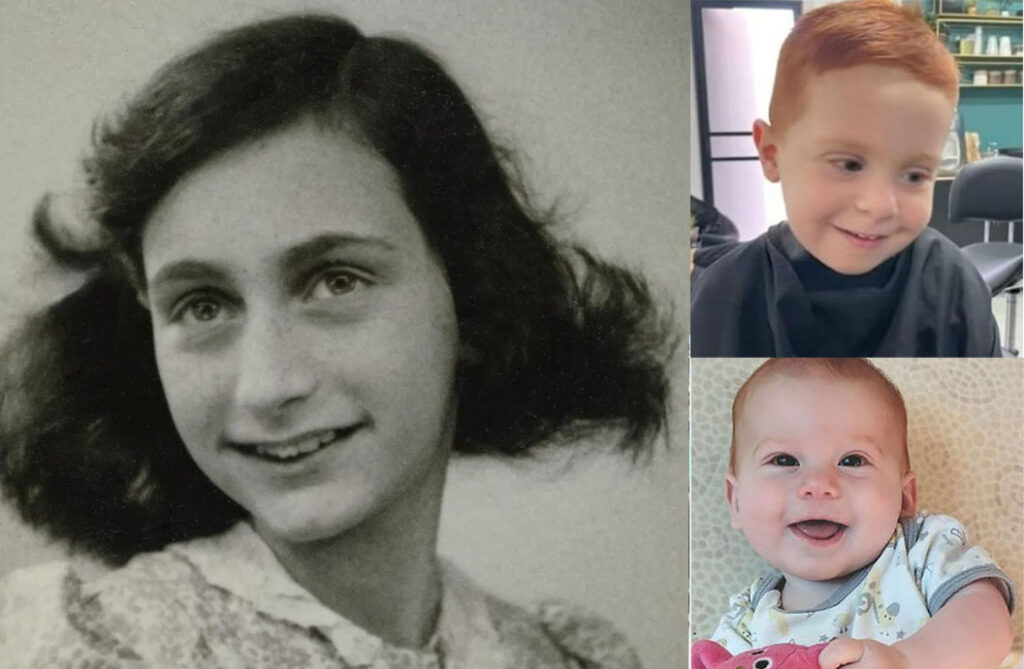
If the Anne Frank exhibit is the hottest place to be in Jewish culture, the coldest is most definitely in Israel, where the bodies of the red-headed Bibas brothers—Ariel and Kfir, a toddler and a baby, respectively—the youngest hostages taken by Hamas on October 7, were finally returned for burial. Their father, Yarden, was released on February 1, alive.

Grotesquely, even for monsters like Hamas, a coffin purportedly containing the body of their mother, Shiri, escorted back to Israel by the International Red Cross, did not include her remains. In a cruel bait-and-switch in the shark-infested ruin that is Gaza, Hamas inserted the body of an anonymous Palestinian woman—as if the Jews of Israel wouldn’t be able to figure that out.

Israel’s National Institute of Forensic Medicine soon determined that the body marked as belonging to Shiri Bibas shares none of the DNA of any of the hostages taken from Israel—either on October 7, or at any prior kidnapping. Shiri is still missing. Yarden, her husband, will have to attend two funerals—one for his sons, now; and the other for his wife, at some indeterminate time. There is no telling whether Hamas will ever locate or release her.

The people of Israel, still grieving over all those murdered, mutilated and raped on October 7, have reserved a special measure of agony for this family. Those two babies in their Batman pajamas have become symbols of Israel’s existential nightmare in the Middle East, and further evidence of the signature brand of barbarism that is the specialty of the people of Gaza—not just Hamas terrorists, but those “innocent” civilians who held Israelis captive and provided as much material support as any other people’s army in human history.

The people of Israel, still grieving over all those murdered, mutilated and raped on October 7, have reserved a special measure of agony for this family. Those two babies in their Batman pajamas have become symbols of Israel’s existential nightmare in the Middle East, and further evidence of the signature brand of barbarism that is the specialty of the people of Gaza.

There is no innocence in Gaza. The fact that not a single Palestinian deigned to save a Jewish life, not one Gazan wished to be a hero rather than an accomplice, is as self-condemning an indictment of collective guilt as can be.

Yad Vashem, Israel’s Holocaust Museum, has 14,000 names inscribed on its Wall of Honor in the Garden of the Righteous—acknowledging those non-Jewish individuals who performed selfless acts of heroism and sacrifice in saving Jewish lives.

No such humanitarian honor inspired Gazans, apparently. No one wished to be valorized or remembered in this way. The allure of martyrdom for the Palestinian cause is too strong; the empathy for Jewish neighbors too nonexistent.

This week felt like a time warp in Jewish history. We were reminded of the millions of children whose tribal attachments to the Jewish people (1.5 million in the Holocaust alone) caused an irreversible pause in their rites of passage.

Despite the legacy of her diary, which has been published in more than 70 languages worldwide, Anne Frank never got the chance to become the writer she was destined to be. She wrote but the one book, cobbled together by her father, Otto, who survived the Holocaust and then desecrated his daughter’s memory (and took liberties with her artistic intentions) by omitting passages that revealed her anger at the world outside the attic, along with her awareness that being Jewish sealed her fate in her native Germany, and in her adopted Dutch homeland.

The justifiably enraged teenager was, instead, turned into a secular saint—universalized as an every-girl cautionary tale, a precocious observer of humanity at its worst. And, yet, in reading the diary, one improbably learns that this Jewish girl in crisis loved Christmas trees, Hollywood movies and the Dutch royal family. Her father wanted the diary to be read as a humanist’s bible: suffering is suffering. Whatever historical torments Jews have endured is not worthy of its own story.

The Broadway adaptation of the diary, and the film version, paint an even fuzzier picture of Jewish particularity.

Otto Frank was determined that Anne’s final word on humanity be a verdict that everyone could smugly live with, even if reciting it out loud was an obscene injustice given all that the girl had experienced. “In spite of everything, I still believe that people are really good at heart.” Plucky, but nauseating, and taken entirely out of context. With an editor’s red pencil, the father ensured that his daughter’s words would reverberate throughout history as an anthem of eternal optimism.

With an editor’s red pencil, the father ensured that his daughter’s words would reverberate throughout history as an anthem of eternal optimism. But it remains a singular lie. Among other things, Anne never met a Gazan.

But it remains a singular lie. Among other things, Anne never met a Gazan.

Meanwhile, many decades later, far removed from the Holocaust that claimed two out of every three Jews of Europe, two red-haired Jewish brothers, born in a Jewish state, nonetheless lived in a home that, paradoxically, had a safe room serving the same purpose as Anne’s secret annex. She survived the attic but could not outlast Bergen-Belsen. The Bibas Brothers lived out the final days of their shortened lives confined in the darkness of a Gazan tunnel. They were, according to the IDF, murdered with the terrorists’ bare hands.

Would they have grown to become Jewish avengers or peacemakers, decorated IDF soldiers or start-up entrepreneurs, humble farmers or the voices of their generation? Like the European Anne Frank, these two sabras missed their chance to leave their marks other than as Jewish martyrs—symbols of antisemitism at its most inhuman and cruel.

Anne Frank’s diary, unredacted, revealed conflicts with her older sister Margot. She had no way of knowing that 80 years after her death, she would forever be linked—in the hearts and memories of every decent human being —to two younger baby brothers.

What we would now give to read what she might have written about them: the blank page of the most famous literary teenager in the world, and those boys of red hair, with their futures denied.


Thane Rosenbaum is a novelist, essayist, law professor and Distinguished University Professor at Touro University, where he directs the Forum on Life, Culture & Society. He is the legal analyst for CBS News Radio. His most recent book is titled “Saving Free Speech … From Itself,” and his forthcoming book is titled, “Beyond Proportionality: Israel’s Just War in Gaza.

Anne Frank’s Baby Brothers Read More »

Did J. Robert Oppenheimer Help Israel Build the Bomb?

An article published on Ynet News early in 2025 pairs J. Robert Oppenheimer to nuclear developments in Israel. The article describes how the growing energy needs of technology data centers may push Israel to develop nuclear power plants. However, it is also a tacit reminder of Israel’s nuclear weapons capability.

According to Emad Moussa, Oppenheimer was involved in the development of Israel’s nuclear weapons. Moussa points out that the recent movie “Oppenheimer” portrays the “father of the atomic bomb” as having had misgivings about the creation of the bomb. He certainly advocated against the further development of nuclear weapons. Yet, Moussa notes, this moral dilemma did not stop him from helping Israel develop nuclear weapons.

Was Oppenheimer involved in the development of Israel’s nuclear arsenal? After all, the movie, as well as two comprehensive biographies about him, “American Prometheus” and “Robert Oppenheimer: A Life Inside the Center,” make it clear that Oppenheimer was, at best, indifferent to his Jewish heritage. (To be fair, both biographies mention that he donated to charities supporting German-Jewish refugee scientists fleeing the Nazis, and both mention that Oppenheimer helped relatives get out of Germany.)

Not mentioned in the movie or books is that Oppenheimer had an Israeli connection, one that began in November 1947 when he and Albert Einstein met with scientist and Zionist leader Chaim Weizmann at the Institute for Advanced Studies at Princeton, New Jersey to discuss the possible development of a nuclear reactor in pre-state Israel.

We also know that Oppenheimer made at least two trips to Israel: one in 1958 to participate in the inauguration of a nuclear physics program at the Weizmann Institute, and another, seven years later, to participate in a meeting of the Board of Governors of the Institute.

Oppenheimer made two speeches in relation to the Weizmann Institute, the first one in May 1958, at the inauguration, and a second in December 1958 at a dinner for Weizmann supporters at the Waldorf Astoria Hotel. From these it is clear that Oppenheimer empathized and supported the the Zionist enterprise.

Yet supporting the establishment of the State of Israel and supporting the creation of an academic program in nuclear physics are not the same as providing help for the development of an atomic bomb. The key point in Moussa’s article is his statement that in 1952, Oppenheimer and Edward Teller, Oppenheimer’s colleague at the Manhattan Project, met in Tel Aviv with David Ben-Gurion, then Prime Minister of Israel, to explore how to manage Israel’s plutonium reserves.

Moussa probably read the 2006 Michael Karpin book “The Bomb in the Basement.”  Karpin mentions that Oppenheimer and Teller had a meeting in Tel Aviv with Ben-Gurion in 1952 to discuss plutonium production. While Karpin’s book is a clearly written, documented description of how Israel acquired the bomb (mostly a collaborative effort involving France), there is no source for the statement about the meeting between Oppenheimer, Teller and Ben Gurion.

(The entry for J. Robert Oppenheimer on the Jewish Virtual Library website also mentions the early 1950s meeting between Ben Gurion, Teller and Oppenheimer to discuss plutonium reserves, but I suspect that the source is the Karpin book.)

Teller does not mention such a meeting in his lengthy 2001 autobiography. He does refer to several visits to Israel, but he mentions that his first visit took place in 1965. In fact, Karpin himself implies a few pages later in his book that Teller’s 1965 visit was his first to Israel.

Moreover, an article based on declassified Israeli state archives, states that the 1958 meeting between Oppenheimer and Ben-Gurion was their first. Later, meeting with his cabinet, Ben-Gurion said that he detected a Jewish spark in the man (Oppenheimer). It’s true that Ben-Gurion also said that Oppenheimer was encouraging about pursuing a nuclear option. But we only have Ben-Gurion’s word on this, the word of a Prime Minister trying to influence his government. By 1958, Israeli scientists were already at work with the French, a development kept from Oppenheimer.

It’s true that Ben-Gurion also said that Oppenheimer was encouraging about pursuing a nuclear option.

Perhaps Ben-Gurion was right when he said he detected a Jewish spark in Oppenheimer. In Yiddish, the expression is a “pintele yid.” It refers to a core Jewish essence, even in assimilated Jews. It can make its presence felt at the most unexpected and unpredictable moments.

A final consideration: In 1952, Oppenheimer was under scrutiny by the FBI because of earlier communist sympathies. This was after all the McCarthy era. He was also was deeply embroiled in controversy over his opposition to the development of the hydrogen bomb (“the Super”). It is difficult to believe that he would participate in a meeting with Teller, his nemesis, especially since Teller was the primary proponent for the development of such a bomb.


Jacob Sivak, a Fellow of the Royal Society of Canada, is a retired professor, University of Waterloo.

Did J. Robert Oppenheimer Help Israel Build the Bomb? Read More »

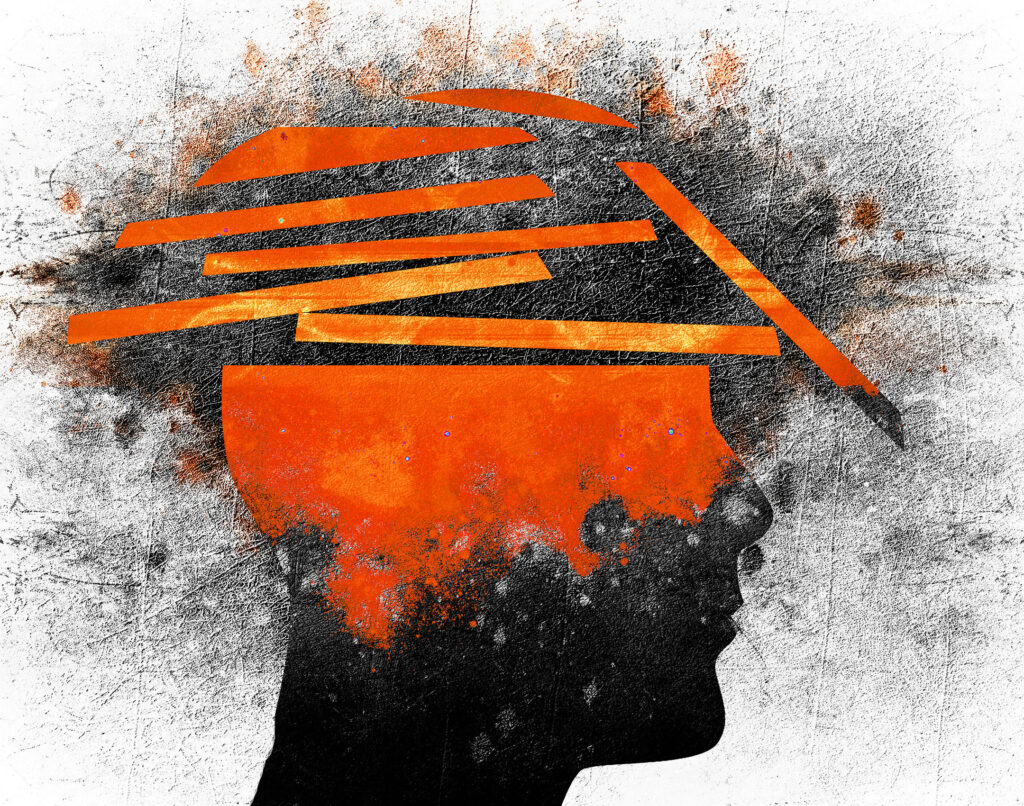
After Trauma

When I was a child, if I woke up in the middle of the night to go to the bathroom, I would often run into my mother, pacing in the hallway. When I’d ask her why she was up, she would offer some excuse, that she had leg cramps or that she wasn’t that tired.

I only realized the real reason she was awake when I was older.

My mother had survived Auschwitz. It left her with memories that continued to inhabit her dreams decades later. These nightmares would shake her to the point that she needed to walk around the house to settle herself.  My mother was an easygoing woman; but at night, the trauma of her past would unsettle her sleep.

I was reminded of this when I read a Wall Street Journal article about how the Released Gaza Hostages Face Long, Wrenching Recoveries. The authors quote Luis Har, 71, who was rescued in February, as saying “I don’t sleep much at night anymore. My head is filled with thoughts.” Luis can’t sleep after his experience as a hostage. And that reminded me of how my mother paced the hallway in our home at night.

Trauma feels insurmountable. Horrific memories remain etched in one’s memory, and they reappear involuntarily at random moments. You feel out of control, as if your mind has a mind of its own; and you become a prisoner of your own thoughts. One of the former hostages, Mia Schem, told the reporters: “People think you are out, you are safe, and that it’s over…But it’s not. Every day is a battle to get up and fight.”

There is enormous trauma in Israel right now. Right after the war started, a cartoon circulated, with a caricature of the map of Israel lying on a couch while Sigmund Freud listens. The caption reads: “How does one find a psychologist for 9.3 million people?” This cartoon is even more relevant today.

Survivors and first responders are still overwhelmed by the unspeakable barbarity they witnessed. So are heartbroken family members who had their beloved children torn away from them. All of Israel mourns the fallen soldiers. And the entire Jewish world has been emotionally scarred by these horrible attacks.

On Thursday, this pain came to a crescendo with the return of the bodies of Oded Lifshitz, and Shiri, Ariel, and Kfir Bibas. Hamas staged the handover in the ugliest fashion possible, with gun-waving terrorists and cheering crowds.

It felt like the nightmare of October 7th had returned.

Contemplating the horrors the sweet young Bibas boys endured before being murdered by Hamas is too much for the heart to bear.

We are all traumatized.

But we can meet this challenge, just like our ancestors did.

Judaism teaches that we inhabit a fragile and imperfect world. Exile is an unavoidable element of the Jewish experience, from Pesach to Tisha B’Av. Even at the heights of joy, we never forget what we have lost; we break a glass at every wedding, a reminder of the destruction of the Temple, and more generally, the broken, unredeemed state of the world.

Exile is not just about events in Jewish history; it is part of the human condition. The first couple, Adam and Eve, are exiled from the Garden of Eden into a difficult, cursed reality. The Kabbalistic doctrine of “shevirat kelim,” “the shattering of the vessels,” is that the world came into existence after the breaking of the receptacles created to receive divine light. This idea is a metaphor for the inherent imperfection of being. Everything is broken. Trauma is the rule, not the exception.

Yet even in the worst of times, Jews had the will to live on.

What philosophers call “the will” is a powerful force. They debate if the will is subordinate to the rational faculties or independent of them. But, to take a side in this debate, it would seem clear that not everything we choose to do is rational or self-interested. In Willful: How We Choose What We Do, Richard Robb argues that much of what we do has no rational utility. There are “for-itself” behaviors such as artistic and creative pursuits, game-playing, and altruism that are done without any purpose.

But where does the desire to do “for-itself” behaviors come from? Is it merely instinct?

At the end of Parshat Mishpatim, we have a famous episode of willful behavior. Even before receiving the Torah, the Jews declare “All that the Lord has said we will do, and we will understand.” In Hebrew, the term is “naaseh v’nishmah,” which becomes an oft-repeated slogan. The Jews committed to the Torah without even knowing what they were committing to. The Talmud explains that the Jews’ willingness to do so was otherworldly. It says:

When the Jewish people said “We will do” before “We will hear,” a Divine Voice emerged and said to them: Who revealed to my children this secret that the ministering angels use?

The Jews cry out naaseh, We will do, without having a reason why; they are listening to an inner voice, much like angels do. This will is always there, a divinely inspired desire to do what is right for its own sake.

Naaseh v’nishmah has guided us forward in the worst of times. A Holocaust survivor once remarked to me: “You know, I just wanted to live”. This may seem like a pointless comment; doesn’t everyone want to live? But what he meant was that he refused to give up no matter how long the odds and how painful the journey. Others gave up. Yet this man kept going, despite suffering, despite pain, despite loss.

Like so many Jews throughout the generations, this man had the will to live on, an inner drive that doesn’t make sense and doesn’t have to. It is a glimmer of divine inspiration in the darkness, exhorting us to keep going, that the Jewish mission must continue, because we have to fix the shattered vessels.

Jews have kept going because we’ve always had dreams that are larger than our nightmares.

Heroically, these released hostages are taking on life with a Naaseh v’nishmah attitude. Trauma surrounds them, but they keep going.

One of the hostages interviewed for the Wall Street Journal article was Moran Stela Yanai, a jewelry designer.She shared her fear of enclosed spaces and the irrational guilt she feels. But Moran just wants to live. The article explained:

Yanai said she vowed during captivity that she wouldn’t let her abductors ruin her life. “When I am not doing well, they win,” she said. “If I can recover fully, I win.” She also decided she would try to become a mother, despite being single at age 41. “That’s going to be my revenge.”

Moran’s words are a testament to the Jewish will to live on. And when her child is born, it will bring a little bit of redemption to a world that desperately needs it.


Rabbi Chaim Steinmetz is the Senior Rabbi of Congregation Kehilath Jeshurun in New York.

After Trauma Read More »

David Labkovski Project, Birthright Israel Onward, Israel Guide Dog Fundraiser

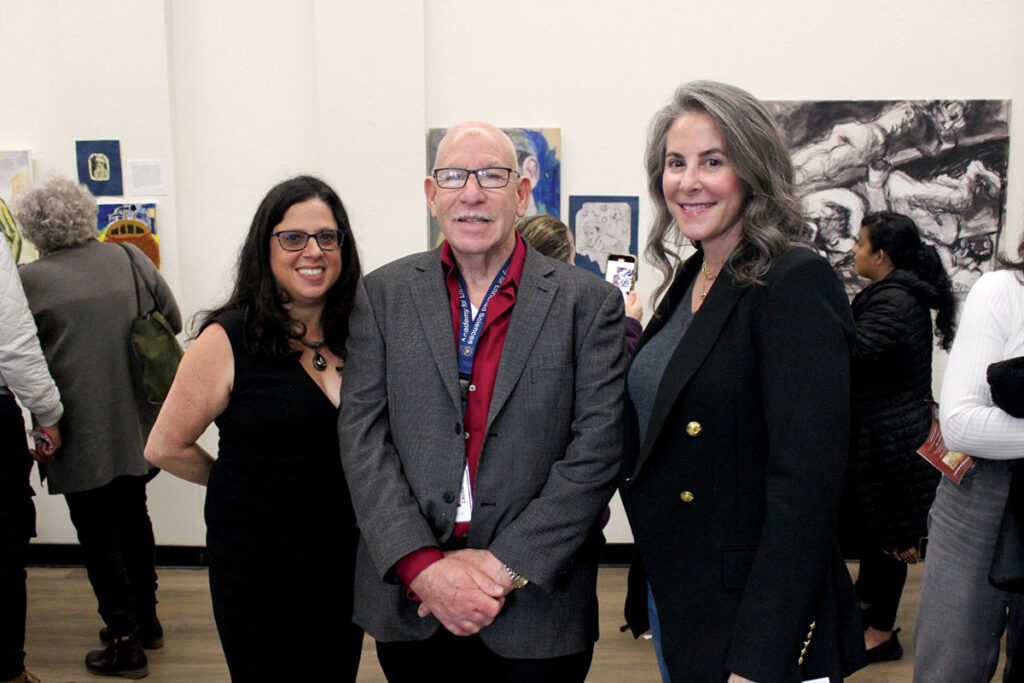
On Jan. 27, coinciding with International Holocaust Remembrance Day, 51 eighth grade students from the Multicultural Learning Center (MLC), a dual-language English and Spanish charter school in Canoga Park, received resolution certificates from Los Angeles City Councilmember Bob Blumenfield, in acknowledgment of their commitment to Holocaust education. 

These certificates recognized the students’ completion of the David Labkovski Project’s semester-long program, a deep dive into Holocaust-related history that trained them as docents and peer-to-peer educators of the exhibit “Documenting History through Art,” which features Israel artist David Labkovski’s work.

Between 1940 and 1945, approximately 1.3 million Jews were deported to Auschwitz by Nazi Germany. Of these, 1.1 million were brutally and systematically murdered. Thousands of Jews from the city of Vilna, including the family and friends of artist David Labkovski, were also killed in the forests of Ponar.

David Labkovski’s narrative art consists of more than 400 pieces, and documents life before, during and after the Holocaust — as well as his time as a prisoner in Siberia and later life in Israel. 

“Through his works, students engage with history in a deeply personal and impactful way,” David Labkovski Project Executive Director Leora Raikin said.

In attendance at the exhibit, “Documenting History Through Art”—which was on display at the Canoga Park Youth Art Center—were approximately 120 people, including Gayle Nadler, executive director of the Multicultural Learning Center; Blumenfield; and LAUSD Board President Scott Schmerelson. According to Raikin, the LAUSD leader “deeply understands the mission and importance of the David Labkovski Project.”


Birthright Israel Onward recently launched its new Storytellers Program, designed to be a space for every Jewish person — whether vocal about their Judaism or not — to explore their Jewish identities in the context of their spheres of influence given today’s polarized world.

Through this new initiative, 80 fellows from around the world will gain the tools, knowledge, and a global network to drive positive change in their industries and online communities, according to Birthright Israel Onward leadership.

“The program’s primary goal is to help influential Jews [ages 18-35] integrate their Jewish voices into their work, overcoming challenges such as the fear of alienating followers or facing online hate,” Birthright Israel CEO Gidi Mark said in a statement. “We view this as a long-term strategic investment for the Jewish people in an era where building digital influence is key to standing out as a leader.”

Two tracks are offered to the fellows: a four-week fellowship at Reichman University (IDC) in Herzliya, Israel, in July 2025, and a fully subsidized, experiential 10-day journey through Israel this summer. 

Fellows in the cohort include Los Angeles-based celebrity stylist Ali Gropper. 

Los Angeles celebrity stylist and influencer Ali Gropper, who will participate in a new Birthright Israel Onward initiative. Courtesy of Birthright Israel

“As a Jewish female entrepreneur, this experience is an opportunity to unlock my power on my platform, extending beyond just fashion and lifestyle,” Gropper, 28, who will join the inaugural Storytellers journey this summer, said. “I’m eager to make a tangible impact in the Jewish community both online and offline, and even more excited to experience this alongside influential, inspiring leaders who are shaping culture across industries and digital platforms.”

Birthright Israel is the largest educational tourism organization in the world and has provided more than 900,000 young Jewish adults from 68 countries the gift of a 10-day tour in Israel since its inception 24 years ago. Additionally, more than 10,000 people have attended internships, academic studies and fellowships through Onward Israel.


“Dog mom” Rachel Leah Cohen (left) turned her dog’s 13th birthday into a fundraiser for Israel Guide Dog Center. Courtesy of Rachel Cohen

Penny Lane Cohen of Valley Village was called to the Torah to become ‘Bark Mitzvah’ on Feb. 2, in the presence of dear friends and family—both the two-legged and four-legged variety.

Rabbi Cantor Lily Blum presided over the festivities which included her own commentaries on the week’s parsha, blessings for all the animal friends present, and a speech from Penny Lane herself, albeit read by her very proud mom Rachel Leah Cohen, an actor, comedian and self-described “dog mom” who serves as program director at Temple Judea in Tarzana.

Celebrating guests joyfully participated in a treat-tossing, a tunnel of belly rubs and the hora, during which Penny Lane — a rescued Havanese Maltese mix — was happily lifted in her specially-constructed doggy-chair for the occasion. Perhaps most importantly, as part of her Bark Mitzvah Project, Penny Lane has already raised nearly $1,000 for the Israel Guide Dog Center, which is dedicated to improving the quality of life of visually impaired Israelis by providing Hebrew-understanding guide dogs, Cohen said. 

David Labkovski Project, Birthright Israel Onward, Israel Guide Dog Fundraiser Read More »

Shabbat Can Help Heal Us

 Shabbat, Friday February 21, 2025 By Jodi Berman
With our minds and our hearts on Israel, we are still reeling from yesterday’s events. Our hearts break for the Bibas and Lifshitz families, whose beloved were returned in coffins, first paraded around in Gaza. Our hearts break further for Yarden Bibas and his family, who continue to endure the unimaginable as they wait for news about Shiri; in an act of further cruelty, the fourth body was not that of Shiri Bibas. This fierce mother of Israel was not returned with her babies. The world should collectively raise its voice and demand that all remaining hostages, alive and dead, be returned ACHSHAV (now). We will continue to raise our voices, in demand and in prayer.And, as if this pain was not enough, we hold gratitude for the mistiming—and discovery—of bombs planted on buses in Central Israel. At the end of this devastating week, we pray that our brothers and sisters in Israel find some measure of shalom as Shabbat descends tonight.

On Tuesday, January 7, I was sitting in our clergy meeting when Rabbi Sari elbowed me and said, “You need to call your parents. There’s a big fire in the Palisades, and there’s an evacuation order.” I jumped up, left the room, and called them immediately. My parents were already gathering their belongings, preparing to leave. Thankfully, a thoughtful neighbor had warned them even before the official order, urging them to evacuate. I’ve never felt so helpless. Should I remind my mom to grab my Bat Mitzvah album? Or should I tell her to leave everything behind and just get in the car? She was overwhelmed, so she grabbed what she could and left—leaving behind essentials like hearing aid chargers and my dad’s walking cane, as well as sentimental treasures like photo albums and keepsakes. From this, I learned an important lesson: never say, “It’s just stuff, as long as you’re safe.” Of course, safety is the most important thing, but the thought of losing a lifetime of memories is incredibly painful. It was weeks before we could return in person to see what had happened to my childhood home—the house we moved into when I was three years old. In the meantime, I witnessed heartbreaking losses among childhood friends and Temple members, but I also saw the most profound acts of kindness. I joined Marc Entous and our spouses in evacuating Torahs in the middle of the night. I sat on 6 a.m. calls, scrambling to reopen our schools. Amid the devastation, I walked away with three powerful lessons, which I want to share with you.

“Look to the helpers.” Mr. Rogers’ famous words resonated with me in a way I had never experienced before. Those who sent meals and checked in on us made an enormous difference. I saw members of our Temple step up—donating gift cards, money, Judaica, and beautiful new clothing for those impacted by the fires. We distributed these to the people who needed them most (thankfully, my family was not in need in that way). People gave  asher n’sao libo אֲשֶׁר נְשָׂאוֹ לִבּוֹ—as their hearts moved them—a passage from this week’s Torah portion that remains as relevant today as it was in Biblical times.

Tomorrow you may be the recipient of the organization you support today. While waiting in line to get our permit to return home for the first time, a food organization my mother has supported for years came up to our car and offered us lunch. We were overwhelmed. My mother, through tears, blurted out, “I give you guys money!” In that moment, we realized the true cycle of generosity. Later, FEMA representatives approached our car, offering guidance on available resources. I have had many conversations about the vital role FEMA plays in supporting Americans in times of disaster, but I had always associated their work with hurricanes and tornadoes. I never imagined they would be helping my own family. Shabbat is the balm that heals the soul. Amid the chaos—the calls, the fire monitoring, the worry—I insisted that, on that first Friday night, we stop. Just for a moment. We quieted the noise, lit the Shabbat candles, took a sip of wine, and had a bite of challah.

U’vayom hashvi’ee yihiyeh lachem kodesh Shabbat” (Exodus 35:2) וּבַיּ֣וֹם הַשְּׁבִיעִ֗י יִהְיֶ֨ה לָכֶ֥ם קֹ֛דֶשׁ שַׁבַּ֥ת
And on the seventh day, you will have the holiness, the rest, the comfort, the healing of Shabbat.” This verse from this week’s Torah portion had never felt more real to me. Even in crisis, this sacred ritual gave me the space to stop, breathe, and taste the sweetness of our beautiful tradition.
The Punchline: We Are the Lucky Ones. Though my parents will need to have their home tested and thoroughly cleaned (if you know a great and affordable remediator, let me know!), the day we arrived, we found it intact and unharmed—along with most of the houses on the street. We spontaneously said a Shehechiyanu and stepped inside to gather a few things to bring back to my house where my parents are still living. Among them, of course, was the photo album from my Bat Mitzvah. Shabbat Shalom, —Jodi Berman, Executive Director, Stephen Wise Temple

Shabbat Can Help Heal Us Read More »