fbpx

November 20, 2024

Jessie-Sierra Ross: Straight to the Hips Baby, Seasons Around the Table and Apple and Pear Crumble

“There’s nothing better than a little coffee, a little cake and a little kibitz,” Jessie-Sierra Ross told the Journal. “We eat to remember, we eat to connect, we eat to nourish, we eat to love.”

Ross, who identifies as a Ukrainian Jew, grew up conservative; her mother was Jewish, her father was not. “My father was actually a World War II refugee, and had gone through some pretty traumatic and terrible times, one of which was not having enough food at a very tender age,” she said. “So in my house, when we had food, it was not only nourishing [and] something that was an art that could tap into memory, but it was a celebration because of all those hardships.”

Ross, who prefers salty blintzes, said she would never share her mother’s recipe. However, there’s a family blintz story ingrained in her memory. “My maternal grandparents’ [families] came from separate sides of Ukraine. one side liked sweet, one side liked salty,” she said. “My grandpa would come over and put some salt into the blintz’ mixture; my nana would taste it and put sugar into it, so that was our growing up.”

The founder of the “Straight to the Hips, Baby” blog and author of “Seasons Around the Table,” Ross took the leap from prima ballerina to the food and cooking world, after she retired from professional dance and started a family.

“I started cooking at my mother’s side at six or seven years old, just fascinated by not only the chemistry of bringing food together and the sort of food is love aspect, but also just spending quality time with my family,” she said, “That passion for food continued to grow with me, even if I couldn’t always indulge: My daily staples were yogurts, oranges and bowls of chicken soup, but that didn’t stop me from the occasional cocktail and slice of Brie.”

Once Ross’ blog took off, she started doing food photography and styling, magazine articles and TV work. Her recently published cookbook, “Seasons Around the Table,” naturally covers the four seasons, and melds gardening, home decor, lifestyle and food and drink. The linchpin is entertaining: Inviting people to the table and creating beautiful tablescapes for people to enjoy. This could be flowers, little objects of art or even pieces of family history.

“I love bringing out my great grandma’s huge crystal compote dish, which you can’t really use anymore, but I stick a bunch of fruit and flowers in there,” she said. “I bring her to the table; it’s a way to remember and it’s a way to really enjoy what you have with the people you love.”

Ross said you don’t need a special occasion to make a special meal. And, when you host, you need to remember what is and is not important. “Focus on the flavors, focus on the food and obviously the guests,” she said.

You do not have to serve five or six courses, have a piece of silverware for each course or even have matching plates. You just need to get people to the table.

When you are planning a dinner party, start with your menu plan. Decide on your focus: maybe it’s the main dish, perhaps it’s a fancy dessert. “Choose one thing to put a ton of your energy on – and by a ton I mean something under an hour because in my world I’m too busy to do much else – and supplement with simpler recipes,” Ross said. “Simpler doesn’t mean less flavorful.”

For instance, if the main course is a roast chicken, also make a beautiful, crispy, smashed potato with olive oil, dill and garlic, along with a fresh green salad.

If you’re going to make a complicated dessert, use the sous vide to make a prime rib. Don’t even bother with the oven.

“It’s all about your time management and expectations,” Ross said. “If you can create a stunning dish at the table and everything lines up, your guests will be astounded; it takes very little to make this huge impact.”

For a simple dessert that’s a certain hit, the recipe for Ross’ apple and pear crumble is below.

Learn more at StraightotheHipsBaby.com and follow @StraighttotheHipsBaby on Instagram and Jessie-Sierra The Last Bite on Substack.

For the full conversation, listen to the podcast:

Apple and Pear Crumble

4 large Honeycrisp apples (about 800 g)

2 large Bartlett pears (about 500 g), washed

1 tsp (4.8 g) vanilla extract

¼ tsp (0.75 g) kosher salt

2 tsp (5 g) cornstarch

1 cup (128 g) all-purpose flour

1 cup (200 g) sugar

½ tsp (1.3 g) ground cinnamon

½ cup (115 g) cold butter, cubed

Optional: vanilla ice cream or whipped cream for serving


  1. Preheat the oven to 350°F and butter a 9-by-13-inch (23 × 33 cm) baking dish.
  1. Peel and core your apples. Cut into quarters and then slice thinly (⅛ inch, or 25 cm). Add them to a large mixing bowl.
  1. Next, cut the pear from the core in quarters, leaving the skin on. Slice into ⅛-inch (25 cm) slices. Add to the bowl of apples.
  1. Sprinkle the apples and pears with the salt, vanilla, and cornstarch. Gently mix and set aside.
  1. In another large mixing bowl, add the flour, sugar, and cinnamon. Mix quickly with a fork.
  1. Add the butter, and — using your hands — incorporate the butter into the dry mix. “Squish” the butter in, using the heat from your hands to melt it slightly.
  1. When the butter starts to clump with the flour, begin to crumble up the clumps. The end result should look like a mix of sandy dough, with a few larger chunks.
  1. Add the sliced apples and pears to the prepared baking dish. Spread the fruit out to even thickness.
  1. Spread the “sandy” crumble mixture all over the fruit.
  1. Bake for 40–50 minutes on the middle rack, until golden and slightly bubbly.
  1. Let cool for at least 15 minutes before serving. (I like to let mine rest for about 40 minutes, so the crumble is still warm, but not too hot; that way I can top with a scoop of ice cream and not have it immediately melt!)

Debra Eckerling is a writer for the Jewish Journal and the host of “Taste Buds with Deb.Subscribe on YouTube or your favorite podcast platform. Email Debra: tastebuds@jewishjournal.com.

Jessie-Sierra Ross: Straight to the Hips Baby, Seasons Around the Table and Apple and Pear Crumble Read More »

Comedy Fantasy Camp, with Teacher Jay Leno, Returns This January

For over two decades, local sports agent and music tour producer David Fishof has been running Rock ’n Roll Fantasy Camp. At this camp, people can sign up to jam with and learn from rockstars like Gene Simmons, Roger Daltrey, Alice Cooper and Nancy Wilson. 

Three years ago, while promoting his documentary about his camp, “Rock Camp: The Movie,” Fishof went on “The Adam Carolla Show.” It was there that Carolla came up with an idea: Why not run a fantasy camp for comedy?

“I told Adam, ‘That’s my dream, but can you help me secure other comics?’” Fishof told The Journal. “He called me one day and said, ‘I proposed it to Jay Leno.’ We did our first camp, and it sold out fast.”

From Jan. 23-26, Comedy Fantasy Camp is returning – with Leno and Carolla on board once again, along with Natasha Leggero, Brad Williams, Patrick Warburton and Daniel Lobell, among others, as the comedy coaches and teachers. 

For four days, 50-60 campers will learn how to write a standup comedy set, and the camp will culminate with a performance at The Hollywood Improv. Many of the campers do not aspire to be comedians – they are simply professionals, like doctors and lawyers, who want to have fun for four days and learn a new skill under the guidance of some of the most prominent comedians around. 

“The campers have incredible mentors,” said Fishof. “And you don’t have to want to be a comic to attend. As Jay Leno says, for anyone who is in sales or business, it’s best to learn comedy.”

“The campers have incredible mentors.” – David Fishof

In a statement, Leno said, “Writing jokes is the hardest thing in the world. Words have power; you need to learn how to use them.”

Though Fishof’s career has mostly focused on sports and music – he booked tours for the Monkees and Turtles and produced eight Ringo Starr and His All-Starr Band tours – one of his first loves was comedy. When he was just getting started, he booked acts in the Catskills, the birthplace of American Jewish comedy, and worked with comics like Henny Youngman, Rodney Dangerfield, Milton Berle, Jan Murray and Freddie Roman. 

Jon Lovitz, David Fishof

“I always dreamed of being a comic,” he said.

As an observant Jew, the Comedy Fantasy Camp founder said he admires Leno for his commitment to Israel. 

“He went to Jerusalem a few years ago and MCed the Genesis Prize Award Ceremony and has appeared many times for United Hatzalah,” he said. “He’s a real friend of Israel.”

Fishof is currently in Israel producing a documentary about 10 Israelis he brought to Los Angeles to participate in Rock ’n Roll Fantasy Camp this past March. Participants included drummer Tuval Haim, whose brother Yotam was one of the hostages accidentally killed by the IDF; Bar Rudaeff, whose father was taken hostage; and Valeria Dvorkin, who had friends who were taken hostage and killed on Oct. 7. They performed alongside rock legends in Hollywood and at a Creative Community for Peace event in Beverly Hills. 

“I realized how much music is healing to these folks,” Fishof said. “If music can heal, laughing and comedy are even more healing.”

Learn more about the camp by visiting Comedyfantasycamp.com. 

Comedy Fantasy Camp, with Teacher Jay Leno, Returns This January Read More »

Stand Up! Records Releases Tom Lehrer Vinyl Just in Time for Hanukkah

In the 1950s and ‘60s, Tom Lehrer, a Jewish musician, satirist and mathematician, rose to prominence with hits like “The Elements,” “Poisoning Pigeons in the Park,” “The Hunting Song” and “The Irish Ballad.” But what some may not know is he also recorded two holiday songs: “A Christmas Carol” and “(I’m Spending) Hanukkah in Santa Monica.” Now, Stand Up! Records, an independent comedy record label, is releasing those two songs on vinyl, complete with blue splatter for Hanukkah and red, blue and green splatter for Christmas. 

“Tom Lehrer, after a long career in several fields, had released nearly everything to the public domain in 2022, which had sparked my curiosity,” said Stand Up! Records founder Dan Schlissel. “I was looking through his roster of songs again and hit upon the idea of making a holiday record.”

Though Schlissel originally wanted to release the vinyl back in 2023, world events and production problems caused a delay.

“We had some technical issues in the manufacturing back then, and that and the wake of Oct. 7 made me hold the release for that season,” he said. “Since Hanukkah is the festival of light, I decided it was time this year to light my candles against the dark with the gift of comedy.”

Lehrer, who is now 96 years old, stepped out of the spotlight following his success. The gifted vocalist and pianist is also a mathematics prodigy who went to Harvard University at age 15 and graduated just three years later. He then worked for the NSA – where he claimed he invented the Jell-O shot – and taught mathematics and musical theater at prestigious universities. His music inspired a generation of other artists like Weird Al, Steely Dan and Dr. Demento. 

Schlissel, a Grammy-winning producer, has been listening to and enjoying Lehrer’s music since childhood. “His music has been a thread throughout my life,” he said. “I just wanted to shine a light back toward a towering figure that meant something to me as I was coming of age.”

“His music has been a thread throughout my life. I just wanted to shine a light back toward a towering figure that meant something to me as I was coming of age.” – Dan Schlissel

“(I’m Spending) Hanukah in Santa Monica,” which is on side A of the single, was originally released in 1990. The song is klezmer-inspired and features funny lyrics like, “I spent Shavuos in East St. Louis, a charming spot, but clearly not the spot for me” and “Amid the California flora, I’ll be lighting my menorah. Like a baby in his cradle, I’ll be playing with my dreidel.”

The record comes with sheet music and transports listeners to a happier place.

“It’s a perfect Hanukkah gift for transplants first and foremost, because it’s about wanting to be away from winter, snowfall and the world at large,” Schlissel said. “Los Angelenos may become jaded to or unaffected by the winter blahs because they are used to nicer weather than most of the rest of the country, but for folks living anywhere that snow and ice can impact a good part of the year, being barefoot on a beach and away from the world’s cares … what’s not to love about that?”

For more than 30 years, Schlissel has been putting out vinyl, and sees that records have made a huge comeback in the last decade. “Nostalgia has its cycles,” he said. “Cassettes have made a minor resurgence as well. I am expecting that before long, CDs might even make a comeback.”

Schlissel, who is based in Minneapolis, has released albums from many other Jewish artists on his label including Joan Rivers, Marc Maron, Lewis Black, Daniel Lobell and Judy Gold. Through his latest release, along with his other work, he can show his Jewish pride. 

“I am a secular person by nature, but I love my people more than I can possibly tell you,” he said. “When I am around other Jews, particularly ones in the arts, I feel like I am home, no matter where I may be. To be at a gathering, whether it’s Shabbat, or a holiday, or a gathering of friends, and sharing stories, humor, conversation, even arguments – that’s when I feel the most of us continuing traditions from our forebears and carrying them to our collective futures.”

The new Tom Lehrer record is available at Standuprecords.com/collections/tom-lehrer

Stand Up! Records Releases Tom Lehrer Vinyl Just in Time for Hanukkah Read More »

‘Survivors’ Brings Holocaust Stories to Life for Students

On Monday morning Nov. 11, the Saban Theater in Beverly Hills was filled with hundreds of students from 12 schools in the Los Angeles Unified School District (LAUSD). It was clear that these 8-12 graders were thrilled at the chance to leave their classrooms and watch a live performance. The theater buzzed with excitement and chatter.

Once the curtains rose, however, the audience fell into complete silence that lasted until the final moments of the play.

The production, “Survivors,” is a powerful one-hour play that recounts the experiences of 10 Holocaust survivors before, during and after World War II. It draws from the real stories of Jews like such as Helen Levinson, who survived by posing as a Christian; Evie, who was saved through the Kindertransport to Britain; Rosemarie Molser, who survived by disguising herself as a nun and later marrying her pen pal in Africa; and Henry Silberstern, who endured the horrors of Theresienstadt and Birkenau concentration camps.

Commissioned by CenterStage Theater in Rochester, New York, to create a Holocaust-themed play, “Survivors” was written in 2017 by Wendy Kout. Just one month after starting the project, Kout witnessed neo-Nazis marching with tiki torches in Charlottesville, which made her realize that she wasn’t just writing a historical piece – she was crafting a timely warning.

When Kout began writing the play, four of the 10 featured survivors were still alive and she was able to get in-depth interviews with them. She also spoke extensively with the family members and friends of all 10 survivors to authentically capture their essence. The outcome was a play that added rich, multi-dimensional portrayals to each survivor’s narrative. This allowed the audience to feel more connected to the characters and understand them better. 

The play reached over 10,000 students throughout Rochester and surrounding areas, garnering strong reviews and positive feedback. A few years later, as the production gained momentum and more productions were staged, Genie Benson, executive director of Keshet Chaim, saw a posting about the Philadelphia production on Facebook and called Kout, her college friend. “She said, ‘so Wendy — “Survivors” — why just Philly?’” Kout said in an interview with  The Journal, noting she hadn’t heard from Benson in years. “I said, is it you Genie?”

And so, the two began collaborating to bring the play to the West Coast. Benson, the daughter of Holocaust survivors, has years of experience producing shows for the Keshet Chaim Dance Ensemble. Under the Keshet Chaim umbrella, she created, with Kout, Arts for Change, which connects socially conscious artists to raise awareness and inspire change.

The play had its West Coast premiere at the Museum of Tolerance and invited Holocaust survivors, who filled the first row in the theater. One of them was 95-year-old David Lenga, who was just 11 years old in Poland when the Holocaust began. He was imprisoned at Auschwitz and lost his mother, father, brother and many other family members. Kout recalled he got up at the end of the play and said, “Until today, I was worried about Holocaust education in this country, and now I’m not worried anymore.”

Kout and Benson noted that it wasn’t easy to convince teachers that the play should come to their school or that it would make for a valuable field trip, but they were persistent. They sent materials and continued following up, and in the end, their efforts paid off. The first school to host the play was Calabasas High in March 2023. They later brought the production to Camp Alonim, the Reagan Library, a Catholic high school in downtown L.A., John Burroughs High School in Burbank and to 800 students in Santa Barbara, among other venues.

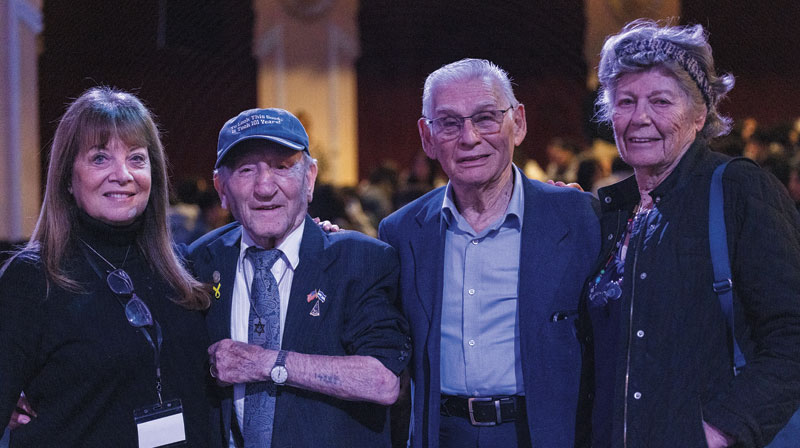
This last performance of the tour was at the Saban Theater. Three Holocaust survivors were invited to attend: Lya Frank, Henry Slucki and Joe Alexander.

“We wanted to do this performance to reach students from Title I schools, low-income and underserved schools that don’t have access to quality theaters,” said Benson. “We could see the impact it had on them as they came into this beautiful venue.”

The actors portray students, just like their audience, with hopes and dreams, living normal lives until the rise of the Nazi party. The play demonstrates how quickly their lives were turned upside down as they were sent to concentration camps or had to escape the tragic fate of their families and Jewish friends by disguising themselves as Christians. The audience also learned what happened to the survivors after the war, with photos of them as young adults and in their later years displayed on a large screen.

The actors portray students, just like their audience, with hopes and dreams, living normal lives until the rise of the Nazi party. 

After the play, students were invited to ask questions of the actors. “One student came to me afterward and asked to speak with the survivors,” said Kout. “She spent some time talking to them and as she walked away, I asked if she was okay. She said, ‘I need some time to process what I’ve learned; it’s unbelievable what they’ve been through.”

Kout and Benson claim that students don’t know enough about the Holocaust. “[California Gov.] Gavin Newsom launched a collaborative a couple of years ago, making the Holocaust and overall genocide education mandatory,” said Kout. “This makes us a valuable tool for schools, as they need ways to teach these lessons. The play was designed to teach the history of the Holocaust through active testimony.”

While the play centers on the horrors of the Holocaust, Kout emphasized that she wanted also to show how each survivor discovered hope and resilience, finding the strength to endure and overcome unimaginable challenges.

The performance at the Saban Theater was sponsored by the Sheri and Les Biller Family Foundation and the Len Hill Charitable Foundation. Benson and Kout plan to bring the play to as many schools on the West Coast as possible, including those in San Diego, San Francisco, Seattle and Las Vegas.


For more information and donations to help bring “Survivors” to schools and local communities, visit: www.artsforchange.world

‘Survivors’ Brings Holocaust Stories to Life for Students Read More »

Hearty Veggie Thanksgiving Sides

At the center of most people’s Thanksgiving tables is a beautiful turkey. However, the stars of the meal are often the sides. Here are some recipes that pair well with the main attraction, yet are filling enough for any vegetarians’ main course.

Diana Goldman’s vibrant and flavorful quinoa and sweet potato salad is one such dish. 

“Packed with plant-based protein and hearty ingredients, I love this dish not only for Thanksgiving but for any time of year,” Goldman, founder of Beantown Kitchen and author of the award-winning cookbook “Plants For You,” told The Journal. “The slightly sweet lemon-cumin dressing perfectly balances the earthy notes of quinoa and the natural sweetness of roasted sweet potatoes and apricots.” 

Quinoa Salad with Sweet Potato and Apricot 

Serves 6

For the salad:
2 small zucchinis, ends trimmed and cut in half lengthwise (about 15 ounces)
1 medium unpeeled sweet potato, cut into ½-inch dice
1 cup uncooked quinoa (3¼ cups cooked; see notes)
1¾ cups water
2 scallions, chopped small
½ cup shelled pistachios, chopped
½ cup dried apricots, chopped
½ cup fresh parsley, chopped
1 Tbsp Chopped fresh parsley and/or lemon wedges– optional, for serving

For the dressing:
¼ cup freshly squeezed lemon juice
1¾ tsp ground cumin
1 Tbsp agave syrup
1¼ tsp sea salt
½ tsp ground black pepper
¼ tsp red pepper flakes– optional, for serving

Preheat the oven to 400°F.

In a lidded jar or small mixing bowl, shake or mix together the dressing ingredients and set aside.

Line a baking sheet with parchment paper or a silicone baking mat. Place the zucchini on the baking sheet flesh-side up. Add the sweet potatoes and sprinkle the vegetables with salt and pepper.

Roast on the middle rack for 24-30 minutes or until the vegetables have cooked through (keep an eye on the zucchini; you may need to remove it before the sweet potatoes). Remove from oven and let cool.

While the vegetables are roasting, rinse the quinoa and transfer to a small saucepan. Add the water and bring to a boil. Cover, reduce to a simmer, and cook for 15 minutes or until all the water is absorbed. Transfer to a large serving bowl and let cool. 

Chop the cooled zucchini into ½-inch pieces. Add the zucchini, sweet potato, scallions, pistachios, apricots, parsley and dressing to the quinoa in the serving bowl. Mix to thoroughly combine.

Garnish with the reserved parsley and lemon wedges, if desired.

Alon’s Brussels Sprout Salad with Mustard and Toasted Almonds
Photo by Werk Creative

Chef Alon Shaya’s Brussel sprout salad is quick and easy and combines a variety of flavors and textures that aren’t typically seen together.

“The use of two types of mustard provides a tangy depth, while herbs, like cilantro, dill, rosemary and thyme, add a fresh and aromatic complexity,” Shaya, co-founder of Pomegranate Hospitality and author of “Shaya: An Odyssey of Food, My Journey Back to Israel,” told The Journal. “These bold flavors are balanced beautifully with the sweetness of golden raisins and the crunch of warm almonds, creating a delightful contrast.”

Brussels Sprout Salad with Mustard and Toasted Almonds

3 Tbsp dijon mustard
3 Tbsp­ whole-­grain mustard
3 ­Tbsp apple-­cider vinegar
2 tsp honey
1 tsp Morton kosher salt
½ tsp red ­pepper flakes
½ cup lightly packed fresh cilantro leaves
2 Tbsp lightly packed fresh dill fronds
1 sprig fresh rosemary
1 sprig fresh thyme
1 small shallot
1 small clove garlic
¾ cup ­ extra-­virgin olive oil
2 pounds Brussels sprouts
¾ cup golden raisins
1 cup sliced almonds, toasted

At the bottom of a salad bowl, whisk together the mustards, vinegar, honey, salt and ­red ­pepper flakes. Chop the cilantro and dill; strip the leaves from the rosemary and thyme, and mince them along with the shallot and garlic. Add all these ingredients to the bowl, then stream in the olive oil, and whisk until combined.

Peel away any tough outer leaves from the Brussels sprouts. Shred the sprouts until they look similar to slaw. Toss with the dressing and raisins, and sprinkle with the almonds just before serving.


Pam Stein’s creamy, flavorful smoky corn risotto combines the rich and savory essence of arborio rice with sweet corn and smoked paprika.

“Smoky corn risotto for Thanksgiving may raise some eyebrows if you have a family of Thanksgiving traditionalists,” Stein, founder of In Pam’s Kitchen, told The Journal. “But why cling to the same old dishes year after year, when you can bring some creativity to the table while showcasing autumn’s bountiful corn harvest?”

Smoky Corn Risotto

Yield: Serves 6-8

4 cups vegetable broth, divided
3 Tbsp unsalted butter, divided (use vegan butter to make this dish vegan)
1 3/4 cup frozen corn kernels, do not defrost
4 cloves garlic, run through a press
1 1/2 tsp smoked paprika
1/2 tsp salt
1 cup arborio rice
Chopped fresh chives for garnish

Heat vegetable broth in the microwave or over medium-high heat on the
stovetop until boiling. Set aside.

Melt 1 tablespoon butter in a 2-3 quart pot set over medium heat. Add corn, garlic, smoked paprika, and salt. Stir to coat well. Sauté for 2-3 minutes. 

Add the rice and stir for 3-4 minutes until the rice becomes translucent.

Add the vegetable broth to the pot in 1/2 cup at a time, stirring constantly until the broth has been absorbed. Repeat until all the broth has been used and the rice is creamy and tender.  

Remove from heat and stir in remaining butter. 

Transfer to a serving bowl and top with chopped chives, as desired.

Refrigerate leftovers in an airtight container for up to 3 days.

Hearty Veggie Thanksgiving Sides Read More »

Rabbis of L.A. | Rabbi Broner and the Challenges of Being a Ninth Grade Dean

Rabbi Eli Broner, the confident, imaginative, broadly educated and experienced ninth grade dean at Shalhevet High School, puts himself into his work. He is the opposite of someone who just goes to work. He is the work. Teaching is as necessary and vital as breathing.

A believer in teaching the whole child, he appreciates having “a wealth of knowledge of every grade level,” he said. “I know where a student should be and the trajectory. If I’m dealing with a seventh grader doing things at a fifth-grade level, I know what he needs to do to get to grade level.” That, he said, “leads me to being dean of the ninth grade.”

There are two elements to his job, he explained. “I tell parents and the kids, I am their concierge. A concierge may not do everything for you, but he is your point person. It’s stressful going from middle school to high school. So much transition.” He cited the most difficult challenges: “There’s social, being part of a whole new class. Academically, it is much more rigorous than middle school. And as a student, you have ownership over your learning as opposed to parents’ ownership.”  There’s management — of time, of materials, of study schedules. “So much is going on,” he said. And when his students come to him, saying, “Rabbi, I am worried about this,” or “Rabbi, I forgot this” or “What can I do about this?”, he says, “Come to me and I will do it for you” or “You and I together will reach out to so-and-so.”

The parents also have issues, he said. “They are in a new school, too. They are used to being coddled in middle school. Now they are sending their kid off. They want to be on top, want to be responsible, but they also want to give their child space.” As the concierge, “I am your address. I will take care of you.”

Sounds as if Eli Broner was made for this position at this moment. “But I could not have done it without the experience I have had,” he said. “Right place, right time. This is everything I want to be doing in education – I want to make sure every child is meeting his fullest potential to have a great school experience and grow into the best person he can be as a Jew and as a contributor to the world.”

Rabbi Broner was also eager to talk about his earlier career. “I have taught every grade,” he said. “When I was studying for smicha (ordination) in Sydney, Australia, I taught second grade and high school. When we started the Conejo Day School, I was teaching first grade. I went all the way through to bar mitzvah, the seventh grade, with them. It was the most magical experience.”

The Brooklyn native grew up in a Chabad home and spent a dozen years with Chabad in the Conejo Valley. Rabbi Broner also taught at L.A. Hebrew High, Emek Hebrew Academy and Hillel Hebrew Academy before Shalhevet. Additionally, the father of five is youth director and assistant rabbi at Beth Jacob Congregation.

Rabbi Broner’s father was his teacher and model. A professor of dentistry at NYU, he also had a private practice. “I owe my abilities to him,” the rabbi said.  “I learned from him a respect for integrity, always doing your very best at everything – and to be very detail-oriented, hands-on education, being able to explain things in a way that makes sense for every student, and caring for every student’s need.”

But teaching wasn’t his original career path. “When you grow up Chabad, you want to be a sh’liach (emissary of The Rebbe) and open a Chabad House,” he said. Teaching was seen as second-tier. “You are teaching,” Rabbi Broner said, “but you don’t want to be a ‘schoolteacher.’ “If you had the stuff, you had a Chabad House. My vision always was to open a Chabad House.”

As a 15-year-old yeshiva student, he taught a class of six students, “and, thank God, I succeeded at it.” As he grew older his perspective on teaching sharply changed. “Teaching is a mission, a vision, a gift, the awesome responsibility God gives you to hopefully make an impact,” he says.

The world has changed substantively since he began teaching in the ‘90s. What Rabbi Broner has seen is that “my students have much more stimuli now in every moment of their lives. I always have been an entertainer in the classroom. I like changing my voices, dressing up, getting down on the ground. I’m always entertaining, but you have to entertain a lot more than before. Kids are innocent. They are diamonds. They are precious. They want to accomplish, to succeed. They want to feel loved, appreciated, noticed.” Rabbi Broner sees “each child like wet cement. Every impression lasts a lifetime.”

“Kids are innocent. They are diamonds. They are precious. They want to accomplish, to succeed. They want to feel loved, appreciated, noticed. Each child is like wet cement. Every impression lasts a lifetime.”

He loves teaching first graders because they need everything the high schooler needs. “You just have to take it and package it at a first-grade level,” says the rabbi. “That takes talent and experience.” What he enjoys about teaching is more the approach than the subject. “In anything I am teaching,” says Rabbi Broner, “regardless of level, there is something you already know. Identify what you know, and let me give you the tools you need so you are able to own this on your own.”

Finally, as Beth Jacob’s youth director, the rabbi speaks of “amazing programs on Shabbat and during the week. Our Spark minyan is focused on parent-child davening. It’s teaching kids davening skills and the ability to lead. We draw between 20 and 50 [families].”


Fast Takes with Rabbi Broner

Jewish Journal: Do you have unmet goals?

Rabbi Broner: I never am happy with what I am doing. I always could be doing better.

JJ: Your favorite Shabbat moment?

RB: When I have my family around me and we discuss our favorite parts of the week.

JJ: Best book you have read?

RB: Stephen Covey’s “First Things First” about organizing your life.

Rabbis of L.A. | Rabbi Broner and the Challenges of Being a Ninth Grade Dean Read More »

Table for Five: Chayei Sarah

One verse, five voices. Edited by Nina Litvak and Salvador Litvak, the Accidental Talmudist

Then Abraham bowed low before the landowning citizens, and spoke to Ephron in the hearing of the landowning citizens, saying, “If only you would hear me out! Let me pay the price of the land; accept it from me,
that I may bury my dead there.”

– Gen. 23:12-13


Rivkah Slonim

Associate Director, Rohr Chabad Center at Binghamton

Against the protestation of Ephron, Abraham insisted on paying for the burial plot we, today, refer to as Ma’arat haMachpela. Abraham’s unswerving stance, despite the urging that he simply accept the plot as a gift from the Hittites, is an important statement. Abraham sought to sever all ties between the land and its original owner, thus elevating its spiritual status. Holy things cannot be acquired for “free”; an investment of resources and efforts is required to import from the realm of the mundane into the Holy. Granted as a gift, the land would remain always tethered in some way to the Hittites. The Tanach records the purchase of three parcels of land within the land of Israel. The first, referenced in our verse, is the Ma’arat haMachpela in Hebron. The second is the burial site of Joseph, Yosef Hatzaddik, in Shechem (Genesis 33:19). The third is the Har Habayit, Temple Mount, which King David purchased from Aravnah the Jesubite (II Samuel 24:15–25). The sages state that our ownership over these three sites cannot be contested since they were purchased at full value and with no reneging on the part of the original owner. Ironically, these very locations have always been flash points in the millennia-long conflict. Alas, neither purchases nor conquest through wars won fairly, have disabused our enemies of claiming that we are the colonists and oppressors. Our enemies struggle (as a result of our own struggle) with this truth: Our tie with the land is eternal and transcends convention. 


Rabbi Natan Halevy 

Natanhalevy.com

Abraham insisted on buying the cave at full cost. As did King David when purchasing the Temple Mount. Ephron didn’t sense the holiness in the cave. His name in Hebrew means “dust,” signifying spiritual laziness and sadness. These sites are “gates” to divine realms, as they’re linked to a greater revelation of Hashem’s presence in Israel. The Machpelah cave is the gate of the Garden of Eden where souls ascend to heaven. This is where our patriarchs and matriarchs ascended to unite with Hashem. The Temple is also called the Gate of Heaven. On the physical level these places’ holiness is reflected in the increased measure of Hashem’s presence revealed there. This is connected to the powerful providence of Hashem found in Israel, more than anywhere else in the world. In Israel itself there are certain places where this providence is more revealed. The connection of these sites to Hashem’s providence and proximity also explains why they attract both reverence and resistance, symbolized by the initial ownership by nonbelievers or idolaters. Thus these places were under the hands of impure people and idolaters, as are many holy things in this world, which need to be elevated from their grasp. The main reason they worship idols and nature is for the physical benefit they believe they will receive through this. These opposing forces, which deny divine presence, can only be relinquished through respectful acquisition, and their agreement. In these transactions, the act of paying with money represents a form of elevation.


Aliza Lipkin

Writer and Educator, Ma’aleh Adumim, Israel

Abraham needed a burial place for his wife Sarah. He requested that the children of Chet approach Ephron and ask if he could purchase Ma’arat haMachpela to bury Sarah. At first, Ephron offers it to Abraham for free. Abraham insists on paying for the property, whereupon Ephron quickly suggests an exorbitant price that makes one question the authenticity of his first offer. According to the Alter of Kelm, Ephron’s initial magnanimity was genuine. He ponders how Ephron could quickly change from acting generously to being so greedy. He responds that Ephron’s true nature was to be greedy, and just as a leopard can’t change its spots, Ephron could not resist taking advantage of the opportunity once Abraham insisted on paying. We should be careful not to take advantage of people’s generosity even when it appears genuine. In this instance, we see how fickle a person can be. Abraham understood this and did not want to take any chances with such an important transaction. A gift can come with strings attached and engender a feeling of indebtedness that can conflict with one’s needs, desires, aspirations, or beliefs. Abraham did not want to risk that his ownership of Ma’arat haMachpela would be challenged or that he would be beholden to Ephron for accepting such a gift. Abraham’s actions indicate that is preferable to earn our keep rather than to receive gifts. It is the best way to feel secure and maintain our dignity. 


Rabbi Chaim Singer-Frankes

Multi-Faith Chaplain & Spiritual Care Guide, Kaiser Panorama City

Might Abraham’s humble presentation before Ephron signal atonement for grave errors? Previously and apparently with neither Sarah’s knowledge nor consent, Abraham undertook the bleak mission of sacrificing their treasured Isaac. Abraham obeyed God stoically, dutifully, while Sarah was isolated, left behind with no voice in Isaac’s fate. The next we hear, she has died. We could appraise Abraham’s gesture in full public view, as pitiful; “’oh, Ephron’ — hoping everyone is watching — ‘let me buy this corner of your land. I am in desperate need.’” Read differently however, this passage teaches essential principles of honesty, diffidence; even love redeemed! In the acquisition of a cemetery plot, Abraham elevates a desolate transaction to something extraordinary and even sacred. Abraham’s demeanor in purchasing and burying conveys respect for God, his beloved Sarah, and to a principle that we are measured in all deeds, venerated and mundane. As images of The Divine, we do not delay concerning interment. We also don’t assume to be what is ours, but rather extend landowners their fair due. Abraham’s purchase teaches us honor for individuals in death as we should in life; by leaving them neither alone nor destitute. Intuiting these imperatives, Abraham chastens himself to fulfill the purchase. His ingratiating posture with Ephron might even be a poignant effort to rectify the earlier indecencies inflicted upon Sarah; a sort of tikkun to his forsaken and now deceased mate. Avraham/Abraham’s final doting on behalf of Sarah conveys that he apprehends his true fortunes, both corporal and eternal. 


Rabbi Yoni Dahlen

Spiritual Leader / Congregation Shaarey Zedek, Southfield MI

My father grew up as a farmer. His whole family was made up of farmers. From an early age, his life looked exactly how you’re imagining it in your head right now. Up before the sun, feeding animals, cleaning pens, sweeping, baling, milking, repairing, then off to school and back home again for the second round of chores before dinner and bedtime. It’s a demanding life — physically, emotionally, and financially exhausting. But built into the heart of every farmer, and really anyone who spends enough time putting their hands into the soil and relying on the land, is a profound and understood truth: The land talks back. While some landowners or developers might understand the business of property and real estate, farmers will tell you that the land speaks to the one who sacrifices, who puts their entire being into its care. In this parsha, Abraham sets the groundwork for one of the most theologically significant beliefs in our tradition, that the Land (the Aretz) is not about buying and selling for the sake of financial investment, but rather the investment of body and soul, the giving of our whole selves so that we learn and understand deep within our bones that we are partners in creation. That we are meant not to own and conquer, but to tend, to nurture, to speak. So that we can then take a step back and listen, because when we learn to talk to the land, then the land talks back.


Table for Five: Chayei Sarah Read More »

I Tried to Grow My Own Vegetables but Threw in the Trowel

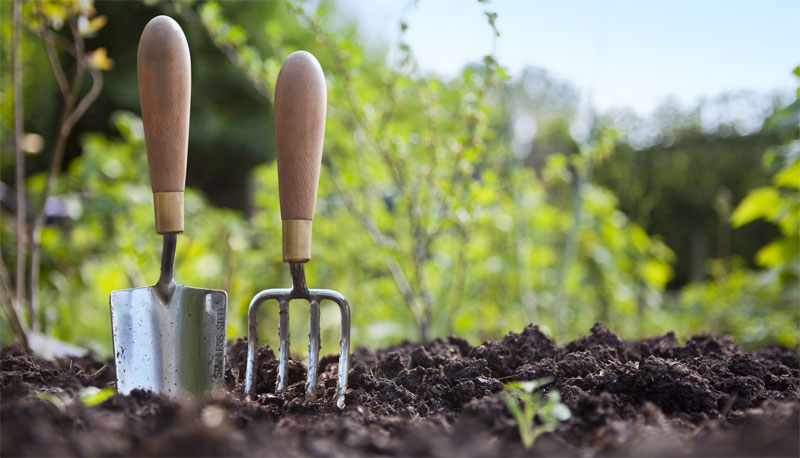
A few years ago I had the madcap idea of planting an organic garden in my backyard. I’m not sure what possessed me, because the closest thing to real farming I had ever done was pulling up potatoes on a kibbutz when I was 16. I’m still trying to get some of the dirt out of my fingernails. But all those boastful “locally sourced!” signs in the supermarket were getting to me, and after pulling up some troublesome rosemary that attracted bees, we had a skinny, empty patch of dirt on the side of the house. You can’t get more locally sourced than your own backyard. I thought, what did I have to lose?

You can’t get more locally sourced than your own backyard. I thought, what did I have to lose? The answer: about 500 bucks.

The answer: About 500 bucks. If I thought buying organic produce was expensive, it was chump change compared with hiring a professional to plant organics for you. This was no DIY job, certainly not for me. Seeds were cheap, but new soil, mulch, fencing, labor, and a drip irrigation system add up fast.  

I had never been an organic purist. After all, if pesticides were so bad, why were we living so much longer? However, when I began cooking organic for a friend undergoing cancer treatment, I found that things really tasted better. And my friend — also benefitting from traditional medical treatment — was improving. 

When Max the organic gardener came for weekly maintenance, I stood by wearing a pair of gardening gloves so that I could look like I mattered for something other than writing checks. It was exciting to read the little tags jutting out from the fresh soil, identifying the future home of snap beans, zucchini, lettuces, tomatoes and peppers. So far it was mostly a spectator sport for me, but I tried to channel my Jewish ancestors. In the desert we weren’t all accountants, dentists, and marriage and family therapists. We were an agricultural people! We knew how to deal with sheep! We could grow things that we could eat, without pesticides! We could find our way around the desert without Waze!

I waited for the magic to happen. Unfortunately, an organic garden creates an all-you-can-eat buffet for insects, which are maddeningly industrious and ravenous. It became a small miracle to grow an entire strawberry, cucumber, or head of lettuce that hadn’t been aggressively sampled.  

For every promising new shoot, I also saw mold assaulting my zucchini plant and bugs nipping at my neo-natal peppers. I played Bruce Hornsby jazz to coax the defiant snap beans to grow, but perhaps fearing being eaten alive by insects, they yielded a miserly 16 beans. 

Max explained that yields were always unpredictable. “What did you expect in such a tiny space?” he asked. I watched my garden with concern and anticipation, bent low to the ground to pull weeds, and prayed. Five weeks later, I had bright, fresh red leaf and butter lettuces, but in our drought-riven state, the amount of water I needed to thoroughly wash my organic produce was scandalous. As I washed and rinsed the leaves, I thought, I like pesticides.  

I felt triumphant snipping healthy, intact kale with a sharp gardening tool and twisting off scrumptious orange and red grape tomatoes from the vines. One night, we had as many as three grape tomatoes each. Each tomato probably cost 18 bucks. 

Then, seemingly overnight, the entire garden was taken over by a weed called Chinese garlic. I couldn’t pull it out fast enough and despaired. Why was it that even our weeds were made in China? I gifted my few lovely lettuces to friends and neighbors, but I threw in the trowel. Life’s too short to fight an invasion by Chinese garlic and worry about the ideal nitrogen levels required for soil to yield broccoli (a lot) versus blueberries (a little). 

After this failed experiment, buying organic produce feels almost like a bargain. More importantly, though, I have a newfound appreciation for how much work, attention to detail, patience, and blessings are required to grow food, even with pesticides! Now when I make the blessing thanking God for bringing forth food that comes from the ground, I mean it like never before.


Judy Gruen is the author of “Bylines and Blessings,” “The Skeptic and the Rabbi,” and several other books. She is also a book editor and writing coach.  

I Tried to Grow My Own Vegetables but Threw in the Trowel Read More »

Switch Up Your Stuffing for Thanksgiving

Everyone has their go-to recipes, whether it is a special side dish, starch or dessert. One way to introduce new flavors to your holiday meal is to try a new stuffing recipe.

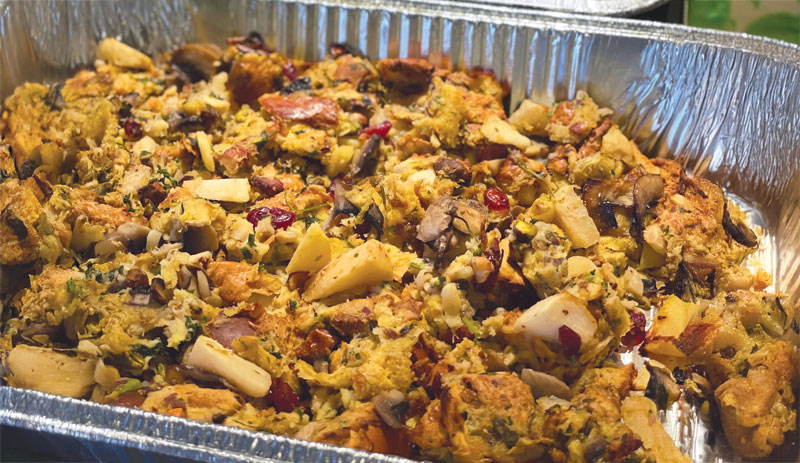
A family favorite, Bonnie Taub-Dix’s Thanksgiving challah-day stuffing is a delicious alternative. “I’ve been making Thanksgiving dinner for my friends and family for over 25 years and I’ve tried lots of different stuffing recipes,” Taub-Dix, RDN, host of the “Media Savvy” podcast, creator of BetterThanDieting.com and author of “Read It Before You Eat It,” told The Journal. “I love the sweet, rich taste and texture of the challah used in this recipe along with the medley of sweet and savory flavors provided by the dried fruit, nuts and veggies nestled within.“ 

Taub-Dix said to be creative: Add your favorite chopped dried fruit and nuts. “And if fresh herbs are not available you can use a few sprinkles of dried seasonings instead,” she said.

Thanksgiving “Challah Day” Stuffing 

25-30 servings (1/2 cup each)
2 challah breads, torn apart into small pieces
3 Tbsp olive oil
5 cloves of garlic, minced
1 medium sweet onion, chopped
2 quarts mushrooms, sliced
4 apples, cored, peeled and coarsely chopped
3/4 cup chestnuts, roasted and chopped
1/2 cup dried cranberries
1/2 cup dried apricots, chopped
1/2 cup dried figs, chopped
1/2 cup total chopped almonds, walnuts and pecans
1/4 cup total fresh chopped parsley, thyme and rosemary
4 eggs
16 oz. container of egg substitute
3 cups low sodium chicken broth
Salt and pepper to taste
Cooking spray

Heat oven to 350°F.

Tear challahs into small pieces and put in a very large bowl. Set aside.

In a large skillet, sauté onion in olive oil until transparent, add garlic and cook for 5 minutes more.

Add mushrooms and continue to cook together until mushrooms are tender.

Add chopped apples, chestnuts, dried fruit, nuts, herbs, salt and pepper and continue to cook together for about 10 minutes. Remove from the stove.

Add the above mixture to challah bread pieces and stir. Add egg, egg substitute, and broth. Combine together.

Spray a large roasting pan with cooking spray.

Place mixture evenly into the pan.

Bake covered with foil wrap for 20 minutes.

Remove foil and bake until the top is golden brown (around 30-45 minutes.)


Chef Olivia Ostrow said her chestnut and truffle stuffing is the smell of heaven in Paris.

“Growing up in the City of Lights, during the holiday season, there was a tradition to go see the incredible window decorations of famous stores around Paris, like Gallery Lafayette,” Ostrow, founder of Ostrow Brasserie (Miami’s first kosher French restaurant), told The Journal. “In front of those stores, there was always an old man warming up chestnuts and selling them to the locals and tourists. It’s my childhood comfort food; plus, adding truffle gives it a uniqueness and a definite French twist!”

Chestnut and Truffle Stuffing

7 cups small pieces of baguette
3 shallots, chopped
2 stalks of celery, chopped
2 cup fresh chestnuts, peeled, chopped
2 cups of truffle peelings with oil
7 oz. beef bacon
1 cup finely chopped tarragon
3.5 Tbsp unsalted margarine
2 Tbsp chopped fresh sage
2 Tbsp chopped fresh thyme leaves
1 Tbsp chopped fresh parsley leaves
1 cup of Chanterelle mushrooms
Cut a slit on the chestnuts 

Spread chestnuts in one layer on an oven tray with parchment paper and bake at around 400° F until skins break open, usually about 10 minutes. Peel and smash the chestnuts.

In a baking pan, arrange the baguette pieces in one layer, spread the truffle peeling on it with its oil. Bake in the oven for 10 minutes, then transfer to a large bowl and set aside.

In a large pan, sauté the beef bacon until crispy; remove from pan, chop and set aside.

Melt butter in the pan. Caramelize the shallots, celery, sage, thyme, tarragon and chanterelle over moderately low heat, stirring, until the onions are lightly brown. 

Combine all the ingredients in the pan with a drop of truffle oil. Mix. 

Pour onto bread and serve!


Pistachio Rice Stuffing
Photo courtesy Debbie Kornberg

Debbie Kornberg calls her pistachio rice stuffing deliciously aromatic.

“It is a rice-based dish with just enough bread to give that ‘stuffing-like’ feeling without all the heavy carbs,” Kornberg, founder of SPICE + LEAF, told The Journal 

Thanksgiving Pistachio Rice Stuffing with Mushrooms Cranberries and Fresh Dill

Serves 4 – 6

1 cup uncooked basmati rice (this will yield two cups cooked) or use “old rice,” which can be found at international markets

2 cups water in pot  (or 1  1/2 cup water in rice maker)

1 tsp. SPICE + LEAF Premium Vegan Broth Base

4 Tbsp. olive oil (recommends SPICE + LEAF Galili Olive Oil)

1 onion, finely diced

8-oz. package of sliced mushrooms, diced

2 celery stalks, diced

1/4 cup slivered almonds, toasted

1/4 cup pistachios, toasted

1 Tbsp sesame seeds, toasted

1 – 2 Tbsp fresh dill

1/4 cup dried cranberries

Kosher salt, to taste

1 cup of French bread, cut into cubes (omit bread to make dish gluten-free)


Rinse rice in a bowl at least 4 times. This will help remove the starch from the rice and give you nice clean grains once it has been cooked. Cook rice either in a pot or in a rice maker. 

For Rice in a pot: Place 2 cups of water in a pot and bring to a boil. Add rice and 1 tsp. Vegan Broth Base. Mix well. Cover with lid and cook on simmer for about 18 minutes or until water is fully absorbed into rice. 

For Rice in a Rice Maker: Add 1.5 cups of water, 1 cup of rice and 1 tsp. Vegan Broth Base to rice maker. Mix everything well and set to cook white rice.)

In a dry (no oil) sauté pan toast almonds on a medium high heat. About 2-4 minutes, until nice and toasty brown.

Heat the sauté pan with 2 tablespoons. olive oil. Add onions, mushrooms, and celery and sauté on medium low heat until onions turn a golden brown in color. Set aside. 

Once rice is cooked, place in a large bowl and combine with onions, mushrooms, celery, toasted almonds, and remaining ingredients. Combine everything together well. Add the remaining 2 tablespoons. of olive oil. Add salt to taste. 

Place cubed bread into a sauté pan and cook on medium low heat until bread becomes toasty brown. Add 3 tablespoons water to soften the bread; mix into rice to give a more stuffing-like texture.

Switch Up Your Stuffing for Thanksgiving Read More »

A Very Full Life

This old man said to his wife, “I just saw myself naked in the mirror, and I look horrible. Tell me something good about myself to lift my spirits.” The wife says, “Well, at least you still have good eyes.”

All three of my boys have a few grey hairs. Realizing that I have children with any grey hair stopped me in my tracks. How is this possible? My wife reminds me that her family turned grey in their 20s. That’s true, but having kids with grey hair makes me ponder my age. 

At seventy-two, a bit more than periodically, I calculate how much time I still have left up top. If I genuinely contemplate, that number hits me like a Bavarian Cream pie smack in the puss. Just a blink back in time, I told my boys to hold my hand when we crossed the street and stop their scooters at the alley. I’m grateful for having had that time. The good news is that I am reliving it with my grandchildren in many ways. 

I have reached an age where almost all my friends are entirely grey (myself not included), and some are full-blown whiteheads. Most of my friends (myself included) have at least some aches and pains and have had or are having major or minor surgeries. And sorry to say, some of our loved ones are sometimes quickly and sometimes slowly being towed away. Some because they refuse to read the writing on the wall. So many of us believe we still have time to get to it. Good luck with that dead-end thinking. And I mean Dead End. The time is now. And some do everything right, and for them, it’s just because….

Recently, I went to a 98th birthday party for my dear friend George Stanley. George was 98 on April 14th, 2024.  His wife Sandra is a mere 86. At least a half dozen other 90-year-olds or close to it were at the party. When George gave his birthday speech, he said, “Turning 98 is great, but it’s the only thing I can still turn. As a soldier in WWII, I used to jump out of airplanes. Now, at 98, I can’t even jump to conclusions.” George loves to laugh and make others laugh. He’s good at it. 

Going to a party for a 98-year-old was not depressing but incredibly uplifting. Sure, there were lots of diapers and Ensure jokes. Sure, many had eyeglasses as thick as coke bottles and crumbling bodies. You know what, though? They still showed up. They were still participating in life. They have not given up. They still celebrated a friend. This group rang every ounce of life out of whatever time they had left.

Here are a few of George’s rules for a long life:

1. Most importantly, don’t die. Dying throws a clinker into this whole thing.

2. Stay socially engaged to maintain mental and emotional well-being; isolation can lead to depression and cognitive decline. George talks to dozens of people a week on the phone. And if he hasn’t heard from you, he will call. 

3. If your faculties are impaired, avoid activities that could result in falls or injuries, such as climbing ladders or driving and riding unicycles while texting. If you think you’re still 20, watch people in their twenties playing tennis.  

4. If possible, have someone like Sandra (his wife) in your life. Sandra is why he is still here and a big part of why he wants to wake up daily. If your spouse is gone, a close friend can also do it.

5. And, of course, Rule 62: don’t take yourself too seriously. You must know when to be serious and when to have fun.

6. Never get wonder-full but remain full of wonder.

George is a living example of how to be grateful for today’s gift. He’s taught me yesterday is gone and tomorrow may never come. Today I have work to do. Today, I have friends to call. Today, I must do God’s work. 

George is a living example of how to be grateful for today’s gift. He’s taught me yesterday is gone and tomorrow may never come. Today I have work to do. Today, I have friends to call. Today, I must do God’s work. Today, I must be of service. Not only does George have an entire life, but he also helps fill my life and dozens of others’ lives.


Mark Schiff is a comedian, actor and writer, and hosts, along with Danny Lobell, the “We Think It’s Funny” podcast. His new book is “Why Not? Lessons on Comedy, Courage and Chutzpah.”

A Very Full Life Read More »