fbpx

May 8, 2024

Talmudic Grappling is Alive and Well at Milken Conference

There are two opposite vibes at the annual, three-day Milken Conference, which took place this week at The Beverly Hilton. One vibe is in the lobby and hallways, where high-achieving attendees mingle and schmooze like business butterflies. This vibe is in the spirit of social media—quick hits, short conversations, lots of buzz, eager networking, and so on.

The other vibe is more like Talmudic grappling. Here, everything slows down. You experience this vibe in conference rooms and presentation halls where hundreds of experts grapple in deliberate fashion with some of the world’s toughest problems.

No one expects these problems to be solved in one panel or conference. The grappling itself is the idea. The best solutions, after all, often arise from rigorous grappling– correct framing of problems; push and pull of different approaches; connection between different disciplines; balance between innovation and human values; exposure to new ideas, specialized knowledge and different cultures, and so on.

Any lover of Talmud would feel at home with this slower vibe. The Talmud itself represents centuries of painstaking grappling with difficult issues. Beginning more than 2,000 years ago, it was a way for the Sages of the day to weigh in on the countless intricate challenges of everyday life.

The Milken Institute’s 2024 Global Conference, which this year attracted 4,000 attendees, including over 1,000 speakers and industry leaders from around the world, continues that Talmudic tradition.

Just as the ancient Sages tackled the people’s problems, the conference tackles everything it deems vital, from health, finance and technology to philanthropy, sports, and media. The conference, as it says on its website, “grapples with critical issues, from geopolitical hotspots and the ongoing climate crisis to the complexities of artificial intelligence, examining both its potential and impact on global workers, firms, and markets.”

As one can see on the conference website, where the wide breadth of the panels can be viewed, there are few stones that are left unturned.

I had a special interest in a panel titled, “Beyond the Headlines: Addressing Antisemitism and Religious Bias Based on Facts,” moderated by Richard Sandler.

This topic has taken on added urgency with anti-Israel sentiment spreading on college campuses in the wake of the Gaza War, and many Jewish students feeling under siege. Given the long history of antisemitism, urgency comes naturally to the Jewish community, which is more than understandable.

The value of the Milken panel is how it balanced the short-term urgency with the long game. Indeed Jewish resilience has always been rooted in the long game; in an appreciation that faith, courage and wisdom help us prevail in the end. The main thing I took away from the panel is that as we fight and understand and teach and expose and analyze the problem of antisemitism, combatting that problem will always be a marathon, not a 100-yard dash. The long game nurtures deeper strategies. It makes us stronger, wiser.

I felt that long game as well on a panel on Israeli innovation. Jonathan Medved, who runs the Israel innovation fund OurCrowd, spoke about the remarkable resilience of the Israeli high-tech sector after the October 7 massacre. He didn’t underplay the dangers of the moment, but he reminded us that the “Start Up Nation” drive to come up with innovative solutions for the planet is as alive as ever.

This kind of long game rarely makes the 24-hour news cycle, which is consumed with the crisis du jour. Combined with the instant dynamic of X and Instagram, our modern news culture is the very antidote of the long game. If you’ll indulge a food analogy, most people today gorge on news snacks while the real action happens with long, slow meals.

That long, slow meal is the secret sauce of the Milken conference. Yes, there were plenty of flashy attendees like Bill Clinton, Elon Musk, David Beckham and our own mayor Karen Bass, among many others, and the connections people make at the conference are invaluable. But for me, the key contribution of the conference is the very elevation of deep grappling that aims for deep solutions.

While an impatient and polarized world craves instant solutions and vote-hungry politicians are only too pleased to deliver them, the conference reminds us that if we really want to fix the world’s problems, it is the long, non-partisan game that truly counts.

At one of the final panels on Wednesday, titled “The Free Enterprise System and Closing the Wealth Gap,” you could see that grappling in action. Why? Because it’s complicated. Free enterprise and closing the wealth gap are rarely spoken in the same breath. The panelists brought in charts, graphs, data and insights to show that aiming for both doesn’t have to be a pipe dream.

The moderator of that panel was Michael Milken himself, founder of the Institute. It struck me as I heard him engage with the panelists that a whole other vibe permeated the conference. That vibe is the revival of the American Dream, a project close to Milken’s heart, and mine as well.

I’m guessing the conference was full of dreamers. You could sense that gene to dream in the excited schmoozing and networking in the hallways. Each of the 4,000 attendees likely harbored their own dreams.

Those dreamers, however, know that dreams, both individual and global, come to life only when dreamers slow down, roll up their sleeves and grapple patiently and fearlessly with the complex problems in front of them.

That idea hasn’t changed in 2,000 years.

Talmudic Grappling is Alive and Well at Milken Conference Read More »
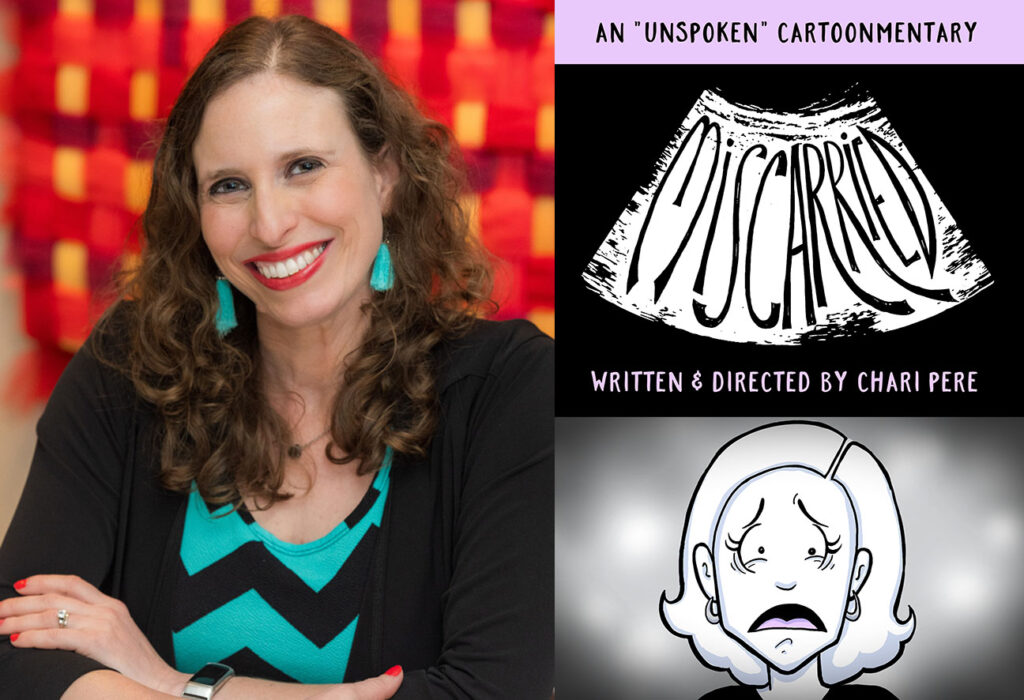
Artist Chari Pere Creates Cartoonmentary on Miscarriage

In 2014, Chari Pere received devastating news from her doctor: her pregnancy was not viable, and she was likely going to have a miscarriage. The artist, who already had a 17-month-old son with her husband Eli Schiff, spent an agonizing few days waiting for the miscarriage to happen – and when it finally did, she mourned her loss and tried to process what had happened.

Pere, an illustrator who has worked for Red Bull, Comedy Central and Disney, later took to the drawing board to create a comic about her experience, calling it “Miscarried.” When she released it, Mayim Bialik helped her promote it, and she received messages from people all over the world who resonated with her work.

Now, 10 years later, Pere, a mother of three, has transformed her comic into a short cartoonmentary, a five-minute video called “Miscarried,” which tells her story. It’s the first in an animated series of “Unspoken” cartoonmentaries, which are animated shorts featuring real stories about fertility, pregnancy and raising children.

“When I suffered my miscarriage, I was most frustrated to find out how common it was and how many of my friends had suffered from a wide range of issues, and how few spoke about it,” said Pere, a former Los Angeles resident who now lives in New Jersey. “I was so thankful to reach out to the couple of friends who were open about their miscarriages well before I had mine, and they were instrumental in helping me get through without completely falling apart. I hope that my cartoons can help people who are in positions where they are deeply in pain, feeling lost or that their pregnancy trauma is their fault, and need a friend to tell them that they are not alone.”

What makes Pere’s story different is that it includes her husband’s perspective as well. In “Miscarried” the comic and cartoonmentary, Schiff cries while embracing his wife. When Pere had her miscarriage, he was on a work trip, and when he came home, the fetus was already gone.

“He had his own emotions and experiences that he had to put aside to make sure I was strong thousands of miles away from him,” she said. “He didn’t have anyone to talk to. It was important for me to depict that Eli had his own emotions and had kept them in check until the first opportunity he actually had to release them. While he may not have been carrying the baby himself, this was his future child that was now suddenly gone too.”

As little as women talk about miscarriages, Pere found that men don’t discuss them at all. After putting out her comic, she received an email from a fan, who told her she should consider telling a story from a man’s perspective.

“That fan’s story became the second comic in my series, ‘Michael’s Miscarriage,’” Pere said. “The animated short version of that story is underway, and I’m hoping to have that premiering around Father’s Day.”

Following the release of “Miscarried” and “Michael’s Miscarriage,” the artist – who collaborated with the Jewish Writers’ Initiative Digital Storytellers Lab to make the series – wants to tackle more topics like stillbirth, postpartum depression and adoption, along with other challenges and genetic disorders that parents and children have to deal with, such as diabetes, autism and ADHD.

“It’s my dream to have more individuals sharing their true stories to help others feel seen and supported,” she said. “The main goal would be to make all the ‘unspoken’ stories become more ‘spoken.’”

She continued, “I hope that my work can really make a difference in the world. I may not be a doctor, or a firefighter, but I hope that my work can help people in ways that matter.”

You can find “Miscarried” on YouTube or visit ChariPere.com.

Artist Chari Pere Creates Cartoonmentary on Miscarriage Read More »

100th Anniversary: The U.S. Immigration Law That Doomed Europe’s Jews

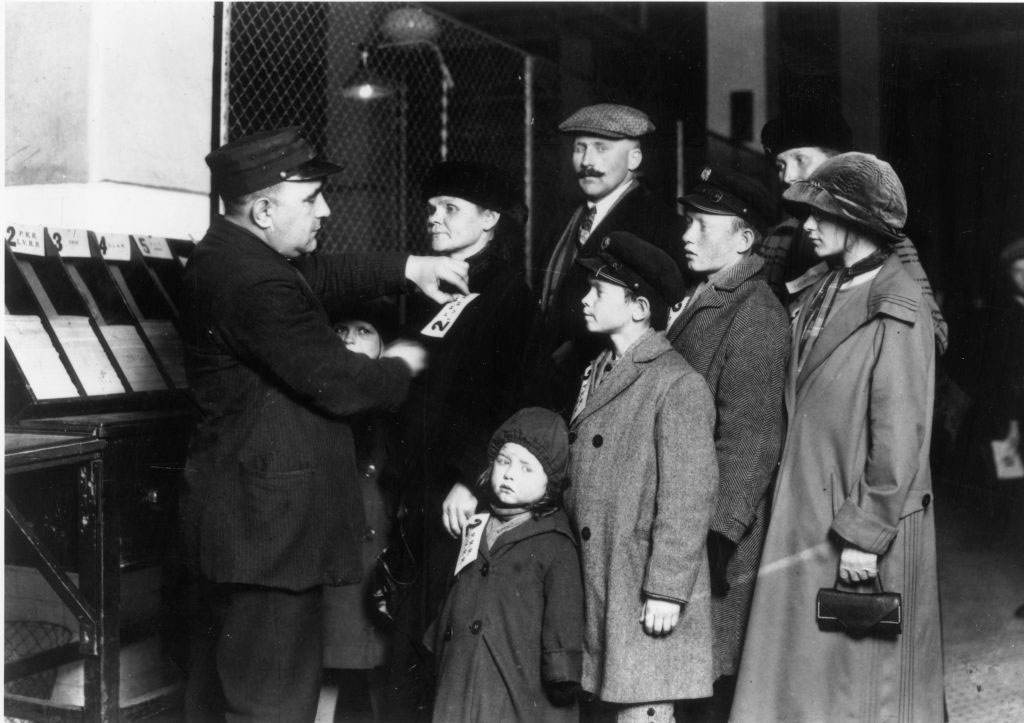
This week marks the 100th anniversary of the infamous U.S. immigration law that ultimately made it extremely difficult for Jewish refugees to find haven in America. The way that President Franklin D. Roosevelt’s administration implemented that law helped ensure the abandonment of millions of Jews seeking to flee Nazi Europe.

This troubling chapter in America’s history began in the late 1800s, when the public began turning sharply against immigration. Fear of radical ideologies, concern about competition for jobs, and a growing belief that Anglo-Saxons were racially superior all fueled resentment of foreigners. Congress responded by repeatedly passing immigration restrictions, but most of those bills were vetoed by several presidents.

The Communist takeover of Russia in 1917 intensified anti-immigration sentiment in the United States and spurred the introduction in Congress of the Emergency Quota Act. It stipulated that the annual number of immigrants admitted from any country could not exceed 3% of the number of immigrants from that country who had been living in the U.S. at the time of the 1910 national census.

The bill was presented to Congress with a report by the chief of the U.S. Consular Service, Wilbur Carr, characterizing would-be Jewish immigrants from Poland as “filthy, un-American, and often dangerous in their habits…lacking any conception of patriotism or national spirit.” President Warren Harding signed the bill into law in 1921.

But that law was only a temporary measure. So in May 1924—100 years ago this week—Congress adopted, and President Harding signed, a permanent and more restrictive measure, known as the Johnson-Reed Act. The specified percentage was reduced from 3% to 2%; and instead of the 1910 census, the quota numbers would be based on an earlier census, the one taken in 1890—a move intended to reduce the admission of European Jews and Italians, since most of them had not arrived in the U.S. until after 1890.

In response to the onset of the Great Depression, President Herbert Hoover reduced immigration further, with a 1930 executive order barring the admission of anyone “likely to become a public charge” (dependent on government aid).

The annual quota for Germany was 25,957, but that limit was almost never reached, thanks to extra requirements and regulations that the Roosevelt administration piled on. Barely five percent of the German quota was filled in 1933, Hitlers first year in power. In fact, it was filled in only one year out of Roosevelts twelve years in office, and in most of those years, it was less than 25 percent filled.

Wilbur Carr, who authored that antisemitic report in 1921, was kept on by Roosevelt as assistant secretary of state. He played an important role in implementing the president’s harsh immigration policies. So did George Messersmith, a senior US diplomat in Germany and Austria whom Roosevelt made assistant secretary of state in 1937.

The best known of these State Department officials was Breckinridge Long, a major donor to FDR’s presidential campaign who was rewarded by being named U.S. ambassador to Italy. But Long’s praise for Mussolini’spunctual trains” proved embarrassing to the administration, eventually leading to his resignation. Roosevelt then rewarded Long by promoting him to assistant secretary of state, putting him in charge of 23 of the State Department’s 42 divisions, including the visa section.

In one infamous memo to his colleagues in 1940, Long wrote of the needto put every obstacle in the way [of refugees seeking to enter the U.S.] and to require additional evidence and to resort to various administrative devices which would postpone and postpone and postpone the granting of the visas.”

Long regularly briefed President Roosevelt on his efforts to suppress immigration below the level allowed by existing law. In a diary entry in October 1940, Long described his meeting with FDR to discuss “the whole subject of immigration, visas, safety of the United States, procedures to be followed.” He found that the president “was 100% in accord with my ideas.”

One of those ideas was a June 1941 regulation—personally approved by FDR—that rejected all visa applicants who had “close relatives” in German-occupied territory. The new edict affected significant numbers of European Jews. During the period of the Nazi genocide, from 1941 to 1945, only 10% of the quotas from Germany and Axis-controlled European countries were actually utilized. Almost 190,000 quota places were left unused.

Thus the Johnson-Reed Act, signed into law a century ago this week, established the framework that would help doom many of Europe’s Jews. But it was the Roosevelt administration’s harsh implementation process that actually shut America’s doors in the face of those who most desperately needed a haven.


Dr. Medoff is founding director of The David S. Wyman Institute for Holocaust Studies and author of more than 20 books about Jewish history and the Holocaust. His latest is Whistleblowers: Four Who Fought to Expose the Holocaust to America, a nonfiction graphic novel with artist Dean Motter, published by Dark Horse / Yoe Books.

100th Anniversary: The U.S. Immigration Law That Doomed Europe’s Jews Read More »

Chef Katie Chin: Heritage, Chinese Cooking and Chocolate-Raspberry Wontons

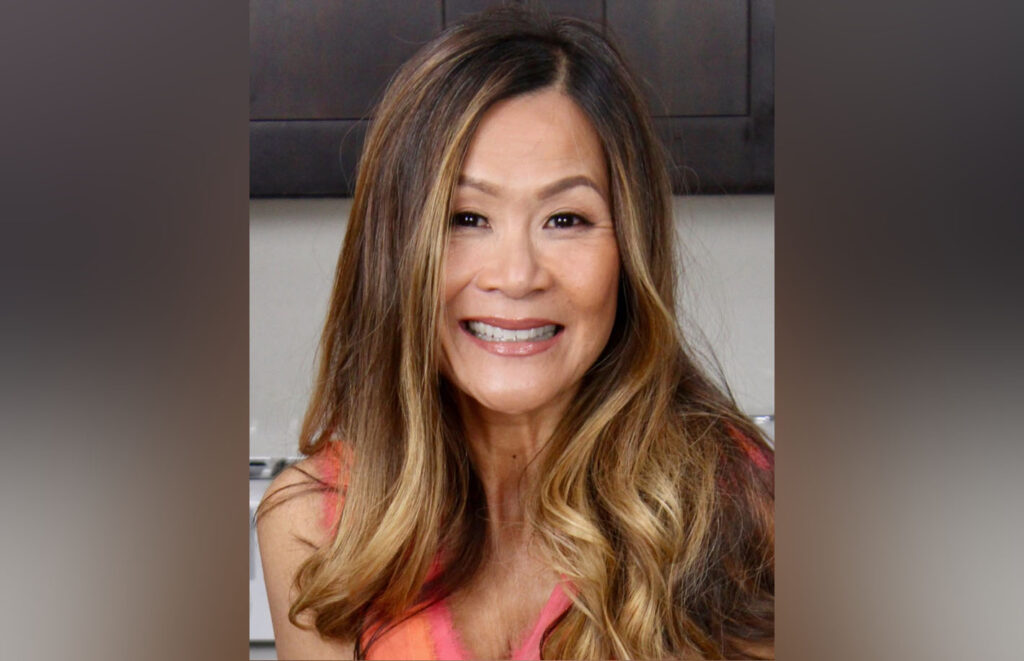
“There’s incredible symbolism in Asian cuisine, but there’s also incredible symbolism in Jewish cuisine,” Celebrity chef Katie Chin, an award-winning cookbook author, caterer and playwright, told the Journal. “I love to marry the two.”

Chen’s husband is Jewish and they are raising their children – 15-year-old twins – Jewish.

“[My] twins had a B’nai Mitzvah, we belong to a temple, we observe the high holidays; I think it’s a beautiful religion,” Chin said. “We teach our kids to be super proud of being Jewish and also super proud of being Chinese.”

“Katie Chin’s Global Family Cookbook” features four cultural celebrations, including Hanukkah.

“I was really excited because my kids were in on the action; they helped to make the sufganiyot,” she said. “The recipes actually were contributed by my dear friend Faye Levy,

renowned Jewish food writer.”

Chin’s other cookbooks include “300 Best Rice Cooker Recipes” and “Everyday Thai Cooking,” as well as “Everyday Chinese Cooking,” which she wrote with her mother, restaurateur Leann Chin. The duo also co-hosted the national PBS cooking series, “Double Happiness.”

“[Food] is an expression of love, but it’s also storytelling and legacy, especially in my case, because my mother passed away when my twins were two,” she said. “I feel like every time I make one of her dishes, she lives on in them, through her memory and also in teaching my kids how to cook.”

After growing up working in the kitchens of her late mother’s award-winning Minneapolis-area restaurants, Chin moved to LA after college to pursue a career in film and television marketing. However, she eventually found her way back to her culinary roots.

“One day, I decided to throw a dinner party, but I had completely forgotten how to cook,” Chin said. “I kept calling my mom and asking her questions, and she was like, ‘This is ridiculous,” so she got on a plane with frozen lemon chicken [and] showed up on my doorstep.

“She cooked the entire thing, but let everyone think that I had cooked it, and then my friends were like, ‘Oh my gosh, you make this look so easy.’”

Shortly thereafter, the mother-daughter team started working together. Chin quit her job as a senior VP at Fox, left her then husband and completely changed her life.

“The biggest gift was through those quiet moments cooking, [my mom] opened up about her life in China and all the hardships that she endured being in an arranged marriage, being a marginalized business woman,” Chin said. “Through these stories, I really learned to appreciate all of her sacrifice and that all of those hardships she was able to heal through the act of cooking and … I felt like it was my responsibility to share and honor her culinary legacy.”

When it comes to cooking, Chin likes to put modern spins on her cuisine.

One delicious dessert is raspberry Nutella wontons. When Chin and her daughter, Becca, had a cooking series during the pandemic, they came up with this recipe, which is below.

“You can really put anything in a dumpling wrapper,” Chin said. “You can be as creative as possible.”

When asked the proper way to fold dumplings and wontons, Chin said you can always look on YouTube. Still, she offered some of her own tips.

“If you’re making a classic potsticker, make [it] like a loose taco, but don’t seal it,” she said. “The back half of the dumpling wrapper should stay flat and the front you make almost like an empanada; make little pleats and press the front against the back.

She added, “If you’re afraid to do it, just make a half moon shape. Nobody cares. It’s still going to taste delicious.”

Shumai, which is an open-faced steamed dumpling, takes a little more skill, but in time, if you keep practicing, muscle memory will kick in.

“That’s basically taking the round wrapper, spreading the filling  in a thin layer and then just gathering, almost like a pottery wheel going around and around,” she said. “Then naturally the pleats start to form on their own; it almost looks like a flower.

“It might not be that pretty the first time you do it, but you might surprise yourself.”

To learn more about Katie Chin, go to ChefKatieChin.com and follow @ChefKatieChin on Instagram.  You can also learn more about her award-winning one woman show “Holy Shitake!  A Wok Star is Born,” which is playing throughout the month of May 2024 at Whitefire Theatre in Sherman Oaks.

For the full conversation, listen to the podcast:

Watch the interview:

Chocolate-Raspberry Wontons

Serves 8

Preparation time: 25 minutes

Cooking time: 8 to 10 minutes

Raspberry Sauce

4 cups (500 g) fresh raspberries

½ cup (125 ml) water

¾ cup (185 ml) sugar

2 tablespoons all-purpose cornstarch

1⁄3 cup (40 g) chopped fresh raspberries

2⁄3 cup (200 g) chocolate-hazelnut spread such as Nutella

16 round dumpling wrappers

1 egg, lightly beaten

Oil for frying

Confectioner’s sugar for garnish

Mint leaves for garnish

Make the sauce: Place the 4 cups (500 g) raspberries in a small saucepan. Crush the berries and add the water. Stir in the sugar and cornstarch and bring to a boil over medium heat, stirring constantly. Remove from heat and press through a strainer. Set the sauce aside.

Fold the 1⁄3 cup chopped raspberries into the chocolate-hazelnut spread until combined. Lay a dumpling wrapper on a clean work surface and brush the edges with egg. Place 1 scant tablespoon of chocolate-hazelnut raspberry mixture in the center, then fold the wrapper in half over and the filling, pressing the edges firmly to seal. Repeat with remaining wrappers and filling.

In a wok or deep skillet, heat 2 to 3 inches (5 to 7.5 cm) of the oil to 350°F (175°C). Deep-fry the wontons until golden brown, 1 to 2 minutes, turning occasionally. Place on a paper-towel-lined sheet pan to drain. Transfer to a platter and dust with confectioner’s sugar, then drizzle with raspberry sauce. Garnish with mint leaves and serve immediately.

Cook’s Note: If you only can find square wonton wrappers, use a cookie cutter to cut them into rounds.


Debra Eckerling is a writer for the Jewish Journal and the host of “Taste Buds with Deb.Subscribe on YouTube or your favorite podcast platform. Email Debra: tastebuds@jewishjournal.com.

Chef Katie Chin: Heritage, Chinese Cooking and Chocolate-Raspberry Wontons Read More »

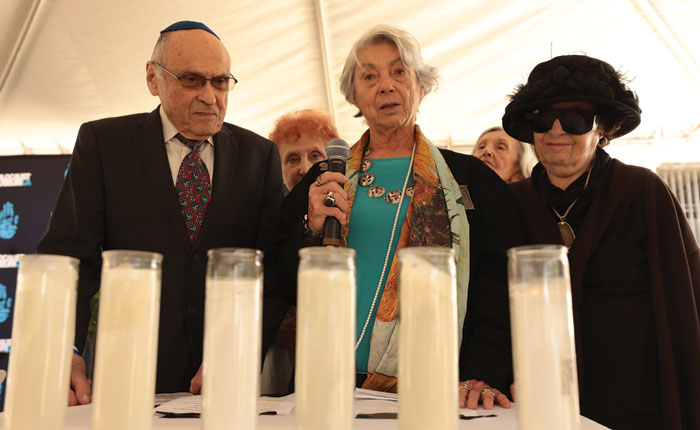
From left: Hungarian Holocaust survivors Steve Kovary, Eva Nathanson and Eva Brettler light memorial candles at this year’s community Yom HaShoah ceremony. This year marked the 80th anniversary of the deportation of Hungarian Jews to Auschwitz. Photo by Al Seib, Holocaust Museum LA

Yom HaShoah Ceremony Draws 600 Attendees to Pan Pacific Park

Holocaust Museum LA held its 32nd annual Yom HaShoah Day commemoration ceremony at Pan Pacific Park, drawing an estimated 600 community members to an afternoon dedicated to Holocaust remembrance. 

“Today we gather not only to mourn the six million Jewish souls who perished in the Holocaust, but also to reaffirm our commitment to ensuring such atrocities never, ever happen again,” Los Angeles Mayor Karen Bass said during the May 5 event. “As your mayor, I stand firmly against antisemitism and any form of hatred or discrimination.”

From left: Los Angeles Mayor Karen Bass, Holocaust Museum LA CEO Beth Kean, L.A. City Councilwoman Katy Yaroslavsky; and Holocaust Museum LA Board Chair Guy Lipa. Photo by Al Seib, Holocaust Museum LA

From 11 a.m. to 1 p.m., an array of community leaders — including Holocaust Museum LA Board Chair Guy Lipa and CEO Beth Kean, City Councilmember Katy Yaroslavsky, Wilshire Boulevard Temple Senior Rabbi Steve Leder and Consul General of Israel in Los Angeles Israel Bachar — addressed the crowd on the importance of commemorating the Shoah while also combating antisemitism post-Oct. 7.

“So much has happened in the year since we last gathered to mark this day,” Yaroslavsky, whose district includes a large Jewish population, said.  “And in so many ways the world feels entirely different in one short year. Our collective pain over the horrors from Oct. 7 has only grown in the seven months since.”


From left: Holocaust Museum LA CEO Beth Kean, Consul General of Israel in Los Angeles Israel Bachar and Wilshire Boulevard Temple Senior Rabbi Steve Leder at Holocaust Museum LA’s Yom HaShoah commemoration. Photo by Al Seib, Holocaust Museum LA

The Oct. 7 attack and the subsequent sharp rise in antisemitism nationwide hung like a shadow over an already-somber event. At the park, which is adjacent to the museum, there was a strong security presence. Seated under the large canopy where the gathering was held, several attendees wore clothing with messages calling for the release of the hostages from Gaza. According to Leder, one of the program’s speakers, Hamas’ attack impacted approximately 2,500 Holocaust survivors, including nearly 1,900 who were evacuated from their homes in Israel after Oct. 7.

Israeli American actor Mike Burstyn emceed the gathering, which included live music performed by L.A. Opera Maestro James Conlon, accompanied by several violinists and cellists from the Colburn School.

Though the population of Shoah survivors is rapidly dwindling with the passage of time, several of them were in attendance and participated in lighting memorial candles for the approximately six million Jews murdered during the Holocaust. 

Among the survivors were Dr. George Berci, a 103-year-old Hungarian-born survivor who currently serves as a professor emeritus at Cedars-Sinai Medical Center and pioneered a minimally invasive form of surgery; 96-year-old Mary Bauer, who survived the Auschwitz-Birkenau and Ravensbrück concentration camps; and Eva Nathanson, who was born in Budapest in 1941 and settled here after the war. 

A theme of the event was the relationship between generations, as former city controller Ron Galperin, the child of a survivor, led the crowd in the recitation of the Mourner’s Kaddish, and as Amy Conroy, the grandchild of a Holocaust survivor, spoke about her experiences growing up in a family of survivors.

Additional community leaders who turned out included L.A. County Supervisor Lindsey Horvath and State Assemblymember Rick Chavez Zbur. Neither is Jewish, but the two have been outspoken supporters of the Jewish community in the aftermath of Oct. 7. Former L.A. County Supervisor Zev Yaroslavsky, L.A. City Attorney Hydee Feldstein Soto and Wilshire Boulevard Temple Rabbi Susan Nanus also attended. 

The event marked the 80th anniversary of the deportation of Hungarian Jews to Auschwitz-Birkenau. From May 15 to July 9, 1944, Hungary’s police force, under the guidance of the Nazis, facilitated the systematic deportation of approximately 400,000 Jews. Most were sent to Auschwitz. 

Yom HaShoah began the evening of May 5.

Yom HaShoah Ceremony Draws 600 Attendees to Pan Pacific Park Read More »

Jews Are Becoming More, Not Less, Zionist

Last week, at a Passover seder doubling as an anti-Israel protest, Naomi Klein called for an “exodus from Zionism.” The delight many take in passing around this Jew’s denunciation of Zionism reflects our topsy-turvy universe. A few, marginalized, anti-Zionist Jews snare massive headlines, as the overwhelming majority of pro-Israel Jews feel marginalized. Klein is wrong. On Oct. 7, many Jews experienced an exodus to Zionism, not from – abandoning their delusions that Jew-hatred had ended and Hamas was pragmatic.

Trying to reject “the false idol of Zionism,” Klein demonized the Middle East’s only feminist-friendly, LGBTQ+-welcoming, democratic state as a “militaristic ethnostate.”  Profaning the holiness of the Passover seder, she proclaimed “tonight we say: It ends here.”  

What she called “Our Judaism” is “internationalist,” cannot “be protected by” Israel’s “rampaging military,” and is “not threatened by people raising their voices in solidarity with Palestine,” because “in that chorus lies both our support and our collective liberation.” 

Really?

Klein’s “Our Judaism” distorts Jewish history. Accusing Israel of “colonial land theft” negates Jews’ 3,500-year-old indigenous roots.  Charging “ethnic cleansing” overlooks the U.N.’s 1947 partition plan and every other compromise Palestinians rejected. And crying “genocide” perverts theword’s meaning – eliminating another nation: the Palestinian population quintupled since 1948, and grew by 35% since 2009, when Klein first accused Israel of “genocide.”

Some historical ignorance is understandable; her ignorance about the situation today is willful. How can she find “universalism” and “liberation” in the mass murder of Jews?  Why is she silent about today’s global hate “chorus” of antisemitic anti-Zionism?

Most Jews had a Zionist awakening Oct. 7, because they saw what victory looks like to the anti-Zionists – and what happens if we don’t protect ourselves.

Most Jews had a Zionist awakening Oct. 7, because they saw what victory looks like to the anti-Zionists – and what happens if we don’t protect ourselves. In their bones, Jews recognized the sadistic Jew-hating glee motivating the Hamas terrorists – followed by waves of Gazans –raping, kidnapping, maiming, murdering.

Without Israel’s “rampaging” army mobilizing immediately, against Hezbollah and Hamas, terrorists would have slaughtered exponentially more Jews and non-Jews. On April 13, the Iranians and their proxies launched 320 lethal reminders that thousands more would die without Israel’s ever-vigilant army – and impressive international partners.

Sickeningly, the murders on Oct. 7 triggered celebrations on many campuses and world capitals. Crying “this is what decolonization looks like,” many professors found this bloodbath “exhilarating.” Most of Klein’s feminist sisters were silent about modern history’s largest, most-self-promoted act of gendered violence. Defying their own teachings to “believe survivors” suggested that they mean “me too – unless you’re a Jew.” 

I only found one quick reference by Klein characterizing Hamas’ “attack” as “horrific.” But she used that one adjective to tee up a long denunciation of “Israel’s furious determination to exploit those crimes.” So much for sisterly solidarity. 

Most recently, with their masks on – because these cowardly careerists fear alienating future employers – too many students have taken the masks off, beating Jews, promising more Oct. 7-style slayings, yelling at “yahoodim” to “go back to Poland” and “Germany.” And they show no sympathy for their Israeli peers – like Hersh Goldberg-Polin, 23, cruelly kidnapped from a music festival. No wonder Hamas and the Iranian mullahs applaud these Jew-hating student hooligans and offer them free tuition in Iran – they all seek Jewish destruction, not “liberation.” 

All these un-Jewish, freedom-threatening, performative “Emergency Seders” and “Freedom Seders” amid pro-Hamas protests celebrated these mass murderers. It takes a particular kind of coward to scavenge through your own people’s teachings to boost the enemy.  In cheerleading for those who would have happily killed you too, you betray yourself; weaponizing Jewish rituals and values, like the Passover seder, against the Jewish people and the Jewish state betrays your people.

Three years ago, Natan Sharansky and I called these Jewish insiders “un-Jews” for trying to undo the core Jewish consensus uniting Israel, Zionism, Judaism and the Jewish people. Perhaps the Harry Potter generation would prefer to call them Peter Pettigrew Jews – evoking the traitor who serves the evil Voldemort as his groveling slave – and takes the shape of the rat.

Klein misreads Passover’s story. The Jewish people first had to mobilize in self-defense, bravely marking their doorposts so the Angel of Death would pass over them, then fleeing Pharaoh, before receiving the Ten Commandments with its lovely values. The Jewish – and Zionist – lesson is: First defend yourselves – survive! – then heal the world. 

Hillel the elder understood that too: before “if not now,” before “if I am only for myself,” he started by saying, “If I am not for myself, who will be for me?”

On Oct. 7 – and subsequently – Hamas’ evil drew a clear red line between a thuggish illiberalism and a genuine, humane, democratic-liberalism, i.e., Zionism, struggling with complexity. Anti-Zionists burn American, Canadian and Israeli flags, while targeting civilians, celebrating violence against Jews, and threatening more. Zionists wave American, Canadian and Israeli flags, while defending themselves at home and abroad, providing humanitarian aid to enemies who hate them, and regretting the excruciating dilemmas soldiers face in wars of self-defense against terrorists who hide behind their civilians.

Today’s Jewish exodus toward Zionism, however, is not just defensive, even with all the horrors unleashed. As the movement of Jewish national liberation, Zionism remains a construction project, a dream machine. Zionists understand that Jews are a people not just a religion, with millennia-old ties to one particular homeland, and the right to build a state on that homeland.  Since establishing that Jewish democratic state in 1948, Zionists defend that state when necessary, but build it, are rebuilt by it, and use their story, those values, to dream about a better tomorrow, always. 

That’s a liberal-democratic vision Canadians and democracy-lovers worldwide can embrace – while learning from Zionists to sift between your real friends – and your true, often-lethal, enemies.


Professor Gil Troy, a Distinguished Scholar in North American History at McGill University and a Senior Fellow in Zionist Thought at the JPPI, the Jewish People Policy Institute, is an American presidential historian and the editor of the new three-volume set, “Theodor Herzl: Zionist Writings,” the inaugural publication of The Library of the Jewish People (www.theljp.org). 

Jews Are Becoming More, Not Less, Zionist Read More »

Why 2024 Is Not 1968

A growing number of progressive politicians such as Sen. Bernie Sanders (I-Vt.) and Ilhan Omar (D-Minn.) have begun drawing parallels between the Vietnam War and the current conflict in Gaza. These comparisons are designed to convince Joe Biden to side with the student protesters who are causing such upheaval on American college campuses. Progressives want Biden to adopt a more aggressive strategy toward Israel and to denounce the public safety measures that many schools are taking to prevent demonstrations from disrupting commencement ceremonies, final exams and other campus activities.

This would be precisely the wrong lesson for Democrats to draw from the tumult that roiled the nation in 1968. That was the year that the Democratic convention became the scene of civic unrest in which protesters and police brawled in the streets of Chicago and the convention floor itself became the scene of some of the nastiest and most divisive political debate that this country had seen in decades. The convention attracted the most visible of a series of riots that overcame America’s cities that summer, allowing Republicans to frame a law-and-order message that reassured a nervous American electorate and elected Richard Nixon as president. With the exception of Jimmy Carter’s single post-Watergate term in office, the GOP held the White House for the next quarter of a century.

But as the Democrats prepare to return to Chicago for this summer’s convention, it will be almost impossible for many progressive activists and other opponents of the Gaza war to resist the temptation to exaggerate the similarities between two embattled presidents navigating two exceedingly volatile political landscapes. But while both crises feature a centrist president being targeted by an aggressive anti-war movement, the differences between Gaza and Vietnam are immense.

The most obvious is that American troops are not fighting in the Middle East and there is no longer compulsory military service in this country. Consequently, the number of students involved in the campus demonstrations is much smaller than in that era and public opinion polls show that while young voters are the strongest opponents to Biden’s approach to the war, the issue ranks extremely low on the list of that generation’s voting concerns.

But there is a much more important distinction between 1968 and 2024. The Vietnam protests were directed primarily against the U.S. government and military, then later against those who tried to stop the demonstrations. The anger and vitriol were directed at politicians, generals, and academic leaders. There was no effort to target the miniscule number of Americans of Southeast Asian descent or the larger community of Asian Americans who lived here at that time.

Jews in this country, who have faced skyrocketing levels of harassment, intimidation and violence in the months since Oct. 7, have not been nearly as fortunate. Long before the Hamas attacks last fall, Jewish Americans have occupied an outsized place in the national dialogue. Despite tremendous professional, academic and cultural achievements, aspects of that conversation have consistently portrayed Jews with a belligerence and animosity which erupted last year as many of the anti-war protests quickly turned antisemitic. Since then, the invective continues to worsen. Incidents of violence against Jewish students are also becoming more frequent.

The balance between safeguarding freedom of speech and protecting those who are targeted by the angriest and ugliest of that speech must therefore be viewed through a different lens that it has been in demonstrations against past U.S. military involvement in Vietnam, Iraq and elsewhere. Political leaders and university presidents are chastised because of their professions and their decisions. Jews are vilified for our very existence. Politicians and college administrators are provided with platforms from which to speak and protection to ensure their safety. With rare exceptions, Jews have neither.

Some may choose to remember the movement against the Vietnam War with pride. By contrast, none but the worst of the antisemites among us should remember the current insurrection with anything but shame.

Free speech is a critical component of our democracy, until it leads to harm against other citizens. That’s the biggest difference between protests against the two wars. Some may choose to remember the movement against the Vietnam War with pride. By contrast, none but the worst of the antisemites among us should remember the current insurrection with anything but shame.


Dan Schnur is the U.S. Politics Editor for the Jewish Journal. He teaches courses in politics, communications, and leadership at UC Berkeley, USC and Pepperdine. He hosts the monthly webinar “The Dan Schnur Political Report” for the Los Angeles World Affairs Council & Town Hall. Follow Dan’s work at www.danschnurpolitics.com.

Why 2024 Is Not 1968 Read More »

An Ode to Hillel

As a junior at UC San Diego in 2004 (Go, Tritons!), I attended a talk by Gina Waldman (born Gina Malaka Bublil), a human rights activist and co-founder of JIMENA (Jews Indigenous to the Middle East and North Africa). Waldman, who was born in Tripoli and whose family had lived in Libya for centuries, was persecuted, nearly killed and ultimately forced out of her homeland as a result of horrific pogroms against Jews during the 1967 Six-Day War. 

Waldman was the first Libyan Jew I had ever met. I will never forget her survivor’s account of almost being burned alive when she was 19 years old. Waldman and her family were riding a bus to escape Libya when the bus driver stopped in the middle of the desert and poured gasoline on the vehicle, hoping to set it on fire and murder Jews inside. 

Waldman left a deep impression on me and for the first time, I contemplated whether anyone would want to hear my own story, and whether I had anything to contribute in the realms of Jewish advocacy and activism. And as an Iranian, I was incredulous to learn that an educational advocacy organization like JIMENA existed for Jews like me. 

That critical event with Waldman was hosted by UC San Diego Hillel. 

I have a special place in my heart for Hillel, formally known as Hillel International, which celebrated its 100th birthday several weeks ago. In honor of this milestone birthday, I want to share with readers for the first time some of my most memorable Hillel experiences, and shed light on the previously-unimaginable challenges that Hillel is now facing as a result of antisemitic students on campus. 

I entered college two weeks after 9/11, beginning my freshman year at UC Davis (Go, Aggies!).

For the first two weeks on campus, I felt viscerally lost and out of place, and I realized it was because I had not met or spoken to another Jew since I had arrived. This sense of loneliness had nothing to do with being religiously observant; it derived from a deep-rooted desire to find my own people, my own kind, while still forming meaningful friendships with many non-Jewish peers. 

After two weeks of feeling wholly out of place, I finally saw a flier taped to a wall at Olson Hall promoting an AEPi event being held at the Hillel House. I wasn’t exactly a candidate for a Jewish fraternity, but I pounced on that flier because I finally realized that UC Davis had a Hillel, and an address to boot. 

The Hillel House at Davis became my home away from home, and I learned much from its patient director, Hillel Damron, a film director and novelist whose parents had survived the Holocaust. I loved that Hillel ran Hillel. Every Friday night, I could be found there for Shabbat dinner, especially because for Persian Jews, Shabbat dinners are sacrosanct. The fellow students felt like family and the food was kosher. In fact, I tasted matzo ball soup for the first time at a Hillel Shabbat dinner. I still missed my mother’s Persian Gondi meatballs, but there was something wonderful about those fluffy matzo balls.

It was at UCD Hillel where I first attended lectures by Middle East experts, including the incomparable Dr. Mitchell Bard. When Bard discussed his vital book, “Myths and Facts: A Guide to the Arab-Israeli Conflict,” I realized that in order to honor myself and my identity, I had to learn much more about the modern Middle East.

I spent two years at Davis, during the Second Intifada and the impassioned protests of the early George W. Bush years. At times when I felt the most unsafe during massive anti-Israel campus rallies, I walked quickly to that Hillel house on A Street and spent a few hours socializing and, of course, eating.  

As a junior, I transferred to UC San Diego, where, during my campus tour, I met a young Hillel program director named Keri Copans (née Savage). This time, I didn’t even have to wait two long weeks to find my home away from home. 

I immersed myself fully in UCSD Hillel and its pro-Israel student group, where I met lifelong friends. I even wrote for the Jewish student paper. Every Friday night, I was at the International Center, which Hillel used for Shabbat services and dinner (it recently secured a permanent home). At UCSD Hillel Shabbats, I heard non-Iranian tunes to Jewish prayers for the first time. It was magical.

It was also at UCSD Hillel where the remarkable Rabbi Lisa Goldstein, then the chapter’s executive director, taught this public-school Jew how to read Hebrew, and also broke down the elements of Jewish prayer in the siddur. Her brief words of inspiration each Friday night energized me for the week. 

Hillel is one of the reasons why, after graduation, I proudly served at the Consulate General of Israel in Los Angeles, co-founded 30 Years After to encourage civic action among a new generation of Iranian American Jews, and why, for half a decade, I have been a weekly columnist for The Jewish Journal. 

During graduate school at USC (Go, Trojans!), I even briefly worked at Hillel. It was then that I was first exposed to a new low in campus anti-Israel activity: Hateful students were no longer merely boycotting pro-Israel campus groups, they were going directly after Hillel. 

Beginning a few years ago, protesters began appearing outside Hillel at UC San Diego, often in response to conflicts between Hamas and Israel, such as those in May 2021. Jewish students who wanted to attend everything from a “Lunch and Learn” to a Shabbat dinner were faced with protesters. 

Is Hillel an arm of the Israeli government? No. Does it have the right to include Israel as part of its wonderful programming because the Jewish state is an important element in the identity of most American Jews? Of course.

After Oct. 7, the targeting of Hillel on campuses nationwide has been particularly unforgivable. Recently, a flier at a local university attacked Hillel by depicting a Hillel logo and fulminating: “Zionist Alert! Long Beach State University endorsed generations of Zionist bigots. Should LBSU students be taught to be hateful?” At the bottom of the flier, there was a photo of Jewish students seated at a table, drinking sodas. Oh, the pernicious activities of Hillel students. Also, I don’t know whether to laugh or cry at the ominous warning of “Zionist Alert!”

The irony is brutal. Whoever created that flier is a shameless bigot. But “generations” of Jews, whether current students or alumni, are “Zionist bigots.” That’s funny. When I first started attending Hillel Shabbat dinners, I was mostly there for the free matzah ball soup. The Zionist bigot addition was a delightful afterthought.

For decades, Hillel staff have tried their best to support Jewish students of all religious and political backgrounds, from right-wing to left-wing. Their job is not easy.

There’s another irony: For decades, Hillel staff have tried their best to support Jewish students of all religious and political backgrounds, from right-wing to left-wing. Their job is not easy, especially because, unlike off-campus organizations, Hillel has to be very careful in how it approaches campus administration. 

To Hillel International: I stand unequivocally with you, your resilient students and your devoted staff. One of the most meaningful moments of my career occurred when JIMENA invited me to speak at UC San Diego, alongside Gina Waldman, roughly 10 years after I had graduated. Of course, the event was also organized by UCSD Hillel. 

If Hillel has meant anything to you, please contact the Hillel at your alma mater; offer support and ask how you can help. These days, I hear Google is very good for searches related to Jewish campus life. 

And if need be, I will return to that Hillel house on A street in Davis, or to the new Hillel house in La Jolla, or to the Hillel at USC. I will stand proudly outside those welcoming doors and hold an American flag in one hand and an Israeli flag in another. Maybe I’ll even stay for Shabbat dinner.


Tabby Refael is an award-winning writer, speaker and weekly columnist for The Jewish Journal of Greater Los Angeles. Follow her on X and Instagram @TabbyRefael.

An Ode to Hillel Read More »

The Enemy is the Status Quo

The Jewish community must learn several important lessons from the civil rights movement if they want to end the occupation of US campuses by anti-Israel and antisemitic groups.

Our Nation is founded on the principle that observance of the law is the eternal safeguard of liberty, and defiance of the law is the surest road to tyranny.- John F. Kennedy REPORT TO THE NATION ON THE SITUATION AT THE UNIVERSITY OF MISSISSIPPI, SEPTEMBER 30, 1962

First Lesson: Where do we aim our efforts? 

The “enemy” in this struggle to make campuses safe for Jewish students is the status quo that allows universities to disregard Jewish students’ safety and well-being, maintain double standards in the enforcement of campus rules, and refuse to hold students and faculty accountable for illegal and discriminatory actions.

While fair-minded people find the opinions of students or faculty who support Hamas and want Israel destroyed to be vile, hateful, and wrong, the law permits them to think that way. However, they are not allowed to occupy campus buildings, deny Jewish students free passage, or create a hostile environment that interferes with learning. The organized harassing, bullying, and taunting of those who care for Israel transgresses student conduct codes and state and federal laws.

The problem is the unjust system and the philosophy that allows for discrimination against Jewish students and refuses to enforce the laws to protect Jewish students.

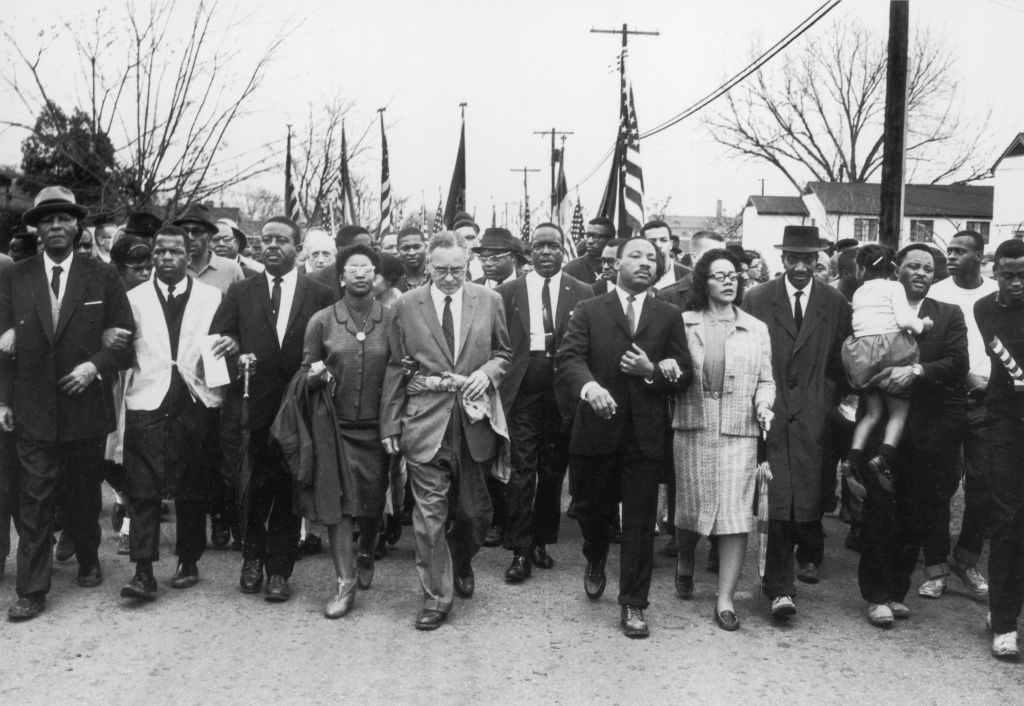
Rev. Dr. Martin Luther King did not focus on vilifying the people who kept the unjust systems in place; he aimed at the systems and philosophy that supported segregation. While it may feel good to attack Jew-haters, it does not make fewer Jew-haters or make the campus better for Jewish students. The problem is the unjust system and the philosophy that allows for discrimination against Jewish students and refuses to enforce the laws to protect Jewish students.

The Federal government could force universities to change their ways by demanding that they follow the law. Up until the 1960s, African Americans were barred from being students at many Southern universities. Today, this idea seems absurd, but it was once permitted. How did it get changed? By nonviolent protest movements, effective lawsuits, Federal action, and winning hearts and minds.

Title VI of the Civil Rights Act, in theory, could protect Jewish students on campus, but the agency that enforces this is understaffed and underfunded. Universities routinely settle Title VI cases and pledge to do better instead of getting penalized. But there needs to be enforcement and follow-up. The Jewish community must demand accountability from the Department of Justice and the administration to enforce the necessary laws.

Yes, it may be true that China, Qatar, and other dictatorships have bought influence on campuses. It may be true that some of the protests are being orchestrated by nation-state actors intent on sowing chaos in America. However, state and federal governments give a free pass to what is happening on campus. With a few executive orders, the US Attorney General’s office could effectively bring a halt to the occupations on campus and start to dismantle the influence of dictatorships and anti-democratic forces on our students.

One of the most powerful images from the civil rights movement is the picture of James Meridith, an Air Force veteran, entering the University of Mississippi on October 1, 1962, flanked by U.S. Marshal James McShane and Justice Department’s John Doar. The observance of the law brought about change.

Pray that it never comes to this – that Jewish students will need Federal marshals, National Guardsmen, and U.S. Army soldiers to feel safe on campus.

However, eventually, the violent pro-segregation mobs were defeated, the federal government restored order, and black students could enroll at Ole Miss and other universities.

Coming Next — Lesson Two: The righteousness of the cause for Israel on campus.

Rabbi Yonah Bookstein served as Alevy Family Campus Rabbi at the University of California, Irvine, Hillel of Long Beach State, and Hillel of USC between 2004-20012. 


The Enemy is the Status Quo Read More »

Supporting Children in Foster Care in the U.S. and Israel

Today, May 7th, is National Foster Care Day — a time to raise awareness about the nearly 370,000 children in the U.S. foster care system and the adults who care for them. The date also marks seven months since the October 7th attacks by Hamas terrorists in Israel. On that day, 18 children became orphans when both of their parents were murdered.

Both the U.S. and Israel face serious challenges and require systemic reform and heightened awareness among the public.

“The nearly 370,000 children in foster care deserve to grow up in safe and loving homes that help them reach their full potential,” President Joe Biden said in his April 30th proclamation about the American foster care system. He said that recent initiatives such as tax credits, housing vouchers, job training, and healthcare access can help those aging out of the system find stability.

Still, systemic issues remain pervasive and support from individuals and nonprofit organizations are integral, both in the U.S. and Israel.

A 2022 report from Haaretz included sobering numbers that exposed the issues plaguing Israel’s foster care system. The Ministry of Labor, Social Affairs, and Social Services admitted that only 42 out of 810 required annual reviews were completed in 2018. Oversight lapses and limited workforce availability compound these issues, and children end up spending too much time bouncing from one temporary home to the next.

The Jerusalem Post reported in 2023 that there were nearly 3,800 children in Israel who lived in foster homes. The May 2023 State Comptroller of Israel report was even worse, stating that “1,149 children in Israel under the age of 8 (of which 474 children are under the age of 5) were placed in boarding schools instead of foster families in 2016−2021, in contravention of the guidelines, which set the minimum age for placement in boarding schools at 8 years; 87% of the children in foster care were not assigned care plans as required by the Foster Care Law and the Ministry of Welfare’s Social Work Regulations.” It also found that the “adoption procedure lasts 26 months on average, twice the maximum time set in the law.”

The October 7th Hamas attacks had a devastating impact on Israeli children, leaving families shattered. In April, The Jerusalem Post reported:

  • 31 young people under 25 lost both parents: 18 minors and 13 young adults.
  • 250 minors lost one parent, and three have a parent still held captive in Gaza.

“The fact that so many children are victims of the brutal Hamas attack turns the stomach,” Israel Minister of Labor, Social Affairs and Social Services Ya’akov Margi said in a statement to the Times of Israel 16 days after the attacks.

In the U.S, Biden’s Foster Care Month proclamation emphasized the lasting impact on foster youth separated from their biological families, with a disproportionate effect on children of color. While recent policy changes have expanded support, much more needs to be done. Biden proposes providing more funding for job support, education, and healthcare for youth inside of and aging out of foster care.

Actress Angela Featherstone, a former foster youth herself, is dedicating her life to supporting transition-aged foster youth in finding purpose and stability.

“If it were truly helping kids, why are 80% of all trafficking survivors from foster care?” Featherstone told the Journal. “Why are 40% of the homeless in Los Angeles County from foster care? Why are so many prisoners former foster youth?” Featherstone was one of the fortunate former foster youths, having found her footing after transitioning out of foster care in Canada in the 1980s. She told the Journal in 2022 about how being taken in by Toronto’s Jewish community in her early 20s gave her the stability to carry on where so many foster youth fall apart. That is why Featherstone created the nonprofit Fostering Care which aims to fill the gaps in so many basic necessities for fostering youth aging out of foster care. Their holistic 90-day program that includes housing and transportation, medical care and counseling, life skills training, and spiritual development through meditation, health, exercise, and prayer.

“If it were truly helping kids, why are 80% of all trafficking survivors from foster care?” Featherstone told the Journal. “Why are 40% of the homeless in Los Angeles County from foster care? Why are so many prisoners former foster youth?” – Angela Featherstone

“We’re helping them to individuate and become self-realized by enhancing the spark inside each one through meditation, health, wellness, exercise, prayer, and study,” Featherstone said.

Even with looming funding cuts to mental health services in California, Featherstone is determined to ensure her graduates become leaders in their own right. “Our graduates will become teachers and practitioners, and they’ll get to take this incredible work that was so freely given to me and will be so freely given to them out into the world.”

In Israel, there are organizations such as The Summit Institute, which “rescues and cares for 750 at-risk Israeli children who have been removed from their homes after being severely abused, neglected or orphaned.” In a recent interview with Jewish News Syndicate, Yonatan Bogut, the CEO of the Summit Institute, called for immediate recognition of the children orphaned Hamas’ terror attacks as foster children so they can access the care and support they need.

The emotional toll of separation and trauma cannot be overstated. But children are often reluctant to share their stories of neglect with the media, even if given the opportunity to do so anonymously.

A new organization in Israel, the Israeli Children’s Fund (ICF) is providing financial aid and social support to the orphaned children in the wake of the Oct. 7 attacks. ICF already raised $500,000 to fund orphaned children “while establishing the financial, legal, and structural foundation for long-term stability.” Meanwhile, back in Los Angeles, Featherstone is assembling resources and experts for her organization, Fostering Care, which continues to seek dedicated funding and strategic partnerships. The 90-day system Fostering Care will implement upon launch is designed to guide graduates to become mentors and teachers for the growing number of foster youth struggling as they transition out of care.

“The key to unlocking the potential within each young person is through love, support, and the right tools for self-discovery,” she said. “We are here to provide them with everything they need to break the cycle and rewrite their story. Every young person has a unique gift to share with the world. Our role is to help them realize their potential and become the best version of themselves. True healing and growth come from within. When we nurture that divine spark, we set forth a cycle of positive transformation that can ripple out into the world.”

Supporting Children in Foster Care in the U.S. and Israel Read More »