fbpx

April 2, 2024

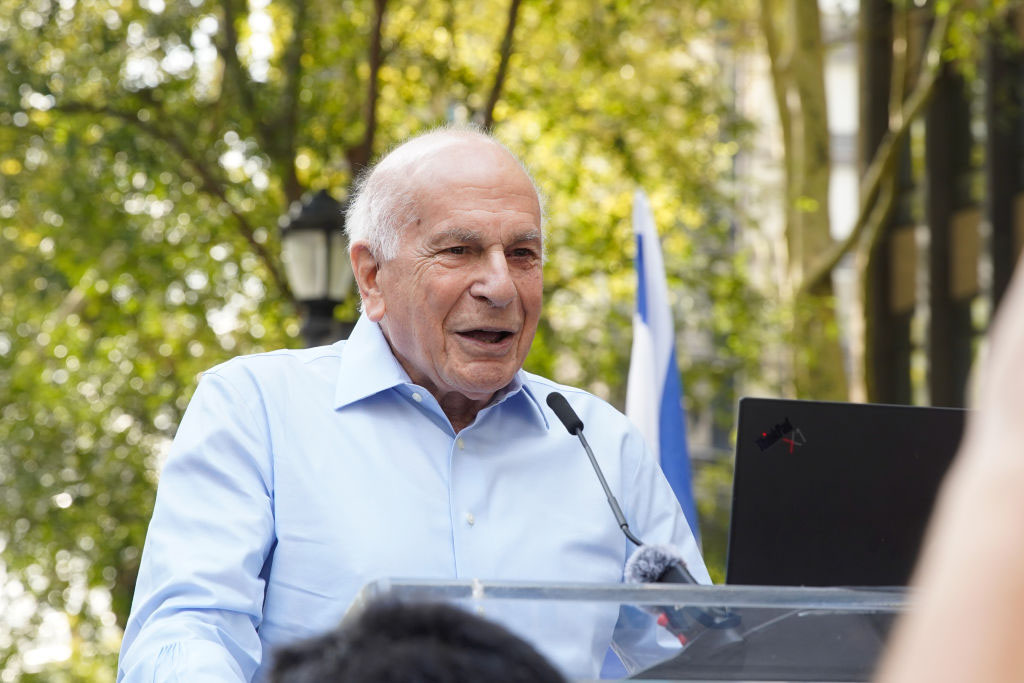
A Tribute to Daniel Kahneman, Israeli-Born Psychologist Who Won the Nobel Prize in Economics (2002) for Asking: Are Humans Rational?

Daniel Kahneman (1934-2024), who died last week at the age of 90, was born in Tel Aviv to Jewish Lithuanian parents who had emigrated to France in the early 1920s. He spent his childhood years in Paris under Nazi occupation and, after losing his father, returned to Tel Aviv in 1946, just before the creation of the state of Israel.

After studying psychology at the Hebrew University in Jerusalem and serving in the IDF in a combat recruiting unit, in 1958 he went  to the United States to study for his PhD  at the University of California, Berkeley. In 1969, he began to collaborate with another Israeli, Amos Tversky, and the two produced their seminal works on human thinking that led to the Nobel Prize in 2002. (Tversky died in 1996.) They discovered that humans are far from acting rationally when faced with uncertainty; they are in fact prone to systematic errors and biases, which can be described mathematically and, sometimes, corrected.

The captivating story of these two friends-researchers is narrated in the book “The Undoing Project: A Friendship That Changed Our Minds,” by Michael Lewis (Penguin Random House, 2017).

I first met Daniel at a scientific conference in Michigan in the late 1970s, and I have remained a devout disciple of his theory throughout my work in artificial intelligence. In 2003, while editing the book “I Am Jewish: Personal Reflections Inspired by the Last Words of Daniel Pearl,” I asked him if he would share his thoughts on what “being Jewish” means to him. He sent me the following essay:

“I trace my vocation as a psychologist to my experience as a Jewish child in France, before and during World War II. Like many other Jews, I suppose, I grew up in a world that consisted exclusively of people and words, and most of the words were about people. Nature barely existed, and I never learned to identify flowers or to appreciate animals. But gossip was fascinating. The people my mother liked to talk about with her friends and with my father were fascinating in their complexity.

“Some people were better than others, but the best were far from perfect and no one was simply bad. Most of her stories were touched by irony, and they all had two sides or more.

“In one experience I remember vividly, there was a rich range of shades. It must have been late 1941 or early 1942. Jews were required to wear the Star of David and to obey a 6 p.m. curfew. I had gone to play with a Christian friend and had stayed too late. I turned my brown sweater inside out to walk the few blocks home. As I was walking down an empty street, I saw a German soldier approaching. He was wearing the black uniform that I had been told to fear more than others the one worn by specially recruited SS soldiers. “As I came closer to him, trying to walk fast, I noticed that he was looking at me intently. Then he beckoned me over, picked me up, and hugged me. I was terrified that he would notice the star inside my sweater. He was speaking to me with great emotion, in German. When he put me down, he opened his wallet, showed me a picture of a boy, and gave me some money. I went home more certain than ever that my mother was right: people were endlessly complicated and interesting. It seemed that even the SS soldier had more than one side to him. I also remember struggling as a child with the troubling thought that the monstrous Hitler enjoyed flowers and was tender to babies. If there was some good even in Hitler, then evil could not be simply described as the thing that evil people do, evil people were a puzzle to be understood. Understanding did not imply forgiving: it was all right to hate, and a duty to resist. But the complexity of evil and the fallibility of the good have been with me all my life — perhaps the first thing I think about when I think of being a Jew.”

“The complexity of evil and the fallibility of the good have been with me all my life — perhaps the first thing I think about when I think of being a Jew.”  — Daniel Kahneman

My next Jewish-related interaction with Daniel came in 2010, when the BDS movement began to raise its ugly head in academia, and I was recruiting scientists of stature to express opposition to the idea of boycotting Israel. Daniel immediately added his name to the list of 32 Nobel Laureates who denounced calls for boycotts and sanctions against Israeli academics.

The last email that I received from Daniel contained a personal surprise. Having read my book, where I mention some of my high school teachers, he wrote to me: “Hi Judea. Did you study in Tichon Irony Dati in Tel Aviv? I studied there in 1949, and had a wonderful physics teacher name Feuchtwanger. It seems to be too much of a coincidence…”

As it turns out we went to the same high school in Tel Aviv, two years apart in 1949-50, and had the same science teacher who introduced us to logic through a paradox in causal reasoning (see http://bayes.cs.ucla.edu/BOOK-2K/why.html). It must have been the magic of this science teacher that pulled each one of us, independently, into the fold of science.

I’ll end this tribute with a Mishnaic saying: “Aseh lecha rav, knei l’cha chaver.” — “Make for yourself a teacher, acquire for yourself a friend.” (Pirkei Avot 1:6)

Daniel Kahneman was a friend and a teacher. Am Israel and the entire scientific world will miss him dearly.

A Tribute to Daniel Kahneman, Israeli-Born Psychologist Who Won the Nobel Prize in Economics (2002) for Asking: Are Humans Rational? Read More »

Getting REAL ft. Carly Weinstein

After a brief break due to Marla’s last minute trip to Israel, the girls are back and didn’t want to make you wait until a Thursday release. Libby shares about Maxine’s wedding, Purim festivities and fun restaurant experiences. Marla shares about her trip to Israel and updates in her dating life. This week the girls are thrilled to welcome Carly Weinstein!

She talks about Jewish geography and her typical NYC dating life.  She shares about how she went from competing in gymnastics to starting her first blog in high school and kept it going through college even when other people looked down upon her for it. She also talks about the importance of being honest and vulnerable on social media especially with how difficult the internet can be. The Schmuckgirls dive into Carly’s Jewish background and she shares about what her Jewish identity looked like as a kid versus now as well as the importance of her Jewish culture and how she made friends with Israelis through a penpal program. She also shares insight into how Jewish creators have fought back against antisemitism on TikTok. They end with a game of Cute or Cringe.  

You can find Carly on Instagram @carly_weinstein and Schmuckboys @schmuckboysofficial. 


Getting REAL ft. Carly Weinstein Read More »

180 for 180: Take Action TODAY for Israel

Take Action for Israel and Bring Our Hostages Home

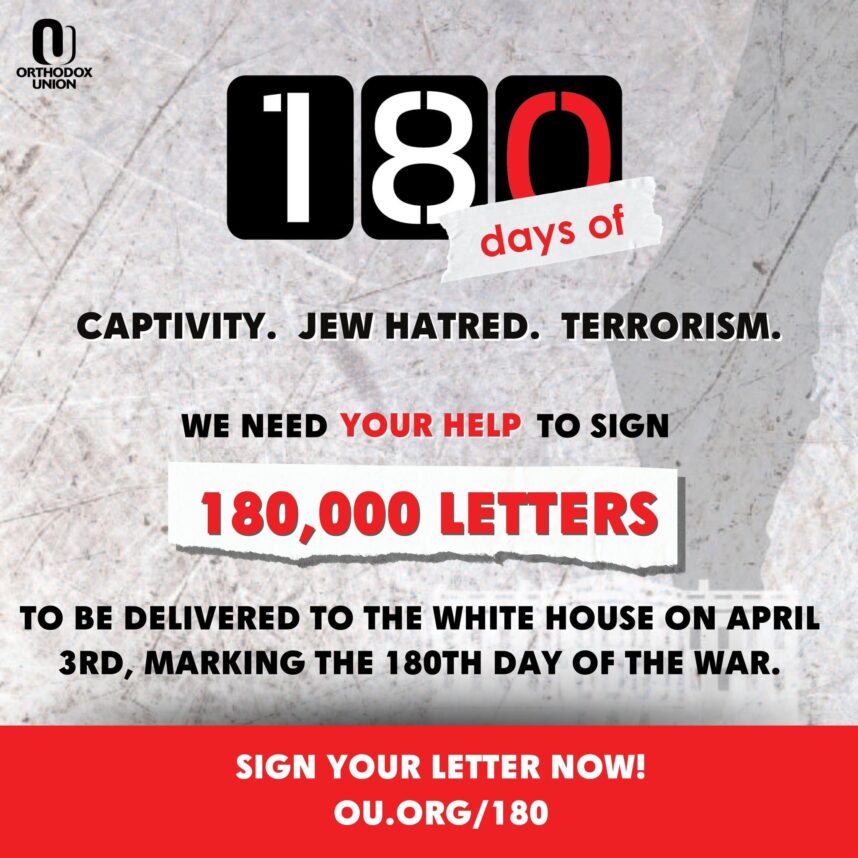
April 3 marks 180 days since the horrors of October 7th. Every one of us can do something. We are hoping to collect 180,000 signed letters that will be hand delivered to the White House on Wednesday, April 3rd in support of our brothers and sisters in Israel. This initiative, “180 for 180,” was launched by the OU (Orthodox Union) and is supported by the Zionist Rabbinic Coalition, an organization for which Rabbi David Woznica serves on the Leadership Team. We strongly encourage you join us in this important project. Click here to write your letter of support which must be received by the end of today.Stephen Wise Clergy Team SIGN THE 180 FOR 180 LETTER
צָעֲקוּ וַיהֹוָה שָׁמֵעַ … קָרוֹב יְהֹוָה לְנִשְׁבְּרֵי־לֵב“They [the children of Israel] cry and God listens…God is close to the broken-hearted” (Psalm 34:18-19).
Last Tuesday, I read former Israeli hostage Amit Soussana’s testimony about the horrific sexual assault she endured at gunpoint by Hamas terrorists during her captivity in the tunnels under Gaza. And I cried. I cried and cried until my eyes were red and weary. I called my best friend. I texted my brother. I hugged my husband and my babies. And still, for the rest of that day, I cried. Nothing could comfort me except the thought of Amit reunited with her family and the hope, the feeling, the trust that God is by my side—maybe even cries with me—when I weep.Tears stream through our sacred texts. Hagar cries in anguish when she is separated from Abraham (Genesis 21). Abraham wails for Sarah at her grave (Genesis 23). We cried together at the rivers of Babylon when we remembered Zion (Psalm 137). We even read about the city of Jerusalem weeping bitterly for our suffering (Lamentations 1). And Joseph, whose story takes up more biblical verses than any of the previous patriarchs and matriarchs, cries often: he sheds tears for his own pain, for the secrets and lies that eat away at his brothers, for the grief his father endures. We cannot get through our shared story without crying, without releasing our sadness. And just like in the story of Noah and the flood, when the water stops, we can perhaps experience moments of hope, calm, and peace. Our tears are precious and help us ease our heaviest pains. May our darkest days be washed away by our unshakeable hope for a better next chapter for our People, for all the peoples of God’s earth. May we see all our hostages safely returned to us, a most sacred day when—God willing—we can weep in joy. — Cantor Emma Lutz Didn’t sign yet?! Thats ok! It takes just 1 minute of your day to sign a letter and add your name to the 180,000 letters that will be hand delivered to the White House TOMORROW, the 180th day since October 7th. (on Instagram) Visit ou.org/180 to sign a letter NOW!

180 for 180: Take Action TODAY for Israel Read More »