fbpx

November 10, 2023

Alex Edelman on His Show “Just For Us,” Comedy During War, and How Mariah Carey Can Help

Comedian Alex Edelman’s acclaimed one-man show “Just For Us” comes to Los Angeles, with performances at the Mark Taper Theater through November 26. It centers around the true story of how he attended a white nationalist meeting in Queens, New York, but without revealing that he was Jewish.

The show isn’t just for Jewish audiences, but for comedy lovers and curious minds about Judaism. In the process, Edelman has received rave reviews from his comedy heroes Mel Brooks, Jerry Seinfeld and Steve Martin.

Among some of the lines from the show that translate adequately to print:

“I have cousins Menachem and Yitzhack. You can’t even spell their names correctly because there’s no English letter for phlegm.”

He’s been having quite a 2023. “Just For Us” went from off-Broadway to Broadway this past summer.

He’s made promotional appearances on nationally-broadcast morning and late night talk shows. And he’s been performing “Just For Us” to sold out audiences. On paper, it may seem like Edelman is having the best year of his life. But in May of this year, Edelman lost his best friend and collaborator Adam Brace.

Edelman wrote a touching tribute on X, formerly known as Twitter:

“He was my closest collaborator for more than a decade, but more importantly, he was one of my closest friends. I don’t feel ready to acknowledge the magnitude of this loss, but I already feel it. Adam directed every one of my solo shows — all three of which were conceived over beers with him on the same street in London — including ‘Just for Us.’ Adam’s laugh was distinctive and deep and my favorite sound. I sought it out again and again. I was lucky to spend so much time with him, especially over the last year and a half, and I am distraught at the prospect of doing the show without him on Broadway. If I’m being honest, I’m not sure what kind of performer — and person — I’m going be without him.”

His eulogy for Brace is a testament to Edelman’s affable personality and ability to convey emotion succinctly. He’s carried on with the show, albeit with changes.

“It changed a lot,” he said. “He was my closest pal, and so of course it’s going to be a little different. He was …yeah, man, it’s a bummer.”

The October 7th attacks on Israel left an ongoing cloud of haze and sadness over the entertainment world, from performers to audiences.

“It’s definitely up there in my mind, definitely paramount on how I want the show to be comporting itself,” Edelman said. Eleven days after the attacks, Edelman was invited to speak at Variety’s “Antisemitism & Hollywood Summit.” The “How to Tell A Joke” panel was one of the most well-received moments of the day, featuring Edelman with  fellow comedians Ike Barinholtz, Tiffany Haddish and Marc Maron.

Towards the end of the panel, Edelman reflected on the times and his stage show:

“Rabbi [Jonathan] Sacks said, ‘the only cure for antisemitism is to communicate to people the experience of being Jewish.’ And so writing [‘Just For Us’], I really wanted to try to do this specific type of outreach and let people know what it’s like to be a Jew. But yeah, there’s the hook of the Nazi thing,” Edelman quipped to the audience of advocates and journalists who felt comfortable enough to laugh.

Edelman grew up in Boston with his parents (who he described as being “encouraging” of his creative pursuits) and brothers Austin and AJ. After graduating from Maimonides High School, Edelman attended Yeshiva in Israel for a year before moving to New York. These days, he is a regular on the New York standup circuit.

It’s definitely a trying time for Edelman to be performing after such a tumultuous year. Still, he has not lost his playfulness nor his enthusiasm for comedy or Judaism. On the day of the Journal’s interview with Edelman, he said that the very next day (November 2nd), he was going to be a guest on “Jimmy Kimmel Live,” where singer Mariah Carey was also scheduled to be a guest.

“I’m going to try to talk her into doing a “All I Want for Hanukkah Is You,” Edelman said. “I’m very excited because look, Christmas didn’t make it until Mariah Carey wrote about it in the song.” When Edelman sat on Kimmel’s couch the next night, he came wearing a Mariah Carey t-shirt underneath his navy blue blazer.

“First of all, I’m the biggest fan, it’s crazy,” Edelman told Kimmel about Carey. “I said to her, ‘we need a Hanukkah song from you. The Jews, we’ve had such a rough month, we deserve a Hanukkah song.’ And she just went, ‘Sandler’s is pretty good.’”

Edelman shared more reflections about the “Just For Us” tour with the Journal.

(The conversation has been edited for space and clarity.)

JEWISH JOURNAL: In what ways does the show evolve with the news of the week, and with the passing of your friend Adam Brace.

ALEX EDELMAN: I have been so curious about what my job is at this moment and how to best reconcile myself with what’s happening. Doing that really difficult work is part of my job. I’m very curious and concerned with what. Shows should be living, breathing organisms, and so I think my show should be too.

JJ: In the audience at the upcoming shows, there will be many people who will be making their first attempt at laughing or being entertained since the October 7th attacks. How do those expectations affect you?

AE: People are really going through a frustrating moment. We just did shows in San Francisco and they were really cathartic for lots of folks. We’re living in such a complex moment. Jews in particular are really feeling that impetus. And so having to navigate that as a performer, having to navigate that as a writer — I always think shows should be in distinct conversation with the times that they are in. And so doing that, it’s not easy, but it’s important I think. I’ve been very careful about what I think I should be saying on stage and how I should be saying it.

JJ: Tell us about your interaction with Mel Brooks after he saw the show.

AE: Mel Brooks has been a bit of a grandparent figure to me, and has been really supportive of me in the show. He patted me on the cheek and I made him laugh about something, and he asked me if I worked at clubs because someone told him I was a comedian. I said, ‘I sure do. Mr. Brooks.’ He was everything you want Mel Brooks to be. They say, don’t meet your heroes. And I’ve met a few who were disappointing, but Mel Brooks and Jerry Seinfeld were not them. My show’s produced by Mike Birbiglia, who’s a comedy hero of mine.

JJ: Your show is called “Just For Us” but it’s very much for Jews and non-Jews alike.

AE: The show is an 80-minute love letter to Judaism, and it’s been really amazing for me, not just as an artist, but for me as a Jew, to watch audiences that are not entirely Jewish, find it to be accessible. It’s not something I had growing up and something I would’ve really loved. So it seems really disingenuous to not love it now. I really love it. It’s bananas. How many people get this opportunity in their lifetime — to make a show that is accessible enough for non-Jews to enjoy, but makes Jews feel seen.

Alex Edelman on His Show “Just For Us,” Comedy During War, and How Mariah Carey Can Help Read More »

“The Jewish Dog” Stage Show Brings Audience to 1945 Poland Through a Dog’s Eyes

If you’ve ever looked at the family dog and wondered what they’re thinking, there is a stage show that will have you coming home to hug your dog extra hard. In “The Jewish Dog,” which runs through November 19 at The Wallis Annenberg Center for the Performing Arts, a family’s dog is abandoned after his family is arrested during the Holocaust.

A one-man show with an astonishing performance by Roy Abramsohn, it leads audiences through the experience of Cyrus the dog, telling the story of the Holocaust from the dog’s perspective.

The tagline of the show is clever and telling: “Don’t miss this unexpected view of history — from only 20 inches above the ground.”

Yes, there is a grown, adult actor in a dog costume on stage. And no, it isn’t exactly a comedy. It’s intense. It’s sad. It earns every minute. Of course, Cyrus’ naivete and misunderstandings bring moments of levity to the audience. Playing about 20 different characters, Abramsohn both inflicts and absorbs terror. At no point during the show is it confusing who Abramsohn is portraying in any given moment. He plays an old German woman, he plays a young Ukranian woman, he plays Nazis, he plays Jews, and he even plays more than just one dog. While his speaking voice is a heavy Philadelphia accent, Abramsohn is adept at slipping from character to character.

Abramsohn explains that the play resonates with him due to his Jewish heritage and love for dogs.

“It’s very easy to get emotional in this show for me,” Abramsohn told the Journal. “Sometimes, you’re on a film set or something and they say, ‘in this scene you have to be emotional and there’s 20 people around.’ But for a dog story, it’s easy for me to get emotional. It doesn’t take much. And yeah, I did have dogs growing up.”

Without spoiling any particular scene, audiences will notice that even after Cyrus the dog is left without a home, he still loves whoever loves him back.

“The Jewish Dog” was originally a 2007 bestselling book by Asher Kravitz. It was adapted for the stage by Israeli playwright and director Yonatan Esterkin. Abramsohn expressed multiple times throughout the interview his gratitude for Esterkin for casting him.

And although he’s performing in theaters nationwide, Abramsohn’s first live shows as Cyrus the dog were in a backyard during the COVID-19 pandemic.

“Tom Dugan, from Dugan’s Backyard Playhouse, allowed me (for free) to do three shows in his backyard to get more experience and prepare for the show in Houston at the Holocaust Museum,” in January of 2023 to commemorate International Holocaust Day, Abramsohn said. “Tom is the definition of the word ‘mensch.’ The word was created for guys like him.”

Not only did his wife Betsy and children Benjamin and Madeline play a role in Abramsohn’s mind as he got into character(s), he also took cues from the family dog, a poodle-terrier mix named Charlie, whom he found roaming the Valley while driving his children to school. In many ways, Charlie was unwittingly a great coach for Abramsohn throughout the process of becoming Cyrus. Abramsohn took a moment away from Charlie to speak about the experience of playing Cyrus the dog on stage.


(The conversation has been edited for space and clarity.)

JEWISH JOURNAL: As an actor, do you think this show will be your legacy?

ROY ABRAMSOHN: I thought it’ll give me more shows to do in the coming years, because I’m 62 and everything gets harder. I have two kids, they’re 22 and 20 and everything gets tougher as you get older — physically and just doing stuff and remembering lines. So I wanted something in the next 10 years that I can go do all over the country. I want to do this.

JJ: Tell me about the audition and how you prepared.

RA: I taped an audition at my friend’s house. It was a section where the dog is sent to live with the closeted gay man and his wife, who’s a Nazi-loving woman. It was the kind of scene where there’s a lot of characters at once. And I just guess I’ve developed a talent for doing these quick character changes. And that’s the hardest thing to do. When I got the part, I read the show into my phone, all 38 single-space pages. I would drive around doing errands in Los Angeles wherever I would go. I wouldn’t get in my car without going over that script page by page by page. It took four or five months to really get it down. In this show, if you forget a line, you can’t look at your scene partner and hope they save you.

JJ: What’s something you learned about the history of the Holocaust by doing this show?

RA: I didn’t know that dogs were taken from their Jewish owners in Nazi Germany. Or in a sense, learning this part of the Nuremberg laws. The Jews had to give away all their dogs. First they took their guns. Then they took their dogs.

JJ: What surprised you most about audience reactions to the show?

RA: I was surprised at the laughter. The first time I did it, I thought, ‘wow, there’s a lot of laughs in this, and I’ve made it fun.’ I compare this show to the book “Maus” in a way where it’s another way to see the Holocaust that’s not so tragic and painful that you’re hearing a human being talk about the abuse they endured. You’re hearing a dog talk about it. So it removes you from the horror and pain just a bit.

The Jewish Dog is playing at The Wallis Annenberg Center for the Performing Arts through November 19. For tickets: https://thewallis.org/show-details/the-jewish-dog

“The Jewish Dog” Stage Show Brings Audience to 1945 Poland Through a Dog’s Eyes Read More »

Elisha Wiesel: ‘Hatred Is A Stain That is Hard To Wash Out’

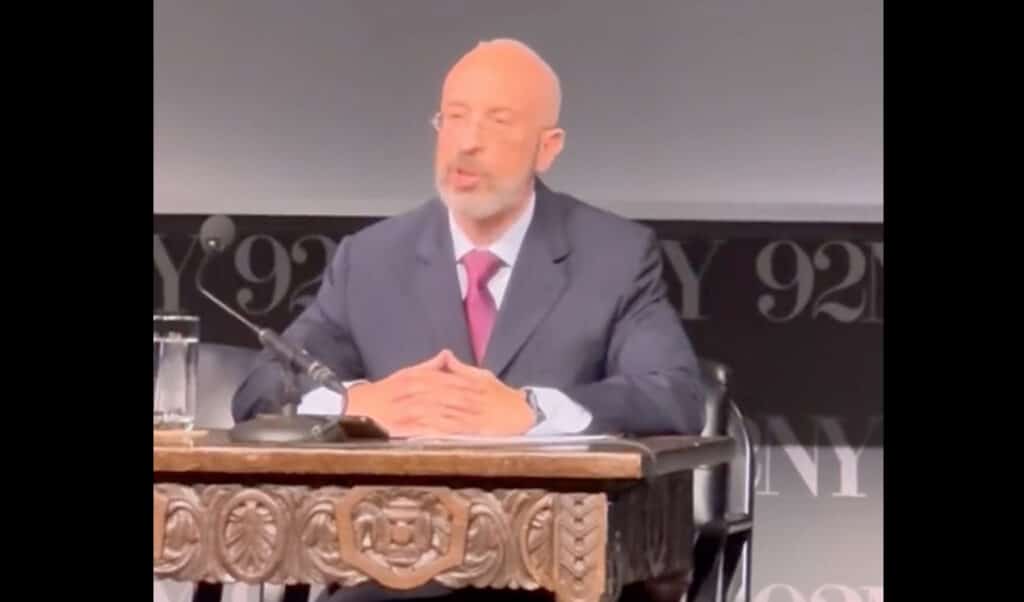
“We knew they hated us,” Elisha Wiesel told a crowd of more than 150 who gathered at 92NY on Manhattan’s Upper East Side November 8 for “Kristallnacht Unbroken: An Evening with Elisha Wiesel. “Hitler’s speeches, the Nuremberg Laws, they made that clear. How could Kristallnacht have come as a surprise? Is it because all of a sudden, words suddenly became the actions they had threatened to become so long?”

On November 9-10 in 1938, Nazis killed Jews, destroyed synagogues and stores by setting them ablaze and bashed in windows of stores.

“So how could October 7th have come as a surprise,” Wiesel said. “The Hamas rockets had abated somewhat. Iron Dome was working. The Abraham Accords were working …”

Wiesel noted that Iran was flush with cash and the people of Israel were divided.

“Did we not see that that these were the signals that Hamas was waiting for before opening the gates of Hell,” he said. “We knew they hated us and yet we were still surprised because we do not want to believe that evil like this can exist.”

Wiesel sat next to an empty chair, the one his father, Holocaust survivor, author, and Nobel Peace Prize winner Elie used to sit in.

A recording from a 1988 speech his father gave commemorating Kristallnacht at the Y, was played where in part, he asked of the Holocaust: “Why did it happen? Was universal conscience asleep? … And where was God, a shomerYisrael, the guardian of the people of Israel.”

Wiesel said he was adding a new question to add to those his father asked: “Once we know that evil exists, how should we respond to it?”

Wiesel noted that the Nazis made Jews pay for the damage they did on Kristallnacht. He said he cries when the story of Moses concludes, knowing that he never made it to enter the Promised Land. He said the Torah says that seeing Cain’s anger at his sacrifice, being rejected, God said it he did better, he would be accepted.

He said 18 years ago, those in Gaza had an opportunity to have great things.

“When Israel pulled out of Gaza in 2005, the hope truly was that with the help of the U.S., the European Union and the U.N. and Russia, Gaza would become a thriving demilitarized country, powered by tourism, economically tied, to Israel, a new chance,” Wiesel said. “But that dream proved sadly too far out of reach for the people of Gaza. They could not conquer their worst instincts. Like Cain, they saw Israel successful, and they voted their worst instinct into power. Those instincts in the form of Hamas, then seized complete power through a coup … blood still stains the homes of the Southern kibbutzim…”

But he said there is also hope and life is not a zero-sum game. He noted that an Israeli technology investor who brough high tech jobs to Gaza, and whose daughter was murdered on October 7, said that when Hamas is defeated, he would open another office, and would hire 25 Gazan employees.

Wiesel said his father saw Israel as the only guarantee against a second Holocaust and told the audience that “hate is a stain that is hard to wash out.”

Wiesel said the IDF seeks to avoid civilian casualties and anyone who calls for entire cities to be destroyed is committing a “Chilul Hashem” or desecration of God’s name. He also said President Joe Biden “had a genuine love for my father and has a genuine love for the Jewish people.”

Those calling for ceasefire, he said, should be asked: “What do you think will happen if Israel allows a ceasefire that allows Hamas to re-arm?”

He lambasted colleges who have taught students to “trust feelings over rational thought.”

Asked what reaction his father would have had to the U.N. Secretary-General, António Guterres, who said the Hamas attack did not happen in a vacuum, he told the Journal: “I think my father would have asked Mr. Guterres if it was also not in a vacuum when the Arab nations chose to wage war rather than accept a Palestinian state in 1948? And in 2000? And 2008? Mr. Guterres is guilty of both-sides-ing a history that clearly shows Israel is interested in building, not destroying.”

Wiesel also told the Journal that the claim of genocide against Israel “fails primarily on intent. The Hams charter calls for Israel’s destruction, Israel’s charter calls for peace and coexistence.”

He told the crowd it is a pattern that enemies of the Jews charge them with the crimes they perpetrate.

Wiesel read an excerpt from his diary, from July 26, 1995, when he and his father visited Sighet, Elie’s birthplace.

“At first I didn’t understand why start the tour in a cemetery?” he said. “But I understood then, it was to get used the feeling of death which surrounded us. You expect it in a cemetery. It belongs. It settles into you. It is once I start walking the streets of Sighet outside the cemetery and realize that death is in the air too, that your heart starts to pound, and you start to feel whatever it is one is meant to feel in Sighet.”

He and his father walked to the spot where he was taken on a cattle train.

“This is where the Jewish community of Sighet ended,” reading from his father’s work.

Wiesel noted that the goal of the Nazis was for him to never exist, and his father told him if he started to cry, he would cry forever.

Wiesel said he felt in a similar way in recent days and saw a video where a prominent rabbi in Israel who said not to come to him for a bracha, or blessing, but to go to an Israeli soldier for one. Wiesel called upon God for several blessings, to safeguard the IDF, including his nephew, to free the hostages, help all Israeli citizens, as well as the grieving families of loved ones dead or missing.

He also called on God to protect innocent Gazans and enable them to flee south and take an active role in building society when Hamas is gone.

Rabbi David Ingber, founder of the Renewal congregation Romemu, and senior director of Jewish Life and the Bronfman Center at 92NY told the crowd that Elie Wiesel spoke at the building about 180 times and called it his little yeshiva.

Asked what advice he had for those troubled by harrowing images and fears of what will happen in the future, Ingber told the Journal that “we should remember we are not isolated. We are one people. Just as they are fighting in Israel, we are deployed here to do what we can by working with one another and we must not be divided.”

Elisha Wiesel: ‘Hatred Is A Stain That is Hard To Wash Out’ Read More »

Kristallnacht and Hamas

Thursday was the 85th anniversary of Kristallnacht, the infamous night when Jewish homes, stores, and schools were ransacked and vandalized while many Jews were beaten and murdered. This happened before WW2 started. German citizens stood by and watched their neighbors and friends being targeted, and did nothing. The next morning, my grandfather who was seven at the time, was forced to clean up the shattered glass from the sidewalks while on his knees. Jewish families apparently assumed that this was as bad as it was going to get and it’ll pass over, not fathoming that over the next seven years, 6 million European Jews will be murdered, including six of my great-grandparents. I grew up hearing these stories and confidently believed that this could only happen in history books …that the world would NEVER let anything like that happen again.

I sit here today with tears in my eyes and a deep pain which is difficult to describe — a combination of helplessness, fear, anger, and sadness. Every day, I’m seeing more and more protests with signs of “Gas the Jews” and “Hitler was right,” Jewish stores vandalized, hate crimes against Jews skyrocketing this last month. Universities are cowardly standing behind the First Amendment when confronted on how they’re allowing hatred and assaults against Jewish students happen on their campuses.  I keep on finding myself in disbelief that this is actually happening and the vast majority of people, including my friends, are not only not saying anything, but don’t even see it. I finally understand what I never quite understood before: How did the world see what was happening when the Holocaust occurred and not do anything? It’s because they didn’t even “see” it. They were busy with their own lives and didn’t care because it was not their problem.

“I finally understand what I never quite understood before — How did the world see what was happening when the Holocaust occurred and not do anything? It’s because they didn’t even ‘see’ it.”

The world needs to wake up and see that history is repeating itself. That a terrorist group has hijacked the minds of college students and “well-meaning” people and created a global army to help them achieve their ultimate goal: To eliminate Israel and rid the world of Jews.

Israel was forced into this war because innocent civilians were brutally massacred, tortured, raped and kidnapped from their homes and they have every right, just like any other country, to defend itself and protect its citizens. Any other spin on what is happening is only supporting and justifying terrorism and enabling a landscape for history to repeat itself. Israel did not start this war. But they will make sure that it will NEVER happen again.

Kristallnacht and Hamas Read More »

‘Bearing Witness’ Screening at Museum of Tolerance Draws Community Leaders and Demonstrations

The horror film “Bearing Witness,” depicting the massacre carried out by Hamas in Israel on October 7th, was unlike anything Hollywood had ever seen before. The 200-plus attendees at the Museum of Tolerance for the Wednesday, November 8th screening underwent tight security checks and were asked to leave their phones at the front desk. The 47-minute film, compiled by the Israel Defense Forces, consists of short videos from Hamas bodycams, cell phones, car dashboard cameras, first responders, and CCTV. This same video was viewed by Knesset members in Israel, leading some to leave midway through the screening, while others were seen sobbing, and one member even fainted.

The audience’s reaction in Los Angeles was mixed. Some viewers stood up at the end of the screening and shouted, “Why didn’t you show the rape? The beheading?” – a sentiment shared by some within the audience.

“It was shocking, but not something I hadn’t seen play out over the past month,” said Sharona Cooper, the publisher of Israeli Weekly magazine. Actor Mark Feuerstein (“Defiance”) had a different reaction. In an interview with The Jewish Journal, Feuerstein expressed his shock at what he saw: “I’m a wreck. I was sobbing and shaking throughout the film. Anyone who sees this film won’t be able to deny what happened there. Witnessing the inhumanity of man makes you wonder how it’s possible for people like that to exist in the world. It’s hard to comprehend how anyone can look at the faces of families and babies and kill. How can these people be human beings? It was pure evil.”

“I’m a wreck. I was sobbing and shaking throughout the film. Anyone who sees this film won’t be able to deny what happened there.” – Mark Feuerstein

Rabbi Marvin Hier, president, and founder of the Simon Wiesenthal Center, emphasized the audience’s duty to tell people what they had seen: “We owe it to the 1,400-plus victims and their families to bear witness.’” Jews were always targeted and murdered and instead of being 200 million Jews today in the world, Rabbi Hier said, “we have only 14 million Jews. We are the leftovers of the pogroms and Hitler.” He then added that despite Hamas efforts to kill all Jews, they are the ones who “will become the dust of history.”

Gilad Erdan, Israel’s ambassador to the United Nations, addressed the audience, stating, “This video will change the way you view the Middle East and how you perceive Gaza.” He added, “People keep asking me why they filmed themselves doing that, and I answer that they want to terrorize Israelis so they will never feel safe in Israel.” He further emphasized that for Israelis to be safe again, Hamas needs to be eradicated completely. Other notable figures who attended the screening included Mattel’s CEO, Ynon Kreiz, and actress Swell Ariel Or (“The Beauty Queen of Jerusalem”).

While the film was being shown, some 50 demonstrators — both pro and anti-Israel — gathered outside the museum. According to the LAPD, smaller groups returned to the museum an hour after the screening and a fight broke out. Order was restored when officers returned to the area. There were two reported batteries, but no one was arrested.

Sara Greenberg and Melissa Zukerman worked with the IDF and their international spokesman Amnon Shefler to organize the event with support from the ADL and the AJC.

‘Bearing Witness’ Screening at Museum of Tolerance Draws Community Leaders and Demonstrations Read More »

FDR’s Warning About Raising Kids to Kill

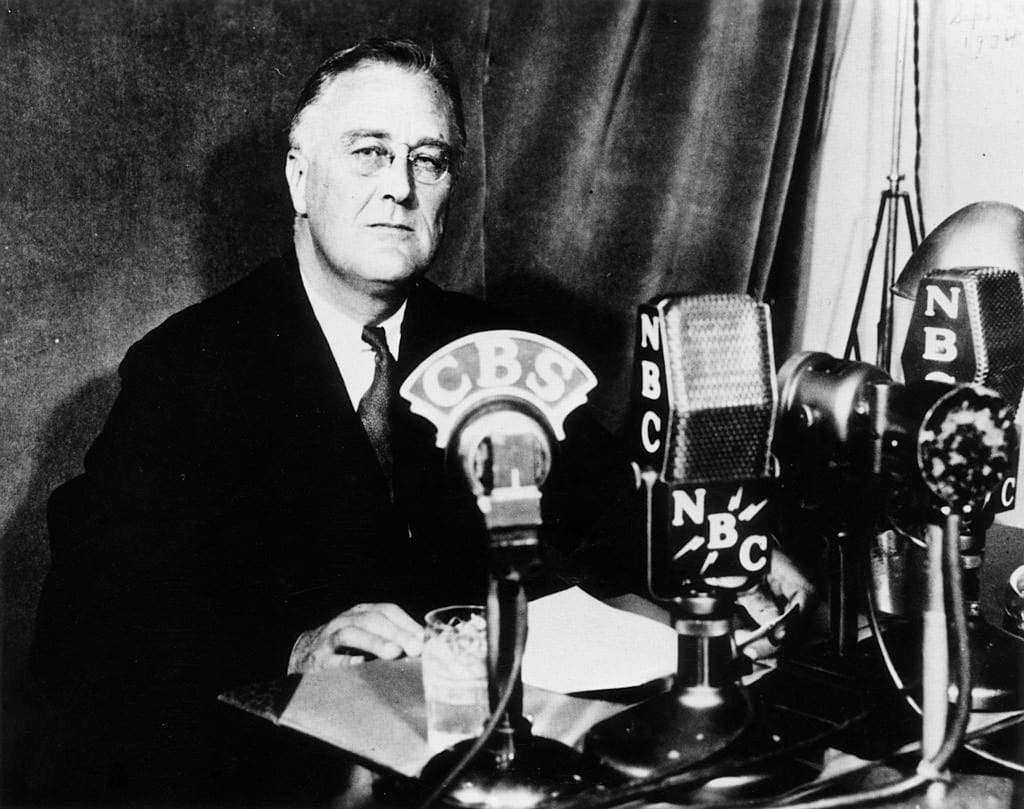
What can a press conference by President Franklin D. Roosevelt in 1934 teach us about the recent murder of an Israeli police officer by a teenage Palestinian Arab terrorist? More than you might think.

On November 5, Muhammad Omar Al-Faroukh fatally stabbed Elisheva Rose Lubin, a 20 year-old police officer who immigrated to Israel from Atlanta, Georgia.

The fact that the killer was just 16 years old has, understandably, sparked some discussion. After all, no child is born a terrorist; somebody influenced him to choose that path.

Palestinian Media Watch has pointed to the extremist teachings by Palestinian Arab school teachers and public figures. Among the latter was the threat by Palestinian icon Ahed Tamimi to “drink the blood” and “eat the skulls” of Israeli Jews, which she announced to her 100,000 followers on Instagram just days before Al-Faroukh murdered Elisheva Lubin.

President Roosevelt, like Ms. Lubin, had a strong connection to the state of Georgia. Beginning in 1924, he spent periods of time in the town of Warm Springs, an hour’s drive from Atlanta, in the hope that exercising in its therapeutic waters would help him recover from polio. He built a home there, which came to be known as the Little White House. It was in Warm Springs that he suffered his fatal stroke in 1945.

On the afternoon of September 7, 1934, FDR held a press conference in his residence at Hyde Park, New York. At one point, a reporter asked the president what was discussed during the president’s recent lunch with a French cabinet minister.

“We spent most of the lunch hour talking about Germany,” Roosevelt replied. He then emphasized—twice—that everything he was about to say had to be “entirely off the record” because “I cannot talk foreign affairs about so-called friendly countries.”

FDR’s policy toward Nazi Germany prior to World War II was to maintain cordial, sometimes friendly, relations with Hitler. He never criticized the Nazi regime in public, and even compelled Interior Secretary Harold Ickes to delete criticism of Hitler from his speeches. Roosevelt supported U.S. participation in the 1936 Berlin Olympics, and he opposed the widespread grassroots boycott of German products. FDR’s Commerce Department even quietly advised the Nazi regime on how to deceptively label their products in order to avoid boycotters. And Roosevelt never publicly mentioned the plight of German Jews, an issue which he considered to be none of America’s business.

But off the record—where there was no danger of offending Hitler—Roosevelt shared an anecdote to illustrate French fears of Germany’s militarization. “The school children in Germany are now going through an educational process,” he said at that 1934 press conference. To explain that educational process, FDR shared with the reporters something that had been witnessed by an American professor who recently visited friends in Germany.

The professor overhead her hosts’ eight year-old son saying his nightly prayers. “He kneeled down at his mother’s knee and said his prayers and ended in good German, like a good German boy, and he said, ‘Dear God, please permit it that I shall die with a French bullet in my heart’,” President Roosevelt said. “You get that sort of thing and that is what has got the French scared when ninety percent of the German people are thinking and talking that way. If I were a Frenchman, I would be scared too.”

Unfortunately, FDR’s private recognition that Hitler was raising German children to hate and kill did not alter his policy toward the Nazi regime. In late 1937, Roosevelt even proposed providing helium to Germany to power its Zeppelin airships, which he said would demonstrate that the U.S. was “a good neighbor.” (Secretary Ickes blocked the sale on the grounds that the gas could be “of military importance,” since the Germans had used Zeppelins as bombers in World War I.) The following year, Roosevelt supported the Munich agreement to dismember Czechoslovakia in order to appease Hitler.

In our own era, it is no secret that anti-Israel and antisemitic propaganda permeates the Palestinian Arab educational system. That system helps produce teenage killers such as Muhammad Al-Faroukh. Yet leaders around the world—including the United States—have echoed President Roosevelt in pursuing friendly relations with the Palestinian Authority rather than confronting the PA’s policy of raising children to be terrorists.


Dr. Medoff is founding director of The David S. Wyman Institute for Holocaust Studies and author of more than 20 books about Jewish history and the Holocaust. His latest is America and the Holocaust: A Documentary History, published by the Jewish Publication Society & University of Nebraska Press.

FDR’s Warning About Raising Kids to Kill Read More »

Life Torn and Sewn Together (comments on Torah Portion Chayei Sarah) 2023

Life Torn and Sewn Together (comments on Torah Portion Chayei Sarah) 2023. (adapted from previous versions)

Pain, regret, hurt, and betrayal form part of the backdrop of the book of Genesis. Those tragic moments often produce visions of God and the appearance of angels. Sometimes moments of unimaginable fulfillment arise.


Of the many sad, heart-wrenching and ultimately beautiful stories in Genesis, one of the most distressing is that of Hagar. We see Hagar three times in the Torah, in Genesis 16, Genesis 22, and, according to the Midrash, in our Torah portion, this Shabbat, in Genesis 25, but under the name Keturah.


We met Hagar as the maidservant of Sarai (before she became Sarah) in Genesis 16. When Sarai could not conceive, Hagar was given to Avram (before he became Abraham) as a concubine. Hagar conceived, but Sarai felt slighted. Sarai mistreated Hagar, and Hagar fled down Highway 61, and found herself near a spring of water in the desert.


An angel of God intervened, and counseled Hagar to return to Sarai. The angel assured Hagar that her own offspring will increase beyond measure. The child of Avram whom she is carrying will be named Ishma’el, “God hears,” because God has heard her prayer. We are told that Hagar gives a name to the God who spoke to her through the angel:


And she called the name of Adonai who spoke to her “You are the God Who sees me,” for she said, “Even here I saw after I was seen.” Therefore, the well was called, “The Well of the Living God Who Sees Me.” (Genesis 16:13-14)


We don’t know why Hagar must return to Avram and Sarai, but it seems that some great part of the plan that the God of the Bible has in mind requires that Hagar submit herself to Sarai.


Hagar returned and bore Avram’s son Ishma’el at the end of Genesis 16. In Genesis 17, Avram is circumcised, and the covenant is established. Avram’s name becomes Abraham and Sarai’s name becomes Sarah. In chapter 21, Abraham and Sara have a son and name him “Yitzchak,” laughter.


We also meet Hagar again in Genesis 21, some years after she saved by the angel in Genesis 16. By this time,  Ishma’el was a teenager. In this chapter,  Sarah saw something unseemly happening between Ishma’el and his younger half-brother Isaac, Yitzchak. Sarah insisted that Hagar and her (and Abraham’s) son Ishma’el be banished into the desert. The offense that Yishma’el committed is not quite clear, other than it is a play on the name “Yitzchak” – laughter.


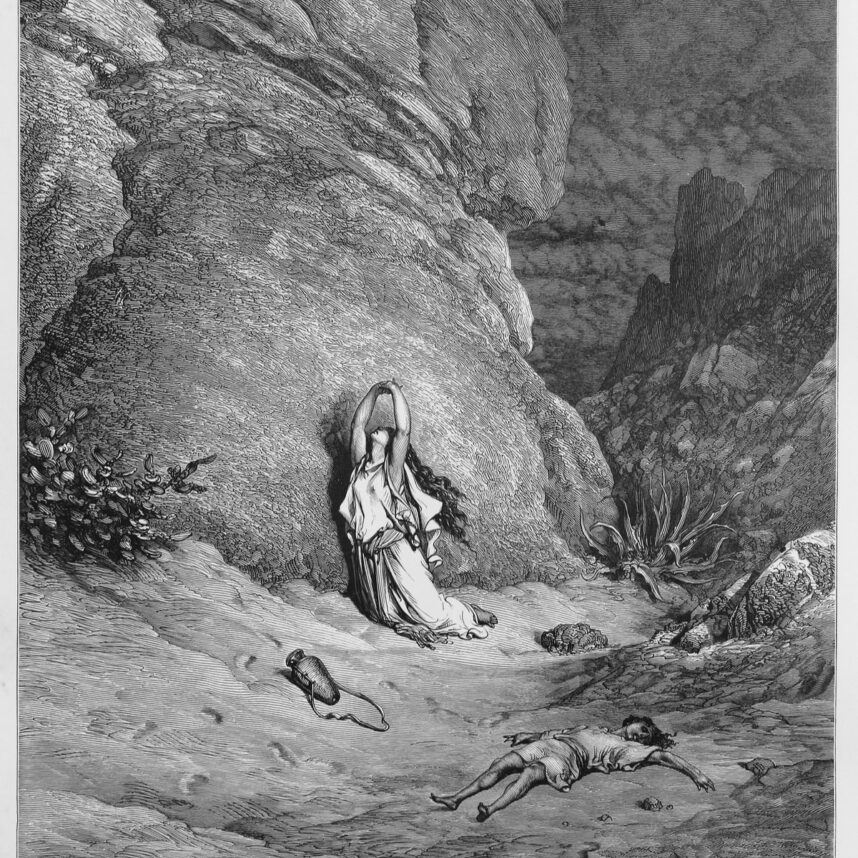
In Genesis 21, Hagar was devastated again. Back in Genesis 16, Hagar fled the mistreatment of Sarah, but she returned to the fold and submitted to Sarah. Here, in chapter 21, she is banished with her son. Hagar stumbled through the desert near Be’er Sheva (on my map, just off Highway 61), and suffered a spiritual collapse. Hagar ran out of water, and resigned herself to the fact that she and her boy will die. The angel intervenes again. God opened her eyes, and Hagar saw a well of water. She and her son were saved.  The reader assumes that she has returned to the place, to the well, and to the angel of the first angelic intervention – “The Well of the Living One Who Sees Me.”  Twice forlorn and stranded, twice saved by the power of sight.


The rabbinic tradition insists that Hagar’s story does not end here. In this week’s Torah portion, after Sarah died, Abraham remarried a woman whose name is Keturah – “Incense.” In the Midrash (Genesis Rabbah 61:4), Rabbi Judah says “Keturah is Hagar.”


The brevity of this statement – “Keturah – Zo Hagar” (Keturah is Hagar) is directly disproportionate to its interpretive brilliance. In that brief utterance of Rabbi Judah, many things are brought to light.


It seems that the Midrash, through Rabbi Judah, tells us that Abraham loved Hagar. The desperation of barrenness that caused Abraham and Hagar to be thrown together, however begrudgingly, produced a forlorn intimacy. Perhaps their love was simply that of two people who quietly asserted their humanity in the midst of some vortex of pain and destiny. Sarah’s barrenness brought them together. Sarah finally bearing Yitzchak drove them apart. Now Sarah’s death released a force that took each of them by surprise. We don’t know, but we are bidden to imagine.


Rabbi Judah’s assertion, in no way supported by the biblical narrative, helps shape a rabbinic theory of love and alternative lives. Rabbi Judah seems to conceive of a God who holds blessings in store that might have seemed to be sheer fantasy.


Had the Bible had its way, Hagar would have gone her way, and Abraham would have married an Incense Woman of consolation. Rabbi Judah cannot accept this. In saying, “Keturah is Hagar,” Rabbi Judah insists that loose strands of the narrative urge themselves back on each other.


Hagar’s son Yishma’el nearly died – but Ishma’el was Abraham’s son as well. Both of Abraham’s sons, Yitzchak and Yishma’el, nearly died at his own doing. Imagine the tear and trauma in Abraham’s heart – he attempted to kill both of his sons, only to be stopped by angelic intervention. Is such a man worth loving?


Might we assume that Hagar/Keturah loved her stepson Isaac like a son, in spite of what Isaac’s mother had done to her? Might we assume that Hagar/Keturah herself was stricken when she heard that Abraham had taken Isaac up to the mountain to be killed as a sacrifice to the God? She and her son Yishma’el almost died at the hand of Abraham. Isaac almost died at the hand of Abraham. Why doesn’t Hagar hate Abraham? Rabbi Judah has us ask different questions. How did she forgive him? How did their love survive?


The text does not report Abraham’s weeping when both his son and his concubine, Ishma’el and Hagar, were cast from his life seemingly forever. Perhaps that inconsolable heartache – and guilt – had led Abraham to take Isaac for a sacrifice. (This is indeed one of my interpretations of the Binding of Isaac – his anger at God and Sarah, his own horrific acquiescence, producing unbearable guilt and shame, all causing Abraham to imagine that God wanted him to kill Isaac.)


From Rabbi Judah’s assertion, we can only infer why Hagar had to return to Sarah.  So that the love between her and Abraham could be sealed? So that Ishma’el and Isaac could forge a friendship based on their wounded father, their wounded mothers, a friendship that was torn but not shredded, and now could be sewn back together?


Life can rip us apart. Rabbi Judah wanted us, the readers of the Bible, to be able to sew fragments back together.


Hagar had almost witnessed her son Ishmael’s death, due to Sarah, Abraham, and the will of the God of the Bible. An angel of God intervened. Abraham had almost killed his son Isaac, due to the will of the God of the Bible, but an angel of God intervened. Hagar and Abraham shared a horror, but also an angelic miracle rooted in that horror.


Sarah and Hagar’s sons’ lives were shaped by that horror. We can only imagine their trauma. Was their attending their father’s funeral together a way to face that trauma? We don’t have a record of what the two men said at their father’s funeral. Perhaps his complicity in their near deaths was not addressed directly.


We do know from the Bible that after the funeral, Isaac decided to settle at a place called “The Well of the Living (God) Who Sees Me” – it seems certain he went to live with his half-brother and stepmother, Hagar/Keturah.


We must assume that Isaac took his new wife Rebecca there. We might assume that Rebecca got to know Isaac’s stepmother Hagar, and his half-brother Ishma’el, very well. The stories Rebecca heard from Isaac, Hagar, and Yishma’el are recounted in the yet to be written Midrash of Rebecca. (I hope to write it.)


I am in awe of the genius of Rabbi Judah.

Life Torn and Sewn Together (comments on Torah Portion Chayei Sarah) 2023 Read More »

Nearly 300 UCLA Faculty Members Call on University to Denounce Anti-Israel Rallies on Campus

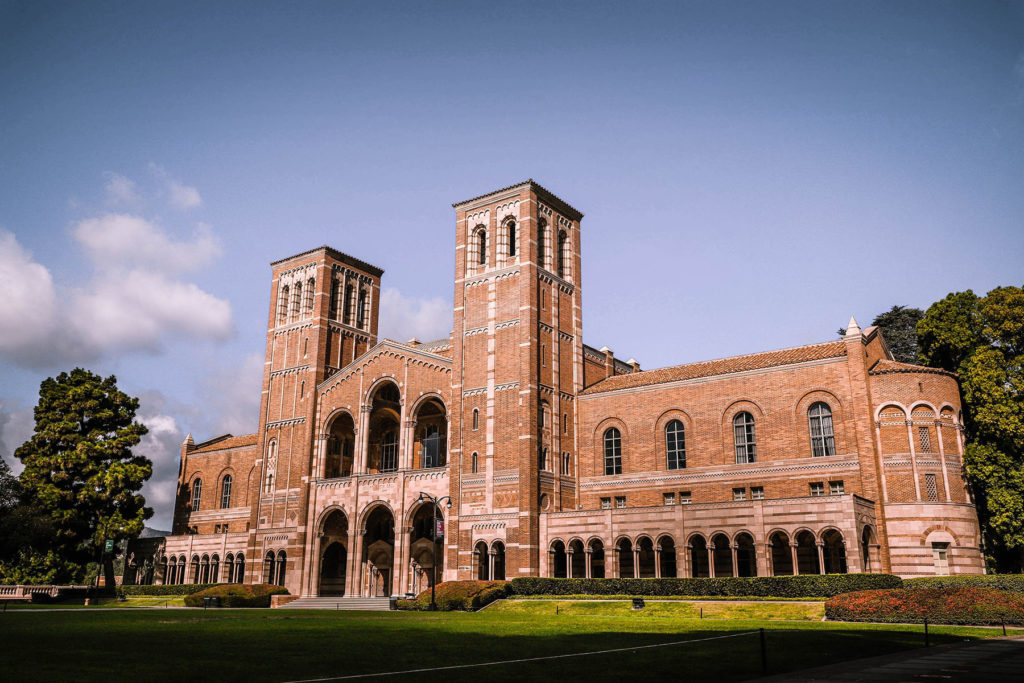
A letter signed by nearly 300 UCLA faculty members urges the university to denounce the various anti-Israel rallies that have occurred on campus since October 7.

The letter begins by detailing the atrocities perpetuated by Hamas against Israelis on October 7. “As a result of the massacre performed by Hamas, a quarter of the bodies of Israeli civilians still, three weeks after the terror attack, cannot be identified; babies were beheaded; entire families were tortured and then executed; women were abused and their mistreated naked bodies were paraded; entire villages were completely wiped out, and the Hamas terrorists massacred and slaughtered 260 innocent youth from many nationalities at a music festival,” the letter stated. “The terrorists took more than 220 hostages back to Gaza, mostly children, women and elderly. “

The faculty added: “While we all have our different political views on the Israeli-Palestinian situation, the October 7 slaughter should be condemned irrespective of political views. UCLA leadership must make the strongest possible statements condemning the barbaric Hamas attacks. There is no room for moral equivalence. There is no room for ‘both-sideism.’ There is no room for ambiguity.”

The letter noted that the signatories were “horrified to see Pro-Palestinian rallies on campus in which the massacres by Hamas were celebrated, including explicit calls for violence (including chanting ‘Intifada’ or event advertisements featuring images of weapons/violence). Such celebrations create an atmosphere of fear; one cannot imagine that UCLA will allow for celebrations of the killing of George Floyd, or for celebrations of the Armenian genocide, or the celebrations of the 9/11 attacks.” “It is inconceivable why such celebrations are not denounced by the UCLA leadership, regardless of political views,” the letter continued. “The atmosphere on campus results in Jewish students, staff, and faculty who are afraid to be on campus, show solidarity with Israel, or practice their freedom of religion in public.”

They concluded their letter by calling on the university to “denounce in the strongest possible terms any celebrations of Hamas terror attacks and killings” and to “take firm steps (including a public statement) to denounce any campus rallies crossing the line from speech to incitement, such as those rallies where speakers call for violence and spilling blood.” They also urged the university to “hold student groups and UCLA community members accountable who directly participate in such incitement.” Additionally, the faculty lobbied the university to designate “Hamas as a terrorist organization.”

Judea Pearl, chancellor professor of computer science at UCLA, National Academy of Sciences member and Daniel Pearl Foundation president, shared with the Journal an email to Chancellor Gene Block asking that the university not use “the First Amendment as a crutch,” as “the 16 Law Professors who signed the letter know something about the First Amendment, and have assured us that our requests are totally orthogonal to this diversion.”

A university spokesperson told the Journal that the chancellor is currently working on a response to the faculty letter.

One pro-Palestinian protest that occurred at UCLA on October 12 featured chants of “Intifada intifada,” “Free Palestine,” “hey hey ho ho the occupation has got to go” and “from the river to the sea, Palestine will be free.”

More recently, a video has gone viral on social media of pro-Palestinian protesters on campus beating a pinata of Israeli Prime Minister Benjamin Netanyahu with a stick, and then one protester punching it and breaking it with his knees.

This is a developing story.

Nearly 300 UCLA Faculty Members Call on University to Denounce Anti-Israel Rallies on Campus Read More »

Still a Despised Stranger, and Still Standing Strong

The Biblical phrase “a stranger and a resident” is fraught with meaning for the modern Jew. Rabbi Joseph Soloveitchik points out that this phrase is self-contradictory, and asks: “How can one be a stranger and a resident at the same time?” He explains that: “Abraham’s definition of his dual status… describes with profound accuracy the historical position of the Jew who resides in a predominantly non-Jewish society. He was a resident, …sharing with them a concern for the welfare of society, and contributing to the progress of the country in loyalty to its government and institutions. ….However, there was another aspect, the spiritual, in which Abraham regarded himself as a stranger. His identification and solidarity with his fellow citizens….did not imply his readiness to relinquish any aspects of his religious uniqueness. His was a different faith … which set him apart from the larger faith community.”

Soloveitchik reads the words “a stranger and a resident” poetically, and sees this paradoxical phrase as a reflection of the dual commitment that Modern Orthodox American Jews make, to be both a citizen and a Jew at the same time. The challenge for American Jews is to learn how to fully embrace their country and culture without assimilating away any of their spiritual identity.

However, a closer look at the text offers a different interpretation. This unusual phrase has to be seen in context. Abraham describes himself as “a stranger and a resident” when he petitions the local Hittites in the hope of acquiring from them a permanent family burial ground. Abraham is worried the Hittites might reject his request because he is a stranger; so he assures them he plans on taking up permanent residence and making this his community. In other words, Abraham is turning to the Hittites and saying: will you accept me, the stranger, as a citizen?

It turns out that not only did the Hittites accept Abraham, but they honored him as a spiritual leader. Abraham the wanderer and outsider is finally embraced. He is a stranger no more.

In many ways, this interpretation also reflects the history of the Jews in America. Jews have faced many challenges during their 370 years here; but eventually the Jews were accepted, and no longer needed to see themselves as both “a stranger and a resident.”

For a while, Jews felt completely accepted in the United States. Had you asked me 15 years ago, I would have told you that combating antisemitism was a waste of community money; Jew hatred was a thing of the past, not a challenge of the future. But I was wrong, very wrong.

Antisemitism has grown, year after year; and that came to a crescendo on October 7th. The Hamas attack has unleashed unprecedented hatred of Jews.

The American Jewish world has been left in shock. We found out that in many ways, we are still strangers after all these years.

Part of it has to do with a misapprehension about antisemitism. Many people assume that antisemitism is just another variety of xenophobia, and the hatred of Jews is much like the hatred of every other minority group. This is a partial explanation of antisemitism which is also partially correct. The Book of Esther does say that Haman demands the Jews be destroyed because their “customs are different from any other people.” Xenophobia is as old as humanity itself.

Jews have also assumed that antisemitism is mere xenophobia; and so they endeavored mightily to prove to the world that they are no different than others. During World War I, German Jews volunteered for the army in disproportionate numbers, eager to shed the accusation they were cowardly and unpatriotic; 12,000 German Jews died on the battlefield. (Unfortunately, this didn’t help; Jews were slandered anyway. And a few short years later, Germany elected Hitler.)

At times, Jews policed the behavior of other Jews in the hope of diminishing xenophobia. In the late 1800s and early 1900s, German Jews looked down on Ostjuden, the Jews from the East, who dressed differently, didn’t speak the vernacular, and lacked German refinement.  This form of social pressure was not unique to Germany; in post-war America, many spoke about how they thought the oddly dressed Hassidic Jews got in the way of other Jews being accepted.

Even so, xenophobia is only a partial explanation for antisemitism. Jew hatred has raged in countries where no Jews live; at other times it has exploded in countries where Jews have assimilated and blended in. David Nirenberg, in his book Anti-Judaism, points out that hatred of Judaism often has a mythical quality, in which Judaism is seen as the polar opposite of one’s beliefs, the very definition of what one isn’t.

This type of antisemitism is ideological. Medieval Christians didn’t just see Judaism as a competing religion; Judaism was seen as containing noxious beliefs that could ruin the soul. One need not be Jewish to be a victim of this type of anti-Judaism; in post-inquisition Spain, Christian thinkers would often malign the other as being “Jewish” for having the wrong ideas.  For Communists,  Jews were predatory capitalists; for Fascists, Jews were the vanguard of Communism. Judaism became the deviant philosophy against which everyone contrasted their “true” beliefs.

Nirenberg points out at the end of the book, which was published in 2013,

“We live in an age in which millions of people are exposed daily to some variant of the argument that the challenges of the world they live in are best explained in terms of Israel.” This reality was already evident then; it is ubiquitous now. Israel has, to borrow Jacob Talmon’s phrase, become “the Jew among the nations,” the devil which defines what deviance is.

Anti-Zionism is an ideology; and like most ideologies, it is disseminated by the intelligentsia. The hatred for Israel that is roaring through college campuses is founded on the belief that Israel is the ultimate colonial state, the very incarnation of centuries of Western racism and exploitation. Considering Israel the echt-colonial state may seem absurd to anyone well versed in 3,800 years of Jewish history in the Holy Land. But such is the reality of myths; they need no reality. This new form of anti-Judaism means that the plight of the Palestinians is looked at with a microscope, while what happens to the Rohingyas or the Uighurs is barely worth anyone’s attention. Such ideologies are uncompromising; the thought of offering any sympathy for kidnapped Israelis is beyond the pale.

One can reasonably discuss how, on the margins, anti-Zionism and antisemitism are not fully identical. But without a doubt, the myths that drive contemporary anti-Zionism are one and the same as the myths that lie behind antisemitism. And as we have seen over and over again, even the most carefully crafted protestations of anti-Zionism rapidly morph into antisemitism. This is what is happening on college campus after college campus, where harassment of Jewish students is an everyday event, and death threats and assaults are becoming too common an occurrence.

Jewish students are feeling betrayed. They can’t believe that their own friends rushed out immediately on October 8th to show solidarity with the murderers of their brothers and sisters in Israel. And this betrayal goes all the way to the top, nurtured by professors and enabled by administrators.

This betrayal is not just a betrayal of Jewish college students; it is a betrayal of the American Jewish dream. After Jews immigrated to this country, it was at these very same universities that they found the tools to achieve success. The children of Jewish strangers from Europe and the Middle East were able to enter the mainstream of American life due to these universities. Just a few decades ago, these campuses are where Jews shed their past as strangers.

Now that’s no longer true. On October 7th American Jews woke up to find out that they are strangers once again.

Many Jews feel alienated right now, out of place in their workplaces, universities, and even in their favorite coffee shops. Like Abraham, Jews are once again wondering if they belong here.

But the story doesn’t end here. What is remarkable is how many Jews have gotten involved in helping Israel and combatting antisemitism. Young and old, they will organize dinners at Hillels and candlelight vigils at City Hall; they will march on Washington and deliver supplies to Israel. They will stand up for Israel and stand against antisemitism.  Unlike Abraham, these Jews won’t ask for acceptance; they will demand it.

And no one is going to tell them they don’t belong.


Rabbi Chaim Steinmetz is the Senior Rabbi of Congregation Kehilath Jeshurun in New York.

Still a Despised Stranger, and Still Standing Strong Read More »

Seeing October 7 Through the Long Arc of the Jewish Story

One of the things about moments of intense darkness is that it’s difficult to pull back and look at the long arc of history.

We’re living through such a moment. Ever since Hamas terrorists invaded Israel and brutally massacred 1400 souls on Oct. 7, our focus has been on the present—our feelings and our actions.

Emotions of intense grief, rage, shock and fear have collided in our consciousness. Meanwhile, our minds and our hands have been consumed with action—what can we do to help?

When all one can see and feel is the urgency of the moment, there’s not much room left to see history.

And yet, that is what I did this morning when I came across this quote from the late Chief Rabbi Jonathan Sacks:

“To be a Jew is to be part of the most remarkable story ever lived, by any people, covering more countries, more adverse circumstances, more triumph and tragedies than any other story. Every one of us has a chapter to write in that story and hand the book on. That is what it is to be a Jew.”

What struck me about the quote is its radical inclusivity. It’s all in there. Every aspect, every moment, every drama of the Jewish experience since time immemorial feels included. Tragedies, triumphs, everything in between.

In addition to every moment, Sacks makes sure to include every Jew. Every Jew is part of “the most remarkable story ever lived” and “has a chapter to write in that story and hand the book on.”

It’s more pleasant, of course, when we’re writing a triumphant chapter like the creation of the state of Israel, or the success of Jewish comedy in America, or a spiritual renaissance among the new generation. Those are fun to write.

This current chapter isn’t.

Since Oct. 7, we’ve been living through perhaps the darkest time of our Jewish lives. Many of us are still dizzy and numb from the shock of the massacre, not to mention the alarming rise in Jew hatred throughout much of the world. It’s hard to even know what we’re writing.

There is a human tendency to take such moments of extreme darkness and treat them as extreme exceptions. We want to file them away in a special box so we never have to experience them again. But there is an opposite tendency to allow the darkness to invade our souls and blind us to the presence of light.

This is why I found the quote from Rabbi Sacks so powerful—it embraces the darkest darkness and the brightest light. It elevates light without underplaying darkness. It reminds us that they are both part of the most remarkable story ever lived.

It reminds us that Oct. 6 is just as important as Oct. 7.

Rabbi Sacks entered my life this morning to remind me that all these extremities of Jewish life are part of our story. They have shaped us into we are. And just as a horrible tragedy may have befallen us, there are chapters of triumph yet to be written.

Shabbat shalom.

Seeing October 7 Through the Long Arc of the Jewish Story Read More »