fbpx

September 29, 2023

Senator Feinstein on Being Jewish: The Jewish Ethic and the Public Arena

July 31, 2003

Over the centuries, Jewish scholars and laymen alike have battled over the question of what it means to be a Jew.

I think there are no easy answers to this question. But for me, being Jewish has given me a great desire to enter public service and replace my divot. Had I been born in Poland or Russia – the birthplace of my grandparents – I probably would not be alive today, because I was born at the time of the beginning of the Holocaust. I certainly wouldn’t have had the opportunities afforded to me.

My story is a familiar one and part of a common Jewish commitment to make this a better world.

I was born of first generation immigrants. My Mother emigrated from St. Petersburg, Russia, when she was very small. Her family came over during a Russian Revolution via haycart through Siberia, and then by boat to Eureka, California. Whatever possessions they had with them were stolen.

My Grandfather died two months after his arrival at the age of thirty-two, leaving my Grandmother penniless with four small children and no source of income, unable to speak English. It was a rough life, and my Mother was sick as a child, spending three years in a sanitarium with tuberculosis.

At the age of 18, she had virtually no education. She was a very beautiful woman and became a model. Incidentally, she was Russian Orthodox in her religious beliefs.

On my Father’s side, my Grandfather was born into a Polish family in a small town on the border with Russia. He left by himself at the age of 14, out of fear of conscription into the Polish Army and to avoid having to participate in some of the Pogroms that were being carried out by the Polish Military.

He was a stowaway on a ship, which landed in 1890 in Boston Harbor, where from 14 to 19, he worked as a shoemaker. He then worked his way to Sacramento where he met a young Lithuanian immigrant – my Grandmother.

They were married and moved to San Francisco. My Grandmother had six children, in five and a half years. She worked in a shoe store, and she would say that she could deliver a baby in the back of the shoe store, and still complete the sale.

They opened two small stores – one in the Mission District, one on Market street. In 1906, their house fell down in the earthquake. One business burned, and the other was dynamited to stop the fire. Following the fire, they moved to Berkeley. They had five more children, for a total of eleven. Because the family was poor, one child worked while the other went to school.

My Father was one of the lucky ones. He was designated to be educated. He became a physician, and he became the first Jewish full professor at the University of California Medical Center. Imagine my family’s pride at that accomplishment.

My Uncle, who helped put my father through school but had little education himself, also fulfilled the American dream and became a successful businessman with an abiding interest in politics.

And this uncle was one that really gave me my desire to participate in public life, when he would take me down on Monday afternoons to what he called “the Board of ‘Stupidvisors”. And he would say to me, “Dianne, you get an education, and you do the job right.” And for some reason, it stuck.

My Father wanted me to be a doctor. At Stanford University, I took Bio 1, 2, and 3, and I got a D in Genetics. I came home and said, “Dad, I don’t have the aptitude for this. I can’t possibly be a doctor.” And then he told me the first and last lie he ever told me. “Don’t worry, I got a D, too.”

I knew, because of what it meant to his family, that my father never saw the south side of an A. I recognized I wasn’t going to go into medicine, and I began to take a number of diverse courses.

One of those course was American Political Thought. In that class, I could write my heart out and earn a very good grade. This told me something about where I belonged.

I then went on to be a Coro Foundation intern in San Francisco, which gave me an opportunity to do a team project in the Post Conviction Phases of the Administration of Justice.

 I sent the paper to the then Governor, Pat Brown, and he liked what he read. He appointed me to the California Women’s Board of Terms and Parole, where I became the youngest member of a parole board in the United States.

I also served on the Crime Commission, the jail investigative body, and I developed a portfolio of expertise in the criminal justice system.

Then, I decided the time came then for me to try to do what my uncle said I should do, and I ran for the Board of Supervisors, and topped the ticket, which entitled me to be the first woman President of that Board.

Some editorial writers were opposed to having a woman as President of the Board of Supervisors. They said I should do the statesman-like thing, and yield to the next higher runner up.

I looked around, and I saw the next runner-up who was man and a real estate broker, and I decided that I should not give up my spot, and I became the first woman President of the Board. During my time on the Board, my husband, Bert Feinstein, became ill with cancer, and it was terminal. It was an experience which for me has made the battle against cancer one of my top priorities as a United States Senator. It was anexperience which led me to the decision to retire from the public life.

On my first day back to the office after taking leave, I went in the press office and said, I am not going to run for Mayor. Forty-five minutes later, Dan White shot and killed George Moscone, and Supervisor Harvey Milk, the first openly gay elected official in the United States.

I was absolutely determined that the assassination would not succeed in changing the Administration. So I kept all of Mayor Moscone’s staff, slowly making them, I believe, loyal to me.

From that experience, I drew my greatest political lesson – that the best way to govern a diverse society is from the center of the political spectrum. If you do this, you can listen to the right, you can listen to the left, you can make judgements as to what is the best thing for all the people. And I did that for nine years as Mayor.

San Francisco was the first city to experience AIDS, which tore the City apart and caused a riot. It left deep scar tissue much as the Rodney King episode did in Los Angeles. I believe that there is a dark current that runs deep within our society, and must always be guarded against.

My experience is that bigotry and prejudice in diverse societies, ultimately lead to some form of violence, and we must be constantly vigilant against these things.

I was born during the Holocaust. I find that looking at Jewish history and cultural tradition, the horrors that can take hold of a society, and the memories of six million people who were murdered, keeps alive an historic commitment of social justice and progress.

That is the legacy for me, as a Jewish American in this day and age. Despite terrible events, so deeply etched in our souls, Jews have forged themselves with the renewed commitment to the social good, to justice, to equality for the underdog, for the rights of every person regardless of their race, creed, color, sex or sexual orientation, to live a safe, good life.

For those of us who hold elected office, governing in this complex and diverse country can often be very difficult. If we’ve learned everything from the past, it’s that it takes all of us who treasure our nation’s beauty and the character of our people to be mindful and respectful of one another.

Every day it calls on us to put aside our animosities, to search together for common ground, and to settle differences before they fester and become real problems.

Our Jewish culture is one that values tolerance with an enduring spirit of democracy. The right of an individual to speak out, the right of an individual to live and grow and thrive in a society.

For me, that’s what it means for me to be a Jew, and everyday I rededicate myself to that ideal.

Senator Feinstein on Being Jewish: The Jewish Ethic and the Public Arena Read More »

Nature and Spirit – Thought for Sukkot 2023

Hey Everyone – I will be posting twice every Friday – once a thought on the Sabbath and/or holiday we are entering, and once for what I am actually teaching Shabbat morning. As always, you are welcome to join us Shabbat evening or morning – just go to our website for log in info (www.ohrhatorah.org)
Meirav and I wish you all a Shabbat Shalom and Chag Same’ach!
Here is my thought for Sukkot — My plans for teaching up next!Nature and Spirit: Thoughts on Sukkot 2023 (adapted from previous years)
Nature and Spirit
I am one of those who accepts the idea of “natural religion.” This belief does not mean the worship of the natural world. Scholars use the term to mean that religion grows out of human nature.
There are many people, perhaps you, who feel that life is imbued with the “numinous” – a unique spiritual quality, encountered outside of us or found within us. Many of us have a natural drive toward depth. We experience that depth in many spontaneous ways. Sometimes just sitting alone, or with those whom we love, or reading, or listening to music, or watching great cinema, or experiencing art, or sometimes in conversation with family or friends, you suddenly feel that the quality of the moment has shifted, almost as if the air pressure has changed.
Much of what we call religion is the coalescing of these moments into communal experiences, then into rituals so that the experience can be evoked and relived.
Here is my imaginative reconstruction of the history of Sukkot, the holiday which begins tonight, Friday night. Orchards and fields of crops are usually found some distance from the place where people live. Walking back and forth each day to and from these distant fields and orchards during harvest time would be unfeasible. Farmers find it more convenient to build a temporary hut next to fields, perhaps covered with some of the cuttings found on the ground around that day’s harvest.
Some farmers just go to sleep when it gets dark. Others lie awake a little while. Perhaps sitting quietly just a bit, overwhelmed with gratitude for a plentiful harvest. Perhaps looking up at the stars through the small gaps of the foliage overhead, and then looking around at the stunning, moonlit beauty of the fields. Looking over at their loved ones. Looking over at the other huts that house other sleeping families and friends. Sitting there, filled with gratitude and love, and filled with a knowing of the great Presence.
Some people who believe that there is God and who also experience the numinous in deep ways have a natural need to express awe and gratitude toward that experience.
Some people who believe that there is God and who also experience the numinous in deep ways have a natural need to express awe and gratitude toward that experience. Imagine some small hamlet in which those few people who experience the numinous know who each other are. They share a longing and a language of wonder, hoping to capture the beauty of those moments in words, poetry, song, music and dance, so that the beauty can be re-evoked.
Perhaps the more tactile ones put together a careful handful of the local foliage to signify the Divine Presence. Not everyone understood what those people were saying and doing, but many did.
Natural inner life religion eventually turned into revealed / ritual religion, into various revealed religions. The natural human need to experience the Divine does not change though the forms of the experience do.
Sadly, for most of us, the holiday of Sukkot is a residue of times long gone. In order to experience its origins, you have to activate another powerful human tool: the mythic imagination. Whether you do this in a Sukkah or not, consider sitting outside for a bit and gazing at that Harvest Moon (the full moon nearest the autumnal equinox – always apparent during Sukkot). Imagine being overwhelmed by the bounty, enjoying the easy company of other people. Imagine everyone sitting around the fire in the midst of the camp.
As you sit outside, contemplate what is inside your house or apartment. Probably way more stuff than you need, but nevertheless, lots of miraculous artifacts. Music collections and musical instruments. Books and photographs. Things that symbolize the love in your life, mementos of places you have been. Try to distill all that largesse into the few things that symbolize more than anything the bounty in your life. Imagine a beautiful room, decorated only with those articles that point to the deepest moments in your life. Perhaps, in that quiet, you will feel the spirit passing through you.
Try to distill all that largesse into the few things that symbolize more than anything the bounty in your life. Imagine a beautiful room, decorated only with those articles that point to the deepest moments in your life. Perhaps, in that quiet, you will feel the spirit passing through you.
Perhaps during these days of Sukkot, you can make sure to gather with some family and friends for a festival meal or just a quiet moment in the Sukkah, or maybe you go back inside and just phone, text or video chat with some special people. Create a digital Sukkah.
Contemplating the material bounty and beauty outside of us, the spiritual plenty within us, and the love and generosity of those dear to us, can cause us to ache with the heaviness of the spirit. The heaviness becomes unbearably light, as it transforms into joy.
Of course, we have to get back to life. The Sukkah comes down. We hope, though, that the pause inside the beauty of that moonlit hut, the numinous will be anchored in our souls.

Nature and Spirit – Thought for Sukkot 2023 Read More »

White House: Eight Federal Agencies to Use Title VI of Civil Rights Act to Fight Antisemitism

The White House announced in a Thursday fact sheet that eight federal departments will be using Title VI of the Civil Rights Act as a tool to fight antisemitism.

The eight departments are the Departments of Agriculture, Health and Human Services, Homeland Security, Housing and Urban Development, Interior, Labor, Transportation and Treasury. The White House announcement states that these departments are clarifying that Title VI “prohibits certain forms of antisemitic, Islamophobic, and related forms of discrimination in federally funded programs and activities” and are part of the Biden administration’s National Strategy to Counter Antisemitism.

International Legal Forum CEO Arsen Ostrovsky lauded the decision as a “landmark announcement” and argued that Title VI “is an indispensable tool in the fight against antisemitism, especially in its modern manifestation masquerading as anti-Zionism.” “With antisemitism in the United States at record high, especially on campuses, this decision will solidify and reinforce the civil and legal rights of Jewish Americans, against the scourge of modern Jew hatred and antisemitism in all its forms,” Ostrovsky added.

Kenneth L. Marcus, founder and chairman of the Louis D. Brandeis Center for Human Rights Under Law, said in a statement that the Brandeis Center is “elated” by the White House’s latest action to combat antisemitism. “Coupled with Ambassador Lipstadt’s new State Department report, issued in the same week, which recognizes the central role of the IHRA Working Definition in efforts to combat anti-Semitism, this is a major victory well worth celebrating,” Marcus said. “Nevertheless, it is only a partial victory, even if it is deeply satisfying.”

Marcus argued that “that it’s one thing for the government to commit to addressing anti-Semitism and another for it to identify anti-Semitism properly. That is why it has always been critical that this policy be coupled with a proper, uniform definition of anti-Semitism. In our times, that definition is the IHRA Working Definition.” “The Executive Order on Combating Anti-Semitism wisely provided explicitly for IHRA’s use, subsequent Education Department guidance has also done so, and the Biden State Department has just reiterated its commitment to IHRA in Ambassador Lipstadt’s new report,” he added. “It is crucial that the domestic agencies do so as well.”

Conference of Presidents of Major Jewish American Organizations Chair Harriet P. Schleifer and CEO William Daroff also said in a statement, “As American Jewish leaders, we welcome the actions taken by the Biden administration as part of our country’s first antisemitism strategy. Title VI, which bars recipients of federal funds from discriminating on the basis of race, skin color, or national origin, is a critical tool in the fight against modern antisemitism. Jewish Americans, as members of an ancient faith, ethnic group, and people, face multifaceted forms of discrimination in the modern world. By ensuring Jewish Americans are afforded the same Title VI protections as other minority groups, the Biden administration is ensuring that Jews are protected not just against religious discrimination but also from all other forms of antisemitism, including bigotry under the guise of anti-Zionism.” Schleifer and Daroff added that they “look forward to working with the Biden administration on further actions taken to combat the scourge of antisemitism in American life and urge the full adoption of the IHRA Working Definition of antisemitism.”

World Jewish Congress President Ronald S. Lauder said in a statement, “I am extremely pleased that President Biden has instructed Cabinet agencies to clarify that people cannot be excluded from federal programs or denied benefits based on antisemitic bigotry under the Civil Rights Act of 1964. This announcement is an absolutely essential message straight from the top at a time of rising antisemitism across the United States. This directive, which comes as part of the president’s National Strategy to Counter Antisemitism, underscores the administration’s commitment and leadership in directing the vast federal government to coordinate and act to protect Jewish Americans and other populations.

“Religious bigotry has no place in American society, and we are heartened to see President Biden’s first-of-its-kind strategic plan continue to move from words to actions,” Lauder added. “We are hopeful that other urgently needed policy changes like these will be implemented in the near future, and I stand ready to support the federal government in this and any endeavor that protects the Jewish community.”

White House Jewish Liaison Shelley Greenspan posted in a thread on X, formerly known as Twitter, also highlighted other actions taken by the Biden administration as part of their National Strategy to Counter Antisemitism mentioned in the Thursday announcement, including the Department of Education launching “a nation-wide Antisemitism Awareness Campaign and will soon begin site visits, starting with a trip to San Francisco with @HillelIntl for a conversation with students from Bay Area colleges around their experiences of antisemitism” and the Equal Employment Opportunity Commission (EEOC) distributing “materials on nondiscrimination and religious accommodations in the workplace, including a fact sheet to inform employees of their rights when they face antisemitism at work.”

The Anti-Defamation League (ADL) posted on X in response to Greenspan’s thread, “ADL is proud to partner with the @WhiteHouse to support the implementation of the National Strategy to Counter Antisemitism. We welcome the release of the new Fact Sheet on the progress it has made to implement the strategy.”


White House: Eight Federal Agencies to Use Title VI of Civil Rights Act to Fight Antisemitism Read More »

The Quest for the Perfect Etrog: Inside the High-Stakes World of Sukkot Citrus

To read more articles from The Media Line, click here.

For seven days each year, a decorated four-walled hut becomes home for the festive holiday of Sukkot, celebrated by Jews the world over.

The etrog (citron), a symbolic lemon-like fruit, is the centerpiece of the tradition. Some buyers will even pay thousands of dollars for the perfect specimen.

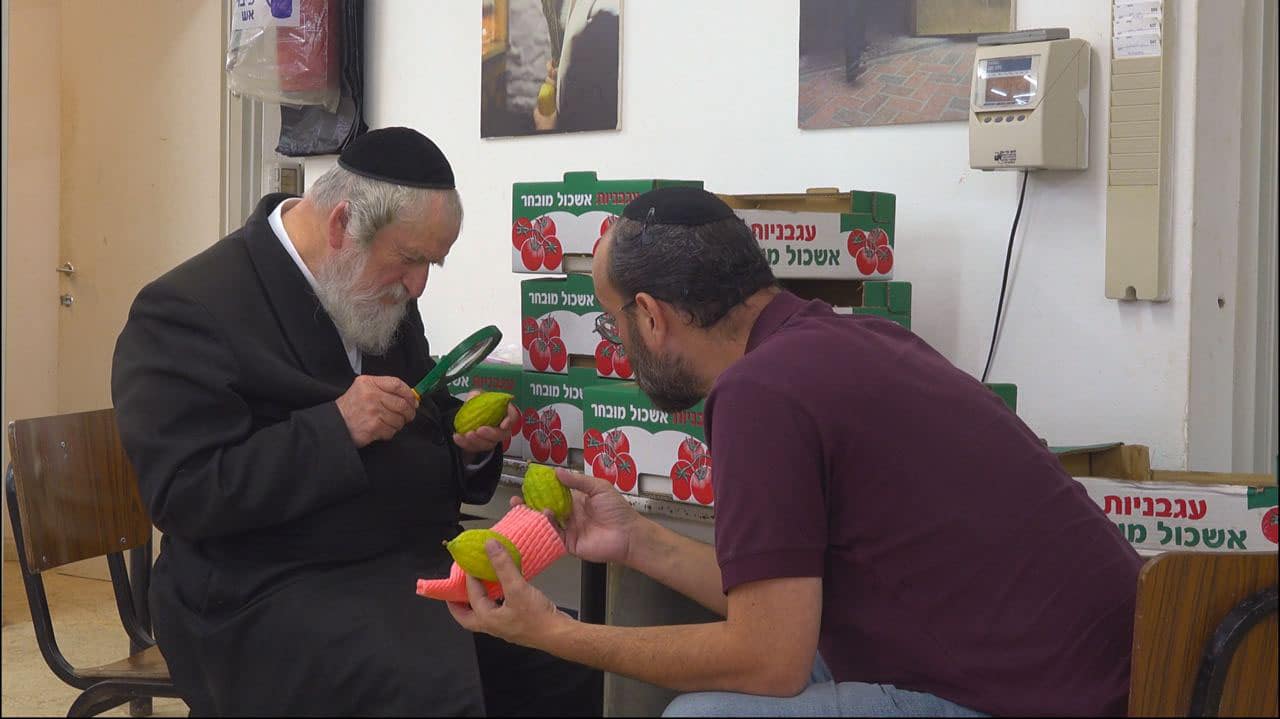
Sitting among visitors at an etrog orchard before the holiday, Rabbis and other prospective buyers are observed intimately studying individual fruit with magnifying glasses and careful, religious attention. Why a single piece of citrus can sell for so high a price comes down to several reasons—starting with what the etrog represents.

Prospective buyers examine etrogs for imperfections at Nachum Lurie’s etrog orchard in Kfar Chabad, Israel. (Dario Sanchez/The Media Line)

As part of the holiday traditions, the observant pray over four species of vegetation. Among several interpretations, rabbis say the four species represent unity among Jews of different types.

The leaves of a willow, or aravot, represent one who neither performs mitzvahs (good deeds) nor studies the Torah. The lulav, a palm frond, stands for one who studies Torah but does not perform mitzvahs. Hadasim, myrtle branches, represent one who performs mitzvahs but does not study Torah. And finally, the etrog symbolizes a person who both studies Torah and does mitzvahs. Therefore, the four species allude to the individual parts of a whole nation.

As such, each of the species must also meet individual criteria for ritual use on Sukkot. But none compare to the high standards of the etrog.

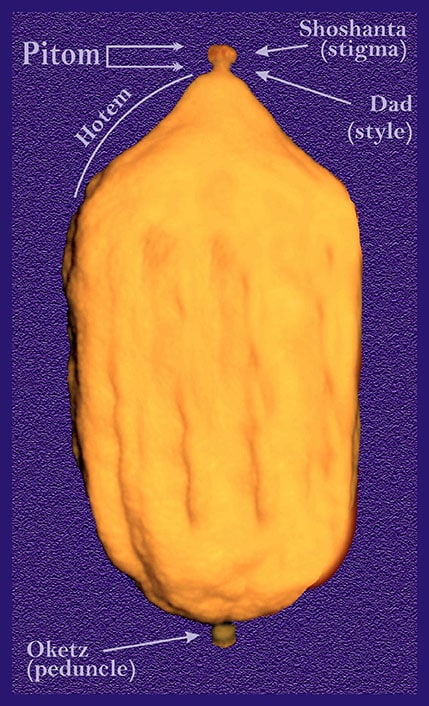
Diagram of an etrog, with its pitom at the top. (CitricAsset/Public domain)

There are multiple varieties of etrog, and different Jewish communities have their own aesthetic and religious preferences among them. Some, for example, prefer the commonly used lemon-sized varieties; with or without a “gartel,” or ridge, around the center. Some prefer wart-like bumps all over while others prefer ridges only along the length. And some prefer the massive melon-sized Yemenite etrog.

Nevertheless, several agreed-upon qualifications are common to all the different etrogs.

“An etrog has to be at its best,” says etrog farmer Nachum Lurie to The Media Line. The Hebrew word for citrus fruit like the etrog is pri hadar, which literally means “glorious fruit.” Lurie adds that the etrog “has to have a nice shape and perfect cleanliness. It can’t have any marks whatsoever. Even a tiny black dot could render the fruit possel or unusable.”

The etrog must also come from a pure tree, neither grafted nor hybridized with other citrus fruits—and this is a tall order.

Dr. Saraleh Oren, senior guide at the Neot Kedumim Biblical Culture Nature Reserve, tells The Media Line that the fruit originally made its way to the land of Israel some 2,500 years ago during the Second Temple period, its path traced back to East Asia by way of the Persian Empire.

It is the first-known citrus fruit to reach the region, and it quickly became popularly identified as the so-called “glorious fruit” for religious use on Sukkot.

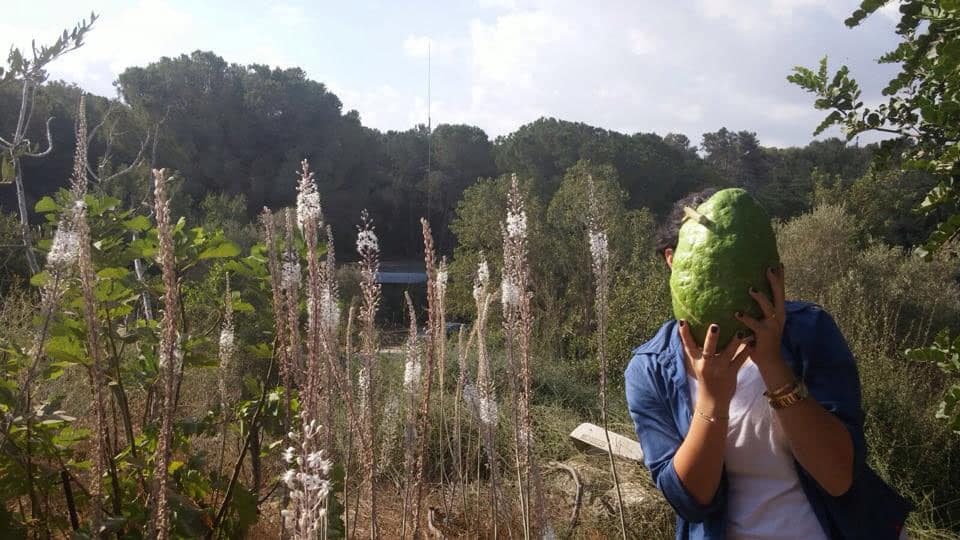
The massive 10-pound Yemenite etrog is the closest relative to this original variant, Oren says. One such etrog, grown at the Neot Kedumim Park, won a Guinness World Record in 2006.

Yemenite etrog grown at Neot Kedumim Park in Israel. (Courtesy Neot Kedumim)

“Not only is the lack of juice inside the flesh an indication of its ancient roots but so are accounts from ancient Jewish literature,” says Oren. “Rabbi Akiva,” the first-century Jewish sage, Oren relates, “is said to have entered the synagogue carrying an etrog on his shoulder. This account doesn’t make sense if Rabbi Akiva had been holding a small etrog.”

Size aside, the smaller etrogs like those grown by Nachum Lurie share the inner qualities with the Yemenite fruit.

Taking over the etrog orchard in Kfar Chabad, Israel, from his father-in-law; Lurie has been farming etrogs for decades. He tells of how his father-in-law grew the orchard from just a single etrog that was gifted to him after being blessed on Sukkot by the then-Lubavitcher rebbe of New York. The rabbi is said to have been able to confirm the fruit’s pure lineage based on its attributes.

Today, that single etrog has birthed tens of thousands of trees in the central Israel orchard.

Holding an etrog in his hands, Lurie demonstrates how the fruit must be symmetrical and tower-shaped (i.e., wider at the bottom and narrow at the top). It should be turning bright yellow from green, but not too ripe. The peel cannot be punctured in any spot, nor can it be too soft, cracked, dry, or stripped.

Finally, if the etrog grows with a stem-like protuberance (called a pitom, it is botanically the plant’s style and stigma, a holdout from the tree’s flowering bud), then that part cannot be broken off. If the pitom falls off naturally, that’s OK. The pitom is another indicator of the citron’s ancient roots. Modern citrus fruits like the orange and lemon do not have one.

Asked how often a perfect etrog grows, Lurie says, “Almost never. … It’s incredibly rare to find such an etrog whose shape and cleanliness is perfect.” But if you do happen to find one, “whatever you ask for it, you can get.”

Case in point, some “perfect” etrogs sell for thousands of dollars, despite becoming completely worthless the moment the holiday ends. And the pricing for subprime specimens is based on how close to perfection they are.

Plots of etrog trees at Nachum Lurie’s etrog orchard in Kfar Chabad, Israel. (Dario Sanchez/The Media Line)

The intensive labor and time involved in growing the etrog is another factor in its cost. Fruit from trees younger than 3 years old cannot be used for religious purposes due to a Jewish law called orla.

But pure fruit trees like the etrog are typically weaker than hybrid citrus counterparts such as the modern lemon. “You have about three years [of use] from the trees,” Lurie says. “Even if they last longer because they’re not grafted, the fruit isn’t nice. It’s not worth keeping.”

In light of this, Lurie rotates his crop as judiciously as possible. Among the thousands of trees at his orchard, his plots are organized by age, with some plots left empty so the soil can rest.

Among the productive trees, monitoring is a more-than-full-time job. Practically everything leaves a mark on the flesh of the fruit—from insects that feed on them to the tree’s own branches and leaves.

“The minute the flower opens up, flies come in and the damage is done,” says Lurie. “So we tie the leaves back [to keep them from brushing against the growing fruit], and then even before the flower opens, you need to regularly spray the trees with pesticides to keep it bug-free. But the pesticides we use can also leave a mark. So we have to gradually weaken the strength of the pesticides” while increasing how often they’re sprayed.

And even then, after all this work, some 70% of the fruit never reaches the market.

“We start harvesting about three months ahead of the holiday and we continue until the last moment. We throw out about 50% right on the spot; they’re not usable at all. Then we grade [the remaining etrogs]. After a month or two, we check again, and some are spoiled. So another 20-30% is thrown out. Until you find a good one, it’s very hard.”

As for the color, if harvested early, Lurie sprays them with natural chemicals to slow their ripening. When harvested closer to the Sukkot festival, he speeds their ripening up.

“People think you make a lot of money but not really. It takes a lot of work and investment.”

So if you ever get a price shock at an etrog cart in the autumn … now you know why.

The Quest for the Perfect Etrog: Inside the High-Stakes World of Sukkot Citrus Read More »

When Beauty Matters

Each year before Sukkot, photos of Orthodox Jews shopping for Lulavim and Etrogim circulate in the media and online; almost inevitably, it includes one of buyers scrutinizing Etrogim very carefully before making a purchase. Last year, a comic post circulated on social media. On one side was the picture of a couple standing under the Chuppah at a Hassidic wedding; on the other was a man looking carefully at an etrog through a magnifying glass. The caption underneath was: “Married random girl. But spends hours vetting a piece of fruit.”

This joke, although unfair, speaks volumes. Haredi families do an in-depth evaluation before matching a couple together. The difference is that physical attraction is not the basis of the match, nor is it the highest priority; they don’t look over the physical attributes of a potential spouse with a magnifying glass. These marriages begin with the assumption that “charm is deceitful and beauty is empty,” and that a true relationship is the meeting of two souls. Values and virtues are the primary yardsticks for choosing a mate, and that is the foundation of the Jewish ethic of marriage.

At the same time, this is not meant to dismiss the value of beauty; even so, Judaism has a complicated relationship with the aesthetic. In a lecture on Robert Frost’s poem Stopping by Woods on a Snowy Evening, Rabbi Aharon Lichtenstein describes inner religious conflict. Lichtenstein, who prior to becoming the Rosh Yeshiva of Yeshivat Har Etzion had earned a PhD in English Literature, explains that “I know of few poems that express so forcefully the moral idea that binds us to the beit midrash (study hall).” He explains that there is always a tug-of-war between the aesthetic and the ethical; beauty is deeply worthy of admiration, but there are greater responsibilities – promises – that one must fulfill. One must not be distracted from the greater goal of life.

The final words of the poem are:

The woods are lovely dark and deep.
But I have promises to keep,
And miles to go before I sleep,
And miles to go before I sleep.

Rabbi Lichtenstein explains:

Coupled with this moral obligation is a tangible sense of fatigue…The narrator longs to resign himself, to surrender to nature.  He wants to remain there, perhaps for an hour or a day, perhaps until the snow melts, perhaps forever.  “The day is short and there is much work to be done” (Avot 2:15), or in Latin, “Ars longa, vita brevis.” Creativity is endless, and life is short.  Nevertheless, the narrator longs to remain in the snow, by the woods.  But he has promises to keep, and miles to go before he sleeps – and this sleep is, of course, death.

Based on another phrase of Frost’s, Rabbi Lichtenstein calls this a “lover’s quarrel with the world.” Life places humankind between the aesthetic and the ethical. The aesthetic appeal of this world is extraordinary; but Judaism demands that we not lose sight of our mission, because there is much that needs to be accomplished before our final slumber.

But that leads one to the obvious question: why then does beauty play such a large role in evaluating the Lulav and Etrog? The Torah describes the Etrog as “a beautiful fruit”; this is expanded by the Talmud as becoming a general qualification, that all four species, (Lulav, Etrog, Hadasim, Aravot) must reach a certain standard of beauty. This emphasis is curious, considering that the beauty of the four species is a superficial characteristic.

What makes this even more puzzling is that a beautiful fruit is the source of the very first sin in the Bible; in the Garden of Eden, Adam and Eve are tempted by a forbidden fruit that is “a delight to the eyes.” The Ramban notes this parallel and explains, based on mystical thought, that the very purpose of the Etrog is to fix the sin of Adam and Eve. His understanding is that combining the beauty of the Etrog with the Lulav, which represents uprightness and righteousness, allows the aesthetic to become spiritual and meaningful. While beauty should not sit at the center, it also can serve a role in our lives, so long as we don’t lose sight of our priorities.

But there is another way of resolving this question. Beauty can inspire awe, even if not everything beautiful is worthy of awe. The Talmud’s emphasis on subjugating the Etrog to halakhic parameters is meant to effect a transformation; the Etrog’s function is for divine service, rather than a mere display of beauty.

And in this small twist of redefinition, we learn to look for a very different type of beauty. The awe we experience at seeing the perfect Etrog is very different than that of an exceptional work of art; in it, we see our spiritual aspirations. The Etrog is now an object of moral beauty rather than aesthetic beauty.

Appreciating moral beauty is the very purpose of every mitzvah, including the mitzvah of the beautiful fruit. A powerful short story recounted by the Nobel Laureate Shmuel Yosef Agnon emphasizes this point.

Agnon tells of how one year, he went to buy an Etrog at the very same time as the renowned Rabbi of Teplik, who lived humbly and gave a great deal of charity. The Rabbi bought the one he could best afford and took it home. The following day, when Agnon goes to the synagogue, the same Rabbi turns to him and asks to borrow his Etrog.

Agnon then writes:

“I asked him, “Rabbi, where is your etrog? You bought a lovely etrog…”

 ….He (the Rabbi of Teplik) sat and said, “In my neighborhood there resides a certain householder. A tough, angry, irritable man, but careful about mitzvot. He bought an etrog for a half lira, maybe more. He bragged about it in front of his neighbors, that there was none finer. I’m not sure how beautiful it really was, but there’s no one in this neighborhood who can afford to buy an etrog for a half lira.

This morning I heard a sound of crying coming from his house. I told my wife, I hear a child crying, go see why she is crying. My wife said, The girl was playing with the etrog her step-father bought for a half lira, the etrog fell from her hand and broke its pitam, becoming invalid for the mitzvah; her mother smacked her.

My wife added: That poor wretch knows what’s in store for her from her husband on account of her daughter from her first marriage. … I took my etrog to the girl and said to her, Don’t cry. Here is my etrog, give it to your mother. If your father asks, have your mother tell him: The rabbi was here and saw that your etrog was not kosher. To enable you to perform the mitzvah properly, he gave you his etrog as an unconditional gift.” (The Etrog, translated by Jeffrey Saks.)

Agnon recognizes that some foolish people, like this irascible stepfather, can misunderstand the mitzvah of Etrog as beauty that can be seen with one’s eyes. But the Rabbi of Teplik knows better; and nothing can be more beautiful than his wonderful act of self-sacrifice.

True beauty can only be seen by the soul.


Rabbi Chaim Steinmetz is the Senior Rabbi of Congregation Kehilath Jeshurun in New York.

When Beauty Matters Read More »

U.S. Senator Dianne Feinstein Dies at 90

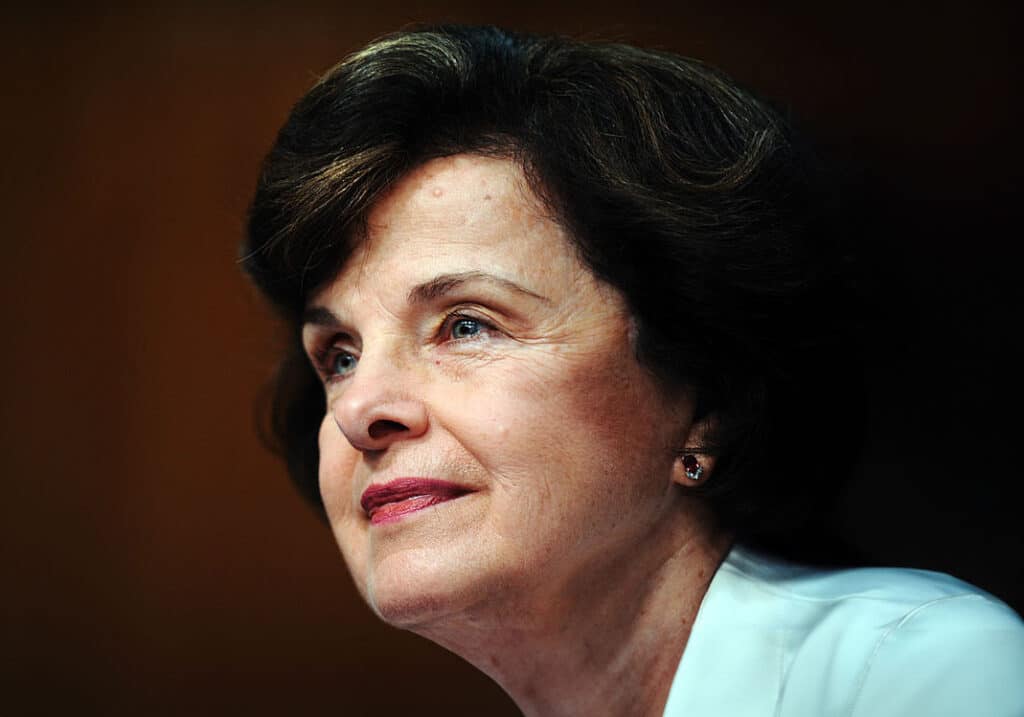
Dianne Feinstein, California’s first female United States Senator, died on Thursday night at her home in Washington, D.C. at the age of 90.

Feinstein’s Chief of Staff, James Sauls spoke of the Senator’s virtues in an official statement this morning:

“Senator Feinstein never backed away from a fight for what was just and right. At the same time, she was always willing to work with anyone, even those she disagreed with, if it meant bettering the lives of Californians or the betterment of our nation. There are few women who can be called senator, chairman, mayor, wife, mom and grandmother. Senator Feinstein was a force of nature who made an incredible impact on our country and her home state. She left a legacy that is undeniable and extraordinary. There is much to say about who she was and what she did, but for now, we are going to grieve the passing of our beloved boss, mentor and friend.”

Feinstein’s 54-year career in public office was marked by fighting the epidemic of gun violence, standing up for environmental preservation, and bringing federal funding to California projects, and providing resources to protect women and children from domestic violence.

In recent years, Feinstein’s declining health became more apparent. Despite calls to step down, in February of this year, Feinstein announced her intention to serve out her term but not seek reelection in 2024.

At the time, Feinstein released a statement listing some of her proudest accomplishments over her three-decade career in the U.S. Senate, from “the 1994 Assault Weapons Ban to the 2014 CIA torture report, preserving Lake Tahoe and the Mojave Desert to passing the first significant global warming legislation, from protecting student athletes from abuse to protecting consumers from harmful chemicals, and more recently improving our efforts to combat wildfire and drought, we have improved the lives of millions.”

At the time of her passing, Feinstein was the oldest member of Congress, the third-most tenured U.S. Senator, and the most tenured Senate Democrat. Following the retirement of Senator Patrick Leahy (D-Vt.)earlier this year, Feinstein was eligible to be elected the president pro tempore of the Senate, a position that typically goes to the most senior member of the majority party. However, Feinstein declined, and U.S. Senator Patty Murray (D-Wash.) currently holds the title. While the Pro Tempore position is largely symbolic these days, the holder of the seat is third in line in the presidential line of succession (after Vice President and Speaker of the House of Representatives).

Feinstein was first elected to the San Francisco Board of Supervisors in 1969. She would hold that position until November 1978, when she was appointed acting mayor following the assassination of Mayor George Moscone. She was elected to a full term in 1983 and served until 1988. In 1990, Feinstein ran for Governor, losing to Republican Pete Wilson by 3.5%.

Dianne Feinstein n her office after she was elected mayor of San Francisco circa 1978. (Photo by Nick Allen/Pictorial Parade/Archive Photos/Getty Images)

Feinstein first came to the U.S. Senate in 1992 after defeating incumbent Republican U.S. Senator John Seymour. Seymour had been appointed to fill the Senate seat vacated by Pete Wilson, who resigned to become the 36th Governor of California. In that 1992 election, then-U.S. Representative Barbara Boxer was elected to her first term in the Senate. Boxer’s election meant that California would join Wisconsin in having a fully-Jewish U.S. Senate delegation (Wisconsin Democrats Herb Kohl served from 1989-2013 and Russ Feingold from 1993-2011).  It was also the first time any state was represented by two female senators.

Feinstein was reelected to four more terms in the U.S. Senate. In 2018, Feinstein defeated then-State Senator Kevin de Léon (D), despite the California Democratic Party denying Feinstein its endorsement.

Throughout her Senate career, Feinstein held numerous leadership positions, including Chair of the Senate Rules Committee, Chair of the Senate Intelligence Committee and Chair of the Senate Narcotics Caucus.

In 2018, after a string of bomb threats against Jewish Community Centers, Feinstein and U.S. Senator Orrin Hatch (R-Utah) drafted and passed legislation to update the Church Arson Prevent Action Act which made threats to religiously-affiliated institutions’ property a federal crime.

On other issues regarding Israel, in 2019, Feinstein voted against Israel Anti-Boycott legislation, saying in a statement, “Despite my strong support for Israel, I couldn’t support legislation that infringes on Americans’ First Amendment rights. Free speech is the foundation of our democracy and this bill would erode that foundation. I encourage my colleagues in the House not to support this bill as written.”

In 2020, Feinstein urged Israeli Prime Minister Benjamin Netanyahu to “preserve the viability of a two-state solution by not annexing lands in the West Bank.” Later that summer, Feinstein welcomed normalized relations between Israel in the United Arab Emirates.

In 2022, Feinstein joined a bipartisan group of senators to urge the Biden Administration “to maintain the United States Security Coordinator (USSC) position at the three-star rank in the face of reported plans to downgrade it to a non-general or flag officer.”  Based in Jerusalem, the USSC serves as a crucial liaison between Israel and the Palestinian Authority.

She was a career-long advocate for the environment and protecting California’s wildlife and landscapes, including Preserving the Headwaters Forest Act (1999), the California Desert Protection Act (1994), adding to Golden Gate National Recreation Area in 2000 and the Lake Tahoe Restoration Act (2000).

In 1994, Feinstein authored the Assault Weapons Ban, which placed a 10-year ban on the manufacture and sale of military-style assault weapons, including UZIs and AK-47s as well as banning copycat versions of the banned weapons, any weapon with a combination of specific assault features and ammunition magazines that hold more than 10 rounds.”

In 2003, Feinstein and U.S. Senator Kay Bailey Hutchison (R-Texas) successfully petitioned President George W. Bush to enact an Executive Order that resulted in the National AMBER Alert Network to help law enforcement find abducted children. That same year, Feinstein and U.S. Senator John Ensign (R-Nev.) passed a bill authorizing the Federal Trade Commission to establish a national “Do Not Call” telemarketing registry.

Feinstein oversaw the six-year review of the CIA’s detention and interrogation program, culminating in the December 2014 release of the report’s executive summary and subsequent anti-torture legislation. That same year, Feinstein led the Senate Intelligence Committee in creating the Bipartisan Benghazi Report, which found that “the attacks were preventable based on security vulnerabilities and a known terrorist threat” and included “18 recommendations to increase security at U.S. facilities abroad.”

In 2015, Feinstein and U.S. Senator Rob Portman (R-Ohio) drafted provisions to “increase penalties for buyers of sex acts from trafficking victims, expand reporting on trafficking prosecutions, require training on targeting and prosecuting buyers, expand wiretapping authority to cover all human trafficking offenses and strengthen crime victims’ rights.”

In 2017, Feinstein and U.S. Senator Chuck Grassley (R-Iowa) authored “The Trafficking Victims Protection Act to renew existing programs that make federal resources available to human trafficking survivors and establish new prevention, prosecution and collaboration initiatives to help bring the perpetrators to justice.” It passed the Senate unanimously.

In 2021, “Senator Feinstein worked with U.S. Representative Ted Lieu (D-Los Angeles) to secure enactment of the West LA VA Campus Improvement Act,” authorizing the Department of Veterans’ Affairs to use funds generated through land use-agreements at the West Los Angeles Veterans Affairs campus for the development of supportive housing and services.

And just last year, Feinstein co-authored the Violence Against Women Reauthorization Act which funds initiatives to help protect women from domestic violence and sexual assault.

Dianne Feinstein was born Dianne Emiel Goldman on June 22, 1933 in San Francisco to surgeon Leon Goldman and former model Betty Rosenburg Goldman. Feinstein said she and her sisters Yvonne and Lynne were often subjected to their alcoholic mother’s brutal physical abuse while growing up.

Though she identified as Jewish, Feinstein graduated from San Francisco’s Convent of the Sacred Heart High School in 1951. She earned a degree in history from Stanford University in 1955.

In 1956, she married Jack Berman; their daughter, Katherine Anne Feinstein, was born in 1957.

Feinstein divorced Berman in 1959 and married neurosurgeon Bertram Feinstein. Bertram passed away from illness in 1978. She married investor Richard Blum in 1980 and they remained married until his passing in 2022.

U.S. Sen. Dianne Feinstein participates in a reenacted swearing-in with her husband Richard C. Blum and U.S. Vice President Joe Biden on January 3, 2013 (Photo by Chip Somodevilla/Getty Images)

President Joe Biden served in the U.S. Senate with Feinstein from her first day in 1992 until he became Vice President in 2008. He described her as “a political giant, whose tenacity was matched by her grace. She broke down barriers and glass ceilings, but never lost her belief in the spirit of political cooperation. And she was a fighter — for the city, the state and the country she loved. Every race she won, she made history, but her story wasn’t just about being the first woman in a particular political office, it was what she did for California, and for America, with that power once she earned it. That’s what she should be remembered for.”

On X, California Governor Gavin Newsom (D)wrote that“Dianne Feinstein was many things — a powerful, trailblazing U.S. Senator; an early voice for gun control; a leader in times of tragedy and chaos,But to me, she was a dear friend, a lifelong mentor, and a role model not only for me, but to my wife and daughters for what a powerful, effective leader looks like.”

Newsom said this year that in the event that Feinstein’s seat becomes vacant before the expiration of her term in January 2025, he would appoint a black woman to fill the seat for the remainder of the term. While no appointment has been made, the top three polling candidates for Feinstein’s Senate seat in 2024 all released tributes to Feinstein this morning.

U.S. Rep. Adam Schiff (D-Burbank) said that Feinstein’s legacy is “unmatched,” adding that Feinstein “single-handedly pushed an assault weapons ban over the finish line, and never gave up her fight to end gun violence. She fought powerful agencies to investigate and uncover torture – and made sure it would never happen again. She helped protect California’s natural beauty and preserve its lands for generations. And she always fought for LGBTQ rights and women’s equality throughout her career.”

U.S. Representative Katie Porter (D-Irvine), another candidate for Feinstein’s Senate seat said that “as the first woman to represent California in the Senate, Dianne Feinstein paved the way for generations of women to serve—including me. She left her mark in tough fights against gun violence, torture, and homophobia, and that legacy will live on.”

U.S. Representative Barbara Lee (D-Oakland) said “California lost a trailblazer and a giant today. Senator Feinstein broke glass ceilings for women in politics and fought fearlessly for safer communities free of gun violence. My deepest condolences go out to her family and loved ones.

Politicians from from both sides of the aisle shared statements eulogizing Feinstein. Senator Josh Hawley (R-Mo.) said that he “admired” Feinstein and “will miss her … It has been an honor to serve with her in the Senate and on the Judiciary Committee. No one was more welcoming when I came to the Senate than she, and no one was a better example. She was tough, incredibly smart, and effective. Always willing to work across the aisle to get things done, she was a person of unquestioned integrity. I admired her and will miss her in the Senate.”

The Senate Majority Leader, Senator Chuck Schumer (D-N.Y.) said “this morning, we lost a giant in the Senate. Senator Dianne Feinstein was one of the most amazing people who ever graced the Senate, whoever graced the country.” Mitt Romney, (R-Utah) called Senator Feinstein “a trailblazer — a giant of the Senate — who dedicated her life to public service. Ann and I give our condolences to her loved ones, colleagues, and staff as they mourn her passing,” And former Speaker of the House Nancy Pelosi (D-San Francisco) said that “Dianne Feinstein, right from the start, was an icon for women in politics.”

U.S. Senator Dianne Feinstein Dies at 90 Read More »

If Universities Truly Want to Pursue DEI, It’s Time to Include Jewish Students

This new academic year, as universities across America trumpeted their commitment to the pursuit of Diversity, Equity and Inclusion (DEI), for many Jewish students, this otherwise laudable goal has become entirely devoid of meaning, with the campus turning into a hotbed of antisemitism, Jew hatred and exclusion.

According to the ADL, in the last year, antisemitic incidents across the US reached record highs, with antisemitic activity reported on college and university campuses surging 41%.

Although these statistics should sadly not come as a surprise to anyone, what is staggering is the extent to which university administrators and leaders are willing to excuse and turn a blind eye to antisemitism, all in the name of the sacred pursuit of academic freedom and free speech.

When in January this year, on the eve of International Holocaust Remembrance Day, we called out the University of Michigan for refusing to condemn a group of students who called for an “intifada revolution,” the University justified their refusal to act by responding that “[o]ne of our most important values as an institution – one we teach and model in and out of the classroom and one that is embodied in our commitment to diversity, equity and inclusion – is the respect for those who have different opinions, have different life experiences, hold different world views.”

In this particular case, the “different world view” they were calling to respect was a direct and unadulterated call for violence, placing Jewish students, faculty and staff, in harm’s way.

In August last year, when a number of registered student groups at UC Berkeley Law School passed a by-law to exclude Zionist speakers, the University excused this by claiming Zionism was merely an expression of a “political viewpoint” and therefore protected speech under the First Amendment, not the inherent and indispensable part of Jewish identity that it is. In response, we filed a Title VI claim under the Civil Rights Act, on the basis of the University condoning the wholesale exclusion of a group of students, Jewish students in this case, on the basis of their identity, national original and shared ancestry.

And then most recently, last week, during Yom Kippur, the holiest day of the Jewish calendar, the Ivy League University of Pennsylvania hosted a ‘Palestine Writes’ literature event. Whilst a celebration of Palestinian literature and art ought to be embraced, this was mostly a festival of hate, featuring a who’s who of antisemites, extremists and even convicted terrorists.

One of the keynote speakers was Roger Waters, who has repeatedly engaged in antisemitism, including making such mendacious and racist claims about the “the Jewish lobby”. Waters is now being investigated by the German police, over engaging in Holocaust distortion, while wearing a mock-SS uniform during a recent series of concerts in the country. The US State Department has even said that Waters has “a long track record of using antisemitic tropes to denigrate Jewish people.”

Another speaker, Randa Abdel-Fattah, has previously claimed that “Israel is a demonic, sick project and I can’t way for the day we commemorate its end.”

Marc Lamont-Hill, also speaking at the festival, was fired by CNN after effectively calling for Israel’s destruction. He has also previously said that calls for Palestinians to “reject hatred and terrorism” were “offensive and counterproductive.”

Meanwhile, Susan Abulhawa, the executive director of the Palestine Writes festival, has previously expressed support for US-designated Palestinian terror groups Hamas, Islamic Jihad and PFLP, describing their terrorist actions, including those which have resulted in the murder of American citizens, as “self-defense by resistance groups,” while comparing Israel to Nazis and calling for a boycott of the Jewish state.

Although Penn President Liz Magill released a statement noting that some of the speakers at the event had a “troubling history of engaging in antisemitism by speaking and acting in ways that denigrate Jewish people,” Penn failed to take any meaningful steps in response, claiming they “fiercely support the free exchange of ideas as central to our educational mission.”

It is inconceivable that Penn would have permitted such a festival had it promoted, say, hatred against members of the African American or LGBTQ community, and rightfully so. Yet such hatred and incitement against Jewish students is being excused and whitewashed, while their voices are being marginalized, silenced and excluded, all in the name of free speech and a perverse interpretation of the Diversity, Equity and Inclusion (DEI) policy.

Perhaps as recipients of federal funding, universities ought to be reminded of their obligations under Title VI of the Civil Rights Act, which prohibit discrimination on the basis of race, national origin and shared ancestry, or in circumstances where universities fail to take action against the creation of hostile environments on campus. This is a point that was also reinforced in the historic May 2023 White House Plan National Strategy to Counter Antisemitism.

Indeed, legislation has already been proposed in Congress to rescind federal funding from universities that allow antisemitism on campuses.

It is imperative to recognize that, even in circumstances where antisemitic hate speech in question is protected under the First Amendment, there is still an obligation for university leaders to condemn these attacks on Jewish students, support them and underscore that their concerns are real.

In order to guide the universities to determine the kind of speech and actions that qualify as antisemitism, universities ought to adopt the International Holocaust Remembrance Alliance (IHRA) Working Definition of Antisemitism, the most widely endorsed definition of antisemitism in the world.

If universities truly want to pursue DEI, it is time Jewish students were included in this discussion and academic freedom no longer used as an excuse for Jew hatred.


Arsen Ostrovsky is a human rights attorney and CEO of the International Legal Forum, an independent NGO and global network of lawyers committed to combating antisemitism. You can also follow him on Twitter (‘X’) at: @Ostrov_A.

If Universities Truly Want to Pursue DEI, It’s Time to Include Jewish Students Read More »

Rally for Israeli Democracy, Dag Hammarskjöld Plaza, Sept. 22, 2023

My heart is in Kaplan Street, but I am at the ends of the West.

My name is Rabbi Elliot Cosgrove. My community, Park Avenue Synagogue, is the largest Conservative synagogue in New York. Day and night I labor to create a vibrant, passion-filled, committed Jewish community, a Jewish community with Israel at its center. To learn about Israel, to support Israel, to travel to Israel, and most importantly, to love Israel – this is not just at the heart of my synagogue; this is at the heart of who I am as a rabbi and as a Jew.

Why am I standing here, at this time, at this place, in front of this crowd? Why?

Because:

If not now, then when?

If not here, then where?

And if not me, then who?

If not now, then when?

Fifty years ago, on the eve of the Yom Kippur War, Israel’s fate hung in the balance, the country surrounded by external foes. Today, 50 years later, Israel once again stands at a tipping point, its internal divisions threatening to tear it apart. It is precisely at this moment, when the Prime Minister of Israel stands before the community of nations, that we need to publicly affirm what it is that Israel fought for, fights for, and will continue to fight for: a Jewish and democratic state.

If not here, then where?

We are here because, as stated in Israel’s Declaration of Independence, on November 29, 1947, the United Nations General Assembly passed a resolution calling for the establishment of a Jewish state in the land of Israel. We are here because of our commitment to an Israel, as stated in Israel’s Declaration of Independence, based on freedom, justice, and peace as envisioned by the prophets of Israel … and faithful to the principles of the charter of the United Nations. We are here to remind and affirm to the world the principles upon which Israel is founded: A Jewish and democratic state.

If not me, then who?

I am here because I love Israel. With all my heart, with all my soul, and with all my might. I am here because. “All of Israel is responsible one for the other.” To my brothers and sisters fighting for democracy in Israel: You are not alone, we stand with you! I am here to remind my American brothers and sisters that to love Israel is to stand by it, to defend it, to shape it, and to help it realize the principles upon which it was founded. I am here because I want my children to know that when the future of Israel as a Jewish and democratic state was hanging in the balance, their father took a stand.

For the sake of Zion, I will not be silent.

For the sake of Jerusalem, I will not be still. (Isaiah 62:1)

For the sake of a Jewish and democratic state, we are all here today.


Rabbi Elliot J. Cosgrove is Senior Rabbi at Park Avenue Synagogue.

Rally for Israeli Democracy, Dag Hammarskjöld Plaza, Sept. 22, 2023 Read More »

Be the Jewishy One in the Room

In my 20’s I worked as a counselor at a Jewish camp in the Poconos. At services one particular Shabbat, I bowed at the appropriate times in the service.  (Mind you, I was the only one doing so).

A few days later, I was walking by a group of younger teens.  One whispered to the other (while pointing at me) “There’s that real Jewishy guy.”

What a comment.  And at a Jewish camp!!!

I laughed at it then.

I think about it now.

Yes, perhaps it was that real Jewishy stuff that made me want to be a rabbi.

But here’s the truth …  My hope this Holy Day season is that we ALL take pride in being “that really Jewishy” person, or part a really “Jewishy” family.

What does that even mean?  It’s not about keeping kosher (though I do want people to make informed choices when they eat).

And it’s not about observing all the laws of Shabbat (though I do want people to take Shabbat in their homes to the next level).

It’s about knowing in our core that being Jewish is important — and that we have no shame in wearing Jewish pride wherever we are.

Now – more than ever, I feel this as the legacy of our time.

Rabbi Hillel, the great rabbinic sage, asked three questions in our Mishna:

  1. If I am not for myself, who will be for me?
  2. If I am for myself only, what am I?
  3. And if not now, when?[1]

The Jewish community has been stellar with regard to questions two and three.

Question 2: If I am for myself only, what am I?  In other words, we need to be out there helping the world. We have so much to be proud of when it comes to how we have stood up for others.  Our role in gender equality, our leadership in civil rights, our support of LGBTQ rights.  We marched in Selma.  We lobbied for fair wages.  We protested in support of undocumented immigrants.

We give philanthropically to art and theatre, universities and museums.  We seek homes for those unsheltered.

And to Hillel’s question number three: If not now, when?  We can also be proud.  We don’t wait for someone else to take the first step.  Our people break barriers, separate the waters, and create opportunity.  We recognize that Justice delayed is justice denied, so we don’t sit back.

But that first question: If I am not for myself, who will be for me?

Friends, I think we could use some extra help here.  I suggest that we consider “Myself” to be “my people.”  If I am not for my people, who will be for us?

My hope this Holy Day season is that we ALL take pride in being “that really Jewishy” person, or part a really “Jewishy” family.

While we as Jews stand in line to support world organizations, who is standing in line to support Jewish organizations? Who is supporting Hillel? Who is supporting the Federation? Who is supporting the Jewish Studies departments? Who is supporting the ADL?

We are in a strange time as Jews in America. Historically, our dreams, our visions, our determination for a better world — they all helped build this country. But there are many, many institutions that are actively ignoring and erasing our presence.

I’ll go a step further – there are many institutions that are condemning our existence.

And yet — those on the extreme right and those on the extreme left — they seem to have one thing in common …. A disdain for Jews.

I believe that we need to step up as Jews and for Jews.

Last spring, I had an experience at a local bookstore.

I was delighted to see a shelf with books celebrating Arab-American Heritage Month. So much to learn!

But as I perused the books, I noticed that many had nothing to do with Arab-American life. Rather, they were about Palestinian life in the Middle East with vitriol against Israel.

I wrote the bookstore, suggesting that I could help curate books for Jewish-American Heritage Month (in May), books about the Jewish-American experience, and books that build bridges (while not ignoring the real issues among religions in our day).

I didn’t hear back.

At the beginning of May, I returned to the bookstore. It was Asian-American Heritage Month. Again, I was delighted. I then looked around for a Jewish-American Heritage Month display.

Nothing.

I wrote the bookstore again, volunteering to do a Jewish themed reading later in the month.

I didn’t hear back.

I wrote one last time. Finally, the owner contacted me.  She said she would be delighted to get my thoughts on important Jewish books prior to the Holy Days and suggested we connect in the summer. I responded right away that I would be thrilled to talk.

And so, we set about curating a list of books to display at the Village Well Bookstore in Culver City.

Yes, I was the Jewishy one making a little noise. And while at first I was apprehensive, I remembered, “If I am not for myself, who will be for me?”

The next step is to be the Jewish voice in the room when it comes to Culver City (home to Temple Akiba) — ensuring our youth are not penalized because the school district continues to hold classes on Yom Kippur. We are committed to effectuating change — guiding the leadership to understand that Yom Kippur is not a holiday, but rather a Holy Day. It’s not a celebration, it’s not a day recognizing a hero or memorializing a loss or commemorating a victory.  It’s a day of pause and introspection and reflection.

More?  We then need to be the Jewish voice in the state when haters try to put forward the so called ethnic studies curriculum in California, which in its original form was anti-Israel and anti-Jewish.  They will continue to try. So we need to stand up.

All this is a reminder to have our radar on when we are out there in the world.  It’s a reminder to see with Jewish eyes, to experience with a Jewish soul, to feel with Jewish emotions, and to express with Jewish passion.

(And look, if the grocery store puts Matzah on the shelves for Yom Kippur, don’t be indignant. At least they are trying.)

I get it …  Standing up can be hard, and it can be scary.  Standing up comes with consequences.  And there will be times when we have to make a judgement call.  When do we stand up, and when do hold back? The book of Ecclesiastes reminds us, “There is a time for silence and a time to speak.”

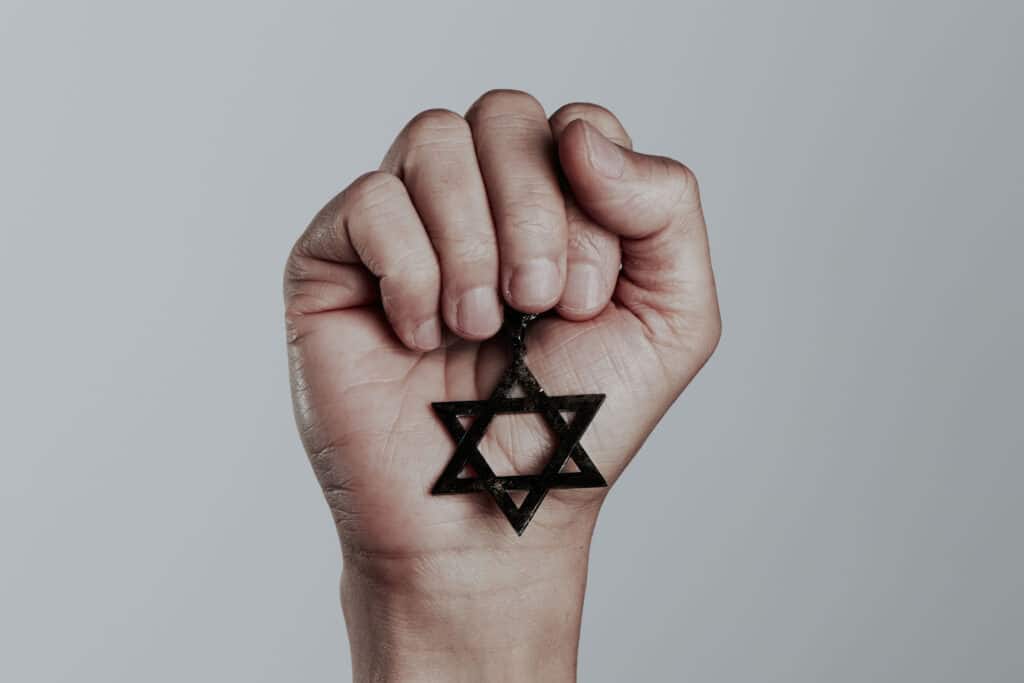
With the recent increase of antisemitism, people have asked, “Is it OK to wear my Jewish star?” “Is it OK to hang my mezuzah?”  “Is it OK to wave an Israeli flag?”

My response?  Haters of Jews know who are Jews, regardless of what we say, do wear, or believe.

But let’s go a step further … Wearing that star, hanging that mezuzah, waving that flag … We don’t really do it to set ourselves apart. We do it to bind us together.

Let the year 5784 be a new chapter in how we all deepen our lives as Jews. Let’s allow the holiness of our traditions  imbue our choices with Jewish values and Jewish hope.  Let’s all become the Jewish ones in the room each and every day.

Allow me to share a final word from the incredible Maya Angelou: “… I not only have the right to stand up for myself, but I have the responsibility. I can’t ask somebody else to stand up for me if I won’t stand up for myself. And once you stand up for yourself, you’d be surprised that people say, ‘Can I be of help?’”

Be the Jewishy One in the Room Read More »