fbpx

September 28, 2023

Ehud Barak Recalls Striking Like Lightning

It was the worst kind of fake news.

After the Palestinian terrorist group Black September took 11 members of the Israeli Olympic delegation hostage in Munich on the morning of September 5, 1972, the standoff was later said to have ended with the Israelis being freed. Instead, as Jim McKay said on the ABC broadcast, they were all “gone.”

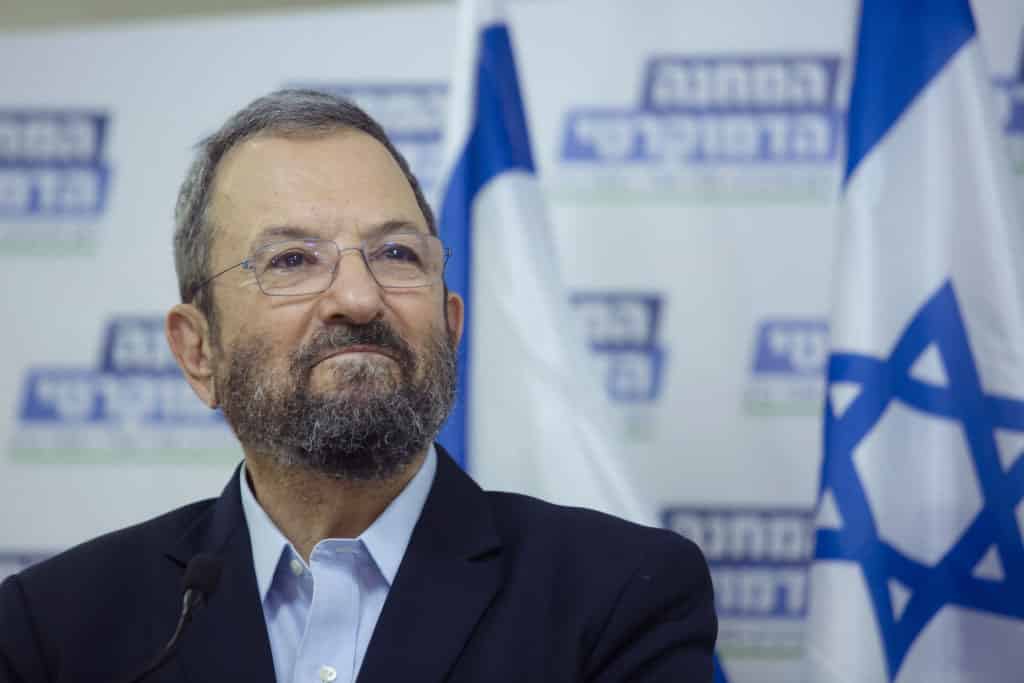
At that time, Ehud Barak, Israel’s Prime Minister from 1999 to 2001, was an elite commando and commander, and is among several key figures who discuss the Olympic tragedy and “Operation Wrath of God,” Israel’s response, on “Spy Ops,” now streaming on Netflix.

Barak told the Journal he believes if he and fellow soldiers had been allowed to plan and execute a rescue operation, at a minimum, some of the hostages would have been saved. The Germans would only allow Mossad head Zvi Zamir to serve in a strictly observational role. Barak said he wanted to be there too, even if only to watch, thinking that option, while not ideal, was better than nothing.

“I was really frustrated at why the hell I couldn’t go and make sure the Germans would not make a stupid mistake. They refused.” At the time he was very angry. But in retrospect, he said,  “I fully understand it was correct. The risk was, if I was there, I wouldn’t withstand the temptation to tell them what to do. They were totally unprepared for this kind of operation. They would fail because they were not professionals. Then they could say, ‘look what do you want from us? We followed your recommendations.’”

On the show, former German police officer Heinz Hohensinn explained that the German force, The Storm Commandos, were on the roof of the building disguised as athletes, and were prepared to go in until some “smart” TV journalists filmed it. The terrorists saw it on TV and warned the police, one of the reasons the rescue attempt was aborted.

The terrorists demanded a plane to take the hostages to an Arab country. The plan was that helicopters would take them to Fürstenfeldbruck airport. While two terrorists examined the plane, German police, dressed as airline workers, would disable or kill them and sharpshooters would kill the other terrorists. But the officers bailed and two terrorists, seeing an empty plane, realized they’d been tricked. A shootout ensued. German forces were not adequately trained, and did not have the proper weapons, lighting, or communications. Terrorists threw grenades into the helicopters, killing the Israelis. Five terrorists were killed, while Adnan Al-Gashey, his uncle, Jamal Al-Gashey and Mohammed Safady survived and were arrested. When other members of Black September hijacked Lufthansa Flight 615 one of their demands was the release of the Al-Gasheys and Safady.

In response, Prime Minister Golda Meir gave the green light for “Operation Wrath of God.”

“Golda was a strong woman,” Barak said. “The idea was not revenge but to prevent such attacks. She was very focused on our security. I don’t think there was hesitation on her side. She did it quickly and decisively.”

Two Mossad agents would kill Abdel Wael Zwaiter, a cousin of Yasir Arafat who was connected with Black September. Mahmoud Hamshari, who Israel believed attempted to assassinate David Ben-Gurion, is seen in an interview he gave to French TV. Asked if he is afraid, he says: “For me, no, but I might not want to tempt fate.” Mossad agents killed him by placing a bomb in his phone.

IDF special forces and a few Mossad agents were enlisted for a daring mission and Barak was tasked with coming up with a plan to kill Black September operational leaders Muhammad Youssef al-Najjar and Kamal Adwan as well as PLO spokesman Kamal Nasser. The plan involved taking missile boats to the shore of Beirut, and then being driven to two buildings on Verdun Street. As it would look suspicious for about 15 men walking together, another soldier suggested some of the slighter men dress up as women so as not to arouse suspicion.
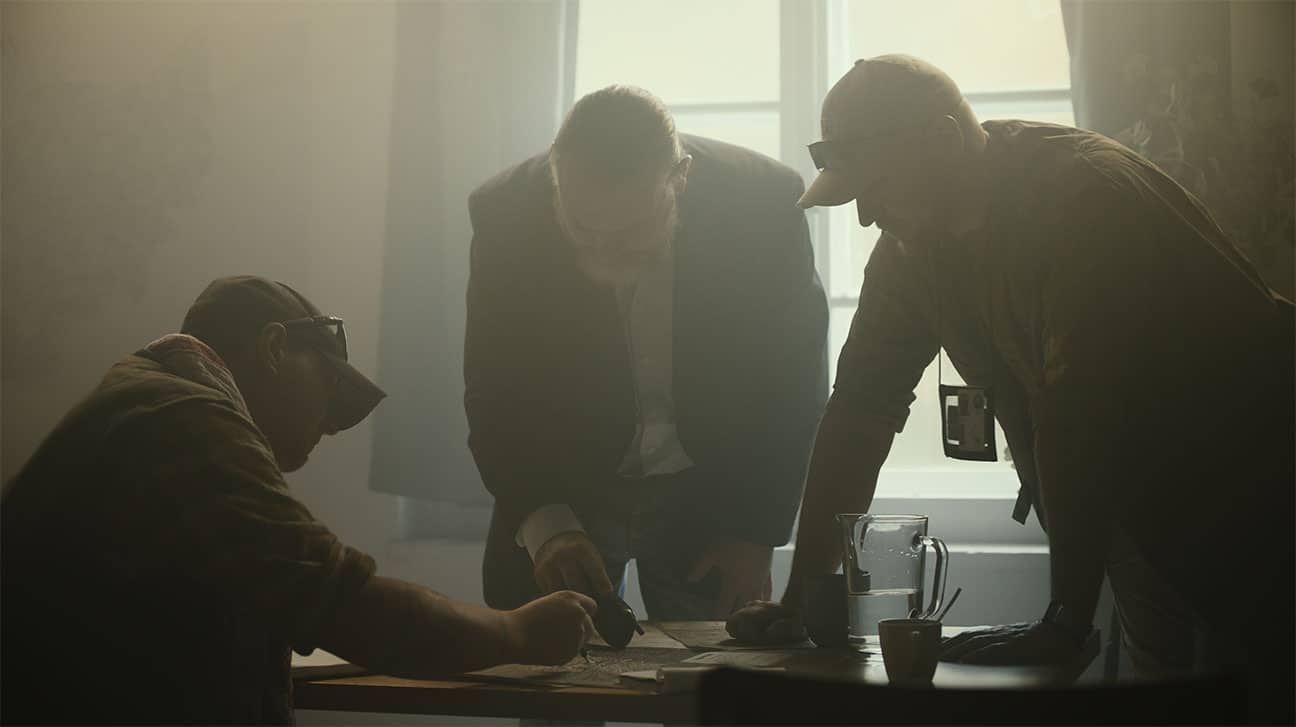
“Spy Ops” shows how a handful of people often planned extremely dangerous missions. Screenshot Courtesy of Netflix

Barak, with a brunette wig, shot a guard who came at him brandishing a gun, which alerted the terrorists.

Others went into the apartment and set off explosive charges, shot the three men and took some documents. The raid in Beirut was a success and took only about seven minutes and the soldiers were back in the boats in 30 minutes.

Barak, said it was “probably” the first time Israeli forces dressed as females for an operation.

Asked if he was afraid, Barak said a mentality develops with experience.

“I was a commander of a special forces unit for 10 years,” Barak said. “It was not the first time I was under fire. Before any operation, there is a certain tension in the air, but the moment it begins, you are a professional, you are prepared and trained for it, so you have to do it and that’s it.”

In his autobiography “My Country, My Life: Fighting For Israel, Searching For Peace,” Barak recounts that while he ditched the wig, he returned home to his wife, Nava, and when he woke up, he was still wearing makeup.

The series also shows the painful irony of Bouchikhi, a founder of The Gipsy Kings, who explains how when he had a new band, he was called to play for Israeli leader Shimon Peres and Palestinian leader Yasser Arafat in 1994. In July, 1973, the Mossad killed his brother, Ahmed, mistakenly thinking he was Ali Hassan Salameh, one of Arafat’s top men, dubbed “The Red Prince” due to the blood he spilled. Ahmed Bouchikhi had a similar appearance to Salameh and Mossad only had a grainy photograph of him. To compound the problem of killing the wrong man, a Mossad agent was caught in Norway. According to the series, he quickly gave up the location of other agents. One of the Mossad’s founders, Michael Harari, had a great reputation for planning missions so it was a uncommon error in this case. Zamir offered his resignation, but Meir refused to accept it, we are told.

In 1979, Salameh, who married Lebanese model and Miss Universe Georgina Rizk, was finally killed by Mossad agents via a car bomb.
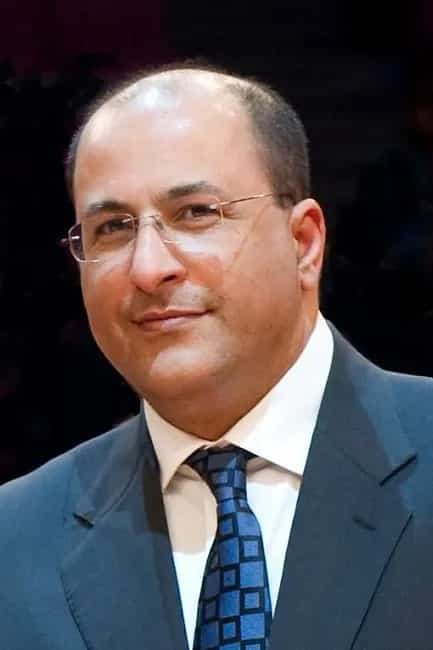
Ido Aharoni Aronoff said, “Operation Wrath of God” showed Israel will take the necessary measures for its security.

The series also includes Ido Aharoni Aronoff, who was a commander in the First Lebanon War, and served as Israel’s Consul General in New York from 2010-2016 after previously serving as Israel’s Consul for Communications and Public Affairs in Los Angeles.

He was 10 when he learned of the Israeli athletes and coaches killed in Munich.

“I remember the shock,” Aronoff told the Journal. “It was a collective trauma in Israel. Today we’re 10 million people, back then we were a small country with 3.2 million. The trauma was huge.”

An expert in branding, Aronoff said Israel was forced into new territory.

“Israel excelled in country-to-country confrontation but had to develop expertise with non-state actors,” he said. “Israel is one of the first countries who had to rewrite the book on how you fight terrorism. The threats we faced were unique and terrorist organizations became more daring. Growing up in Israel, the attacks are etched in the memory of the nation. Our brand is resilience, protection and deterrence.”

He also said that Meir deserves credit and is often viewed too harshly for not being prepared for the Yom Kippur War.

“What happened to Golda is really a tragedy,” he said. “She is remembered for what happened in the Yom Kippur War. What happened in the war was horrible and traumatic to all Israelis. People can’t take away what she brought to the table. She was a gifted leader, the number one fundraiser of the Zionist movement, she was a brilliant foreign minister who introduced the idea of international aid to the tiny state of Israel in the 1960s, and she orchestrated the building of the bridge between American Jews and Israel. As a prime minister, she made very important decisions. I hope some day people will see the whole picture.”

While the 2005 Steven Spielberg movie “Munich” depicts the attack in Lebanon known as “Operation Spring of Youth”  as well as other attacks, it focuses on four male Mossad agents. “Spy Ops” shows female Mossad agents were also involved, including Erika Chambers, who was instrumental in the killing of Salameh; Sylvia Raphael, who assisted in several operations and was incarcerated for her role in the Lillehammer Affair, but was released after15 months.

“The terror attack at the Munich Olympics was just one of many examples where if you put feelings and optics ahead of actual security, you shouldn’t be surprised if your enemy isn’t dissuaded,” “Spy Ops” executive producer Jon Loew told the Journal.  “What you want to feel and want you want to believe doesn’t impact your adversary’s actions.” He described the raid in Beirut as “one of the most audacious in history.”

“Spy Ops,” he said, shows that certain spy agencies “will not stop until they bring you to justice no matter how far they have to travel, no matter how long they have to wait, no matter how hard they have to work.

One thing that sets the show apart from other true espionage stories is that the spy agencies participation.“We’ve got CIA, MI6, Mossad and a lot of these agencies are willing to provide more visibility into their activities so citizens of their countries can be proud of the work and enemies will know what will happen if they attack them again.”

Ehud Barak Recalls Striking Like Lightning Read More »

NellysList Social Club: Hosting Sold Out Jewish Professionals Events for Over 20 Years

On a Thursday evening at the Melrose Place LA Restaurant, the rooftop bar is filled with Jewish professionals in their 20s, 30s and 40s who paid a premium to attend. The events have a reputation for being a genuinely good time with people who are intent on making new friends. At the door, you get a name tag, and the person at the door will ask you “what’s something you enjoy doing?” Your answer gets written on your name tag too.  It’s a harmless little ice breaker. Another is “say what you do for a living without saying the job title.”  Sometimes they have you write your Hebrew name on your nametag, just to add some fun.

The mixer is hosted by the NellysList Social Club, named after the host, Nelly J. Fronen.

No, it’s not just a party with silly name tags. It’s a growing Jewish social community from Los Angeles to New York to Miami of mostly singles gathering to make new friends. NellysList events are not just another Jewish singles event. Attendees often pay between $50-$75 for admission—an expensive ticket if you’re one of those people who too frequently complain that “there’s nobody interesting to talk to.” Attendees are invested and the admission fee will make them reconsider leaving early. It’s not packed to the gills, but the event is sold out. There’s a waitlist too.

The X factor here is Fronen herself. Even after two decades in the business, she still is right there at the bar in the middle of the action, making sure she meets every one of the guests. It’s clear that Fronen wants people to feel welcome and make new friends. Even with a thick New York accent, she sounds kind and approachable. She estimates that 99% of the attendees are single, but still encourages couples to attend.

“I want it to be a community, I also want singles to see good examples of married couples,” Fronen told the Journal. “I’m a couple, my friends are couples and I want to see that. I want singles to see couples can hang, couples can socialize. Couples like being involved in nightlife.”

In attendance at this particular NellysList event was Sophia Alcalay who was visiting Los Angeles from Miami where she works in real estate. Prior to this night, she has been to NellysList events in both Miami and New York. The Journal asked Alcalay what keeps her coming back to NellysList events.

“It’s a really relaxed environment, you find all different types of Jewish people,” Alcalay said. “It’s not affiliated with a synagogue. It’s just Nelly being real and just nice Jewish people. And I think Nelly makes the best choices for her venues because they’re always fun and exciting. And right now I’m standing in a very beautiful space and she always picks a great ambiance. Whether it’s LA, New York or Miami.”

Also in attendance is Azin David, a pharmacist from Los Angeles who attended multiple NellysList events and plans to continue doing so.

“Nelly attracts a lot of professionals, high-caliber professionals,” David said.

Fronen lives in Los Angeles, yet her social empire dates back to 2000 while living in her native Brooklyn.

Then, she was working as a professional corporate event planner in Manhattan. Outside of work, she hosted her own events. As a turn of the 21st century party planner, she did not have social media notifications or group text messaging to spread the word. There were some emails, but mostly phone calls, word of mouth, physical fliers and faxing—whatever that is.

After the events of September 11, 2001, the social scene in New York changed.

“It was super taboo to do big events or spend money on events when 3,000 people just died and there were no budgets really being allocated anymore or for a long time thereafter,” Fronen said. “I had groups of friends from high school, groups of friends from college, groups of friends from traveling. I would go to the venues that I’d established relationships with and I would produce my own events. There was a list at the door called NellysList, which was my guest list. If you said my name at the door, then there was some special amenity, like you got in for free or you were VIP.”

Between 2003 and 2004, as cellular service providers stopped charging customers per text message, NellysList events became even bigger. There were email invitations and Evites. Facebook came around in 2004, and in 2005, Gchat and BlackBerry Messenger changed how people communicated during the workday. Fronen kept growing the contact list and throwing more events. The biggest events, Fronen said, would get upwards of 2,000-3,000 people to attend. There were events for Purim, Hanukkah and Christmas Eve and many more intimate events in between. Fronen developed a reputation for hosting the must-attend social event for young Jewish professionals in New York.

“[The attendees] are really looking to meet other Jewish people and to get hooked up, but people were trying to befriend one another, make new friends post-high school, post-college,” Fronen said. “They didn’t have an outlet for it online yet. There was no such thing. So that was the beauty of NellysList—it was a physical platform. It wasn’t virtual, it wasn’t in the air, it wasn’t intangible. It was like you could come to an actual place and actually meet people. And it worked for a really, really long time.”

It’s not just the rooftop parties in America’s three most Jewish cities. Fronen has hosted many different types of events, including trips to Marvão, Amsterdam and Israel. She has led multiple Birthright trips. She was even a founding member of the Friends of the Israeli Defense Forces’ (FIDF) Young Leadership Board.

In 2013, Fronen relocated to Miami where she hosts one of the largest annual Passover parties in the United States at the nightclub Liv at the Fontainebleau Hotel. Though she currently resides in Los Angeles, she still hosts the annual Passover party in Miami.

“We kosher it for Passover, and 2,000 people from around the world will come, and we’ll fly and DJs from Israel, and we’ll make it one big balagan and have fun with it,” Fronen said. But granted, people are meeting, so many people have met their spouses at my events.”

After years of facilitating so many new friends and families, Fronen started her own. On a seemingly uneventful night in Miami, Fronen was curiously scrolling the Instagram hashtag #Sunsets. Even though Instagram had only existed for four years at the time, there must have been hundreds of millions of photos with that hashtag. But one of the photos she double tapped happened to be posted by a Jewish man in Los Angeles named Jonathan Fronen. The two DM’d each other hit it off remotely for three months. They finally met in person for the first time at the baggage claim at LAX. Fronen relocated to Los Angeles and they were married in 2015. Today, they have three children. Jonathan is a general contractor and attends NellysList events whenever possible. Among the many things they bonded over, they both love introducing people to each other at parties.

“We’ll talk to everybody. We’ll encourage people. We’ll give them advice. We’ll befriend them, we’ll bring them to Shul, whatever [Jonathan] needs to do to encourage people to feel happy. It’s built into our nature. We love hosting. We love people. We love good people, good company. So we’re always brewing. You can’t shut it off. I’m always brewing. He’s always brewing….When it comes to my events, he’s my sidekick. And he also loves it. He loves the social energy that comes with it, or the quality of actually meeting other Jews in this environment, having fun and being happy with them.”

NellysList was unsurprisingly stifled by the COVID-19 Pandemic in 2020. But in 2021, Fronen made a pivot.

“Everything shuts down. All major venues shut down. I had planned one of my biggest events at Liv’s in Miami and I couldn’t bring people together at a physical place,” Fronen said. “But I felt like Hashem didn’t want me to pull the plug out just because the physical place shut down. So I took it upon myself to do person-to-person matchmaking.”

Fronen created NellysList Match where she took on personal clients and created a program to help people get coached into being marriage-ready or marriage-minded ready. Air travel was still not popular and the would-be NellysList event attendees, like the rest of society, were drawing lines in the sand between the vaccinated and unvaccinated.

“I was really heavy in the game of getting people to change their mindset and would say, don’t let this stop you. Pursue finding your Bashert,” Rosaenking said to her matchmaking clients. “I did that for six months straight, nonstop. I had a hundred different people on my clientele list at the time. I was also pregnant and gave birth to my third kid.”

Business in Miami never fully shut down, but Fronen found that Los Angeles seemed exceptionally isolated during the first 18 months of the Pandemic, and is still in many ways recovering.

“I didn’t feel the energy [in Los Angeles] that I felt in New York or Miami’s people wanting to go out in the single young professional realm,” Fronen said. “I just didn’t feel it. I didn’t see it. I didn’t see events that popped up and showcased it, and I didn’t feel it amongst my peers. I felt like, not that I needed to change it, I just felt like I needed to amp up my mojo and get my energy out there to start gravitating to people. A lot of the people that I was matching during the time of Corona were LA- based people. I think LA based singles don’t know where their outlet is here and how to meet singles or where to go to socialize.”

NellysList events continue to be a hot ticket for both regular attendees and first-timers. Fronen relishes in knowing each event she hosts helps enhance the attendees connections with their Judaism.

“So people are engaged in something Jewish, but it’s not in Shul,” Fronen said. “It’s not something that’s being pushed on you religiously. It’s something that you are part of— fun atmosphere, but you’re getting a dose of your Jewish heritage while you’re there. So it encompasses so much.”

The Journal asked Fronen about the variety of events she hosts and for advice for people planning to attend their first NellysList event.

JEWISH JOURNAL: Tell us about the variety of events you host, beyond just the rooftop mixers.

NELLY J. FRONEN: I did a cooking event [in 2022 for] Tisha B’av at Our Big Kitchen Los Angeles, where I got a hundred people to come cook 500 meals for the homeless. I thought that would be interesting and fun and different than just bringing them to a lounge or a club to have people interact with each other.  But of course, I had a DJ and an open bar, so I have to NellysList-it up. I can’t just make it boring. I then did a hundred person dinner party with KosherGuru. We had a tasting for a hundred singles and it was a lot of fun. So that was one of the events I did in May.  And then I did two art events. Miami holds a humongous Art Basel convention every December. People from all around the world come to celebrate amazing art. So I’m hired every year to do the Art Basel event. For part of my Art Basel event, I reserve one room just for Judaica. I really want to bring Jewish artists and Jewish work to light. And I said, “how come we don’t have this in LA?”I partnered with the Chabad West Hollywood’s Rabbi [Yossi] Dalfin, and I told him, I have a vision. I saw this date on my calendar, 6/13, and I really want to bring good energy back into the world and I want to produce a Judaic pop art show. In less than 14 days, I had six artists, we produced a show and we had about 150 people come. It was a lot of hard work, don’t get me wrong. But it happened. And the artists were very phenomenal.

JJ: When it comes to dating and matchmaking, what dealbreakers do you encourage people to drop?

NJR:  “Oh, she’s too old for me.” When guys used to tell me that I used to kill them, I’m like, don’t say that. Don’t. She’s too old for you? I got married when I was 35. I had my first kid at 36, second kid at 38, third kid at 42. Don’t stop yourself because in your head you think she’s too old for you.. Don’t do that. Don’t count your children. Right. Find that one girl that’s going to work for you. And a lot of guys have that mentality and it stops them pushing forward.

JJ: List a few pieces of advice to people who are nervous/shy before they go to a NellysList event.

NJR: 1— You got a ticket, you got up, you got dressed, you got in your car and you made it here. So that was step one. So bravo. Really, pat on the back.

2—Recognize that everyone at the event is in the same boat and is here to meet people and have a good time. They’re here to have a laugh. They’re here to mix and mingle. So there’s nobody that should feel outcasted.

3—Be your authentic self and have emunah that Hashem’s got your back. In the right time, the right things will happen for you. You’re supposed to meet the people that you meet. You’re supposed to go on the good dates and the bad dates. These people are put in your pathway for a reason.

4—Put aside judgments and focus on finding genuine chemistry and connection and conversation with someone that can be carried in a nice way that you feel good about it

5—Follow through! Listen, you clicked with somebody, get their phone number. Go out. It doesn’t need to be a fancy date where you take them for dinner and it’s expensive and all those things. Get those ideologies out of your head. No, go for a coffee. It’s totally cool. Go for a hike.

6—You have to have a different mentality about dating these days because you can’t stick to the old fashioned rules and ways of things.

To get tickets to the next NellysList Social Club event, go to https://nellyslist.com/ and follow it on Instagram.

NellysList Social Club: Hosting Sold Out Jewish Professionals Events for Over 20 Years Read More »

JFSLA Marks Rosh Hashanah, Geft Retirement, LAJH Gala

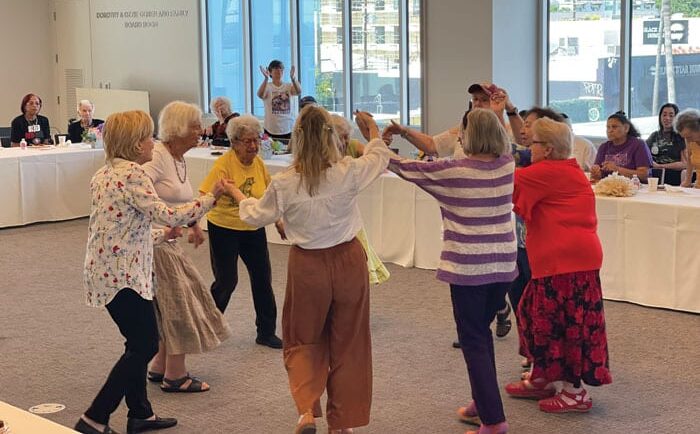
Throughout the month of September, Jewish Family Service LA’s (JFSLA) Senior and Multipurpose Centers hosted Rosh Hashanah festivities for members of Café Europa, JFSLA’s social group for survivors of the Holocaust, and participants from the JFS Arts, Wellness, and Engagement (AWE) Program. 

JFSLA’s AWE Program offers engaging wellness activities, fitness classes, educational and art classes, and social events to 500 seniors weekly throughout the Los Angeles community. On Sept. 7, more than 100 seniors celebrated Rosh Hashanah at JFSLA’s Jona Goldrich Multipurpose Center. Seniors enjoyed a catered meal, a lecture about the traditions of Rosh Hashanah and a musical performance. More than 40 seniors also attended Rosh Hashanah celebrations at JFSLA’s Valley Storefront Community Resource Center and the BAR Center at the Beach.

“Our Rosh Hashanah celebrations were open to all older adults in the community, including survivors of the Holocaust,” JFSLA Senior Director of Multipurpose and Senior Centers Susan Belgrade said. “We were happy to celebrate, but we were also excited to share and educate the community about social services, transportation, nutrition, and activities offered to older adults at JFSLA.”

To spread joy during Rosh Hashanah, JFSLA sent Café Europa members a special Rosh Hashanah gift box that included a challah, grape juice, a honey jar, honey cake, and a Shana Tova greeting card.

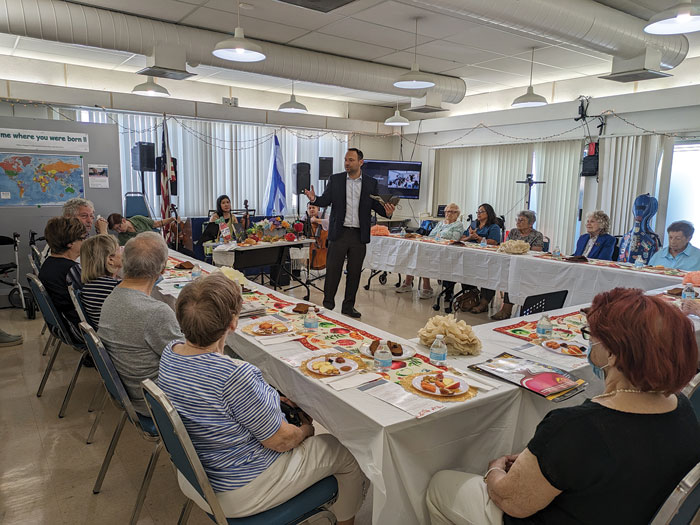
Rabbi Nolan Lebovitz attended JFSLA’s Rosh Hashanah celebration for Café Europa Holocaust survivors. Courtesy of Jewish Family Service LA

Nearly 50 Café Europa members celebrated Rosh Hashanah at JFSLA’s Jona Goldrich Multipurpose Center and the Valley Storefront Community Resource Center. Survivors discussed the meaning of the Rosh Hashanah simanim (symbolic foods) and blessings, enjoyed musical entertainment, and heard the ceremonial blowing of the shofar by Valley Beth Shalom Senior Rabbi Nolan Lebovitz.

“This week’s Café Europa program was especially meaningful, as Café Europa and members of the JFSLA Board of Directors expressed their gratitude to me for my involvement and gifted me with an extraordinarily beautiful Tzedakah Box,” Lebovitz said. “As a grandchild of survivors, it is my responsibility that all survivors receive love and support throughout the rest of their lives. My holidays can no longer begin without spending time with Cafe Europa and ensuring the survivor community hears the shofar once more.”


Liebe Geft has announced her plans to retire from her position as director of the Museum of Tolerance, effective at the end of October.

“It has been an honor and a privilege to serve this exceptional organization for 27 years. I am extremely proud of the countless accomplishments of this time – not only my own but, even more so, those of my colleagues and the collective organization,” Geft said in a Sept. 22 statement. “I am immensely grateful for the trust placed in me by the leaders of the Simon Wiesenthal Center (SWC) and Board of Trustees and I am profoundly appreciative to all my esteemed professional colleagues at the MOT.

“It has been my great pleasure to work with so many extraordinary consultants and partners, and I thank you for the opportunity to collaborate on many important projects, programs and initiatives,” Geft said.

Going forward, Geft said she will be serving as the museum’s emeritus director.


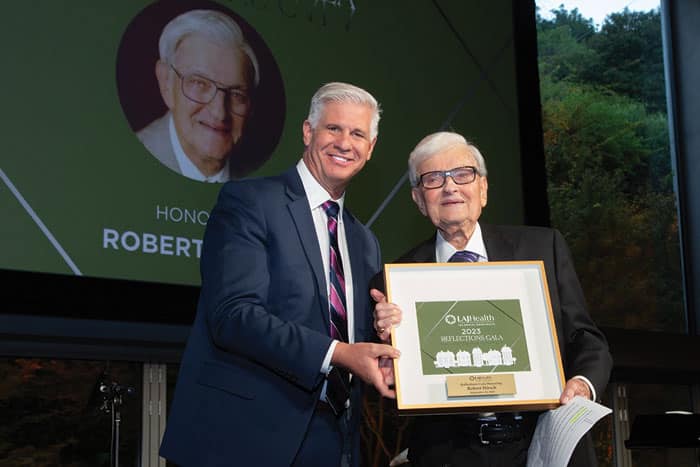
From left: Los Angeles Jewish Health (LAJH) CEO Dale Surowitz and LAJH honoree Robert Hirsch. Courtesy of Los Angeles Jewish Health

On Sept. 10, Robert Hirsch, a philanthropist and long-time leadership volunteer who has devoted decades of support toward the well-being of the city’s senior community, was honored by Los Angeles Jewish Health (formerly Los Angeles Jewish Home) at its annual Reflections Gala, held at the Skirball Cultural Center. 

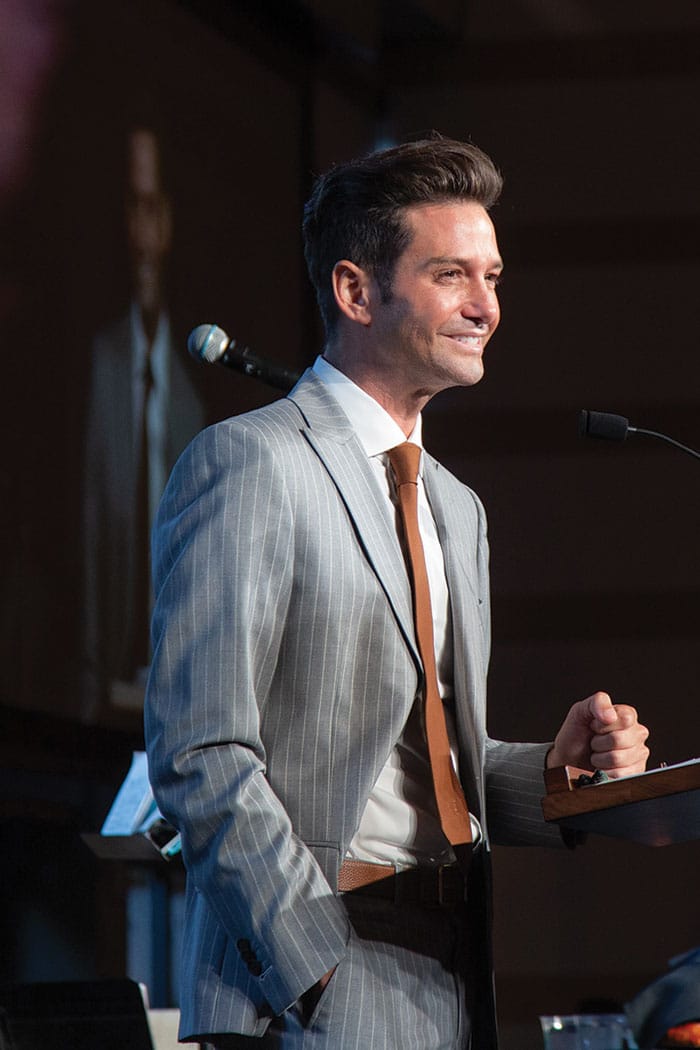
Event emcee Josh Flagg. Courtesy of Los Angeles Jewish Health

Noted real estate agent and television personality Josh Flagg served as master of ceremonies at the event, which paid tribute to Hirsch’s influential career and saluted his longtime generosity and involvement at LAJH supporting seniors in Los Angeles.

 The gala drew more than 300 attendees from throughout Southern California, raising more than $625,000 to advance LA Jewish Health’s efforts and specifically to see the new Hirsch Family Campus housing program become a reality. The Campus will expand housing and care options for the growing population of low and middle-income seniors across Los Angeles in need of affordable housing options, thanks to the generosity of the Hirsch Family.

JFSLA Marks Rosh Hashanah, Geft Retirement, LAJH Gala Read More »

A poem for Sukkot

I remember the Rabbi who was concerned it might rain
on Sukkot, and how that would affect all the plans.
In a fit of Torah obedience he answered himself with
well, if it rains on Sukkot, then we get wet.

As a Jew who has always wanted to be the master of
when I got wet, the idea of mandating I spend seven days
sitting outside, eating outside, and sleeping outside
makes me want to consider other spiritual paths.

It may have started when I was a car-less child.
That is my mother didn’t have a car and as she was
responsible for making sure I got places, it was an issue.
Rain, or really temperatures of any kind, always seemed

like an inconvenience to me. So I have trouble sharing
my old Rabbi’s enthusiasm for it being whatever it was.
But I’m the first Jew (and let me interrupt myself to
tell you I am certainly not the first Jew to do anything)

to admit that ninety percent of the reason we do anything
is because people before us did those things. And
I’m the last Jew (and let me interrupt myself again
to tell you I certainly hope I will not be the last Jew)

to want to break the chain of people doing the things.
So as I sit in the Sukkah this year, glancing at the stars
peeking at me through the roof (or at least I think there
are stars…I’m in Los Angeles and the lights of the city

make stars only a promise.) Glancing at these flimsy walls
(no offense Men’s Club, it’s meant to be flimsy and temporary)
Remembering, as commanded, what it must have been like
for the original links on our unbroken chain to have to wander

from place to place in the heat of the desert, somewhere
between slavery and the promised land. As I taste the
harvest of freedom off these see-through walls, just like
everyone I’ve ever known, or ever wanted to know has done

I implore anyone with capital letters who is willing to listen –
Spread over me the shelter of Your peace
That I may do the same for others
Rain or shine.


Rick Lupert, a poet, songleader and graphic designer, is the author of 27 books including “God Wrestler: A Poem for Every Torah Portion.

A poem for Sukkot Read More »

A Bisl Torah – The Power of Shade

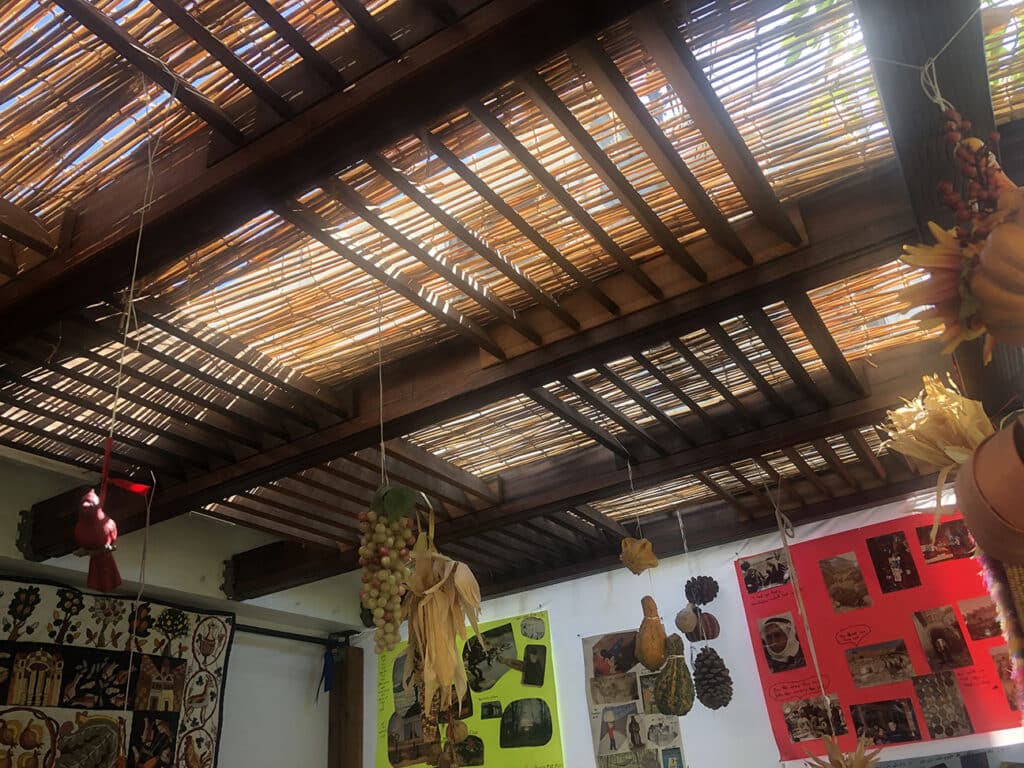
There are many Jewish laws involved in building a sukkah. There are regulations pertaining to a sukkah’s height and where a sukkah is located. Rules about the durability of the sukkah and rules about how we use its space.

But most notable is the mishna that explains shade of a sukkah must be greater than the sunlight passing through. If the sunlight is more pronounced than a sukkah’s shade, the sukkah is deemed unfit.

Light is treasured. The feeling of the sun’s warmth on a chilly day. Sunrises and sunsets are often the most memorable and photographic scenes in nature. How is it that we are elevating shade over light?

Overtime, shade has lost its meaning and value. Imagine wandering through the relentlessness of the desert heat. Shade is life providing and life saving. In an environment where one isn’t protected from the elements, shade is essential.

And shade connotes God’s presence. There is a protective intimacy from the Holy One. As the Psalmist writes, “The one who dwells in the shelter of the Most High will rest in the shadow of God.” When we let God into our lives, we exhale, understanding that through life’s most torturous experiences, we might find rest in God’s embrace.

The sukkah is a metaphor for how we might find God in unyielding chaos. Imagine an embrace from a trusted family member or friend. An embrace that offers compassion, kindness, and love. A hug that allows one’s walls to crumble, knowing you are held and protected for at least the moments of embrace. God’s hands extend through ours.

A holiday where shade is cherished. A moment where God’s embrace settles our soul.

Chag Sameach, Shabbat Shalom


Rabbi Nicole Guzik is senior rabbi at Sinai Temple. She can be reached at her Facebook page at Rabbi Nicole Guzik or on Instagram @rabbiguzik. For more writings, visit Rabbi Guzik’s blog section from Sinai Temple’s website.

A Bisl Torah – The Power of Shade Read More »

Sukkot Ecology

After Yom Kippur, Sukkot
provides an opportunity
shifting paradigms in what
become for the community

locations, where without a roof
Jews change for seven days world-views.
In sky-view sukkahs, not rain-proof,
commanded to rejoice, we choose

to act like ancestors who dwelt
within a wilderness wasteland,
our homes the sort of glatt greenbelt
kosher ecologists demand, 

as if we make apology
for climate violations we
had just confessed, ecology
all driving, unelectrically, 

after fasting and petitioning
a pardon from God: Yom Kippur,
replacing air-conditioning
for outside air, we pray more pure.


The word glatt is Yiddish for “smooth” and refers to the lungs of kosher ruminants, implying that their meat has been processed according to the strictest standards of kashrut, Jewish dietary laws. By writing in the third verse of this poem that sukkot – temporary, roofless dwellings – make Jewish homes as glatt kosher as a greenbelt (land in England which may not be developed) my rumination implies that sukkot enable Jews to breathe air that is not only halakhically correct but also PC, as Pulmonologically Correct as meat of glatt kosher animals.


Gershon Hepner is a poet who has written over 25,000 poems on subjects ranging from music to literature, politics to Torah. He grew up in England and moved to Los Angeles in 1976. Using his varied interests and experiences, he has authored dozens of papers in medical and academic journals, and authored “Legal Friction: Law, Narrative, and Identity Politics in Biblical Israel.” He can be reached at gershonhepner@gmail.com.

Sukkot Ecology Read More »

A Moment in Time: “Inviting Guests into the Sukkah”

Dear all,

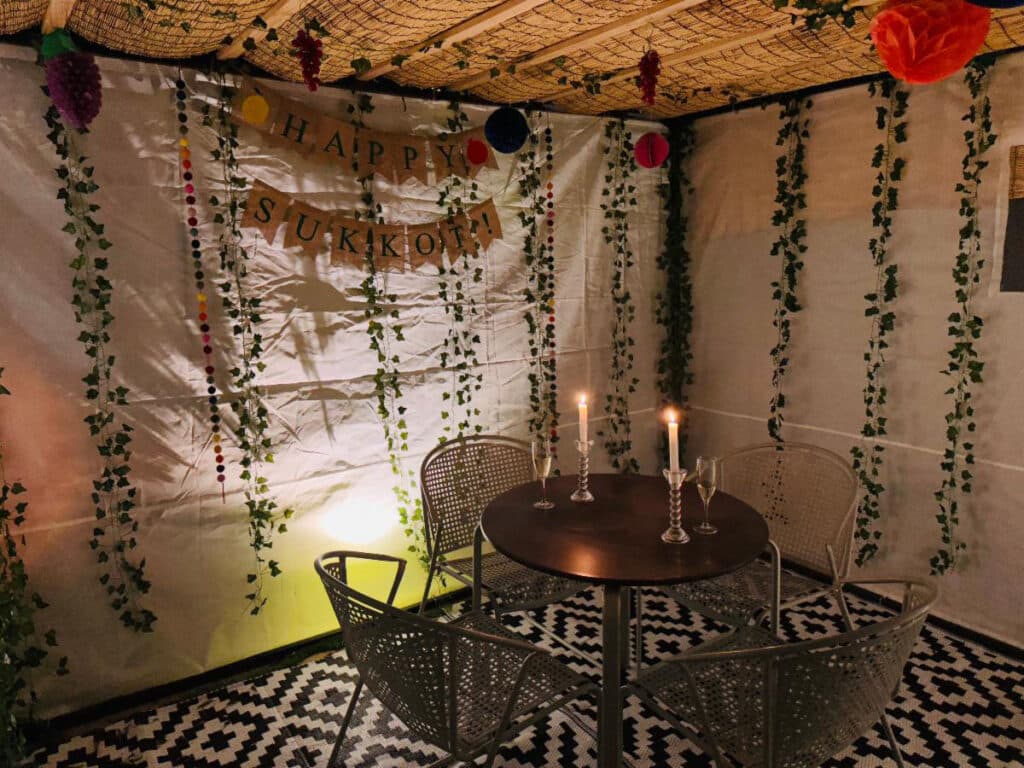
Ron and I enjoy decorating our sukkah each year in anticipation of the Festival of Sukkot. Traditionally, people put photos of ushpizin/ “special guests” that typically include the biblical and rabbinic ancestors in Judaism. Often hosts will add pictures of generations gone by.

We also make the opportunity to take advantage of the open nature of the sukkah – and we invite family, friends, and neighbors to join for a meal.

All this makes me think…. If you could invite one person (in our time or historically) to join you for a meal as a special guest, who would it be? What would you discuss? And for how long would that person stay?

After a week, the sukkah comes down. It’s a reminder that things in life change – and that we therefore have opportunities to nurture a moment in time to harness an important conversation.

With love and shalom,

Rabbi Zach Shapiro

A Moment in Time: “Inviting Guests into the Sukkah” Read More »

Biden Admin Designates Israel Into Visa Waiver Program

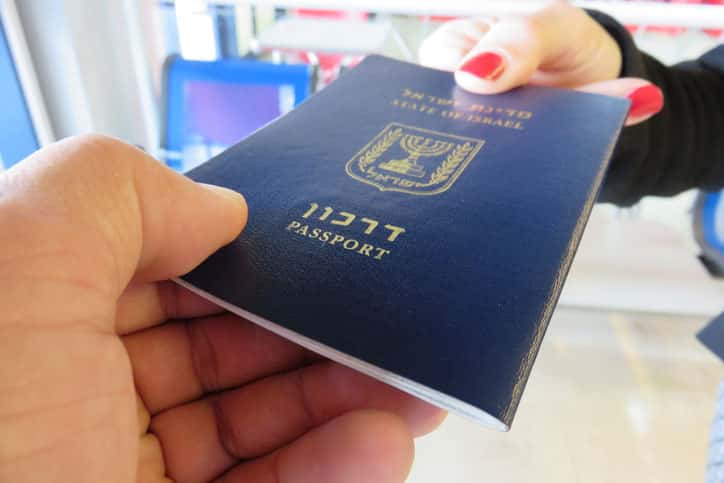
The Biden administration announced on Wednesday that Israel will be admitted into the United States’ Visa Waiver Program.

According to a joint statement from the Departments of State and Homeland Security, Israeli citizens and nationals will be allowed to apply for travel in the United States for tourism and business purposes for 90 days without a visa by no later than November 30. American citizens, in turn, will also have the opportunity to apply to travel to Israel without a visa.

As part of the agreement, Israel updated its policies to allow for “all U.S. citizens without regard to national origin, religion, or ethnicity” and Homeland Security “monitored Israel’s compliance with these requirements and engaged with Palestinian-Americans both living in the West Bank and living in the United States, who now have the ability to enter Israel visa free, and fly in and out of Ben Gurion airport, reducing barriers to travel for these Americans,” per the joint statement.

Israel will be the 41st such country admitted into the program.

“Israel’s entry into the Visa Waiver Program represents a critical step forward in our strategic partnership with Israel that will further strengthen long-standing people-to-people engagement, economic cooperation, and security coordination between our two countries,” Secretary of State Antony J. Blinken said in a statement. “This important achievement will enhance freedom of movement for U.S. citizens, including those living in the Palestinian Territories or traveling to and from them.”

Homeland Security Secretary Alejandro Mayorkas similarly said in a statement, “The designation of Israel into the Visa Waiver Program is an important recognition of our shared security interests and the close cooperation between our two countries. This designation, which represents over a decade of work and coordination between the United States and Israel, will enhance our two nations’ collaboration on counterterrorism, law enforcement, and our other common priorities. Israel’s entry into the Visa Waiver Program, and the stringent requirements it entails, will make both of our nations more secure.”

Some Jewish groups praised the decision to admit Israel into the program.

“Israel’s admittance to the Visa Waiver Program will allow for even stronger ties to grow between the U.S. and Israel and is a key step in advancing American and shared U.S.-Israeli interests,” American Jewish Committee (AJC) CEO Ted Deutch said in a statement. “Our countries, and our people, are already intertwined and this will allow individual Israelis and Americans to more easily experience this relationship themselves. This is an important expansion of the U.S.-Israeli relationship, and will directly benefit Israeli citizens and Israeli-American and Palestinian-American families.”

AIPAC posted on X, formerly known as Twitter, that Israel’s admittance into the program is “a historic achievement that will further strengthen the U.S.-Israel alliance.” “Thank you to Former U.S. Ambassador to Israel Tom Nides for your dedication and tireless commitment to reaching this important milestone,” they wrote.

Democratic Majority for Israel President and CEO Mark Mellman also said in a statement, “We applaud the Biden administration for working closely with Israel to ensure it complied with the requirements of the U.S. Waiver Program, enabling Israel to become the first country in the Middle East to join the coveted program. Israel’s compliance was carefully tested during a pilot period. Israel’s acceptance will benefit both countries, making it easier for Israelis to travel to the United States and for U.S. citizens to travel to Israel. This welcome announcement underscores the Biden-Harris administration’s commitment to continue expanding and deepening the bonds between the U.S. and Israel.”

Rabbi Abba Cohen, Agudath Israel’s Vice President for Government Affairs and Washington Director, said in a statement, “We thank the American and Israeli delegations for the hundreds of hours of dedication and hard work they put into reaching this milestone, as many concerns on both sides – including freedom of entry, reciprocity and security — needed to be ironed out. The U.S.-Israel relationship is grounded in shared values and mutual interests and Israel’s acceptance into VWP gives concrete expression to the strong friendship and unbreakable bond between the two allies.”

Biden Admin Designates Israel Into Visa Waiver Program Read More »

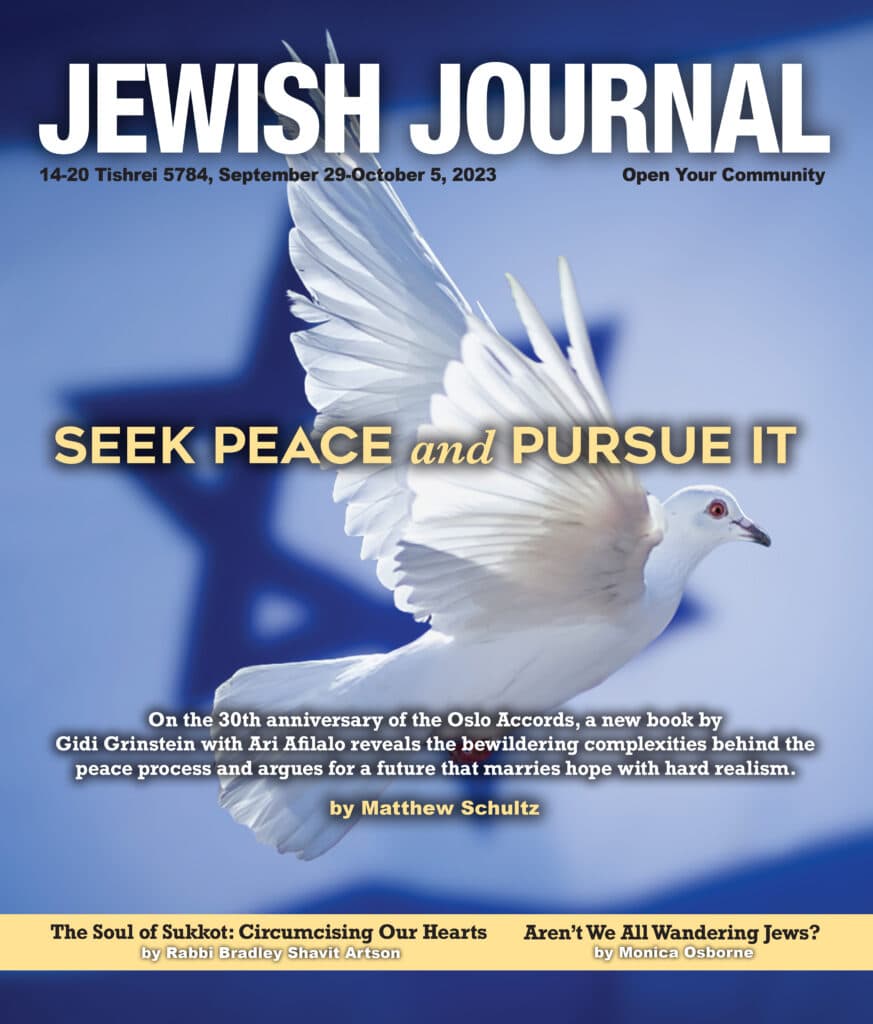
Print Issue: Seek Peace and Pursue It | Sep 29, 2023

CLICK HERE FOR FULLSCREEN VERSION

Print Issue: Seek Peace and Pursue It | Sep 29, 2023 Read More »

Can Sukkot Recharge Reform Judaism?

I have dear friends in the Reform movement. There’s so much about the movement that I admire and value (besides the fact that many of our readers belong to Reform synagogues). Untold number of American Jews would have zero connection to their Judaism if it weren’t for the tolerant and loving embrace of Reform Jewry.

It’s well known, however, that the movement, the largest denomination in the Jewish world, has been in decline. To its credit, the leadership went public with its challenges this past summer by convening thought leaders, Jewish scholars and philanthropists to a “Re-Charging Reform Judaism” conference in New York City.

“In this historic moment of unprecedented change, the future of North American Reform Judaism hangs in the balance,” the conference announced on its website. “Built upon the pillars of God, Torah and Israel, that foundation today faces growing challenges.”

In one form or another, the challenges revolve around the perennial and interrelated issues of Jewish identity and continuity. This is the meta question for all of Judaism: For a people that has survived against all odds for thousands of years, how do we strengthen Jewish identity to keep our miraculous story going?

But not all Jewish identities are created equal; some are more specific than others.

The paradox of the Reform movement is that its very strength– emphasizing universality— has diluted the particularity that’s more likely to create deep and lasting bonds to one’s Jewish identity.

The vexing truth is that it’s hard for Jewish particularity to compete with such compelling universal values as social justice and making the world a better place. Who needs to light Shabbat candles when you’re already doing supremely meaningful work like feeding the homeless?

In a sense, the Reform movement is a victim of its success. It has done such a great job of connecting God and Torah to the broader values of humanity, it has fostered a kind of Judaism lite without enough Jewish concentrate in the juice of identity. In the balance between universality and particularity, perhaps the balance has swung too far towards the former.

One way to correct that imbalance is to put a greater emphasis on uniquely Jewish rituals— and for that, there’s nothing like the eclectic festival of Sukkot.

Indeed, this is one of the quirkiest of Jewish holidays, if for no other reason that we’re supposed to build these frail little huts next to our homes where we have our holiday meals. When non-Jews see Jewish families leave their homes to have their meals inside a hut that could have come from the set of Gilligan’s Island, it must surely look weird.

But that weirdness comes with an upside— because the ritual is so specifically Jewish, it makes you really feel your Jewish identity. Between the universal and the particular, having meals inside a rickety hut clearly tilts towards the particular.

Uniquely Jewish rituals like building a sukkah, in other words, can give Jews real skin in the game. 

It’s worth noting that in recent years, there has been a revival of rituals within the Reform movement. The Reformjudaism.org website, for example, gives a full explanation of Sukkot rituals and encourages members to attend communal meals inside the sukkah at their synagogue.

Of course, there’s nothing like building your own. Yes, that is asking a lot, which is precisely the point. The more effort one puts in, the more connection one gets back.

One my favorite teachings came from my friend Rabbi Nachum Braverman: “You don’t give to someone because you love them; you love them because you give to them.” Building a sukkah is a dramatic way to give to your Judaism, and the more you give, the more you’ll love. 

As with so much in Judaism, there are universal connections. As Rabbi Bradley Shavit Artson writes this week in his “Soul of Sukkot” story, “On this Festival of Booths, we built shelters that are simultaneously frail and resilient, reflecting the existential reality of human life and community… the need of the hour is to articulate a Jewish understanding of why engagement with the world is an essential component of religious life.”

The Reform movement has led the Jewish world in showing us how “engagement with the world is an essential component of religious life.” But now that its future hangs in the balance and it wants to recharge, there’s an opportunity to strengthen Jewish identity through the concrete and the particular. Maybe it’s time for this influential movement to boldly challenge its flock to embrace the uniquely Jewish rituals of our tradition. The idea is to reinforce the movement, not just repair the world.

If it succeeds, it will end up recharging all of Judaism.

Can Sukkot Recharge Reform Judaism? Read More »