fbpx

September 28, 2023

It’s the End of the World … Again

Turn on the news and you’ll see that the world appears to balance on a precipice, with our very survival at risk.  One false step equals oblivion. Fear for our future seems reasonable, given threats to democracy here and abroad, the ravages of climate change, the upheaval in Israel and the all-too-familiar insidious antisemitism. 

Yet, ask yourself, are today’s challenges as terrifying as in the past? Has there been anything in recent memory that comes even close to the destruction wrought by the 20th century’s two world wars?  There are some really scary folks out there, but does anyone now pose as great a danger as Hitler or Stalin? And I have vivid memories of crouching under my desk as we all waited to see whether the Cuban Missile Crisis ended with nuclear annihilation. The world has survived that and much more.

Sociologist Barry Glassner, the author of the bestseller, “The Culture of Fear: Why Americans are Afraid of the Wrong Things,” argues that one reason we live in fear is that an entire industry exists to scare us. Open your mail and let me know when you receive a fundraising letter that says: “Congratulations, your contributions seem to be working, and things are looking up.  But send more money anyway.” Glassner can’t predict which fears will haunt us in the days ahead, but he states with confidence that scaremongers will propagate their scares much as they have done in the past.

Maybe it is human nature to be terrified — that it is the prospect of looming disaster that gives us purpose. If we are truly the last hope for humanity, how important we must be! 

Whatever the rationale, it seems that the one thing that all generations share is the conviction that they live at the most critical and, often, most perilous, period in human history.  Maybe we feel that way because we know little of that history. As a result, in the words of Marcel Proust, we “imagine ourselves always to be going through an experience which is without precedents in the past.”  

I had my own history lesson a decade ago when I had lunch with former Israeli Prime Minister Shimon Peres. He asked me how Israel was being perceived on America’s campuses. I told him that it was an unmitigated disaster.  Student governments across the country were voting in favor of Boycott, Divestment and Sanctions (BDS) resolutions, while progressive voices with conflicting agendas were coalescing on one thing — the delegitimization of the State of Israel. In my view, never had Israel been in such peril.

He smiled and then asked me a series of additional questions.  Did I think that the threat to Israel that day was as great as it was in 1956 during the Suez Canal crisis? As great as it was in 1967 during the Six-Day War?  As great as it was in 1973 during the Yom Kippur War? I got his point. Without historical perspective we are at the mercy of our emotions.

We should comfort ourselves with the knowledge that the world has always been on the precipice. And that humanity somehow finds a way forward.

While we should never kid ourselves that everything will inevitably turn out for the best, we should comfort ourselves with the knowledge that the world has always been on the precipice. And that humanity somehow finds a way forward.  

That perspective doesn’t imply inaction. In fact, it suggests the opposite.  Fight for democracy in the U.S. and in Israel, precisely because history reminds us that its fragility required those who came before us to fight for it. Fight for fairness because of a legacy of injustice — and an even greater legacy of reform and renewal.  

Isaiah 35:4 gives us hope: “Say to those with fearful hearts, ‘Be strong, do not fear; your God will come, he will come with vengeance; with divine retribution he will come to save you.’”

But we need not wait for divine intervention. If we learn from history to focus on the real challenges that confront us, we just might sleep better at night, while ensuring a more promising future.


Morton Schapiro is the former president of Williams College and Northwestern University.  His most recent book (with Gary Saul Morson) is “Minds Wide Shut:  How the New Fundamentalisms Divide Us.”

It’s the End of the World … Again Read More »

The Real You at Last

You’ve had a life. Celebrate it by ensuring you share it with your friends and family. Only you can set it right. 

Since I wrote my book, “Why Not: Lessons on Comedy, Courage, and Chutzpah,” I’ve received numerous congratulations for writing and publishing it. I express my gratitude to them, and if they are over 50, I encourage them to put down their own story. 

I didn’t set out to write a book for publication; I began writing it for my family and friends. I wanted them to have a glimpse of who Mark Schiff was, who my parents were, what my childhood was like and what my marriage was like. I intended to leave them with my footprint — as an act of love. Acts of love can take you very far. When I reach 120, and God lifts me from this world, I want people to have something more than just their memory of who Mark was.

One person, after showing me a memoir their dad left, hugged, and kissed the book to their chest. When the funeral and shiva are over, having something tangible beyond memories is comforting. 

I’ve attended funerals and shivas where people share funny, sad, and heartfelt stories about their loved ones. Some of them had written material left behind, and I witnessed how valuable that was to the families. One person, after showing me a memoir their dad left, hugged, and kissed the book to their chest. When the funeral and shiva are over, having something tangible beyond memories is comforting. I wish I had a book left to me by my parents and grandparents. Don’t you wish the same?

When I encourage others to write their life stories, I often hear responses like, “I’m not a writer,” or “My life is boring, unlike yours.” One person even said, “Arnold Schwarzenegger had an interesting life, but I don’t.” Yes, Arnold has had an interesting life, but would you want his life? Would you want to confess to your spouse that you had a love child with the cleaning lady? It may sell books, but it’s not a life most would envy. Regina Brett wisely remarked, “If we all threw our problems in a pile and saw everyone else’s, we’d grab ours back.”

I agree that writing a book can be daunting, and not everyone is willing to invest the time and effort. I understand. However, welcome to the digital age and the solution: Tape your life on your iPhone, iPad, or computer. Then, secure it on an external hard drive or Dropbox. You can do it as a video (which I recommend) or as audio, like a book on tape. All you need is someone to sit and ask you questions. 

You’ll be surprised how much you enjoy this project. You’ll recall details about your life that were tucked away and would have remained so if not for this endeavor. Plus, you don’t have to include anything you’d rather keep private. Be as truthful as possible, and if you have second thoughts about something you said, it can be easily edited out. If you have a spouse, have them record you, and then record them. You can complete the entire process in a few weeks, and you’ll never regret it.

Biographies are among the most popular books. Why not have them listen to your life story and understand why you are who you are? There is no life that isn’t interesting. As someone once said, “If you had a childhood, then you have a story.” You are the sperm cell that triumphed over millions of others, fighting relentlessly to get here. You have a story, so make sure you tell it.

If you have a family, I believe you owe it to them to capture your life on video or audio. It’s a selfless act. People leave behind money, houses, and cars, some even lots of bills but rarely, if ever, do they leave behind the opportunity to hear the real story — the real you right from the horse’s mouth. This is your chance to linger in their hearts in a way that was never possible before. 

But first order a copy of my book “Why Not Lessons on Comedy, Courage, and Chutzpah.” Because even though I’ve not had a love child with my cleaning lady or yours, I have had an interesting life.


Mark Schiff is a comedian, actor and writer, and host of the ‘You Don’t Know Schiff’ podcast. His new book is “Why Not? Lessons on Comedy, Courage and Chutzpah.”

The Real You at Last Read More »

Creative Aging: What Happened to Fairfax?

15th in a series

I stopped at Canter’s the other day to buy Black-and-White cookies — a traditional Jewish bakery favorite — for my grandchildren. Inside Canter’s, nothing has changed since I’d been in high school, over 50 years ago. Same booths. Tables. Chairs. Floors. Display cases. All in the same configuration. Same aromas. But Fairfax, that block itself? It reminded me when I had been in Saint Petersburg, Russia, soon after the fall of the Soviet Union. It was like a cake that had been left out in the rain for years to melt and corrode. I counted nearly 20 empty store fronts. Lots of trash and graffiti. What had been LA’s thriving Jewish center is now nearly abandoned of Jewish presence. It made me sad. 

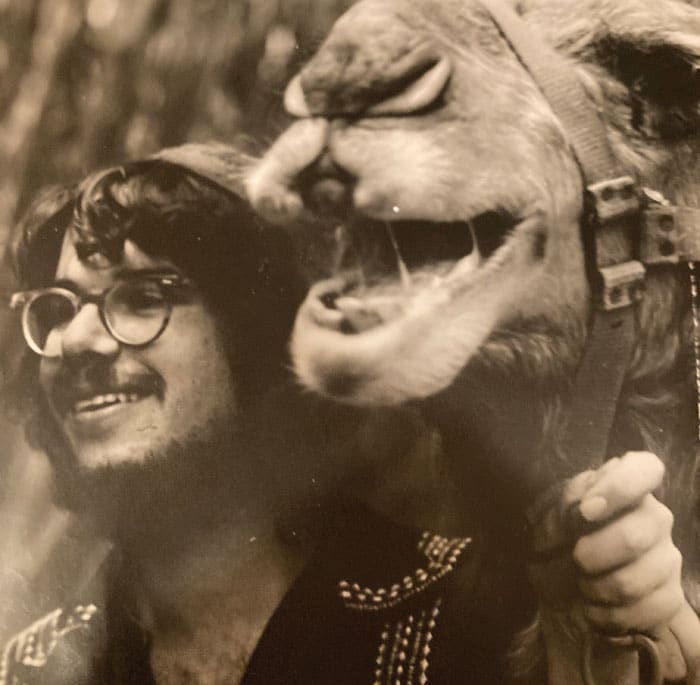
Gary Wexler helping prepare the camel rides at the 1974 Yom Haatzmaut Fairfax street festival.

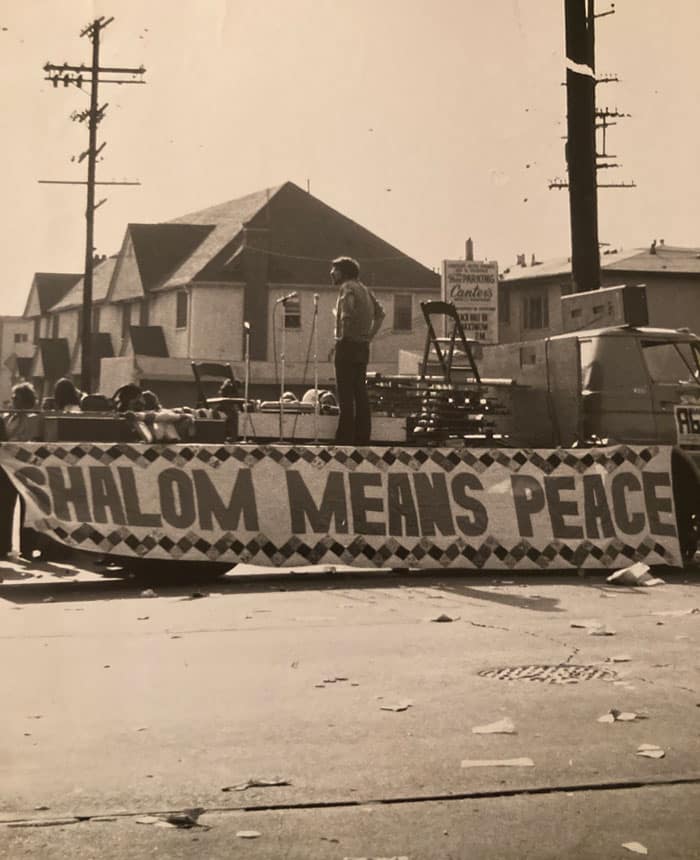
In 1973—yeah, a long time ago, the year after I graduated college, right before the Yom Kippur War­—I worked in the Youth Department of the L.A. Jewish Federation. One of my jobs was to organize the citywide Yom Haatzmaut celebration. It had traditionally been at Rancho Park. But that year, we changed things up, recreating the event as a street festival. We closed down Fairfax Avenue between Oakwood and Rosewood, the same block that now reminded me of the Lamentations description from Tisha b’Av, lamenting the destruction of Jerusalem.  

We had pulled off that celebration on a dime. Someone donated a flatbed truck as the stage, which we placed across Fairfax at Oakwood, just beyond Canter’s. The decorations were homemade banners, Israeli flags and blue and white crepe paper.  We brought on local Israeli singers and dancers. We found camels somewhere out near Palm Springs and had them transported to Fairfax, giving people camel rides. We had a belly dancer who performed to an Arabic song, “Aina Zorga,” (“Blue Eyes”). I remember a Yiddish-speaking lady I knew from the neighborhood, Esther, who came up nearly hysterical, “Genucht. Enough.  Dus is a shande for the rebayim. This is an embarrassment for the rabbis.” 

But what made the festival most successful were the merchants on the street. Scores of them. Several weeks prior to the event, we sent a letter to all the store owners, asking each one for their participation, to decorate, keep their stores and restaurants open, to put out tables, to make money and not raise their prices. To make them feel included and needed, we translated the letter into Hebrew, Yiddish and Hungarian, the languages spoken in each of their establishments. We hand delivered them to Canter’s, Schwartz’s Kosher Bakery, the Budapest Restaurant, The Tel Aviv Cafe, Solomon’s Book Store, Hadarim Israeli Dance Studio, HaTaklit Records and others I now forget. We asked the newsstand to move all their Jewish newspapers — the B’nai Brith Messenger, The Federation News, the Yiddish Forwards, the Yiddish Morgan Tuk Journal, the Israeli Davar, Haaretz and Jerusalem Post — to where people could see them.

Hundreds of young people were excited about Israel in those days and got involved in the organizing effort. Thousands of people showed up, many of them dancing in the street. It was attended by synagogues, Jewish schools, Zionist youth groups and other organizations.  Between the merchants, the volunteers and performers it felt like a grassroots community celebration in an area we all considered home.

Gary Wexler standing on the stage at Fairfax and Oakwood at 7am in 1974 on the morning of the Yom Haatzmaut street festival.

As the chief organizer, I remember urging the Federation leadership, who of course had to give speeches, not to use Yiddish words. I told them it would exclude the Sephardic Jews (many of them I knew from Fairfax High), and the Mizrachi Israelis who were there in droves. They had no idea what I was talking about. The first speaker greeted the crowd, “What do you think of such a freiliche (happy) event organized by all these kinder (kids)?”

Fifty years later, I carry my bag of Black-and-White cookies to the car, no longer hearing Jewish languages on the street. But as I walked, the memories, the echoes and the whispers of what once was, were all still there for me. 

Fifty years later, I carry my bag of Black-and-White cookies to the car, no longer hearing Jewish languages on the street. The neighborhood has changed. There are still a few Jewish spaces, but the old ones are now tennis shoe stores, T-shirt stores, high end electronic gadget stores, a hot chicken restaurant, a few pizza restaurants, among others. Fairfax is no longer the thriving hub of Jewish life in Los Angeles. But as I walked, the memories, the echoes and the whispers of what once was, were all still there for me.


Gary Wexler woke up one morning and found he had morphed into an old Jewish guy.

Creative Aging: What Happened to Fairfax? Read More »

Campus Watch September 28, 2023

Roger Waters Says He Was Banned from Speaking at Penn

Former Pink Floyd bassist and frontman Roger Waters posted a video to social media claiming that the University of Pennsylvania (UPenn) banned him from speaking on campus at the Palestine Writes Literature Festival and that he would have to speak at the festival virtually as a result. However, the university is claiming that they were under the impression from the beginning that Waters would be speaking virtually and that Waters speaking in-person was a last-minute request.

Waters said in the video that he was told that he couldn’t attend the festival because the university had arranged for him to speak via Zoom. “And the fact that I have come all the way here to be present because I care deeply about the issues that are being discussed apparently cuts no ice with the campus police or whoever it is,” Waters said. 

A university spokesperson, however, told the Journal that “organizers of the Palestine Writes Literature Festival indicated from the beginning, and confirmed multiple times, that Mr. Waters would be participating in the event virtually.” “On Wednesday, September 20, less than 48 hours before the start of the event, the organizers communicated the change to in-person attendance to the University Life Space & Events team,” the spokesperson added. “We were unable to accommodate this request, as it would have required significant changes to event coordination, as well as additional campus safety and security resources that were unavailable on such short notice. Therefore, the University asked both the organizers and Mr. Waters’ management to honor the understanding from the beginning that he would not be appearing in person.”

Philadelphia Magazine reported that Susan Abulhawa, the executive director of the festival, told the outlet that “she had informed Penn of the change to in-person closer to 72 hours in advance and that she even raised more money to cover the costs of added security, to no avail.”

Penn Hillel Vandalized

The University of Pennsylvania’s (UPenn) Hillel was vandalized on September 21 by a perpetrator who allegedly shouted antisemitic remarks while doing so.

“Penn Police responded yesterday to reports of an individual shouting antisemitic obscenities and overturning furniture at Penn Hillel,” University President Elizabeth Magill and other university said in a statement on September 22. “The individual was determined to be in crisis and was quickly and safely removed and referred for medical evaluation. This troubling incident came in the wake of another upsetting occurrence at the Weitzman School of Design, where a group of students found a swastika painted on the wall of a spray booth, a small room that is used for painting projects, on the fourth floor of Meyerson Hall.” The statement continued: “We unequivocally condemn such hateful acts. They are an assault on our values and mission as an institution and have no place at Penn. Sadly, incidents of hatred, including antisemitic rhetoric and acts that denigrate Jewish people, have become all too common. That these incidents happened on our campus, in our spaces, is deeply unsettling.”

Antisemitic Graffiti at UT Austin

The University of Texas Austin announced that an act of antisemitic vandalism occurred on or nearby the campus.

FOX 7 Austin reported on September 22 that the university said in a statement: “The University has received reports of antisemitic vandalism on or near the campus. This conduct is not constitutionally protected speech. UT condemns these actions and will refer for discipline any University-associated individuals found to have vandalized University or city property. Moreover, the University condemns acts taken against people because of their race, color, religion, sex and national origin. Such conduct does not align with our institutional values. Our University supports and celebrates the diversity of our community.” According to FOX 7, the vandalism was “graffiti with white supremacy symbolism… outside a sorority house.”

High School Football Coach Resigns After Team Used “Nazi” As Play Call

The coach of the Brooklyn (Ohio) High School football team resigned on September 25 after his team repeatedly used the word “Nazi” to call out plays during a game on September 22.

According to various media reports, Brooklyn’s opponent, Beachwood High School, informed officials during the first half about the use of the term and threatened to pull their players from the game if the Brooklyn team continued to use the word. Brooklyn Head Coach Tim McFarland apologized for the use of the term and the word was not used again for the remainder of the game. However, the superintendent of the Beachwood school district said in a statement the next day that multiple players on the Brooklyn team “used a racial slur freely throughout the night.”

Brooklyn Superintendent Theodore Caleris announced McFarland’s resignation in a September 25 announcement and that McFarland has expressed his sincerest regrets over what happened and apologized for the incident. “While to the district’s knowledge the language was not directed to any single individual, the Brooklyn City Schools acknowledges that using such offensive language in the first place was utterly and absolutely wrong,” Caleris said.

Campus Watch September 28, 2023 Read More »

The Soul of Sukkot: Circumcising our Hearts

Sukkot is the festival marking our turn from the introspection of Rosh HaShanah and the inner work of Yom Kippur. On this Festival of Booths, we built shelters that are simultaneously frail and resilient, reflecting the existential reality of human life and community. Using the months of Elul and Tishrei to turn inward, to plumb the depths of our souls, the need of the hour is to articulate a Jewish understanding of why engagement with the world is an essential component of religious life. In making that case, it is crucial that we locate this agenda not from a perspective of partisan politics, but from the core of personhood, a spiritual fleshing out of how we are in the world, and of who we are in the world.  In sketching out the related nature of our humanity, the place to start is in utero (as individuals; as Jews, in our history as slaves in Egypt and afterward).

Inside the womb the fetus does not know (from what we can tell) where their own identity stops and the boundaries of other people begin.  As we form in our very first few weeks and then months in the world, we live in a world of complete oneness, in which all is united with all, all is merged with all; in which our needs are magically met. We start the first (however many) months of our life in an environment that is perfectly suited to our own growth, our own formation, and our own fulfillment. At some time during this gestation, we start to hear certain recurrent voices, and those voices become familiar to us. We start to hear the recognizable voices of our parents around us; we might even start to hear the voices of siblings, if we have them; certain familiar sounds, that by the time we are born we already register, as familiar, and mishpachah, and our own.  

Jewish tradition speaks of our leaving Egypt as a moment of birth as a people, and the mystical tradition builds on that to suggest that the Sukkah (booth) that we build for the festival is itself a womb. Each year, we step outside the permanent (pyramids and homes) to enter the transformative dynamism of our sukkot.

At the moment of birth, we emerge into a world where the encompassing security of our environment shifts, but our perception of unity continues. The new baby experiences a world in which hunger and thirst are magically, instantly met with the milk of snuggling satiation; in which a sense of being dirty or uncomfortable is met with joyous cleaning. Inside the Sukkah, we surround ourselves with loving companions and delicious foods. Needs are met as if by magic, and their satisfaction is accompanied by human connection, love, and interaction. All of these transactions happen without the baby’s distinguishing between who he is and the fact that there are other, separate people out there. And the Jewish people dwell in an almost mythic unity in Sukkah booths that remind us of every other Sukkah across time and space.

The process of growing out of babyhood and into toddlerhood, and then the rest of life, is a continuing process of differentiation in which consciousness forms around the boundaries of one’s own identity as distinct and separate. This individuation is, by-and-large, good. Becoming aware of one’s own distinctiveness, and of the separate identity of other people leads us to individualism, to creativity, to an ability to play and interact with the world and with the other people whom we discover sharing our world.  

We see that individuation in the symbols that make up our Lulav and Etrog. Rabbinic midrash teaches that the different plants in the Lulav symbolize the diversity of people who comprise Am Yisrael, the Jewish people. Some are visual people, some are aural. Some stand strong and some lead with their hearts. All come together in their individuality to make up a kosher Lulav. All are necessary because of their differences.

That individuation is also a necessary part of having an identity. You cannot know who you are unless you simultaneously know who you are not. It is why Havdallah (distinction) — in concept and in ritual — plays such a key role in our own tradition.  The making of distinction is an essential component not only of Jewish identity, but of any identity whatsoever. Perhaps it is for that reason that the Talmud notes (Kiddushin 5b, Bava Metzia 61a, Avodah Zarah 46a), “The nature of this one is not like that one; and the nature of that one is not like this one.”  Each is unique; each is to be recognized for their distinctiveness and for what they alone can bring into the world. God makes none of us redundant. And yet, this distinctiveness comes at a very high price.

As we recognize ourselves as distinct and separate from others and from the world around us, we also become open to the disappointment of that the chasm that separates us from others. People we love disappoint us. We realize that feeding does not automatically follow hunger; that one can be soiled physically or emotionally or spiritually, and no one will necessary come to cleanse us. This reality is enacted as we take our Lulav and Etrog and march around the sanctuary in a parade of hakafot. We march in search of a destination and a goal. In the ancient world, they used to march around the Altar of the Temple. The loss of that holy building is a continuing wound in our collective heart. We dance our exile and isolation as a people. Each of us, as we emerge into our separate selfhoods, begins to absorb the bruises and disappointments of a world that is not a womb in which we are automatically sheltered and nourished. It is so tempting to respond to life’s bruises by becoming callous or indifferent or cruel.

Years ago, living in Orange County, having bought our first suburban home, we did the thing that all suburban families are required to do virtually by law – we got a dog. We went to the local pound and found this great, floppy puppy with big feet and big ears and lots of enthusiasm for life. Being that she was a puppy, she loved everyone and everything. Until that fateful day, when wandering outside the house, she discovered — “Cat” — the ultimate other. Humie, assuming that everyone has the intrinsic goodness of a dog, went up to the cat and in her own loving way, invited the cat into fellowship and friendship. The cat, in its feline way, declined the offer by swiping Humie across the nose with her claws out. The shock (and the blood) on the dog’s face was palpable, and then she responded with the age-old animosity with which hurt dogs have always responded to uppity cats. Since that incident, she has punished untold numbers of possibly innocent felines for the sins of the one that hurt her so deeply.  

We all do the same. We are all inevitably wounded by our disappointments in life. We are shocked and appalled by the betrayal, the disappointment, the wound, and we try to protect ourselves from future hurt by preemptively lashing out at anyone and anything that reminds us of the person or the scenario in which we were first wounded. Or, we attempt to spare ourselves pain by wrapping ourselves in the isolating cloak of indifference. The pain of others is often too great to bear, their presence, and sometimes their absence. The death or betrayal of loved us leaves us radically vulnerable for sh’leimut, a sense of longing in a world that is shattered eternally.  

And then, there are socio-economic forces that also leave us vulnerable and alone. In one remarkable observation, the sages of the Talmud (Sanhedrin 98b) tell us, “When a person comes home and finds their son or daughter lying in hunger, it’s as though they were bitten by a snake.” There is poverty in the world; there is devastation in the world; there are the results of natural catastrophes such as are now afflicting the people in the Bayou; and there are humanly-constructed disasters in which we turn our back on the suffering on untold numbers of people who struggle simply to make ends meet, to put food upon the table, who live paycheck to paycheck, and barely that, and live one disaster away from complete catastrophe. And, the way many of us try to live in a world in which such suffering occurs is to chisel a hard casing around our hearts. We shelter our hearts from feeling the rawness of life by metastasizing what the Bible calls an uncircumcised heart. 

Try as we will to protect ourselves by avoiding engagement, connection, and involvement, life crashes in, time and time again. We are incapable of staving life off and therefore devote greater and greater expenditures of energy into shielding ourselves from what breaks through anyway. In that futile process, the problems of the world continue to grow, to fester, and to oppress. It was Albert Einstein who noted: “The world is too dangerous to live in, not because of the people who do evil, but because of the people who sit and let it happen.” Eventually we become trapped in our own web, originally designed to protect us, but ultimately, which traps us. Our cultivated insensitivity, our desire to shield ourselves, precludes us from appreciating life’s wonder and the world’s beauty. 

Enter the sukkah, which looks like withdrawal from the world, and enter a place of beauty, transience, and openness. The law of the Sukkah is you have to be able to see outside through the roofing or it is not a kosher sukkah. The very architecture of the booth is a goad to engagement, to noticing.

I recall a conversation with my childhood rabbi, a man who, to this day, I continue to remember with great affection, confiding to me that he had never lived with a pet because it would one day age and die, and he couldn’t bear the pain of its loss. I remember as a 9-year-old thinking that there was something wrong with that attitude; true it is that pain is the price we pay for loving, and the only way to shield oneself from pain is to never love. But then we never live; we are never fully present. There is only one way to remain fully alive – we must tear asunder the deadening wall encasing our hearts. In the words of the Torah, we must have the courage and the faith to circumcise our hearts anew: 

“Circumcise, therefore, the foreskin of your heart, and be no more stiff-necked.  For the Holy One, your God, is the God of Gods, and the Lord of Lords, a great God, mighty and awesome, who favors no person, nor takes bribes. God executes the judgment of the orphan and the widow and loves the stranger, giving them food and garment.  Love therefore, the stranger, for you were strangers in the Land of Egypt (Deuteronomy 10:16-19).“

It is true that circumcising our heart does open us to feel pain, but also joy, and wonder, and community, and connection.  Rooting that courage to circumcise in the presence of the Holy One, being nestled in the bosom of God, gives us the strength, the courage, and the faith to risk the pain, to feel the pain.  

If you are not prepared to feel humanity’s pain, then you will not be privileged to experience humanity’s triumph “Rejoice with Jerusalem, and be glad with her, all who love her; rejoice for joy with her, all who mourn for her (Isaiah 66:10)” says the Prophet Isaiah, to which the rabbis comment in Massekhet Bava Batra (60b), “Anyone who mourns for Jerusalem merits to share her joy, and anyone who does not mourn for her will not share her joy.” One day, we will all dwell in a messianic sukkah of Leviathan pelt, celebrating in the holy city of Jerusalem.

I invite you, this year, to circumcise your heart… I bless us that we can gird ourselves to risk living life whole, embracing each other as brother and sister, and pledging ourselves to fashion communities in which no one is an outsider, no one rejected, no one made invisible.

We are among the most privileged people on the globe. Our wealth is the wealth of history’s grandest kings. We possess the security of people who lived in ancient mighty palaces surrounded by mighty armies there to protect them. Yet our wealth, and our security, threatens to deaden us. I invite you, this year, to circumcise your heart. When you stand before another person, you stand in the presence of God. When you sit in a classroom, an office, a public space, you stand in the presence of God. When you look out in the world and you see a need that you have a capacity to do meet, you stand under an obligation to God, Who gave you life, Who gave you talent, Who privileged you beyond the dreams of most of humanity to this day, and certainly of our ancestors across the millennia. As we learn from the poet Hillel Zeitlin, 

“Praise Me, says God, I will know that you love Me.  

Curse Me, I will know that you love Me.  

Praise Me or curse Me, 

I will know that you love Me.  

Sing out My graces, says God. 

Raise your fist against Me and revile, says God.  

Sing My graces or revile, 

Reviling is also praise, says God.  

But if you sit fenced off in your apathy, 

Entrenched in “I don’t give a damn” says God, 

If you look at the stars and yawn, says God, 

If you see suffering and you don’t cry out, 

If you don’t praise and you don’t revile,

Then I created you in vain, says God.”

This Sukkot, I bless us that we train our ears to truly hear the cries around us — the cries of those we don’t know, as well as those we do. This year, I bless us that we open our eyes to truly see the beauty and the holiness of the person before us at each and every moment, and to see the godliness of their aspirations and their fears. This year, I bless us that we can gird ourselves to risk living life whole, embracing each other as brother and sister, and pledging ourselves to fashion communities in which no one is an outsider, no one rejected, no one made invisible.  This year, I bless us that we should muster the strength to show our love for Avinu sheh-bah shamayim by loving all of God’s children, by honoring all of God’s creation, and by participating in the sacred and mighty work of repairing this broken world under the shelter of a true sukkat shalom, a tabernacle of peace.


Rabbi Dr Bradley Shavit Artson is a Contributing Writer for the Jewish Journal of Greater Los Angeles (www.bradartson.com). He holds the Abner and Roslyn Goldstine Dean’s Chair of the Ziegler School of Rabbinic Studies and is Vice President of American Jewish University in Los Angeles.

The Soul of Sukkot: Circumcising our Hearts Read More »

Rabbis of LA | Rabbi Menachem Silverstein: There’s Something Funny About Him

You heard the joke about the rabbi that walks into a comedy club? No? Well, Rabbi Menachem Silverstein of Shul on the Hill would be the rabbi on stage, telling the jokes. Every Thursday night at 10, Rabbi Silverstein has a gig at the Laugh Factory — less than 24 hours before leading Friday night and Shabbat services at the Orthodox synagogue in Studio City.

Silverstein somehow seems to have found a route to make two starkly contrasting careers click. “I have two kids, six and five. I also write scripts for TV shows. And I have a production company. I produce and direct product videos, commercials, web series, short films. Very busy. As a Jew,” he said, leaning into his punchline, “I need a reason to complain. So if I am never free, I have nothing to complain about. I need to whine.”

Growing up in Brooklyn, New York, Silverstein had his sights set on comedy and screenwriting. And he learned how to deal with the public through outreach done by his Chabad-centered home. “Every Friday I was out asking people to put on tefillin and giving out Shabbat candles,” he said. “I always looked up to rabbis. It was something that was amazing, and I would have been honored to be a part of. But I was like, I don’t know, I’m not Jewish enough. I’m not smart enough. I don’t speak Hebrew well enough and I don’t know Torah well enough.”

But show business was always in his thoughts. Two years before he moved to Los Angeles, Silverstein was backstage at the Laugh Factory, schmoozing with a friend when Tehran Von Ghasri stopped by. He was “tall, Persian, Black, Jewish, Muslim and Zoroastrian. “So many different parts,” he marveled. “I am not amazing at math, but it all has to equal 100%.” Eventually, he showed Tehran how to put on tefillin. They became writing partners and soon, Tehran brought Silverstein on to co-produce his weekly show, “Tehran Thursday.”

Until recently, the rabbi prioritized comedy and his writing. “From a humility perspective, I am not going to force myself on anyone as their rabbi,” he said. But gradually, the (Shul on the Hill) community said ‘We need someone to fill the shoes of the rabbi, and we’d like that to be you.’ I sat there while they were having the conversation, and I felt if no one’s going to do it, I will. Then I stepped up and said, ‘We’ll do two words of Torah every Shabbat, we’ll start a men’s class, and on Jewish holidays we will have special events.’” Today, Shul on the Hill offers two weekly Torah classes, one for women, one for men. “Every week I choose a couple pages. I found I could do it. Gradually and naturally. My personality type is, if no one is going to do it, I will.”

Where did that confidence come from? “When you are one of seven children,” Silverman said, “if you want to stand out in a crowd, you need confidence,” As a matter of fact, he said, he was third of seven. “Third is best,” he explained, “because in the Torah it mentions that when Abraham was recovering from circumcision and when the angels came to visit him, it says he slaughtered the third cow because it was the best meat.”

Rabbi Silverstein wasn’t finished. “Here is how I look at life: The oldest (sibling) in my family is a girl. Tried it with a girl. She came out okay. Tried it with a boy. He came out okay. Tried a third time, the third time’s a charm. Perfect child. Tried a fourth time, close but not there. Again, close but not there. Again, close, not there. Tried one more time, with a girl as the seventh, but again not perfect. And they gave up. To me, again, the perfect child is the third.”

Looking toward the future, the rabbi/comedian said his next goal “is to be running my own show in five years. I would like to be growing in my stand-up, and also be touring more.” He would also like to write and direct movies. For now, Toveedo, a streaming service that creates content for Orthodox Jews, has hired him to write, direct and sometimes act in their 40-minute movies.

Asked if he has any unattained goals, the  busy 28-year-old thought for a moment, then said, “I want to be taller. I am tall for a Jew but short for an Aryan. I am 5-9, which is like a Jewish 6-2 and an Aryan 5-3.”

Fast Takes with Rabbi Silverstein

Jewish Journal: Favorite place you have traveled outside of Israel?

Rabbi Silverstein: Ukraine. A friend and I were able to hold a Passover seder there.

Jewish Journal: The most memorable book you have read?

Rabbi Silverstein: From a Jewish perspective, there is a sefer called “The Gate of Trust,” about the difference between believing in God and trusting in God. Growing up, there was a book, fiction, called “A Series of Unfortunate Events” by Daniel Handler.

Jewish Journal: What do you do on your day off?

Rabbi Silverstein: Spend time with my kids.

Rabbis of LA | Rabbi Menachem Silverstein: There’s Something Funny About Him Read More »

Decorate Your Sukkah with Twig Stars of David

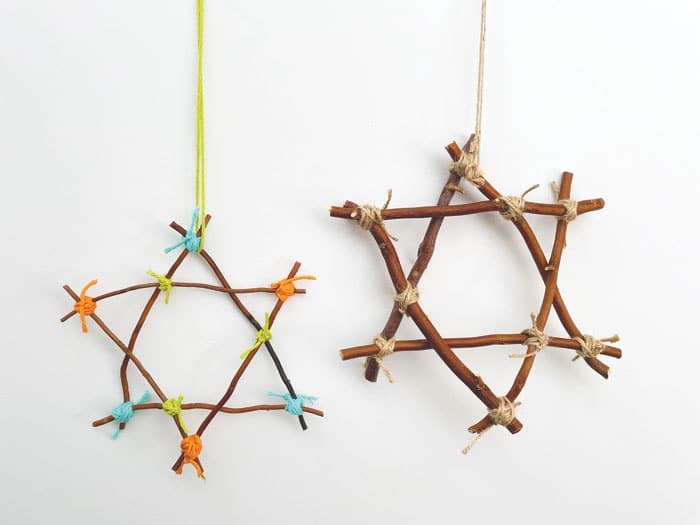
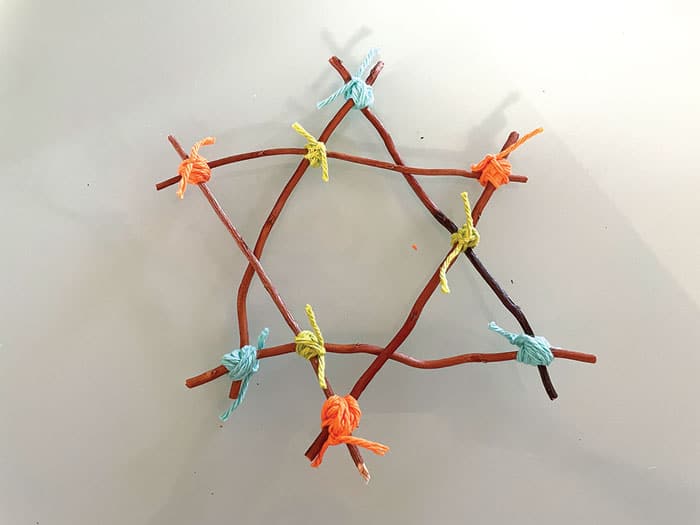
How are you decorating the sukkah this year? In past years, I’ve used plastic fruit, paper garlands, paper flowers and kids’ art to make the sukkah more colorful and festive. Here’s another idea that costs practically nothing and is fun for the whole family: Magen David ornaments made of twigs. 

The kids can participate in making these beautiful, rustic stars by helping to find fallen twigs in the yard or the neighborhood. They can also help assemble them because we’re connecting the twigs with string or yarn rather than a hot glue gun. 

Now when you look up at the s’chach, you really can see stars, even if the L.A. sky isn’t offering any celestial ones that evening.

What you’ll need:

Twigs
Pruning shears or scissors
Yarn, string or twine

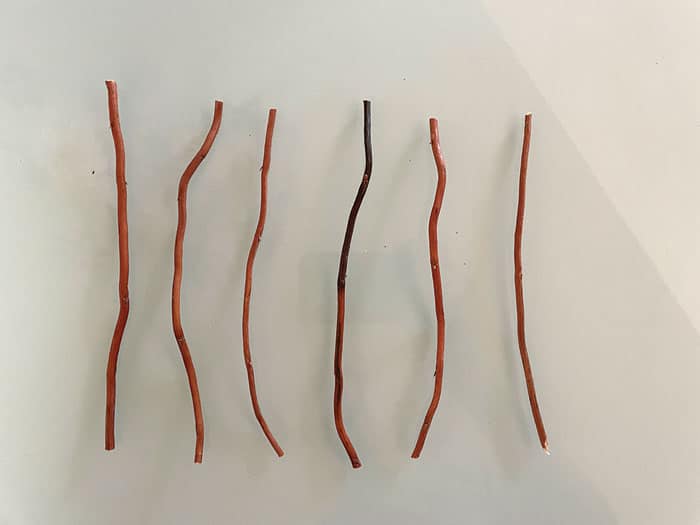
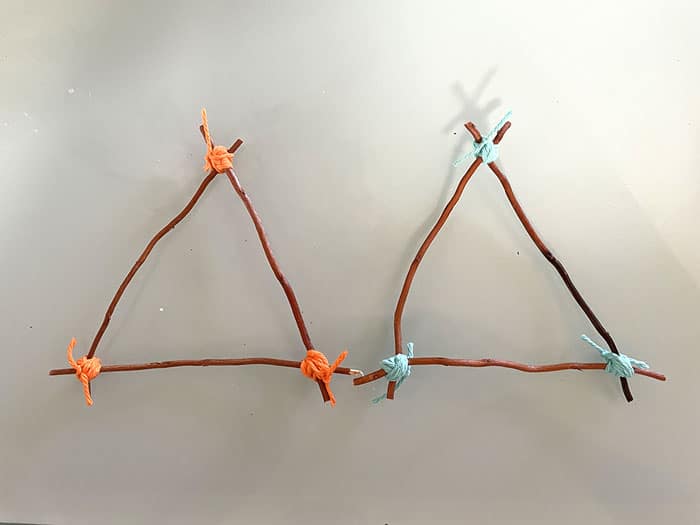
1. Trim six twigs so they are approximately the same length. Mine were about seven inches. You can use garden shears or scissors if the twigs are thin enough.

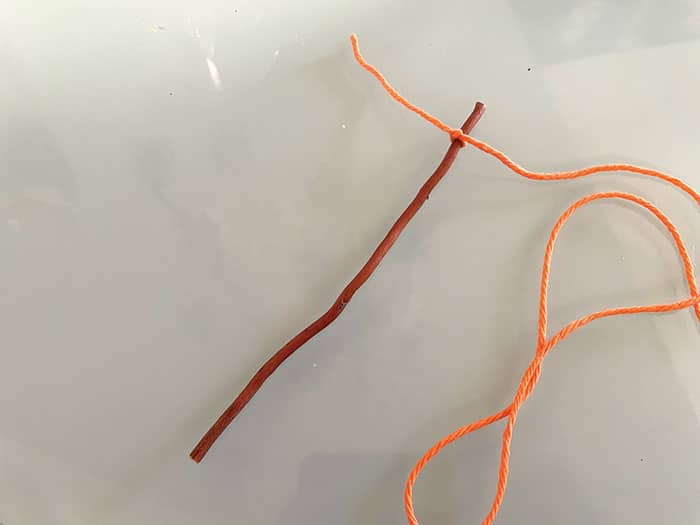
2. There’s a method to tying the twigs together securely. Start by tying a double knot around the end of one twig with a 24-inch length of yarn, string or twine. Leave an end that’s about two inches.

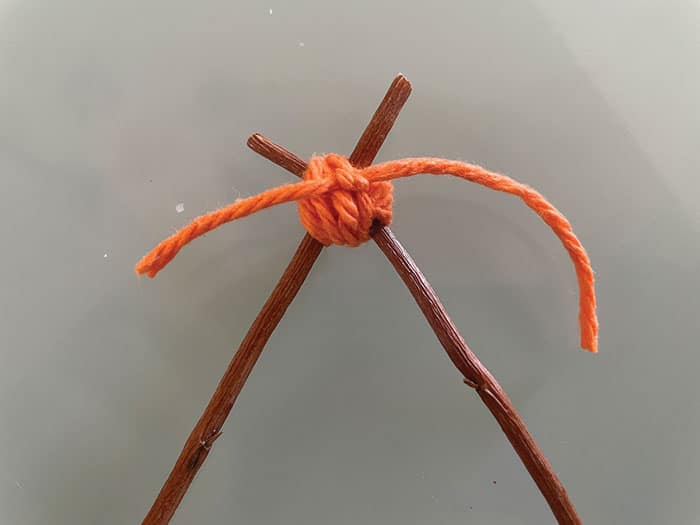
3. Position another twig on top of the first twig to form an upside down “V. “Then wrap the yarn around the twigs both horizontally and vertically. Tie the two ends of the yarn together with a double knot.

4. Connect three twigs to create a triangle, tying knots at each point. 

5. Make a second triangle of the same size.

6. Place one triangle upside down on top of the other and tie knots at points where the twigs intersect. There are six intersections, but securing three points is sufficient to hold the Star of David together.


Jonathan Fong is the author of “Flowers That Wow” and “Parties That Wow,” and host of “Style With a Smile” on YouTube. You can see more of his do-it-yourself projects at jonathanfongstyle.com.

Decorate Your Sukkah with Twig Stars of David Read More »

Scrumptious and Sweet Sukkot Recipes

This year, Sukkot runs from the evening of September 29 through October 6. To make the most of the fall harvest, here are some wonderful on-theme dishes you can enjoy.

“After I break out my nuts, bolts and 2 x 4’s and build this year’s Sukkah, my family will gather with friends to eat incredible harvest dishes” – Danny Corsun

“There are so many wonderful seasonal foods this time of year,” Danny Corsun, founder of Culinary Judaics Academy, told the Journal. “After I break out my nuts, bolts and 2 x 4’s and build this year’s Sukkah, my family will gather with friends to eat incredible harvest dishes, like this one.”

CJA’S Spaghetti Squash-Ricotta “Pasta” Bowls 

2 small spaghetti squash (about 5 lbs total)
6 Tbsp extra-virgin olive oil, divided
2 tsp Old Bay seasoning
1 tsp blackening or cayenne seasoning
Salt and freshly ground black pepper to taste
4 medium garlic cloves (unpeeled)
6 oz (6 packed cups) baby spinach
2/3 cup (2 ounces) grated Parmesan cheese
2 cups marinara sauce (can used store-bought but CJA’s quick tomato sauce recipe is below)
8 oz whole milk ricotta cheese
Chopped fresh basil, for garnish
Pinch of red pepper flakes, optional

Easy Tomato Sauce
1/4 cup extra-virgin olive oil
1 sweet yellow onion, diced
2 garlic cloves, minced
1 tsp dried thyme
1 tsp dried oregano
½ cup fresh basil, ripped
1/2 medium carrot, finely grated
2 (28-oz) cans tomatoes
Salt and pepper

Preheat your oven or grill to 350°F. Place unpeeled garlic cloves in the center of some aluminum foil. Pour 1 teaspoon of olive oil on top and add a pinch of salt and a few grinds of fresh black pepper. Seal the garlic into the foil (making a small packet) and place it in the oven or on the grill. Turn the foil packet over after 4 minutes; cook for an additional 2 minutes. Remove from the heat and set aside.

To prepare the spaghetti squash, turn the oven up to 425°F and line a large, rimmed baking sheet with parchment paper. Using a very sharp chef’s knife, cut off the tip-top and bottom ends of each squash. Stand a squash upright on a stable surface and slice through it from top to bottom to divide it in half. Repeat with the other squash.

Use a large spoon to scoop out the seeds and discard them. Drizzle the insides of each squash half with 1 tablespoon of olive oil and rub it all over the inside. Sprinkle Old Bay, salt and pepper lightly over the interiors of the squash, then place them cut-side down on the prepared baking sheet. Bake for 30-40 minutes (closer to 60-90 minutes if using medium to large squash). Cook time will be less if using a convection oven. Cook the squash until the cut sides turn golden and the interiors are easily pierced through with a fork. Leave the oven on.

In a large skillet over medium heat, warm 1 tablespoon of olive oil. Add the spinach along with salt and pepper to taste; cook, stirring often, until it’s wilted. Set aside.

For the tomato sauce: In a 3-quart saucepan, heat 2 tablespoons of olive oil over medium heat. Add the onion and sauté until soft. Add in garlic and cook for another minute. Add the thyme, oregano/basil and carrot, and cook for 4-5 minutes more. Add the tomatoes and bring to a boil, stirring often. Lower the heat and simmer for 20-30 minutes until thick. Season with salt and pepper.

Open the aluminum foil packet and remove the roasted garlic. Using your thumb and forefinger, the garlic should easily squeeze out of the peel onto a cutting board. Mash it with a fork and then add it to a bowl with the ricotta. Add in one tablespoon of olive oil and season with salt and pepper. Once the garlic is fully incorporated, add in the sauteed spinach and mix well.

Take out the baked squash and fluff the interiors with a fork to make the insides spaghetti-like. To each squash half, add one cup of the tomato sauce and a healthy dollop of the ricotta spread. Mix well. Then top with the parmesan cheese and bake in the oven for 10-15 minutes, or until the cheese is starts to brown. Sprinkle with fresh basil and red pepper flakes, if desired, and serve. Enjoy!


Dana Shrager’s Parsnip Apple Soup is smooth, warm and satisfying to eat in the sukkah. “With a hint of spice, this soup feels like fall in every bite,” Shrager, of the recipe website DanasTable.com, told the Journal. Shrager is planning to use an extension cord, so she can bring her slow cooker in the sukkah and keep the soup warm. 

“Just add a salad or make-ahead bourekas, and dinner is done,” she said. 

Parsnip and Apple Soup Photo by Dalya Rubin

Parsnip and Apple Soup

1 tablespoon olive oil
1 small onion, diced small
3 cloves garlic, minced
1 tsp kosher salt
¼ tsp ground nutmeg
¼ tsp ground coriander
¼ tsp white pepper
1 lb parsnips (about 3 medium parsnips), peeled and cut into ½” rounds
1 medium Honeycrisp apple, peeled and cut into small cubes (you can also substitute with Gala, Envy or similar)
1 medium Yukon gold potato, approximately 8 oz, peeled and cut into small cubes
4 cups vegetarian no-chicken broth or other broth
1 cup water
¼ cup dry white wine
1 bay leaf
2 tsp maple syrup optional for balancing sweetness
Garnish: Olive oil, sumac, pomegranate arils and fresh parsley

In a large soup pot, over medium heat, add the olive oil and onion. Sauté for 6-7 minutes, stirring often, until translucent.
Mix in the garlic, nutmeg, coriander, white pepper and salt. Stir together and cook over medium-low heat until fragrant for 1 minute.
Add the parsnip, apple, potato, broth, water, wine and bay leaf to the pot. Bring to a boil, then reduce to a simmer, and cook mostly covered (with the lid just slightly ajar) for 20-25 minutes, until all the vegetables are softened and fork tender.
Turn the heat off and let the soup sit for 10 minutes, to cool a bit. Remove the bay leaf.
Carefully use a ladle and transfer the soup mixture into a 64-ounce high-speed blender (in 1 batch) or add in 2-3 batches to a medium blender (usually 48-ounce blender), and blend until fully smooth. Be extra careful not to blow the blender lid off with the hot soup. I like to hold the blender cover down with a towel, keeping your hand on it the entire time while blending. Also, some blender lids allow you to release a little of the steam.
Transfer all the blended soup batches back to the pot, and stir together.
Taste the soup, and add maple syrup if you would like the soup to be sweeter (or if the parsnips are slightly bitter). Adjust seasonings to your palate if needed. Mix and heat over a medium flame for a couple minutes until warm.
Serve right away, and garnish with a drizzle of olive oil, sprinkle of sumac, pomegranate seeds, and parsley leaves. Or storage options are listed below.

Notes: You can make this soup up to 3 days before serving; store in the refrigerator in an airtight container. (Once cooled, the soup can be stored in an airtight container in the freezer for 3-6 months.) To reheat from the refrigerator, place the entire soup pot on the stove and bring to a simmer over medium-low heat. Simmer for 5-10 minutes until warmed through. Or reheat individual portions of soup in the microwave for about 2 minutes.


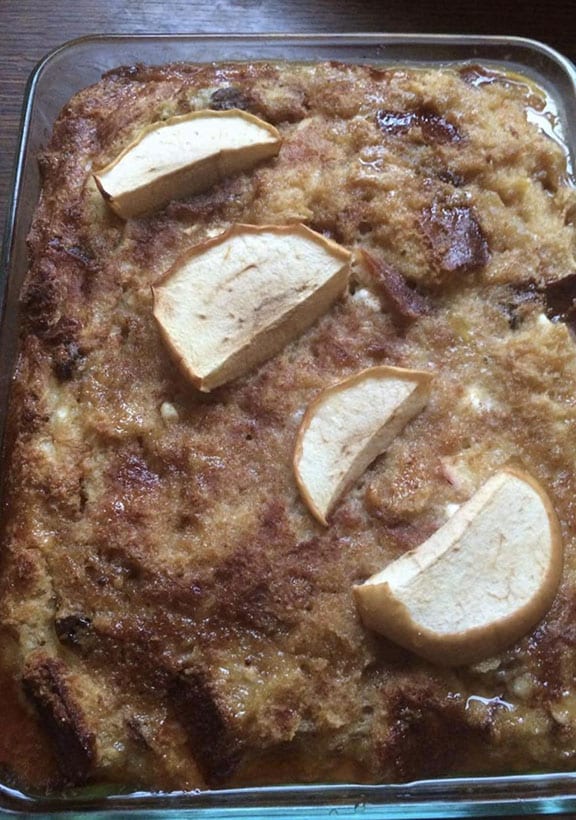
“For an easy dish to serve in your sukkah, try Grandma Beauty’s Apple Raisin Kugel,” Dawn Lerman, author of “My Fat Dad,” told the Journal. “Apples are a traditional fruit enjoyed during Sukkot, symbolizing the harvest season and the bounty of nature.”

Lerman’s kugel is also high in protein, making it a perfect side dish or main.

“It is also easy to prepare and transport, making it sweet all around,” she said.

Beauty’s Sweet Baby Shell Kugel with Golden Raisins and Apples

Photo by Dawn Lerman

8 oz baby shells (you can use low carb or high fiber)

1 stick (4 oz) unsalted butter, melted (plus a little more for greasing the pan) you can also substitute coconut oil or butter

¼ cup applesauce

8 oz cottage cheese

3 oz cream cheese or vegan cream cheese

3 eggs, beaten

4 oz of yogurt

1 cup milk of your choice

½ cup sugar of your choice (coconut sugar works well)

1½ tsp vanilla

1 tsp ground cinnamon

½ cup raisins

1 tsp lemon juice

2 cored and peeled apples, chopped

Toppings:

A little extra cinnamon and sugar to sprinkle on top of the raw kugel (optional)

Preheat the oven to 375°F. Parboil the shells in salted water for about 4 minutes. Strain the shells and set aside.

In a large mixing bowl, combine the butter or coconut oil, applesauce, cottage cheese, cream cheese, beaten eggs, sour cream, milk, sugar, vanilla and cinnamon. With an electric mixer, beat until well combined. Then fold in the shells, raisins, apples  and lemon juice.

Pour into a greased, approximately 9 × 13-inch baking dish. You can sprinkle the optional toppings on top, if desired. Bake until the custard is set and the top is golden brown, about 60 minutes. Cool and slice.

Scrumptious and Sweet Sukkot Recipes Read More »

Table for Five: Sukkot Edition

One verse, five voices. Edited by Salvador Litvak, the Accidental Talmudist

And it will come to pass that everyone left of the nations who came up against Jerusalem will go up from year to year to prostrate himself to the King, the Lord of Hosts, and to celebrate the festival of Tabernacles.

– Zechariah 14:16, from Sukkot haftarah


Rabbanit Alissa Thomas-Newborn
New York Presbyterian and Congregation Netivot Shalom

In the Messianic Era, God will wage war with all of the nations that attacked the Jewish people, and those who remain will celebrate Sukkot. 

Why Sukkot? Because according to our rabbis, sukkah is a “mitzvah kallah” (an easy mitzvah). Specifically, it does not require monetary loss since a sukkah can be made with materials already within one’s possession. But is sukkah *really* an easy (and inexpensive) mitzvah? 

There are arguably many easier mitzvot and holidays that Hashem could have chosen! 

Perhaps we can better understand if we place Sukkot’s annual context in dialogue with our verse from Zechariah. Leading up to Sukkot, we waged war with our yetzer hara (evil inclination). Through the hard work of teshuvah and atonement, we conquered our sins of the past. What remains is “easy”: To celebrate and give thanks. Spiritually from year to year, we shed our husks, and like its biblical name (Chag Ha’asif, The Festival of Ingathering), on Sukkot we reap the benefits of our spiritual sowing. We harvest a self that represents both the beginning of days and the end of days. Both new and complete, worthy of celebration. In this way, Sukkot isn’t so much “easy” as it embodies ease and joy borne out of hard labor. B’simcha (with joy), we show up and build with the materials we already have — our refined souls. 

Bolstered by the spiritual abundance of forgiveness and renewal, let’s then ask ourselves: What does ease look like for me this 5784? And how can I bring that joyful ease into my sukkah and into my fellows’ sukkot — in mind, body, and spirit?


Rabbi Aryeh Markman
Executive Director, Aish L.A.

Historical context: The Jews were devastated by the First Temple having been destroyed, living 70 years in Exile, their return to Israel hindered by foreign powers. Enter Zechariah, one of the last prophets in history (there have been no prophets since, Jewish or otherwise), who tells us that in the End of Days the nations of the world will acknowledge that the Jews were the real Magic Kingdom all along. Imagine that! To riff off Dr. Martin Luther King’s famous 1965 speech, “The Arc of the Moral Universe is Long, but it bends towards …” the Jews.

If we are going to reign supreme, then why are we distracted with anything other than guaranteeing our Jewish future? Don’t we want our own families to be part of it? The question I ask my students is, “If you had a 90% chance of your child attending Harvard and 20% chance of having Jewish grandchildren or a 90% chance of having Jewish grandchildren but only a 20% chance of attending Harvard, which one would you choose … and why?” That, I think, sums up our American experience. 

Zechariah has more credibility than anyone in the last 2000 years! We should be doubling down on Jewish education and living a Jewish lifestyle with dignity. Overall, could a family’s size somewhat indicate optimism for a Jewish future? As the great philosopher and mathematician, Blaise Pascal, told Louis XIV when asked to give the King one proof of the supernatural, “The Jews, your Majesty, the Jews.” 


Rabbi David Eliezrie
President Rabbinical Council of Orange County

A few Jews were sitting in the synagogue after the services schmoozing over some refreshments and one exclaimed “When will Moshiach, finally, come?” What followed was a debate on the belief in Moshiach, the Messiah. Who could he possibly be, why has it taken so long and what will happen when he finally arrives. All those at the table said they believed in Moshiach, but one guy had a condition. “Yes I believe in Moshiach, but I hope he comes after the cruise we’ve been planning.” 

The belief in a Messiah is a core fundamental of Judaism. Maimonides highlights it as an essential belief in his classic, “The Principles of Faith.” Still, to most it seems elusive: Who, when, where. For most American Jews living in a country where we have the freedoms to live as we please and there is economic opportunity, the idea of a redeemer changing the world seems a bit farfetched. 

Ezekiel provides us with a vision of the ultimate hope of Judaism, and takes a leap forward, telling us in his prophecy that not only will Jews be impacted but all of mankind will be changed. They, too, will recognize the transformation, when holiness becomes apparent to all. The promise of Moshiach teaches us that the world we are now is transitionary, but we can propel it to the next level. By living a life filled with sanctity, by learning Torah and fulfilling Mitzvot, we can tip the balance of humanity and prompt G-d to fulfill his promise that is reflected in the words of Ezekiel. 


Rabbi Shlomo Yaffe
Congregation B’nai Torah

Judaism has an “End Game,” discussed extensively in the Prophets. This ultimate positive future encompasses all of humanity. Maimonides (Shoftim: Melachim 12:5) offers an excellent synopsis of these prophecies: “In that era, there will be neither famine nor war, envy nor competition, for good will flow in abundance and all the delights will be freely available as dust. The occupation of the entire world will be solely to know G-d” 

Judaism sees all of Humanity uniting in a harmonious, universal, Ethical Monotheism free of all concerns except for seeking and living Truth.

 This does not suggest that all will adopt Judaism — it represents the idea that the universal ethical code given by G-d (the Noahide Code) will be observed by all and that G-d’s rebuilt Third Temple in Jerusalem will be a unifying focal point of worship for all Humanity. 

Why Sukkot? 

1) Sukkot is the most public “out there in the world” Festival. The Sukkah is built outdoors and visible to all. The Four Species and the Hoshanot (willows brough to the Altar) are paraded publicly in the Temple Courtyard. Sukkot represents Judaism turned outward sharing its values of G-d’s presence in the very fabric of nature with all humanity. 

2) In the Midrashic tradition of the 3 Regalim, Passover evokes the First Temple — liberation and the first entry into Israel. Shavuot evokes the Second Temple — the era of elucidation of Torah. Sukkot evokes the Third Temple — The universal embrace of a common Divine ethic by all.


Rabbi Bentzion Kravitz}
Founder, JewsforJudaism.org 

Recently, a Chinese woman living in California contacted me for advice because her friends have been trying to convince her that Christianity is the only true religion. Although unconvinced by their arguments she was still confused. Her search for answers led her to the Jews for Judaism website. We spoke several times and she was relieved when I introduced her to the Noahide Covenant — a path for righteous Gentiles to reach God without converting to Judaism. She purchased a Jewish Bible that I recommended and started reading from the beginning. Then I received an email from her expressing her concern that the Torah seems to be “only for Jews and not for non-Jews.” To dispel her fears I shared several bible passages with her, including, “My Temple will be called a house of prayer for all nations,” Isaiah 56:7, the verse in this week’s Haftorah that states that the nations will go to Jerusalem every year to celebrate the festival of Sukkot. This festival, when we leave the security of our sturdy homes to dwell in a temporary dwelling, teaches the importance of trusting in God to provide our ultimate security. This is a lesson for Jews and non-Jews alike.

Table for Five: Sukkot Edition Read More »

Sephardic Torah | He Loved Books, People and Sephardic Manuscripts: A Memorial Tribute to Rabbi Meir Abitbol z”l

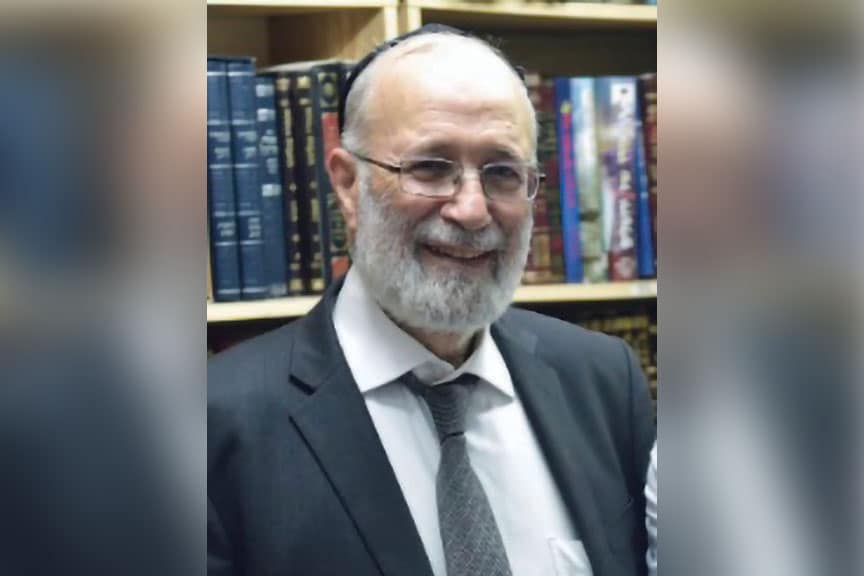
Last week, the Jewish world lost a special individual whose life was devoted to disseminating the wisdom of Sephardic Sages. Rabbi Meir Abitbol z”l passed away between Rosh Hashana and Yom Kippur, leaving behind an unmatched legacy of singlehandedly facilitating the revival of the Sephardic world of Torah scholarship.

Born in Casablanca in 1944, the young Meir was educated in Moroccan yeshivot in Tangier and then in the Gateshead Yeshiva in England. Before moving to Israel, he helped build Sephardic yeshivot in Paris and Montreal.

In 1981 he made Aliyah with his wife and children, where he continued his work in establishing and strengthening Torah institutions that would teach the works of Sephardic rabbis.

But something always bothered him. The works of Torah scholarship of Sephardic rabbis were mostly absent from libraries and Batei Midrash. Many were out of print, but most were unpublished manuscripts. He visited the manuscript collections of Israel’s National Library and of private collectors, discovering thousands of unpublished works by Sephardic Torah scholars. It pained him to see these gems neglected and alone. He decided to change this.

With the help of rabbis and donors from all over the world, he established Hasifriyah Hasefaradit – The Sephardic Library – a new publishing house that would focus on editing and publishing Sephardic manuscripts. By turning them into beautiful books, the public could now study from them. Rabbi Abitbol lifted the wisdom of Sephardic rabbis out of the genizah (storehouse) and into libraries and Batei Midrash, opening the minds and hearts of thousands of eager students to new wisdom from the Sephardic world.

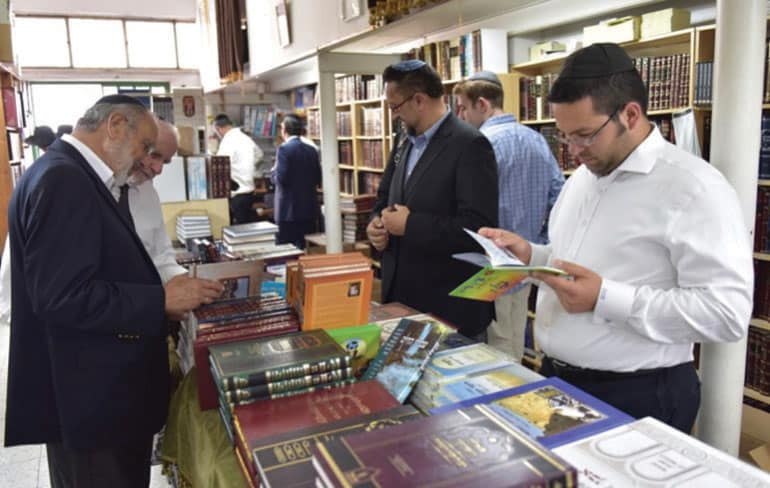
Rabbi Abitbol’s passion for Sephardic manuscripts was matched by his love for people. More than just a publishing house, Hasifriyah Hasefaradit is also a beautiful bookstore in Jerusalem, a haven for Sephardic bibliophiles. It was here that Rabbi Abitbol proudly greeted thousands of visitors, welcoming them like the Ushpizin (honored guests) in a Sukkah.

Every summer at the Sephardic Educational Center in Jerusalem, I lead Metivta, a 10-day seminar of Sephardic Torah studies for rabbis from all over the diaspora. One of our annual treats was our pilgrimage to Hasifriyah Hasefaradit, where Rabbi Abitbol warmly greeted us with love, refreshments…and books. When showing us the newest books, the smile on his face and twinkle in his eyes were priceless. We were kids in a candy store with the chief confectioner!

Rabbi Abitbol was a redeemer of Sephardic Torah. His noble efforts helped publish close to 500 new books that nobody had ever studied before.

He now rests in peace, surrounded in the Garden of Eden by all of the Sephardic sages whose books he brought to life.


Rabbi Daniel Bouskila is the director of the Sephardic Educational Center and the rabbi of the Westwood Village Synagogue.

Sephardic Torah | He Loved Books, People and Sephardic Manuscripts: A Memorial Tribute to Rabbi Meir Abitbol z”l Read More »