fbpx

September 13, 2023

A Bisl Torah – No Shofar on Shabbat Part 2

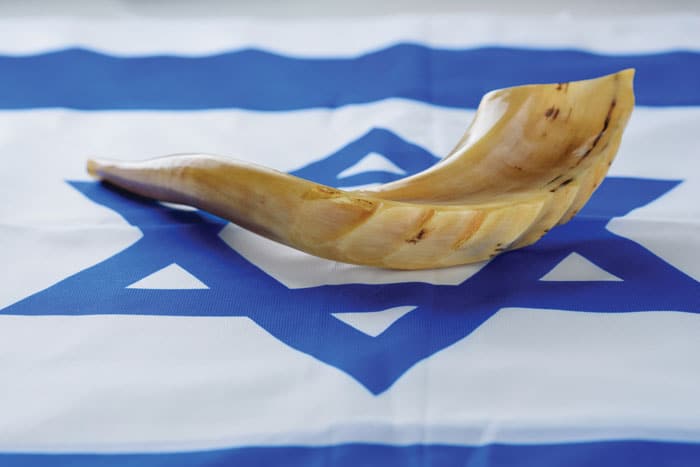
Rabbi Arthur Waskow offers some reasons why the shofar is not blown on Shabbat. The most obvious is the halakhic conundrum of carrying. We are not supposed to carry the shofar from home to the synagogue which would violate the Jewish law of carrying from private to public domains.

The second reason is one we should absorb for the upcoming new year. He explains that the shofar is not blown on Shabbat because nothing should prevent the contemplation of Shabbat. And there is a chance the shofar would break our spiritual concentration. Shabbat itself is a stronger stirring of the soul than the shofar ever could be. Nothing should be allowed to break that spiritual barrier.

What a powerful force. Each week, we hold something just as jarring, alerting and inspiring as the shofar. If we let Shabbat in, imagine what we might hear, imagine what we might see.

The shofar is blown to wake us up. To help us move towards a more righteous path. The quick blasts might inspire quick moves and fast decisions. Necessary actions for the new year. But Shabbat helps us plan. Methodical choices that build character and sustain the soul.

We’ll hear the shofar on the second day of Rosh Hashana. And Shabbat comes each week. May the shofar encourage the immediate movement we need to begin our year. May Shabbat inspire a continuous holy journey, lifting us higher week after week.

Shana tovah and Shabbat Shalom


Rabbi Nicole Guzik is senior rabbi at Sinai Temple. She can be reached at her Facebook page at Rabbi Nicole Guzik or on Instagram @rabbiguzik. For more writings, visit Rabbi Guzik’s blog section from Sinai Temple’s website.

A Bisl Torah – No Shofar on Shabbat Part 2 Read More »

A Moment in Time: “Rosh Hashanah 5784 – Harnessing Awe”

Dear all,

Earlier this week during our Akiba High School program, our 9th graders dropped their phones, their gadgets, and their headsets, and they ran outside to take in this beautiful smile from Heaven.

I’m always amazed how for thousands and thousands of years, a rainbow continues to have the same effect on our hearts. They will certainly be around long after the latest iteration of the iphone!

How cool that this happened on the cusp of Rosh Hashanah, the Jewish New Year?! It’s a time we take inventory of the eternal spark in our finite lives. And it’s an opportunity to take a moment in time to harness awe.

As we celebrate this anniversary of the completion of creation, we hope that the rainbow, the symbol of peace, rests on your homes, in your hearts, and in your relationships.

Ron, Maya, Eli, and I will you a Shana Tova, a year of goodness!

With love and Shalom,

Rabbi Zach Shapiro

A Moment in Time: “Rosh Hashanah 5784 – Harnessing Awe” Read More »

Sephardic Spice Girls: Cooking Simply, Preserved Lemons & Stuffed Artichokes

The Sephardic Spice Girls Sharon Gomperts and Rachel Emquies Sheff have been cooking and teaching together for years. The duo has collaborated on events for the Sephardic Educational Center, as well as many community cooking classes.

“Mostly what being a Sephardic Spice Girl is all about is making cooking and entertaining easy,” Gomperts told the Journal. “We’re connecting people to the recipes of their grandmothers [and] their mothers, [while] inspiring younger chefs to go ahead and not be scared to be in the kitchen.”

Gomperts and Sheff began sharing their recipes with the Jewish Journal community in February 2020. Sheff ran into publisher David Suissa at a Moroccan event, and told him the Jewish Journal needed more food coverage. Suissa gave her the go ahead!

“The whole beginning was right when Covid started, so it gave us something to focus on,” Sheff told the Journal. “Another thing is that Sharon and I have been friends since we were 15, so we’re kind of on the same wavelength.”

Sheff was born in Casablanca to a Spanish Moroccan family that emigrated to Los Angeles when she was seven. Gomperts was born in Tel Aviv to a family with roots in Baghdad and El Azair, Iraq. Her family emigrated to Sydney, Australia and then to Los Angeles. They both have a passion for healthy cooking and sharing delicious food with family and friends.

“Rachel grew up with her mom in the kitchen; I grew up with my Iraqi grandmother in the kitchen,” Gomperts said. “It’s really interesting how our kitchens really complement each other in terms of the Moroccan flavors and the Iraqi flavors.”

As a child, Sheff would peel potatoes. Gompert’s “job” was to peel the garlic and thread the needle for her grandmother so she could stuff a chicken. “I was so proud,” Gompert said.

There is so much power in food and food memories.

“You have a bite of something, and you’re flashing all kinds of memories of your childhood,” Sheff said. “Or you smell something at someone’s house, and you’re like, ‘Wow! My mother used to make that.’”

Added Gomperts, “We have such a [strong] restaurant culture, and it’s great – I love eating out – but it’s so much healthier and much more economical to eat at home. So why not do it well.”

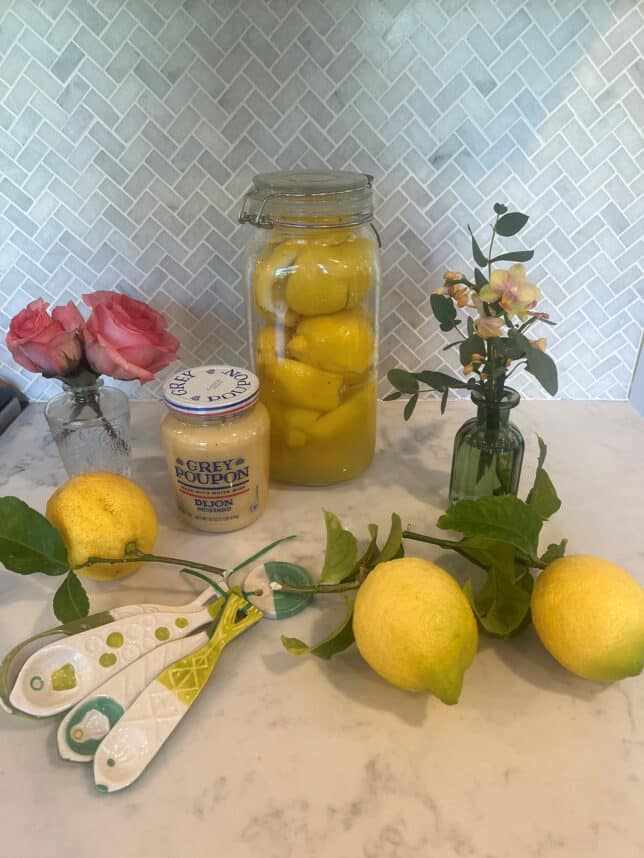
Sheff is a fan of using preserved lemons on almost anything, and they both love stuffed food, as it combines their Moroccan and Iraqi roots. Their recipes for Preserved Lemons and Stuffed Artichokes are below.

To make things simple when cooking, Sheff suggests thinking things through first.

“If you have [all of your ingredients] lined up, it should come together easily,” she said. “And give yourself a break if it doesn’t come out the way your mother made it.”

She added, “It took me over and over and over again to make olive chicken until it tasted like my mother’s.”

Gomperts is a fan of simple cooking, as well.

“Soups are easy, healthy, delicious and impressive for your guests,” Gompert said. “So if you feel overwhelmed in the kitchen, start with soups.”

For more from the Sephardic Spice Girls, follow them on Instagram @sephardicspicegirls, on Facebook at Sephardic Spice SEC Food and on their website Sephardicspicegirls.com.

Every week, Debra Eckerling hosts bite-sized conversations about food, cooking, and community. Check out the full conversation: JewishJournal.com/podcast.

For the full conversation, listen to the podcast:

Watch the interview:


Preserved Lemons

18 lemons, washed and dried
1 cup kosher salt

Remove the stem of the lemon. Quarter the lemon lengthwise, with two cuts three-quarters of the way. Make sure that the lemon stays intact. Stuff all sides of the lemon with a generous amount of salt and squeeze the lemon closed.

Place lemon inside a 1-liter glass jar with an airtight lid. Repeat the salting process, then push down each lemon. Add more lemons until the jar is full.

Add the juice of 2 lemons.

Seal the jar tightly and shake the contents. Leave on the countertop.

The following day, add several more lemons. Repeat the following day, until the jar is full and no more lemons can be added.

Shake daily so that the brine coats the lemons.

After one week, place the jar in the refrigerator.

Lemons will be ready to use in three weeks.

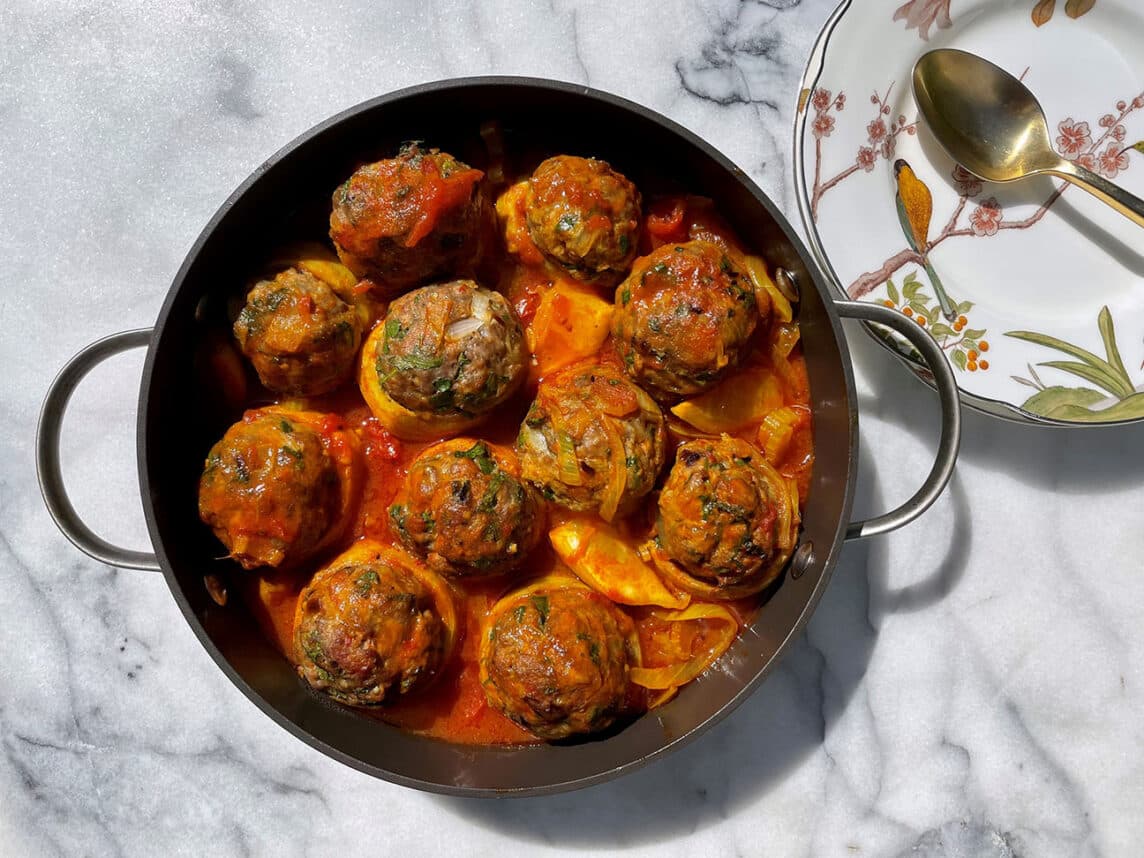
Stuffed Artichokes


Ingredients:

2 14-ounce bags of artichoke hearts

Meatball Stuffing:

2 pounds ground beef
1/2 cup parsley, finely chopped
2 large eggs
1/2 cup potato starch
1/2 teaspoon coriander
1/2 teaspoon cumin
1/2 teaspoon nutmeg
1/2 teaspoon allspice
Salt and pepper


Tomato Broth:

1/3 cup avocado oil
1 large onion, diced
3 stalks celery, finely chopped
8 cloves garlic
1 lemon, washed and quartered
1 cup water
1 14.5 ounce can of chopped tomatoes
1 tablespoon sugar
1 teaspoon turmeric
1 teaspoon paprika
1 teaspoon kosher salt
1/2 teaspoon freshly ground black pepper


Instructions:

Let artichokes thaw on a paper towel. Then lay artichokes on a baking sheet.

In a large bowl, add the meat, parsley, eggs, potato starch and spices. Gently combine ingredients.

Roll meat mixture into 3-inch balls and place inside the artichoke hearts, making sure that the meat filling forms a 1-inch dome over the artichoke.

Over medium heat, warm the oil in a large frying pan. Then sauté the onion until it is golden. Add the celery and garlic and sauté for two minutes.

Lightly squeeze the lemon into the sauce and place rinds inside the sauce. Then add water, chopped tomatoes, sugar and spices, and stir well.

Bring to a boil, then cover the pot and lower heat and simmer for 30 minutes.

Pour all the sauce into a deep ovenproof dish, then place the stuffed artichoke hearts into the sauce, making sure not to submerge the meat in the sauce.

Heat oven to 350°F and bake for one hour.


Makes approximately 18-20 artichoke hearts. Suitable for freezing.


Debra Eckerling is a writer for the Jewish Journal and the host of “Taste Buds with Deb.Subscribe on YouTube or your favorite podcast platform. Email Debra: tastebuds@jewishjournal.com.

Sephardic Spice Girls: Cooking Simply, Preserved Lemons & Stuffed Artichokes Read More »

Musk’s Media Addiction

I was going to write about Jacob Lew this week, because President Biden’s nomination of the former Obama Administration official as the next U.S. ambassador to Israel is of enormous importance to both countries. 

But that discussion will have to wait, because while Lew’s nomination is big news both here and in Israel, and while the path forward for both Biden and Benjamin Netanyahu is a complicated one with lasting global ramifications, I have to write about Elon Musk instead. 

I’m sorry, but I can’t help myself. Which is exactly what Musk wants. For all of his impressive technological and entrepreneurial achievements, the founder of Tesla and SpaceX’s greatest skill may be his ability to command public attention in a way that few other people on the planet can do. As much as his extraordinary business successes, the key to his outsized media profile is Musk’s willingness to seek out controversy and confrontation. He knows that both legacy and digital media are suckers for a fight, and so he continues to provide them with irresistible material that boosts his prominence to even greater levels, even when it’s a result of extremely unflattering coverage. Since his purchase of the social media company then known as Twitter, Musk has taken his thirst for notoriety to even greater levels, including his challenge to fellow tech industry billionaire Mark Zuckerberg to a mixed martial arts “cage match”.

Musk isn’t the first celebrity to understand the benefits of such public shamelessness. Long before Donald Trump’s first political campaign, the future president adopted a similar strategy. When he published “The Art of the Deal” back in 1987, Trump argued that it was preferable to receive controversial and even negative news exposure than to be ignored altogether. This approach upended conventional political wisdom, but Trump reasoned that it was easier to turn unflattering coverage into something positive than it was to attract media and voter interest when no one was paying any attention to him at all. As Trump wrote then: “Good publicity is preferable to bad, but from a bottom-line perspective, bad publicity is sometimes better than no publicity at all. Controversy, in short, sells.” 

Frequently the target of scathing criticism, Trump dominated the election dialogue throughout 2016, attracting far more news exposure than traditional candidates such as Jeb Bush and Hillary Clinton. Trump then conducted himself the same way throughout his four years as president, so it should be of no surprise that he has approached his post-presidency and his current campaign in exactly the same way.

Musk’s meeting with Netanyahu during the prime minister’s upcoming visit to Silicon Valley will create many more headlines, clicks and posts than would have otherwise been the case.

Which explains why Musk has now instigated a brawl with Anti-Defamation League CEO Jonathan Greenblatt, accusing the ADL of causing a drop in advertising revenue on the platform, threatening to sue the organization for defamation, and suggesting that the ADL is responsible for the recent surge in antisemitic activity on Twitter/X due to their efforts to remove objectionable content. For good measure, Musk has reinstated several accounts that had been banned by Twitter’s previous owners for antisemitic content and has liked a post from Irish white nationalist Keith Woods that included the hashtag “#BanTheADL.” All of which guarantees that Musk’s upcoming meeting with Netanyahu during the prime minister’s upcoming visit to Silicon Valley will create many more headlines, clicks and posts than would have otherwise been the case.

I’ll admit that I don’t know whether Musk doesn’t like Jews or loves publicity or both. But if the billionaire does not harbor a prejudice against Jews, he clearly sees little downside in provoking and encouraging antisemitic activity as a means to attract large amounts of media coverage. It’s just as impossible to forecast whether he offers a Kanye-esque apology at some point or continues to argue that his attacks against the ADL are focused on an organization rather than a people, a culture or a religion. But he will continue to use our community as a scapegoat to achieve his publicity goals, a moral crime in which I am now complicit.


Dan Schnur is the U.S. Politics Editor for the Jewish Journal. He teaches courses in politics, communications, and leadership at UC Berkeley, USC and Pepperdine. He hosts the monthly webinar “The Dan Schnur Political Report” for the Los Angeles World Affairs Council & Town Hall. Follow Dan’s work at www.danschnurpolitics.com

Musk’s Media Addiction Read More »

Unionized Employees Asking for Wage Increases and Other Benefits

Disputes over two separate labor contracts prompted unionized employees of several Jewish communal organizations to stage a rally on Sept. 5 in front of the headquarters of the Jewish Federation of Greater Los Angeles on Wilshire Boulevard, where they called for higher wages and improved health benefits.

One of the contracts affects approximately 75 non-management employees at the Jewish Federation of Greater Los Angeles, Builders of Jewish Education (BJE), Jewish Community Foundation of Los Angeles and Jewish Big Brothers Big Sisters of Los Angeles (JBBBSLA).

The other contract is for about 30 employees at JVS SoCal, formerly known as Jewish Vocational Service.

Lilia Arbona, an art director at the L.A. Federation, serves as president of AFSCME Local 800, which represents Jewish communal and social services employees. At the recent rally, Arbona joined approximately 50 colleagues from various Jewish communal agencies.

According to Arbona, employees are asking for wage increases that keep pace with the rising cost of living. The L.A. Federation has offered wage increases that amount to a 3% increase in the first year, a 2.5% increase in the second year and a 2.5% increase in the third year. The employees’ current contract expired July 1 and was extended, Arbona said.

JVS SoCal management has proposed a 2% wage increase the first year, a 1.5% increase the second year and a 1.5% increase the third year.

Additionally, employees are seeking more affordable health benefits; a paid day off on Juneteenth; and increased comp time. Their proposals also address remote work issues, Arbona said.

The recent demonstration was described as an “informational picket.” It did not include a strike or a work stoppage of any kind. Employees marched and carried signs in front of the Federation’s offices, from noon-1 p.m., during their lunch hour. 

While current negotiations have yet to bear fruit, the two sides are expected to return to the bargaining table on Sept. 7, Arbona told the Journal.

Jewish Federation of Greater Los Angeles CEO and President Rabbi Noah Farkas said the Federation respected the right of its employees to voice their proposals and was hopeful there’ll be progress ahead.

“They want to create energy around the negotiation, and they have every right to do so … We look forward to negotiating with them. We value unionized labor.”
– Rabbi Noah Farkas, Jewish Federation CEO and President

“There’s no impasse. We have no dispute. They want to create energy around the negotiation, and they have every right to do so. [Today] they didn’t disrupt business, they didn’t block anybody [from entering the building],” Farkas said. “We look forward to negotiating with them. We value unionized labor.”

Jeff Carr, CEO of JVS SoCal, said employees at JVS SoCal who are members of AFSCME Local 800 account for approximately 10-percent of the organization’s workforce. At JVS SoCal, they hold administrative roles including as office workers, support staff, receptionists, office managers, researchers, grant writers and case workers, among other positions.

Carr expressed confidence an agreement would be reached as negotiations continued. As a nonprofit that provides nonsectarian job training, career services and mentoring to diverse communities, including veterans and refugees, the organization’s ability to increase wages depends on its fundraising, he said.

“I’m confident we’ll arrive at a good place for everybody,” Carr said. “We have some constraints, but we want to support our employees. We want to get an agreement with them, and I’m confident we will.”

Unionized Employees Asking for Wage Increases and Other Benefits Read More »

Apple Desserts for a Sweet New Year

One of the best parts of Rosh Hashanah is welcoming a sweet new year with apples dipped in honey. 

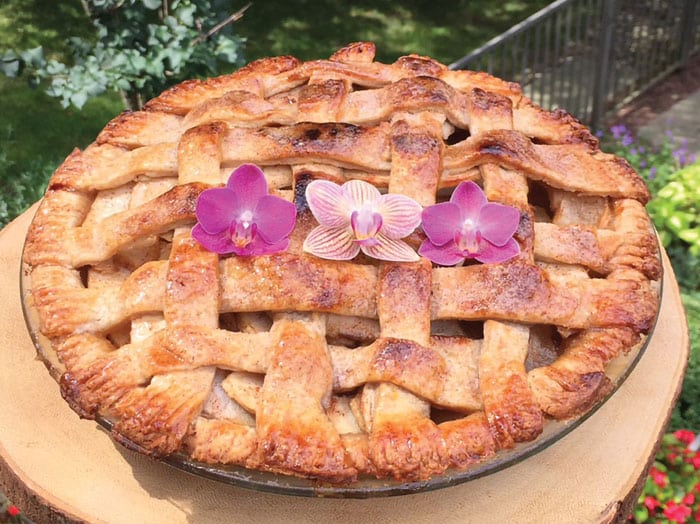
Judy Elbaum’s honey glazed apple pie incorporates both of these delicious flavors.

“This gorgeous pie is a bit of a production, but well worth the time, effort and calories.” – Judy Elbaum

“This gorgeous pie is a bit of a production, but well worth the time, effort, and calories,” Elbaum, founder of Leave it to Bubbe, told the Journal. 

Honey Glazed Apple Pie

Pie Dough:

2 ½ cups flour
1 Tbsp sugar
¼ tsp cinnamon
pinch nutmeg
1 tsp salt
1 cup chilled Crisco, cut into ¼ inch pieces
5 to 6 Tbsp ice water

Pie Filling:

5 apples: Granny Smith or Golden
Delicious
Juice half a lemon
2/3 cup brown sugar
3 Tbsp sugar
2 Tbsp cornstarch
1 tsp pumpkin pie spice
1 Tbsp margarine

Glaze:

½ cup honey, melted

Make the pie dough:
Place flour, sugar, cinnamon, nutmeg and salt in the bowl of a food processor, fitted with a steel blade. Process briefly to combine. Add the Crisco and pulse until the dough resembles a coarse meal. Add the ice water through the feed tube and pulse only until the dough barely holds together. Do not over process.
Divide the dough in half. You will be using one half to line the bottom of the pie pan and the other half to make the lattice for the top of the pie. There should be a few tablespoons more dough for the bottom of the pie than for the lattice. Flatten the dough into discs and refrigerate for at least one hour.
Roll out the larger disc into a circle of approximately 13 inches. Center the circle on a 9-inch pie plate and press down to line the dish with the dough. Trim the dough, leaving a ½-inch overhang.
Roll the remaining disc into a 13-inch circle. With a pastry wheel or a knife, make ¾ inch strips for the lattice.
Keep the lined pie plate and the lattice chilled until ready to use.
Preheat the oven to 400°F.
Make the Filling:
Peel and core the apples and cut into ¼-inch slices. Place in a large bowl and toss with the lemon juice. Combine the sugars, cornstarch and pumpkin pie spice in a small bowl, then add to the apples and mix well.
Place the apple mixture into the dough-lined pie plate. Dot with margarine.
Place the strips of dough on top of the apples in a lattice design, keeping them about an inch apart.
Trim the edges, then, with a fork press the lattice strips onto the dough lining the edge of the pie plate.
Sprinkle the lattice with some cinnamon sugar. Cover the edges of the pie dough with a pie crust edge cover or aluminum foil to prevent burning.
Bake for 45 to 55 minutes until bubbly and golden brown.

If desired, glaze the lattice with some melted honey.


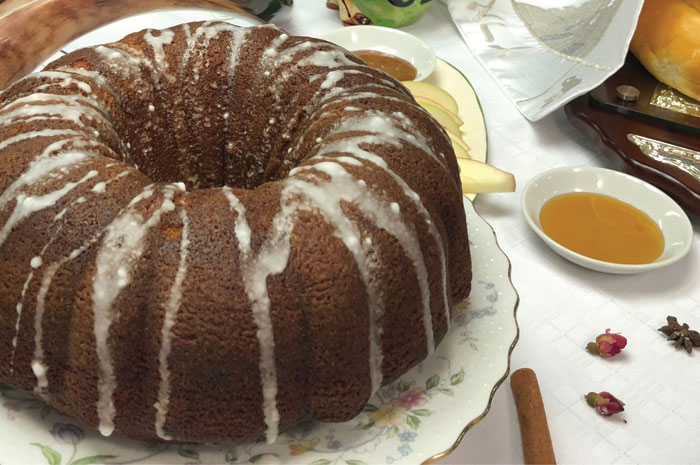
For a rich, dense decadent dessert, try Debbie Kornberg’s apple chocolate cake. 

“This recipe was given to me by my dear friend Barbara, who taught me so much about Jewish cooking during my early years of marriage,” Kornberg, founder of Spice + Leaf, told the Journal. “She fondly refers to this apple chocolate cake as Murder Cake, because it is just murder to only have one piece.”

If you would like to make this in a Bundt pan, Kornberg says to double the recipe. 

“This cake is very dense and does not rise very much,” she said. 

Apple Chocolate Cake
Photo by Debbie Kornberg

Rosh Hashanah Apple Chocolate Cake

3 cups of peeled apple chunks or slices
2 cups of flour
¾ cup vegetable oil
2 eggs
1 heaping tsp of cinnamon
1 cup sugar
2 tsps vanilla
1 tsp baking soda
½ cup of parve Swiss chocolate
A dash of salt

Peel and cut apples into small ½-inch pieces. Set aside. (Sometimes, I will do this a day or two in advance because it can take a while to peel and chop. If you choose to do this in advance, keep apples well covered and in the refrigerator until ready to use.)
Preheat the oven to 325°F.
Place eggs and oil into a mixing bowl and mix until fluffy.
Add sugar and mix again until fluffy. Add vanilla.
Using a knife, cut chocolate up into small pieces and then add to the wet ingredients.
In a separate bowl, mix all dry ingredients together. And then slowly add it to the wet ingredients and incorporate fully. Then fold in chopped apples. It will become very dense and thick.
Grease a baking pan with baking spray. Bake for about one hour in a loaf pan. If doubling the recipe for a bundt cake, bake for about one hour and 30 minutes. Because this cake is so dense, it may need additional time to cook all the way through.
To ensure the cake is cooked all the way through, test with a knife; it should come out relatively clean, minus the gooey chocolate morsels. If the cake starts to get too brown on top but still needs additional cooking time, lay a piece of aluminum foil on top while it continues to bake. Let the cake fully cool before trying to remove it from the baking pan.
A single batch serves about 8 to 10 people; the bundt cake serves about 16 to 20.

Any holiday meal deserves a gluten-free dessert option.

Any holiday meal deserves a gluten-free dessert option. 


Here’s a delicious recipe from Sarah Zulauf, founder of Sarah’s Organic Gourmet.

Gluten-Free Apple Cake
Photo by Sarah Zulaf

Gluten-Free Rosh Hashana Apple Cake

1 pound tart apples
1 pound sweet apple
8 Tbsp salted butter
1/4 tsp cinnamon
2 Tbsp sugar + 9 Tbsps of sugar + 1 Tbsp of sugar
½ tsp salt
2 Tbsp brandy
2/3 cup gluten-free flour
1 tsp baking powder
2 large eggs
2 tsp vanilla

Cut tart and sweet apples into thin slices.
Heat a frying pan over medium heat. Add butter. Swirl butter in the pan until it browns. Add cinnamon to the butter. Set aside.
Using the same pan, add apples, 2 tablespoons of sugar, salt and brandy. Cook over a low flame for 12 to 15 minutes. Set aside.
In a large mixing bowl, combine gluten-free flour, baking powder, eggs, 9 tablespoons of sugar and vanilla. Add in the brown butter then add the apples. Stir to coat.
Prepare a spring-form pan by coating it with butter then dusting it with flour.
Pour batter into the pan. Then sprinkle 1 tablespoon of sugar on top.
Bake at 375°F for 35 to 40 minutes on the middle rack. Do not under bake.

Pareve Cream Cheese Frosting

8 oz (226g) full-fat brick cream cheese, softened to room temperature (I use Tofutti cream cheese to keep it pareve)
1/2 cup (8 Tbsp; 113g) unsalted butter, softened to room temperature (I use Earth Balance to keep it pareve)
3 cups (360g) confectioners’ sugar, plus an extra 1/4 cup (30g) if needed (I use Monk Fruit and blitz it in a dry vitamix container to make my own powdered sugar out of that)
1 tsp pure vanilla extract
1/8 tsp salt

In a large bowl using a handheld or stand mixer fitted with a paddle or whisk attachment, beat the cream cheese and butter together on high speed until smooth and creamy. Add 3 cups of confectioners’ sugar, vanilla and salt. Beat on low speed for 30 seconds, then switch to high speed and beat for 2 minutes. If you want the frosting a little thicker, add the extra 1/4 cup of confectioners sugar (I add it).

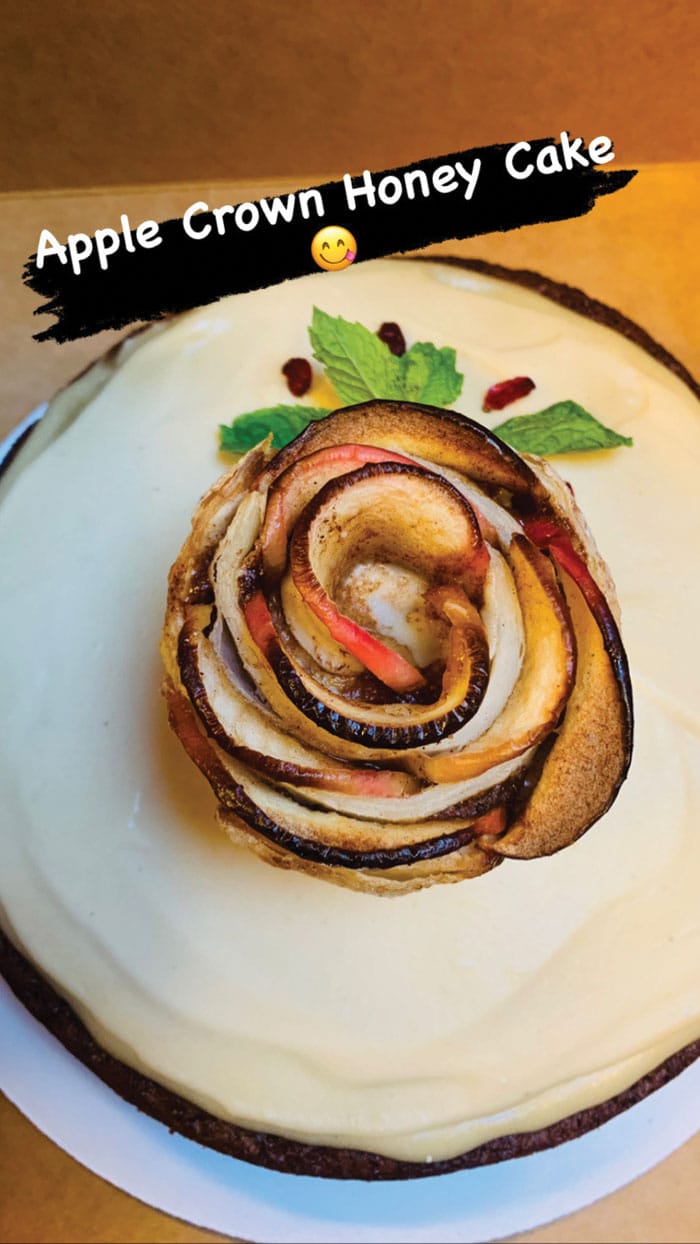
Rose Apple

1 large red apple, cored and very thinly sliced (I use organic honey crisp)
¼ cup white sugar, (I use Monk Fruit)
1 tsp ground cinnamon
1 sheet frozen puff pastry, thawed, (I used GF Puff Pastry to keep it Gluten Free)
¼ cup melted butter (I use Earth Balance)
1 large egg
2 tsp water
1 tsp confectioners’ sugar (Optional)

Preheat the oven to 400°F. Adjust an oven rack to the middle position. Butter two (6 to 8-ounce) ramekins and dust with white sugar.
Place apple slices on a microwave-safe plate, overlapping slightly if necessary. Microwave on high until slices slightly soften, about 45 seconds. Cover the plate with plastic wrap and a kitchen towel.
Mix together sugar and cinnamon in a small bowl.
Roll puff pastry sheet to less than 1/8-inch thickness. Using a pizza cutter, cut two (3×12-inch) rectangles. Reserve remaining pieces for another use.
Spread melted butter over dough; sprinkle with a generous amount of cinnamon sugar. Place apple slices along one long edge of dough, about 1/4 inch beyond the edge, overlapping slices slightly. Fold the bottom half of dough over apple slices to form a long “folder” of dough with rounded edges of apple slices exposed.
Beat together egg and water in a small bowl. Brush surface of dough with egg wash. Sprinkle with cinnamon sugar.
Starting at one end, roll dough to form a rose-shaped pastry. Seal roll with the end of dough strip. Transfer roses to the prepared ramekins. Sprinkle with cinnamon sugar.
Bake on the middle rack in the preheated oven until well browned, about 45 minutes. Use tongs to remove the ramekins to a baking sheet to cool for 5 to 10 minutes.
Remove apple roses from the ramekins and finish cooling on a wire rack. Dust with confectioners’ sugar before serving.
By the way, you can buy this and other gluten-free items, via Sarah’s Organic Gourmet (800-492-3640) and at Bibi’s Bakery & Cafe 8928 W. Pico.


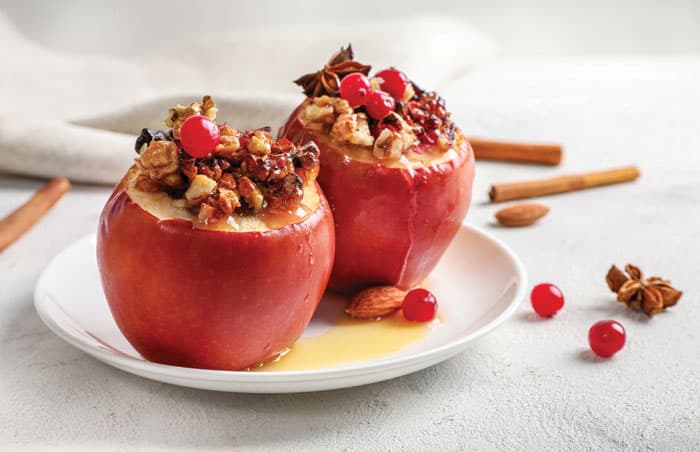
Dawn Lerman’s baked apples recipe is easy and delicious.

“Apples dipped in honey represent a sweet New Year,” Lerman, author of “My Fat Dad,” told the Journal. “My grandmother always thought these were special, as the baking cinnamon creates a warm and comforting aroma for your guests.”

Baked Apples
LumenSt/Getty Images

Beauty’s Baked Apples 

2 Tbsp unsalted butter, or coconut oil for greasing the pan
4 small baking apples, like Macintosh or Cortland, halved and cored
2 tsp chopped walnuts
2 tsp raisins
1 tsp ground cinnamon
1 tsp maple syrup or raw honey
1 tsp apple juice
Plain or vanilla yogurt, or ice cream for serving
Coconut flakes (optional) 

Position the oven rack in the middle and heat the oven to 350°F. 

Generously grease a shallow baking pan with the butter or coconut oil, and place the apples in the pan. 

In a small bowl, combine the walnuts, raisins, cinnamon, maple syrup or honey and apple juice. 

Spoon the mixture into the hollowed apples. Cover with foil and bake for 30 minutes, or until the apples are soft and slightly collapsed. 

Serve the apples warm, topped with plain or vanilla yogurt or ice cream. And sprinkle with unsweetened coconut flakes if you would like. L’Shana Tova! 

Apple Desserts for a Sweet New Year Read More »

Israel at the Crossroads

On this Rosh Hashanah, perhaps more than any previously, Israel stands at a crossroads. In one direction lay chaos and conflict, and on the other, possible reconciliation and peace. Whether it turns away from the former path and follows the latter will depend on Israeli leaders both within and outside the government. Can they overcome their differences and unite to save the country from disaster? Will their love for Israel take precedence over their hatred for one another? Are they capable of avoiding what I’ve come to call the Arian Principle?

The principle was born of a question I once posed to the late Professor Asher Arian, the American-born founder of the field of Israeli political science. “What is the one rule of Israeli politics that everyone needs to know?” I asked him.

His response was Hillel-esque. “Israeli politicians,” he replied, “always prefer collective to individual suicide.”

The professor was pointing out the tendency of Israel’s leaders to insist on getting their own way or else bringing the government — or even the state itself — down.

Arian was not referring to the Masada Complex once ascribed to Prime Minister Golda Meir, the feeling that many Israelis felt of being perpetually besieged and possibly annihilated. Rather, the professor was pointing out the tendency of Israel’s leaders to insist on getting their own way or else bringing the government—or even the state itself—down. 

Arian’s response has recurred to me almost daily over the past nine months, ever since the new Netanyahu-led coalition sought to hamstring judicial checks on the Knesset, give senior ministerial positions to former criminals and unrepentant racists, and yield unprecedented powers to the Ultra-Orthodox parties that contribute little to the state’s economy and almost nothing to its defense. Opponents of the government have staged multiple mass protests, closed highways and the airport, and promoted the refusal of IDF reservists to report for duty. The confrontation has impacted Israel’s diplomatic and financial standing in the world and, according to some senior military sources, impaired its security. 

Now, the Supreme Court is deliberating whether or not to overturn a Basic Law that denies its judges the right to nullify legislation on the grounds of “unreasonableness”—essentially to find unreasonable a bill that negates its right to do so. 

Though it lacks a constitution, Israel faces a constitutional crisis in which the army, the police, and even the Mossad, may have to choose between loyalty to the Court or to the Knesset. Violence between pro and anti-government demonstrators, though so far avoided, nevertheless looms. The very fabric of Israeli society is in danger of unravelling. 

Maddeningly, all this is happening at a very moment when Israel is being offered a monumental opportunity for peace. A rare confluence of interests—President Joe Biden’s need for an historic diplomatic achievement, Crown Prince Muhammad bin Salman’s desire for American security guarantees and backing for a domestic nuclear program, and Benjamin Netanyahu’s yearning for a legacy that doesn’t conclude with civil strife and an Iran at nuclear threshold capacity—have converged to produce the possibility of a Saudi-Israeli accord. This breakthrough, potentially bigger than the Egypt-Israeli treaty of 1979, promises not only to open the vast Saudi markets to Israel, but also those of Indonesia, Malaysia, Pakistan, and Kuwait. This will be peace between Israel and the entire Sunni world. And while the Israeli-Palestinian and Israeli-Iran conflicts will persist, the Arab-Israeli conflict, for all purposes, will end.  

There are, of course, many obstacles, not the least of which are Riyadh’s insistence that it receive a full treaty, and not just a revocable Executive Order, from the United States, as well as US recognition of a right to enrich uranium identical to that which the Americans conceded to Iran. Ratification of such a treaty might be withheld by Democratic senators who insisting on linking it to the two-state solution and by Republicans loathe to grant Biden a foreign policy victory on the eve of the 2024 elections. The prospect of creating yet another nuclear-enabled Middle Eastern state will likely meet resistance in both Washington and Jerusalem.

Some of the largest impediments to peace, though, arise from Israel’s internal morass. To seal the treaty, Israel must make some meaningful gestures to the Palestinians—freezing settlement building in Judea and Samaria, for example, or transferring parts of the territories to Palestinian control. Such concessions, though, have already been rejected by the Coalition’s right-wing partners as well as by members of its Likud majority. Many of the protesters will oppose any peace treaty that allows Netanyahu and his government to remain in power. Those demonstrators carrying signs that plead, “Biden – Save us from Bibi,” will not react passively when Biden saves Bibi from them.

The only answer is the creation of a national unity government comprised of both coalition and opposition parties. Such coalitions existed in the past and proved highly effective, especially in times of emergency. The national unity government formed in 1967 by Labor Prime Minister Levi Eshkol, Rafi Defense Minister Moshe Dayan, and Gahal leader Menachem Begin, successfully navigated Israel through the Six-Day War. The 1984 merging of Labor and Likud enabled Shimon Peres and Yitzhak Shamir to rescue Israel from its suffocating 450% inflation.

Today, a national unity government, built on Israel’s immense center-right and center-left base, could jettison the most radical parties, curtail Haredi power, and reach a viable compromise on judicial reform. 

Today, a national unity government, built on Israel’s immense center-right and center-left base, could jettison the most radical parties, work to integrate the Ultra-Orthodox into Israel’s economy and society, and reach a viable compromise on judicial reform. A national unity government could make the concessions necessary to conclude the Saudi deal. Most importantly, the government of national unity can begin the process of healing the numerous rifts—religious vs. secular, Mizrachi vs. Ashkenazi, the country’s affluent center vs. its underdeveloped periphery—that underlie the current controversy. 

Here, too, many obstacles arise. Distrust of Netanyahu runs exceedingly deep among opposition heads betrayed by him in the past and Netanyahu’s fear of being toppled by what he regards as a cabal of corrupt police commanders and judges. Joining a national unity coalition could well incur a loss of popularity among its parties’ constituencies. Ultimately, though, the highest hurdle will be the Arian Principle, the notion that Israeli leaders would rather see their own government fall—or even their nation disintegrate—rather than pay a personal political price. 

Israel indeed stands at the crossroads between dissolution and reconciliation, internecine violence or international peace. Only love of our country and of our people—only Zionism—will determine which direction Israel takes. This Rosh Hashanah, I ardently hope, the Arian Principle will be proven wrong.


Michael Oren, Israel’s former ambassador to the United States, Knesset Member and Deputy Minister for Diplomacy in the Prime Minister’s Officer, is the author of the Substack “Clarity” and the forthcoming podcast, “Undiplomatic.”

Israel at the Crossroads Read More »

Mahsa Amini and the Meaning of Rosh Hashanah

It’s safe to say that most Jews around the world, regardless of their level of religious observance, know that Rosh Hashanah begins this week. It’s even safer to say that most exiled Iranian Jews around the world know that this week marks not only Rosh Hashanah, but a very important day for Iranians as well. 

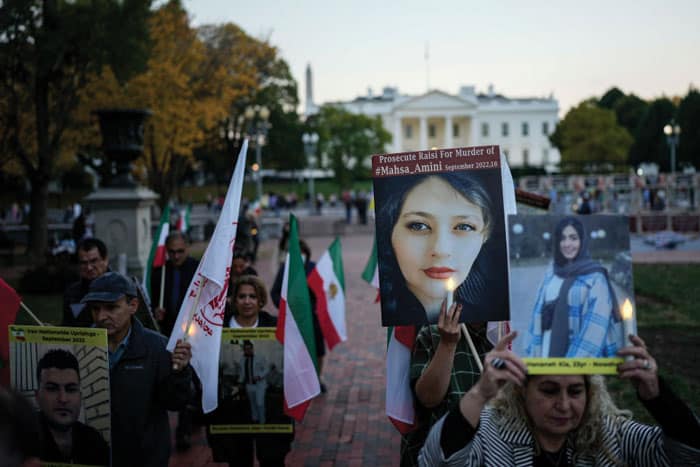
This year, the first day of Rosh Hashanah (September 16) also marks the first anniversary of the death of Mahsa Jina Amini, the 22-year-old Iranian Kurdish woman who perished at the hands of Iran’s brutal morality police in 2022, and whose death sparked a historic revolution that was never before been seen in the Middle East, because it was led primarily by women. Hence, the three words that seemed to take parts of the world by storm in the past year were “Women, Life, Freedom.”

Mass protests will be held all over the world this September 16 because tensions are still running so high and Iranians, whether in Iran or abroad, cannot forget the cruelty of the past 44 years of theocratic rule since the 1979 revolution (and family members of those who were killed are still being arrested for seeking justice). This past year, Iranians worldwide were offered something so precious and fragile that losing it seemed almost inconceivable: the hope that they could bring an end to the regime. 

Naturally, I contemplated how I could connect Rosh Hashanah, a powerful Jewish holiday that’s so deeply tied to matters of the soul that it feels almost eternal, with the first anniversary of Iran’s current revolution, which, while crucial, sadly seems like another mark on the metaphoric wall of freedom’s battle against tyranny worldwide.

I thought about the Iranian Jews who will skip protests to attend synagogue this year and, while remembering that September 16 is an important date, will choose to focus on the first two days of the month of Tishrei, and on the vital work of repairing their relationship with G-d, and with others, through heartfelt prayers and teshuvah. 

I also thought about the Iranian Jews who will choose to attend synagogue services in the morning because, at their core, they identify as Jews, but who will also demonstrate at protests in the afternoon because somewhere inside them, their hearts will always look to the East, toward Israel, but also toward Iran (even if they were born in the United States, Canada or elsewhere).

Such is the duality of our community: If I forget thee, Jerusalem, may my right hand forget its skill. And if I forget thee, Tehran (or Shiraz, Isfahan, Hamedan and elsewhere), may my left hand know the lonely meaninglessness of forgetting from where I came.

Such is the duality of our community: If I forget thee, Jerusalem, may my right hand forget its skill. And if I forget thee, Tehran (or Shiraz, Isfahan, Hamedan and elsewhere), may my left hand know the lonely meaninglessness of forgetting from where I came.

Our rabbis teach that Rosh Hashanah, while known as the Jewish New Year, actually marks the birthday of creation and the world itself. But since G-d created a world of both light and dark, Jews also believe that during the powerful 10 “Days of Awe” (Yamim Noraim) between Rosh Hashanah and Yom Kippur, a person’s fate is sealed for the coming year. 

The liturgy of the High Holy Days offers a humbling, even frightening reminder of this: “On Rosh Hashanah it is inscribed, and on Yom Kippur it is sealed – how many shall pass away and how many shall be born, who shall live and who shall die, who in good time, and who by an untimely death …”).

The brave Iranians who led the country’s most recent revolution took to the streets precisely because Amini and so many others suffered an untimely death. Was she the first Iranian woman to have been killed while in custody by Iran’s Revolutionary Guards? Certainly not. But there was something so heinous about the way she was brutally beaten by regime thugs — who falsely claimed she died of a heart attack — that was symbolic of an entire nation’s unrest over the daily terror of the religious morality police and all that they inflict upon Iranian women.

In the year that has passed, countless people have died in Iran as a result of the revolution; some were actively participating in protests; others were passerby, including several children. Women (and some men) were raped in prison or while in police custody. And then, among the over 20,000 who were arrested for protesting, there were those who were eventually charged with “waging war against God” and executed by hanging. 

It could be argued that the fates of the hundreds of Iranians who were killed between last September and this September were also sealed, but in contemplating how Rosh Hashanah connects with September 16, I want to focus on what I consider the biggest takeaway from what happened to Amini and so many others in Iran: The choice to live each day with unshakable gratitude and meaning. 

I did not know Mahsa Amini. Born in 2000, in most ways, she was an average Iranian young woman. She wasn’t an activist; she was simply in Tehran to visit her brother and, like tens of millions of Iranian women, tired of the mandatory hijab laws. But there was something about her face, and her smile in particular. Though sources close to her family told the media she was shy, to me, Amini’s soulful eyes and warm smile suggested that she knew how to enjoy life, and how to really live. Shortly before her death, she had been accepted to a university and wanted to become a lawyer.

Perhaps it was because she was Kurdish, and Iran’s Kurdish community exudes a particular zest for life because it has survived so much discrimination. In the case of Amini, it seemed that she wanted so much to live — in all the freedom and happiness that living is meant to entail — that she removed part of her oppressively mandatory head covering. For that risk, most Iran women are harassed or detained by the morality police, while others are beaten. Tragically, Amini was beaten in the head so hard that she was killed. 

I often think about how Amini spent the hours before she was beaten on September 13, 2022, and died three days later. I imagine that she took in all the sights and sounds of a bustling Tehran, bought small tchotchkes in outdoor bazaars, and enjoyed the simple joys of Persian street food. She couldn’t have known what awaited her, but something tells me she didn’t spend that day in fear, though, unlike most of us living in the West, there was plenty to fear living in Iran. Perhaps she enjoyed a perfectly pleasant day visiting Tehran, or at least, as pleasant a time as a woman could have visiting Tehran. When I think about Amini, I imagine that she is speaking to me and millions of others, telling us with a sad smile, “Live your life. Live each day. Devour life and don’t be afraid.”

And that, for me, is the biggest parallel between Rosh Hashanah and September 16: We can only hope we will be inscribed and sealed in the Book of Life. But the best we can do is to consciously live each day with a quiet awe that we’re still alive. 

I am reminded of a story that journalist and activist Masih Alinejad shared with Forbes last year about a teenage girl’s response to her mother, who feared her daughter would be killed if she joined the protests in Iran: “I can’t choose what I wear,” she said. “I don’t have the right to dance in public. By law, I’m not allowed to be myself. I’m already dead.” Then she told her mother, “But when I go to the streets, I have a dream. And that makes me alive.”

Rosh Hashanah is a time to repent, as well as a time to rejoice. But it is also a time to dream. I dream of being a better person tomorrow than I was today. And I dream of returning to Iran, to once again stand in a synagogue in Tehran on Rosh Hashanah. And as I pray, I will stand to the West, toward Jerusalem, and dream of that elusive blessing known as peace.  

Shana Tova u’Metuka.


Tabby Refael is an award-winning writer, speaker and weekly columnist for The Jewish Journal of Greater Los Angeles. Follow her on Instagram and X @TabbyRefael

Mahsa Amini and the Meaning of Rosh Hashanah Read More »

New Year Wisdom for Teens – And the Rest of Us

As we enter the High Holy Days, we look back on the past year and engage in introspection, or “Cheshbon Hanefesh,” an “accounting of the soul.” We examine our actions, relationships, and how we impact the world. For me, as the Head of School at de Toledo High School in the San Fernando Valley, this time of year serves two purposes. First, like all Jews, I do my own personal teshuva (process of repentance). At the same time, as an educator, I ask everyone in our scholastic community – starting with myself, but also the younger generation of students – to examine the past year and its challenges, note what we’ve learned, take stock of where we can improve, and move forward with clarity and firm direction. 

Today’s world is fast. It’s tireless. And it can be overwhelming for teens – and frankly for all of us. Dedicating this time to genuine self-reflection is a valuable practice for us all. And one that I value both personally and professionally.

How can the next generation of Jews confidently tackle this upcoming 5784? By adopting the following concepts:

1. In the face of uncertainty, respond with curiosity

Uncertainty is an inevitable part of life. From unexpected job changes to personal relationships and global events, we encounter it daily. A Jewish education can do what secular education often fails to do. It can encourage the next generation to seek more than answers on tests. And in the face of inevitable uncertainty, it can urge students to embrace curiosity. We can’t provide answers to all our students’ questions, but we can help them build the skills needed to navigate the muddy, often opaque waters of adulthood. Our next generation must learn resilience, self-confidence, and mindfulness.

With strong social connections, values, and communal bonds, teens can learn the self-confidence needed to navigate the messiness of adulthood. This doesn’t mean relinquishing all control or living recklessly. It means adopting a growth mindset that allows for the ebb and flow of life’s uncertainties. Whether that’s waiting for a college acceptance letter or struggling with a concept in calculus, students should be taught to acknowledge and own that life is a journey filled with twists and turns, and that unexpected detours can lead to unexpected opportunities. Education, and specifically a Jewish education, is most valuable when it instills in students the ability to embrace the beauty inherent to difficult, complex, messy questions.

2. Lean on our generational wisdom

Jewish wisdom is not confined to the annals of history; it is a living, breathing tradition that has withstood the test of time. From the wisdom contained in the Torah and Talmud to the profound insights of our Jewish sages, our tradition offers a timeless source of guidance on how to live a meaningful and purposeful life. As teenagers face increasingly complex moral dilemmas, Jewish wisdom provides a framework for ethical decision-making.

Concepts like tzedakah (charity), tikkun olam (repairing the world), and derech eretz (ethical behavior) are not just words but guiding principles that educators can use to help teenagers navigate the complexities of modern life. The teachings of Jewish ethics offer guidance on issues such as honesty, compassion, and justice, helping young people make choices that align with their values. Our people’s stories, both triumphant and tragic, from the Exodus to the Holocaust, offer lessons in strength, perseverance, and the transcendence of the human spirit. At the heart of Jewish wisdom are enduring values that span generations. And we’d be remiss to forget their lessons.

3. Don’t pave the road, prepare for a bumpy journey

To hone the resilience required to navigate the messiness of adulthood, teens must develop skills that only they can create. 

Seeing our kids struggle, get frustrated, or become upset is difficult to witness. As a father, I understand the strong urge to solve our kids’ problems for them. My time as an educator has confirmed something I’ve known for a long time but struggled to fully accept – that intervening on behalf of our children is not in their best interest. What happens when they get to college and beyond? Will they have the tools, the mentality, or the grit needed to navigate the challenges of being independent? They will, but only if we let them be the architects of their own future. To hone the resilience required to navigate the messiness of adulthood, teens must develop skills that only they can create. So, I implore all of us to have the strength to allow our children to experience failure and be upset. We need to be strong enough to not only let them to feel discomfort but learn how to navigate that discomfort. This isn’t an abdication of parenting or educating, it’s the very definition of it. Grit is a muscle which must be developed and strengthened.  It takes practice and repetition that is best flexed during the teenage years. This is how you build grit. This is how we can help the next generation develop into the leaders of tomorrow.

As we usher in a new year, let us all return to these timeless lessons. May we continue to nurture the wisdom within ourselves and our youth, providing them with the tools to not only survive but thrive in an ever-changing world. Through self-reflection, resilience, and the enduring wisdom of our tradition, we can confidently embark on the journey ahead, knowing that we are well-prepared for whatever challenges and joys lie along the path.

L’Shana Tova.


Mark Shpall, MA.Ed, J.D., is Head of School, de Toledo High school. 

New Year Wisdom for Teens – And the Rest of Us Read More »

Making Our Hearts Stop Sinking This Rosh Hashanah

The sweetness of apples, let alone honey, and our annual Rosh Hashanah reset, invite us to be countercultural – and unfashionably upbeat. Let’s stop the dooming and glooming. These High Holy Days should remind us how lucky we are as Jews to have our reassuring rituals, our anchoring tradition, our soul-stretching values, and one another. And let’s not forget how central Israel and Zionism are to the whole Jewish package — which offers an effective, time-tested, 3,500-year-old antidote to the malaise of modernity haunting so many of us today, young and old alike.

True, many people, left and right, have declared Israel “over” this year. But this Rosh Hashanah is a perfect opportunity to view Israel and Zionism more culturally than politically — and thus more positively than negatively. Transcending partisanship, thinking historically, ideologically, spiritually, it becomes quite easy to celebrate Israel and Zionism as important parts of the broader Jewish rejection of the aimlessness, loneliness, and hopelessness afflicting our society.

Modernity’s mounting maladies are infecting more and more Jews. Too many of us are overdosing on social media, anxiety, alienation, and loneliness. Too many of us are jonesing for roots, connection, a sense of purpose. It’s tragic — and ultimately self-defeating — that fewer and fewer Jews today see Judaism and Zionism as both vaccinations and cures to these diseases of despair, to this New Nihilism. It’s downright scandalous – and professionally self-defeating too – that too many rabbis and Jewish communal leaders, left and right, are so busy politicking and preening, that they keep failing to make that case – especially as the New Year begins.

America’s insightful Surgeon General, Vivek H. Murthy, keeps urging Americans to face the mental health challenges that keep spreading and intensifying. He has boldly issued advisories about general mental health and teen mental health, about the “decrease in life satisfaction” for many youngsters overusing social media, and about the surge in loneliness. “In recent years,” he reported this year, “one-in-two adults in America reported experiencing loneliness.”

The discussion about mental health and diseases of despair such as drug abuse, alcoholism and suicide often conflate two overlapping phenomena. Some mental health crises are deeply personal, caused by particular genes or individual traumas. Others, while manifested personally, are more cultural, triggered or exacerbated by some malaise of modernity or the other.  

The modern world has unleashed many centrifugal forces, spinning each of us into our own narrative, our own particular slice of the population pie, our own emotional whirl. Admittedly, growing up in a centripetal society could suffocate, crushing some with community and conformity. But growing up in a centrifugal society can be soul-stripping. We’re starved of community and commitment. We’ve created the United States of popular culture – which bewitches Blue and Red America equally with its me-me-me, my-my-my, more-more-more, now-now-now ethos. It’s an America of instant gratification, of history being last week’s most popular YouTube videos of cats rolling around or babies drooling. It’s an America filled with people violating Momma Troy’s warning – “if you’re too open-minded, your brains fall out.”

I grew up in a world in which most American Jews were more insulated from the social dysfunction of “the goyim” around us, because we were that much less assimilated. Today, anyone who thinks that Jews — anywhere in the modern world — are immune to these cultural-caused afflictions is delusional. And, of course, no forms of religion or nationalism are cure-alls or get-out-of-stress-free cards.

Nevertheless, I do believe that a robust Judaism, reinforced by Zionism, can help build up the kind of individual and collective resistance we all need to fight some of these isolating, depressing, demoralizing, forces.

Last month, The Free Press, that consistently thought-provoking and iconoclastic new media company founded by Bari Weiss, published the winning essays from its marvelous high school contest seeking articles about “problems facing young Americans.” The winner, 17-year-old Ruby LaRocca, offered a fabulous five-point “counterintuitive guide for teenage happiness,” urging:

“#1. Read old books….
“#2. Memorize poetry. Learn ancient languages…
“#3. Learn from the monks, and slow your pace — of reading, of writing, of thinking…
“#4. Learn how to conduct yourself in public….
“#5. Dramatically reduce use of your phone.”

As charmed as I was by her list, I felt that — as a wonderful Hebrew phrase puts it — “she discovered America,” long after Columbus. Whether as serious Jews via God and tradition, or passionate Zionists via peoplehood and statehood, we get it. We understand the anchoring and enlightening power of old books offering eternal wisdom not fleeting clickbait. We are liberated by reciting religious prayers, our national anthem, Bialik’s and Amichai’s poems — in Hebrew. Our ancient language, now restored, resonates with Biblical, Talmudic, Medieval, and modern echoes, weaving a wonderful, deepening subtext to all intellectual and spiritual journeys. All of our lovely, time-consuming, life-enriching holidays and rituals and obligations slow us down too — in the best kind of way. The whole Jewish package invites us to put the rush-rush on hold, think big thoughts, and connect to our families, our faith, our friends, and our common destiny. And when — a point I would have proposed — you “join a community of shared values, of higher purpose, and of fellow-seekers,” you instinctively “learn how to conduct yourself in public” because you’re no longer alone. Your phone time drops because you are now blessedly busy talking directly to real people in real time, even if you don’t take on all the “thou shalt nots” of Shabbat — which actually lead us to the holiest of “thou shalts” … choose life!

These last few painful polarized months, we’ve emphasized the divisions ripping Israeli society apart. But what about the underlying religious, cultural, and national bonds being demonstrated that actually have vindicated Zionism since January? In April, Israel’s flag-waving protesters and traditional-minded coalition boosters all stood at attention for national sirens of mourning and celebration together. Such behavior showed how most Israelis, left and right, are strong, proud, assertive, democratic, tradition-positive, nationalistic, patriotic, family-oriented, holiday-observing, “New Jews.” If you doubt me, wander around Israel on Rosh Hashanah to see Israel’s true face. Whether they are shouting on the streets for change or defending Benjamin Netanyahu’s coalition, most Israelis have been freed by the Zionist revolution from the weakness of the past, oppressed Jew, while also being deepened internally by the Israel experience in ways many other moderns resist.

Israelis are much more about the “us” not the “I,” and are happily balancing the old and the new, albeit in different ways of course. The result is one of the happiest countries on earth — even during this unhappy political moment. 

In short, Judaism and Zionism are centripetal not centrifugal forces, soul-strengthening influences not soul-strippers — and Israeli society, left and right, is a centripetal society. Israelis are much more about the “us” not the “I,” and are happily balancing the old and the new, albeit in different ways of course. The result — it’s now almost cliched to say — is one of the happiest countries on earth — even during this unhappy political moment. 

So rather than confusing sermonizing with politicking, rather than predictably endorsing one political leader or another, in Israel or America, let’s shout this good but challenging news from the rooftops – and the bimahs. Let’s celebrate Zionism’s cultural and existential achievements. Let’s toast Israel’s ongoing political protection for world Jewry.  And let’s appreciate Judaism’s surprising and wise relevance, even in this ever-changing disposable age. But let’s do it modestly, organically, faithfully, in the spirit of The Free Press’s wise teenager, Ruby LaRocca. She tells her peers, diplomatically, thoughtfully, modestly: “If you choose to take on three out of five of these precepts, I guarantee your heart will stop sinking.” 

And let us say “Amen.”


Professor Gil Troy is an American presidential historian, and, most recently, the editor of the three-volume set, Theodor Herzl: Zionist Writings, the inaugural publication of The Library of the Jewish People.

Making Our Hearts Stop Sinking This Rosh Hashanah Read More »